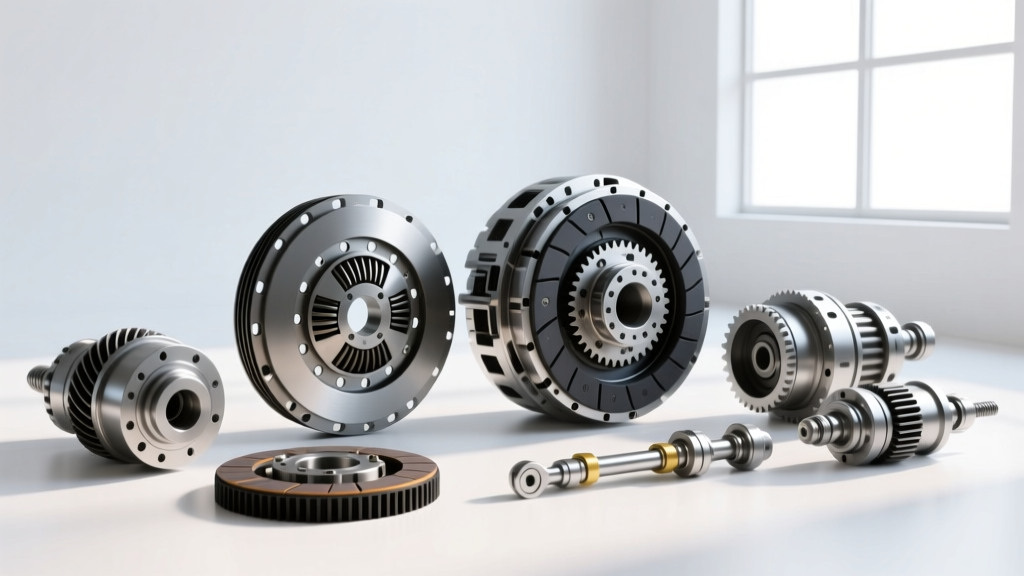
The 2026 South Bend Dual Disk Lineup for the NV4500
The New Venture Gear 4500 (NV4500) remains a legendary heavy-duty 5-speed manual transmission, widely used in 1994–2005 Dodge Ram Cummins trucks and GM heavy-duty applications. As modern diesel tuning and big-block V8 swap capabilities have evolved, stock single-disk clutches routinely fail when torque exceeds 550 lb-ft. Upgrading to a South Bend Clutch (SBC) dual disk system is the industry standard for high-torque NV4500 builds. However, dual disk clutches introduce complex mechanical variables. When improperly specified or installed, they exhibit unique failure modes that can destroy the transmission input shaft and bellhousing.
Before diagnosing a failure, it is critical to understand the South Bend dual disk hierarchy for the NV4500. Selecting a clutch rated far beyond your actual wheel-horsepower can result in severe drivability issues, while under-rating it guarantees friction material vaporization.
| SBC Kit Series | Part Number (Dodge 10-Spline) | Torque / HP Capacity | Friction Material | Est. 2026 Price |
|---|---|---|---|---|
| DD3250 | DD3250-6 | 1,200 lb-ft / 650 HP | Organic / Ceramic Blend | $1,550 - $1,750 |
| DD3800 | DD3800-6 | 1,500 lb-ft / 800 HP | Sintered Iron / Ceramic | $1,950 - $2,200 |
| DD4250 | DD4250-6 | 1,800+ lb-ft / 1,000 HP | Full Sintered Iron | $2,400 - $2,700 |
Note: GM NV4500 applications utilize a 26-spline input shaft and require specific GM bellhousing adapters and concentric slave cylinder (CSC) delete kits when converting to SBC dual disks.
Anatomy of a Dual Disk Failure: Root Cause Analysis
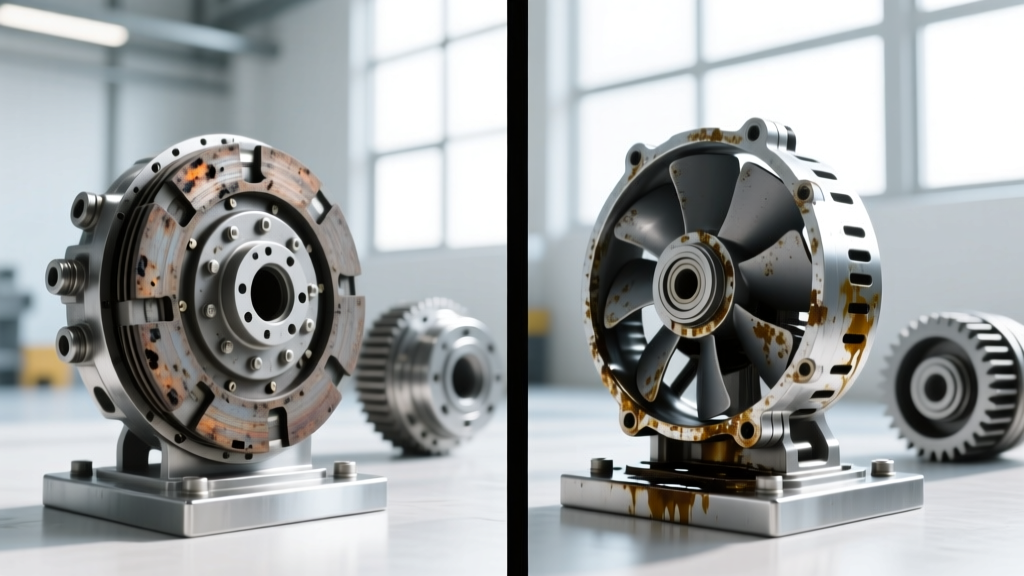
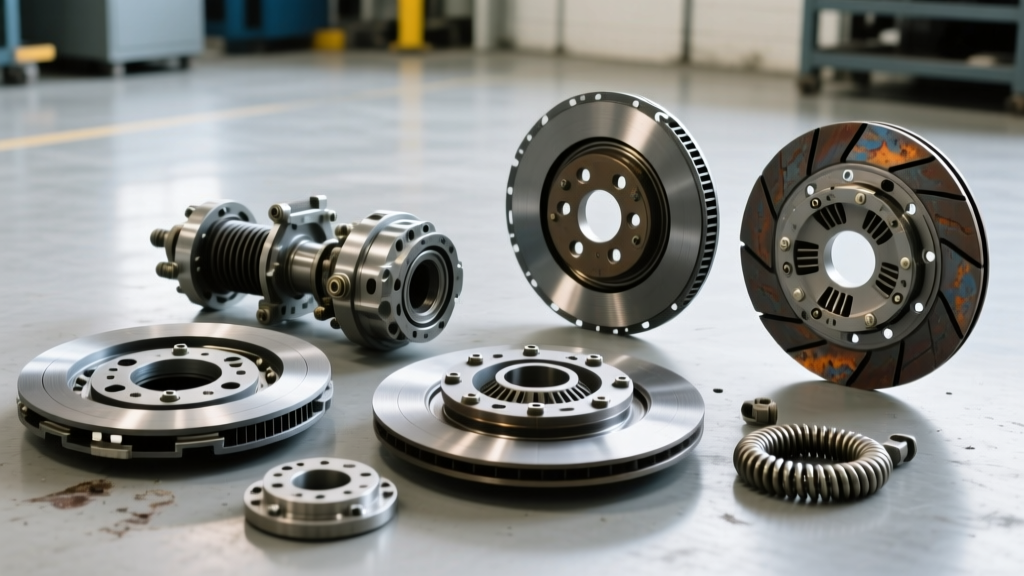
Unlike a traditional single-disk setup where failure usually presents as simple friction material wear or pressure plate fatigue, dual disk clutches fail in highly specific, often catastrophic ways. Below is a deep dive into the primary failure modes of South Bend dual disk systems mated to the NV4500.
1. Intermediate (Floater) Plate Chatter and Lug Wear
The most common complaint with the DD3800 and DD4250 series is violent engagement chatter, which eventually leads to intermediate plate lug wear. The floater plate sits between the two friction disks and is driven by tabs (lugs) that slot into the flywheel.
Root Cause: Improper flywheel step height or inadequate break-in. Dual disk clutches require precise flywheel step heights—typically between 0.020' and 0.050' depending on the exact SBC kit. If a machine shop resurfaces a stock Cummins flywheel without accounting for the dual disk step requirement, the clamping load is distributed unevenly. The floater plate will rattle against the flywheel lugs during low-RPM engagement, elongating the lug slots and causing irreversible chatter.
Diagnostic Check: Remove the inspection cover and use a feeler gauge to measure the gap between the floater plate lugs and the flywheel slots. If lateral play exceeds 0.015', the flywheel and intermediate plate must be replaced. Always use the dedicated South Bend matched flywheel (e.g., Part# MF-DD) to eliminate step-height guesswork.
2. Pilot Bearing Collapse and Input Shaft Scoring
The NV4500 input shaft is heavy and carries significant rotational mass. Adding a dual disk clutch assembly increases the parasitic drag and radial load on the pilot bearing during clutch disengagement.
Root Cause: Using a standard OEM bronze pilot bushing or a low-quality sealed bearing. When the heavy dual disk assembly spins down, a weak pilot bearing will overheat and seize. Once seized, the NV4500 input shaft is subjected to extreme radial friction, scoring the shaft splines and often destroying the transmission's front main bearing.
Diagnostic Check: If you experience grinding when shifting into gear while the engine is running, but the truck is stationary, the clutch is dragging due to a seized pilot bearing or a warped friction disk. Xtreme Diesel Performance highly recommends upgrading to a heavy-duty, sealed, high-temp pilot bearing specifically rated for dual disk applications before mating the NV4500 to the engine block.
3. Hydraulic Actuation Starvation
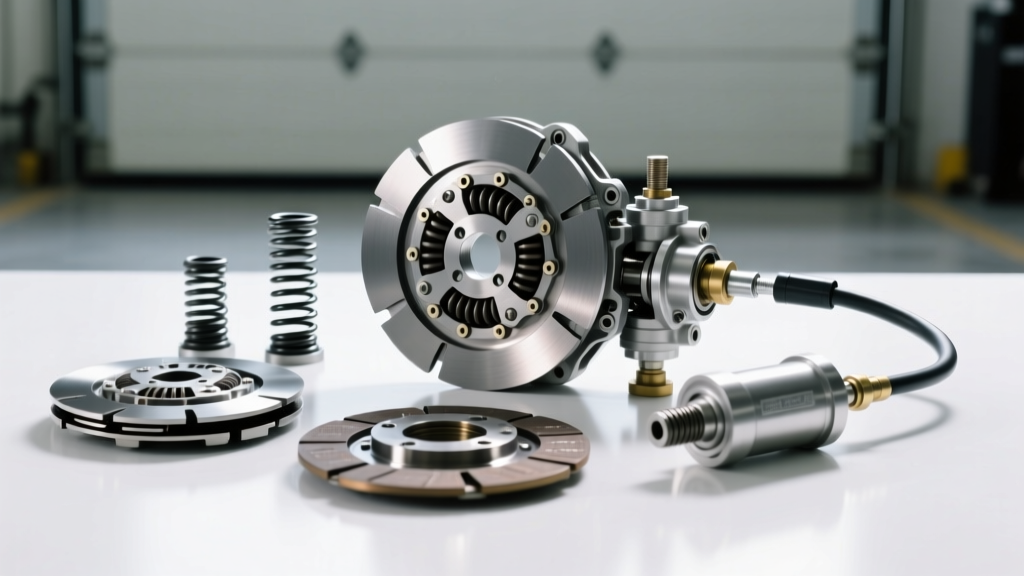
The Dodge NV4500 utilizes an external hydraulic slave cylinder mounted on the side of the bellhousing, which pushes a release fork against the clutch release bearing. The clamping force of a South Bend DD4250 pressure plate can exceed 4,500 lbs, drastically increasing the required hydraulic fluid volume and pressure to achieve full disengagement.
Root Cause: Retaining the stock Dodge master and slave cylinders. The OEM hydraulics simply lack the fluid displacement to fully retract the heavy-duty pressure plate fingers. This results in a 'dragging' clutch, making the NV4500's synchros work overtime to match gear speeds, leading to premature synchro ring failure and gear clash.
Diagnostic Check: Measure the release bearing travel at the fork pivot. You need a minimum of 0.450' to 0.500' of effective travel to fully disengage a South Bend dual disk. If travel is insufficient, upgrade to the South Bend Heavy Duty Hydraulic Kit (Part# SB OK010795-0X), which features a larger bore master cylinder and a high-pressure braided stainless line.
Critical Installation Tolerances and Torque Specifications
Preventing failure modes starts on the assembly stand. The NV4500 requires strict adherence to torque specifications to maintain bellhousing alignment and prevent harmonic vibrations that shatter ceramic friction pucks.
- Flywheel to Crank (5.9L/6.7L Cummins): 105 ft-lbs (Must use high-strength thread locker like Loctite 272).
- Pressure Plate to Flywheel: 35-45 ft-lbs (Tighten in a strict star pattern to prevent pressure plate warping).
- NV4500 Bellhousing to Engine Block: 60 ft-lbs (Ensure dowel pins are seated; misalignment causes input shaft binding).
- Clutch Fork Pivot Ball: 25 ft-lbs (Apply a dab of anti-seize to the pivot point to prevent squealing).
Expert Insight: Never use an impact wrench to seat the pressure plate bolts. The sudden torque spikes can micro-fracture the cast-iron legs of the heavy-duty pressure plate, leading to catastrophic leg failure under high-boost, high-RPM shifts.
Diagnostic Troubleshooting Matrix
Use this matrix to isolate the root cause of your South Bend dual disk NV4500 issues before tearing down the transmission.
- Symptom: Clutch slips under heavy throttle in 4th/5th gear.
Root Cause: Friction material glazing due to riding the clutch, or oil contamination from a leaking NV4500 input shaft seal (a notorious NV4500 issue). Fix: Replace disks and seal; verify crankshaft rear main seal integrity. - Symptom: Pedal feels 'spongy' and engagement point is erratic.
Root Cause: Air trapped in the hydraulic line, or the OEM plastic slave cylinder line has expanded under high pressure. Fix: Bench bleed the master cylinder and upgrade to stainless braided lines. - Symptom: Loud metallic rattling at idle that disappears when the pedal is pressed.
Root Cause: Intermediate plate rattle (normal for sintered iron dual disks at idle) OR worn flywheel lugs. Fix: If the rattle is violent and accompanied by a burning smell, inspect the flywheel lugs immediately. Slight gear rattle is inherent to solid-hub dual disks lacking marcel springs.
Final Buyer's Verdict: Matching the Kit to the Build
When selecting a South Bend dual disk clutch for your NV4500, resist the urge to simply buy the highest-rated kit available. The DD4250 is an incredible piece of engineering, but its aggressive sintered iron friction material requires high pedal effort and offers zero slip tolerance, making it miserable for daily-driven street trucks. If your Cummins or Big Block build produces under 650 HP, the DD3250 offers the best balance of drivability, organic/ceramic bite, and NV4500 synchro preservation. For dedicated tow rigs and 800+ HP sled pullers, the DD3800 remains the undisputed sweet spot for reliability and heat dissipation.