Beyond the Friction Disc: What's a Clutch in a Car?
When drivers and novice mechanics ask, "what's a clutch in a car," the conversation almost exclusively revolves around the friction disc, pressure plate, and flywheel. While these are the torque-transferring elements, the hydraulic actuation system is the neurological network that commands them. In modern manual transmissions, a failing hydraulic system will mimic a worn friction disc, leading to unnecessary transmission teardowns and misdiagnosed slipping. As we navigate the 2026 automotive landscape, where manual transmissions are increasingly reserved for high-performance sports cars and specialized off-road vehicles, understanding hydraulic clutch system diagnosis is critical for preventive maintenance.
The hydraulic clutch system operates on Pascal's Law, multiplying the force applied to the pedal and transferring it via incompressible fluid to the release bearing. When this system degrades, symptoms range from gear crunching to complete pedal failure. This comprehensive preventive maintenance guide will dissect the hydraulic clutch system, providing actionable diagnostic frameworks, exact torque specifications, and fluid management protocols.
The Anatomy of Modern Hydraulic Clutch Systems
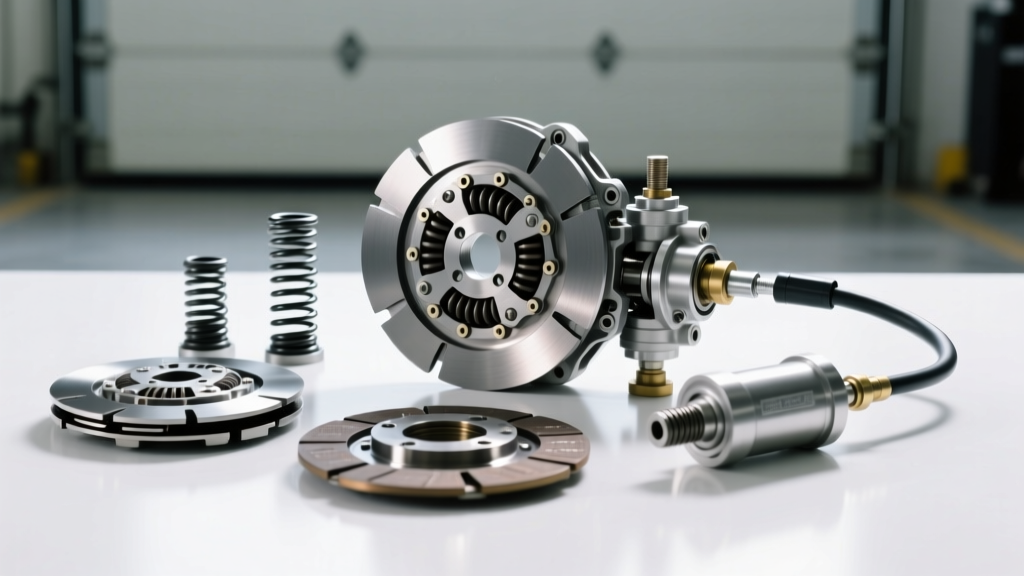
To diagnose a system, you must understand its architecture. Modern hydraulic clutch circuits consist of four primary nodes:
- Clutch Master Cylinder (CMC): Mounted on the firewall, it converts mechanical pedal force into hydraulic pressure.
- Hard Lines and Flexible Hoses: Steel-braided or OEM rubber hoses that route fluid from the engine bay to the transmission bell housing.
- Concentric Slave Cylinder (CSC) vs. External Slave: Older vehicles use an external slave cylinder with a mechanical fork. Modern 2026 platforms (like the Porsche 911 7-speed manual or Honda Civic Type R) predominantly use a CSC, which wraps around the transmission input shaft, eliminating mechanical pivot wear but requiring transmission removal for replacement.
- Hydraulic Fluid Reservoir: Often shared with the brake master cylinder or utilizing a dedicated, smaller remote reservoir.
Preventive Maintenance: Fluid Specifications and Intervals
Hydraulic fluid is the lifeblood of the clutch system. Because clutch systems lack the high-temperature braking friction of calipers, many owners mistakenly believe clutch fluid never needs changing. However, glycol-based fluids are hygroscopic—they absorb moisture from the atmosphere through microscopic pores in rubber hoses and reservoir caps. This moisture lowers the boiling point and causes internal corrosion in the CMC and CSC.
| Fluid Type | Dry Boiling Point | Wet Boiling Point | Application & OEM Notes | Flush Interval |
|---|---|---|---|---|
| DOT 3 | 205°C (401°F) | 140°C (284°F) | Older economy vehicles. Prone to rapid moisture absorption. | Every 2 Years |
| DOT 4 | 230°C (446°F) | 155°C (311°F) | Standard for most modern manual transmissions (e.g., Ford Mustang GT). | Every 2-3 Years |
| DOT 4 LV (Low Viscosity) | 230°C (446°F) | 165°C (329°F) | Required for vehicles with ESP/ABS-integrated clutch delay valves. | Every 2 Years |
| Mineral Oil (e.g., Pentosin CHF 11S) | N/A | N/A | Specific BMW, Audi, and Rolls-Royce hydraulic systems. NEVER mix with DOT. | Every 4 Years |
Expert Insight: According to SAE International's hydraulic fluid standards, using DOT 5 (silicone-based) in a system designed for DOT 4 will cause seal swelling and catastrophic master cylinder failure due to incompatible elastomers. Always verify the reservoir cap stamping.
Diagnostic Framework: Identifying Hydraulic Failure Modes
Before pulling the transmission, you must isolate whether the fault lies in the friction materials or the hydraulic actuation. Use this diagnostic matrix to interpret pedal feedback.
Symptom 1: The Spongy or Dropping Pedal
The Diagnosis: Air in the system or internal master cylinder bypass. If the pedal slowly sinks to the floor while held down at a stoplight, the primary cup seal inside the CMC is bypassing fluid internally. The Fix: Inspect the CMC pushrod area for external leaks. If dry, replace the CMC. Bench-bleed the new master cylinder before installation to prevent trapping air in the dead-volume chambers.
Symptom 2: Incomplete Disengagement (Gear Crunch)
The Diagnosis: If the vehicle creeps forward with the pedal fully depressed, or you experience grinding when shifting into 1st or Reverse, the CSC is not traveling its full stroke. This is often caused by a failing clutch delay valve (CDV) or a swollen, deteriorating flexible hydraulic hose expanding under pressure. The Fix: Perform the "Hose Expansion Test." Have an assistant press the clutch while you observe the flexible rubber line near the transmission. If the hose visibly bulges or swells, it is absorbing hydraulic pressure. Replace the hose with a stainless-steel braided line (e.g., Goodridge or Russell) and delete the CDV if track use is intended.
Symptom 3: Hard Pedal Effort or Squeaking
The Diagnosis: While often blamed on the pressure plate fingers, a hard pedal accompanied by a squeak near the firewall usually indicates a failing CMC return spring or a dry pedal pivot bushing. In CSC systems, a failing release bearing guide sleeve can also bind the cylinder.
Step-by-Step Hydraulic Bleeding and Torque Specs
Bleeding a hydraulic clutch is notoriously more difficult than bleeding brakes due to the upward routing of the hard lines, which creates natural air traps. For 2026 models with complex routing, a pressure bleeder (like the Motive Power Bleeder) set to 1.5 - 2.0 bar is mandatory.
Fastener Torque Specifications
Over-torquing hydraulic fittings strips aluminum threads on the transmission bell housing and master cylinder bodies. Adhere strictly to these baseline specifications (always verify with your specific OEM service manual):
| Component | Thread / Fitting Type | Target Torque (Nm) | Target Torque (lb-ft) |
|---|---|---|---|
| CMC to Firewall Nuts | M8 x 1.25 | 15 - 18 Nm | 11 - 13 lb-ft |
| Hard Line Banjo Bolt | M10 x 1.0 (with crush washers) | 25 - 30 Nm | 18 - 22 lb-ft |
| CSC to Bell Housing | M8 x 1.25 (Flange) | 22 - 25 Nm | 16 - 18 lb-ft |
| Pedal Pushrod Clevis Pin | Clip / Retaining Pin | N/A (Snap fit) | N/A |
2026 Component Cost and Sourcing Guide
When preventive maintenance fails and component replacement is required, sourcing OEM-equivalent parts is critical. The global supply chain for hydraulic actuation is dominated by a few tier-1 suppliers. According to FTE Automotive's OEM clutch actuation whitepapers, over 60% of European and Asian manual transmissions utilize FTE or Sachs hydraulic components.
- Clutch Master Cylinder (CMC): Expect to pay $60 to $140 for OEM FTE or Sachs units. Avoid $25 unbranded aftermarket units, as their internal EPDM seals degrade rapidly when exposed to modern DOT 4 LV fluids.
- Concentric Slave Cylinder (CSC): Pricing ranges from $90 to $220. Pro Tip: If you are replacing the CSC, the transmission is already out. It is highly recommended to replace the entire clutch assembly (e.g., LUK RepSet 624 3150 00) simultaneously, as labor accounts for 80% of the job cost.
- Hard Lines and Hoses: OEM replacement lines cost $40-$80. Upgrading to a stainless-steel braided line kit ($60-$100) provides a firmer pedal feel and eliminates hose expansion under high-RPM shifting.
Conclusion: The Value of Proactive Diagnostics
Understanding what's a clutch in a car extends far beyond the friction materials. The hydraulic actuation system is a precise, high-pressure network that demands regular preventive maintenance. By adhering to strict fluid flush intervals, utilizing pressure bleeding techniques, and recognizing the early symptoms of master and slave cylinder degradation, you can save thousands of dollars in misdiagnosed transmission removals. For further engineering data on drivetrain actuation, refer to ZF Group's drivetrain engineering guidelines to ensure your manual transmission operates flawlessly for years to come.