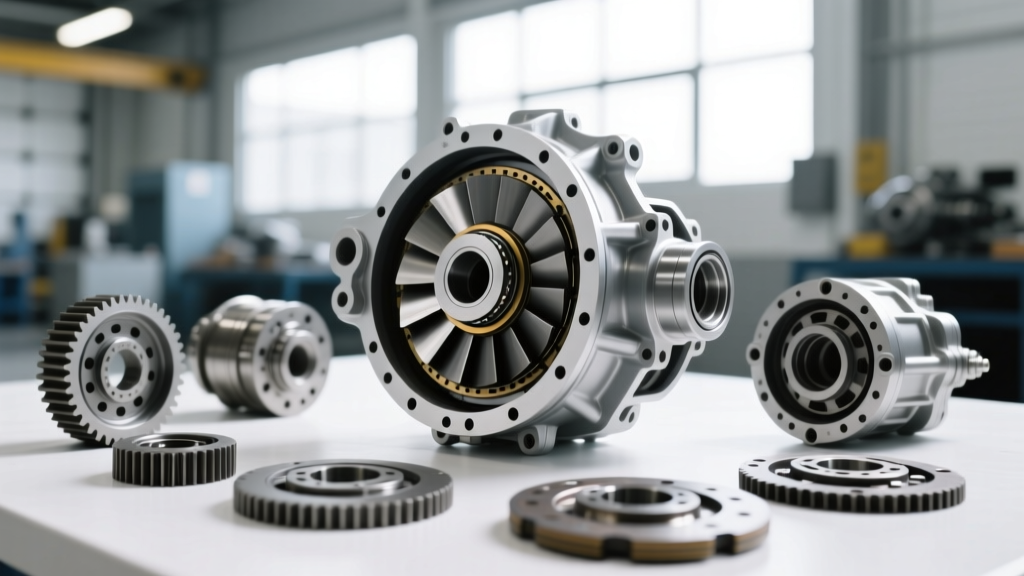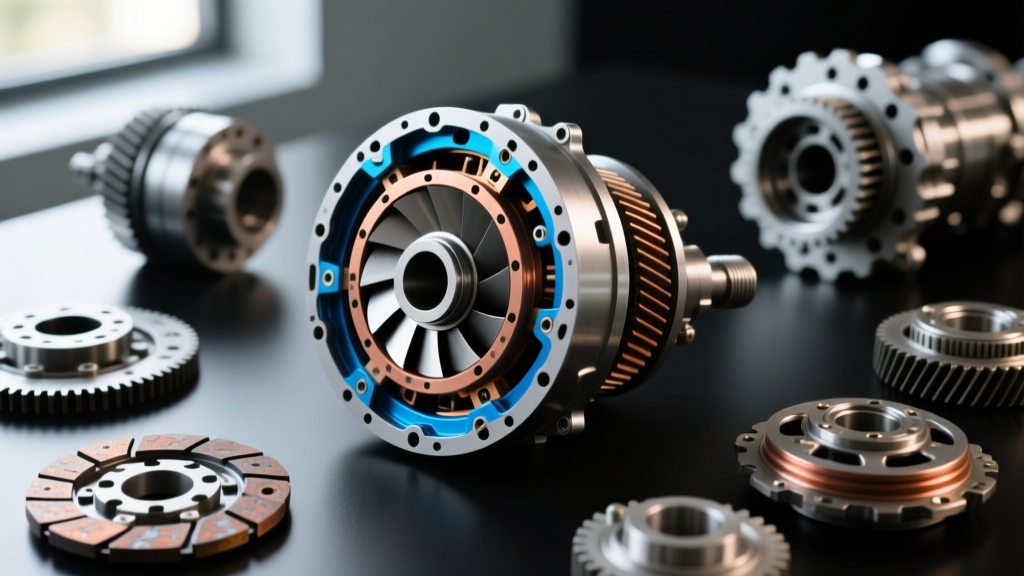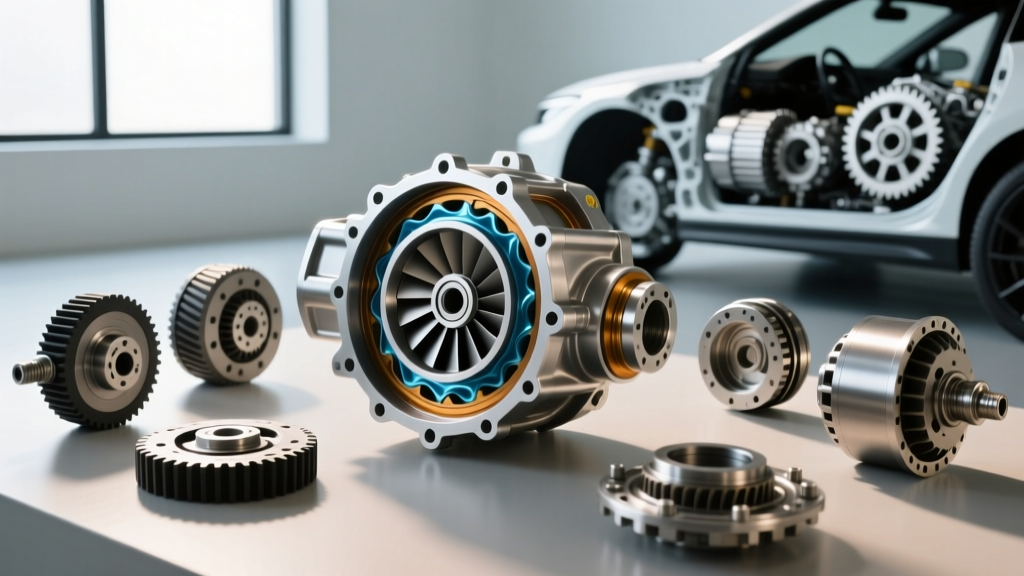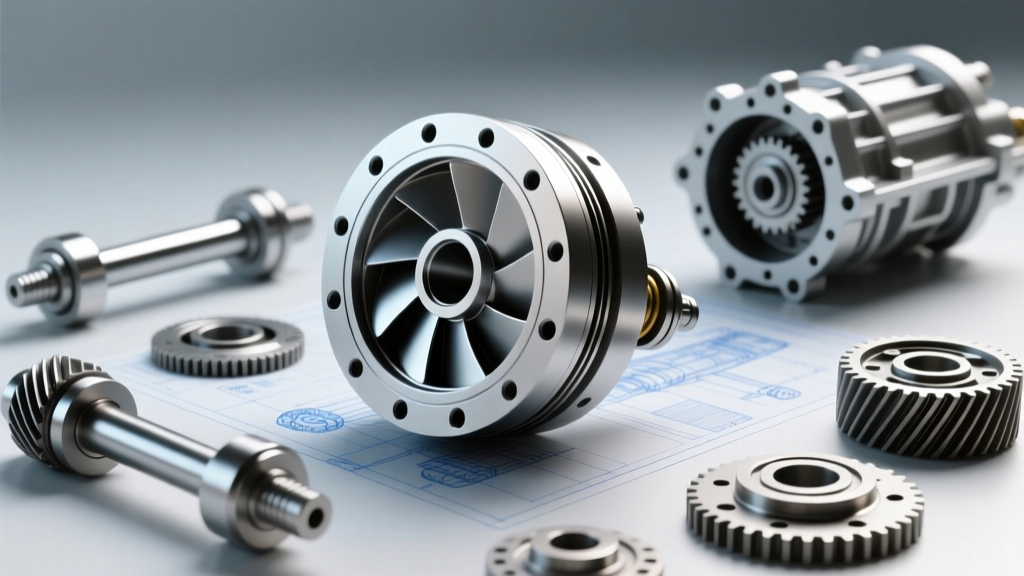
As we navigate the 2026 performance landscape, the automotive aftermarket has fully embraced small-displacement power. Whether you are building a turbocharged 2.0L 4-cylinder, a high-revving Honda K-Series, or a lightweight 5.3L LS small-block V8, the rules of drivetrain multiplication change drastically. Selecting the right torque converter for small engine applications is not simply about picking the highest stall speed available; it requires a meticulous balance of fluid dynamics, stator profiling, and lockup strategy to compensate for the lack of low-end displacement.
In this performance and upgrade guide, we break down the exact engineering specifications, diagnostic symptoms of mismatched units, and real-world installation tolerances required to make a small-displacement engine perform like a big-block on the track.
The Physics of Torque Multiplication in Low-Displacement Builds
Large displacement engines (like a 454 big-block or a 6.2L Hellcat) produce massive low-end torque, meaning they can utilize looser, larger-diameter converters without sacrificing street manners. Small engines, however, lack this inherent grunt. To compensate, a performance torque converter for small engine setups must utilize aggressive impeller and turbine fin angles to maximize hydraulic torque multiplication.
While a standard factory converter might offer a 1.8:1 multiplication ratio, performance units designed for small blocks and turbo 4-cylinders often push this to 2.3:1 or even 2.5:1. This aggressive fin geometry acts as a hydraulic lever, allowing a 5.3L LM7 making 350 lb-ft at the flywheel to multiply that force to over 800 lb-ft off the line, effectively launching the vehicle in the meat of its powerband.
Flash Stall vs. Footbrake Stall: The Critical Distinction
When shopping for an upgrade, you will see two stall ratings. Footbrake stall is the maximum RPM the engine can reach against the brakes while stationary. Flash stall is the RPM the converter flashes to under wide-open throttle (WOT) from a roll or a hard launch. For small engines, footbrake stall is largely irrelevant due to the engine's inability to overpower the brakes at low RPM. You must tune and select your converter based entirely on flash stall, ensuring it matches the exact RPM where your turbo spools or your camshaft begins to produce peak volumetric efficiency.
Stall Speed Selection Matrix for Small Engine Platforms
Choosing the wrong stall speed will result in catastrophic performance losses. Below is a benchmark matrix for popular small-displacement performance platforms mated to common automatic transmissions like the GM 4L60E, 6L80E, or Ford 6R80.
| Engine Platform | Induction | Target Powerband | Recommended Flash Stall | Ideal Converter Diameter |
|---|---|---|---|---|
| 2.0L EcoBoost / K-Series | Turbocharged | 3,500 - 6,500 RPM | 3,200 - 3,600 RPM | 245mm (Billet Cover) |
| 5.3L LM7 / LQ4 (Small Block) | N/A (Aggressive Cam) | 2,500 - 6,000 RPM | 2,800 - 3,200 RPM | 258mm (Furnace Brazed) |
| 6.0L LQ9 / LS2 | Turbocharged | 3,000 - 6,500 RPM | 3,400 - 3,800 RPM | 245mm (Multi-Disc TCC) |
| 4.8L LR4 (Budget V8) | N/A (Mild Cam) | 2,000 - 5,500 RPM | 2,400 - 2,800 RPM | 258mm (Heavy Stator) |
TCC Lockup and Friction Material Upgrades
A major vulnerability in small-engine performance builds is the Torque Converter Clutch (TCC). When a turbocharged 4-cylinder or a nitrous-fed small block suddenly spikes torque at 4,000 RPM, a standard organic TCC friction lining will slip, glaze, and eventually fail, leading to severe transmission overheating.
For any small engine producing over 450 lb-ft of torque, upgrading to a multi-disc clutch pack is mandatory. Manufacturers like Yank Performance and TCI Automotive utilize Kevlar or carbon-fiber friction materials that can withstand immense apply pressures without shudder. Furthermore, tuning the TCC apply rate via HP Tuners or EFI Live to ramp the PWM (Pulse Width Modulation) solenoid pressure over 1.5 seconds, rather than an abrupt on/off engagement, is critical for preserving the input shaft on transmissions like the 4L60E.
Installation Tolerances and Fluid Dynamics
The most expensive torque converter will fail in 100 miles if installed with improper clearances. Small-block and 4-cylinder bellhousings offer tight tolerances, making precise measurement non-negotiable.
- Flexplate-to-Converter Pad Clearance: Must be exactly 1/8' to 3/16' (3.17mm to 4.76mm). If clearance is less than 1/8', the converter will bottom out and crack the transmission pump gear. If it exceeds 3/16', the flexplate will dish forward upon bolt tightening, leading to catastrophic flexplate failure.
- Pilot Hub Clearance: The converter pilot must slide into the engine crankshaft with light resistance. Always check for burrs and apply a light coat of assembly lube.
- Flexplate Runout: Use a dial indicator to measure flexplate runout. It must not exceed 0.010 inches. Excessive runout will cause the torque converter clutch to drag and shudder at highway speeds.
- Fastener Torque: Use Grade 8 or ARP converter bolts with a medium-strength threadlocker (e.g., Loctite 242). Torque to 35-40 lb-ft in a star pattern.
'In 2026, we are seeing a massive influx of 6L80E swaps behind turbo 4-cylinders. The variable displacement pump in the 6L80E is highly sensitive to tight converter clearances and improper fluid shear rates. Running a high-shear synthetic like Red Line D6 or Amsoil Signature Series is mandatory to prevent TCC apply valve bore wear.' — Lead Drivetrain Engineer, AutogearNexus Technical Desk.
Diagnostic Symptoms of a Mismatched Small-Engine Converter
Because small engines operate on a razor-thin margin of torque, the symptoms of a poorly selected or failing torque converter are amplified. If your build is exhibiting the following issues, your converter profiling is likely incorrect:
1. Turbo Lag and Lazy Spool (Stall Too Low)
If your turbocharged small engine feels sluggish off the line and takes several seconds to build boost, your converter's flash stall is too low. The engine is falling out of its volumetric efficiency window upon launch. The stator is not providing enough hydraulic leverage to allow the engine to freely rev into the turbo's spool threshold.
2. High-Speed TCC Shudder (Friction Degradation)
A rhythmic vibration between 45-65 MPH under light throttle is the hallmark of TCC shudder. In small-engine builds, this is often caused by the engine's inherent NVH (Noise, Vibration, and Harshness) resonating through an organic friction disc that lacks the necessary dampening capacity. Upgrading to a carbon-fiber multi-disc setup and adjusting the TCC slip tables in the ECU will eliminate this symptom.
3. Runaway Transmission Temperatures (Stator Failure)
If your transmission fluid temperatures consistently exceed 220°F (104°C) during highway cruising, the internal one-way clutch on the stator may have failed in the 'locked' position. Because small-displacement engines require aggressive fin angles for launch, a stator that fails to freewheel at cruising speeds will violently churn the fluid, generating immense heat and rapidly degrading the fluid's friction modifiers.
Real-World Upgrade Costs and Part Selection
Budgeting for a performance torque converter requires looking at the entire cooling and tuning ecosystem. Below is a realistic pricing guide for small-engine performance upgrades:
- Street/Strip 245mm Billet Converter (e.g., Circle D Specialties): $750 - $950. Ideal for cammed 5.3L small blocks and mild turbo 4-cylinder builds.
- Pro-Series Multi-Disc Carbon TCC Converter: $1,100 - $1,600. Required for 6L80E and ZF 8HP applications exceeding 600 lb-ft of torque.
- Standalone Transmission Cooler (e.g., Derale Series 9000): $120 - $180. Mandatory for tight converters to maintain fluid temps below 200°F.
- Custom TCC Tune & Line Pressure Calibration: $250 - $400. Essential for matching the converter's apply rate to the transmission's hydraulic volume.
Ultimately, maximizing a small-displacement engine requires treating the torque converter as an extension of the engine's camshaft and turbocharger map. By prioritizing flash stall, upgrading TCC friction materials, and adhering to strict installation clearances, you can transform a lightweight small-block or turbo 4-cylinder into a dominant force on the street and the strip.