The Evolution of Torque Converters in Hybrid Drivetrains
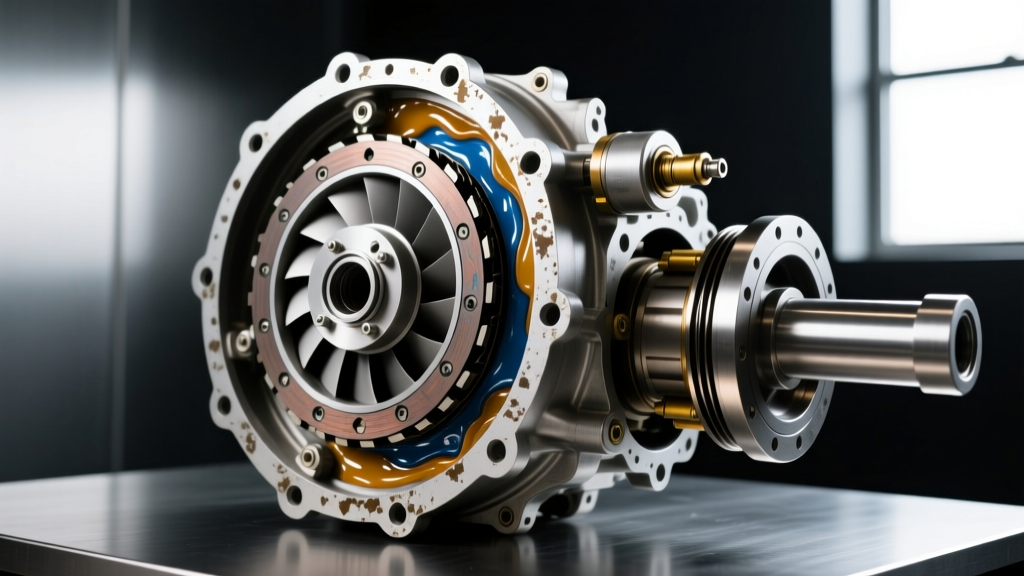
As the automotive industry pushes deeper into electrification, the traditional torque converter has not disappeared; rather, it has evolved into a highly specialized torsional management device. In modern hybrid and plug-in hybrid electric vehicles (PHEVs), the torque converter must handle the violent torque spikes of an internal combustion engine (ICE) simultaneously with the instant, high-frequency torque delivery of an electric motor. For automotive technicians and advanced DIYers, diagnosing drivetrain shudder in these vehicles requires a fundamental understanding of hybrid-specific architectures. Misdiagnosing a failing torque converter clutch (TCC) as a faulty inverter or motor generator (MG) is a common and expensive mistake.
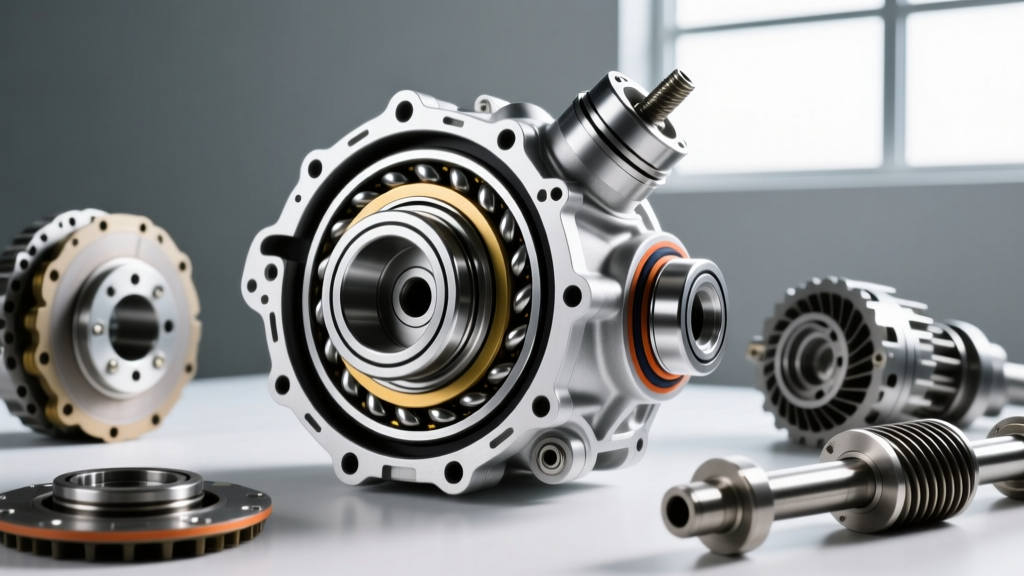
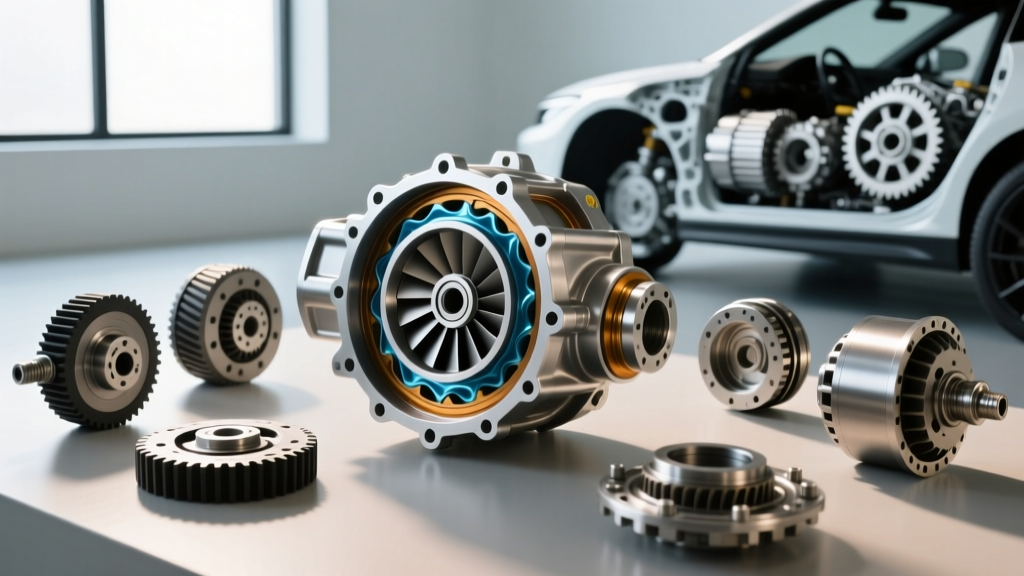
Unlike traditional automatic transmissions, hybrid drivetrains utilize distinct architectures. The Transmission Mounted Electric Device (TMED) layout, used heavily by Hyundai and Kia, places an electric motor between the engine and a conventional automatic transmission, retaining a fluid torque converter. Conversely, the ZF 8HP PHEV architecture integrates the electric motor rotor directly into the transmission bell housing, utilizing a specialized torque converter with a centrifugal pendulum absorber (CPA). Meanwhile, power-split eCVTs (like the Toyota P810/P910 or Ford HF35) abandon the fluid torque converter entirely in favor of a mechanical torsional damper assembly. Understanding which system you are working on is the first step in accurate symptom diagnosis.
Spotting Hybrid Torque Converter Failure Symptoms
Hybrid torque converter failures rarely present as the catastrophic 'check-engine-light' limp-mode events seen in older vehicles. Instead, they manifest as subtle NVH (Noise, Vibration, and Harshness) anomalies that overlap with electric drivetrain characteristics.
- Transition Shudder: The most common symptom occurs during the ICE auto-start/stop event or the handoff between EV-only and hybrid drive modes. If the TCC is failing to modulate slip correctly, the driver will feel a distinct 15-25 Hz shudder through the chassis.
- High-Frequency Whine: A failing torque converter stator or damaged needle bearing in a TMED setup will produce a whine that changes pitch with motor RPM, often misdiagnosed as inverter whine.
- Delayed ICE Engagement: In PHEVs, the electric motor must spin the ICE up to a specific RPM before fuel injection begins. A degraded torque converter fluid coupling will slip excessively during this crank phase, triggering 'Check Hybrid System' warnings related to slow engine start times.
Expert Diagnostic Tip: Never rely solely on acoustic diagnosis in a hybrid. The high-voltage (HV) system operates at frequencies that mask mechanical bearing noise. Always correlate auditory symptoms with live PID data from the Transmission Control Module (TCM).
Analyzing the Hybrid Transmission Torque Converter Replacement Cost
When a hybrid drivetrain requires internal mechanical repair, the financial stakes are significantly higher than conventional vehicles. The hybrid transmission torque converter replacement cost is driven by three factors: high-voltage safety lockout procedures, the necessity of OEM-specific low-viscosity fluids, and the requirement for post-installation rotor-to-stator air-gap calibration.
Below is a detailed breakdown of estimated replacement costs and specifications for common hybrid architectures in the 2026 service landscape.
| Hybrid Architecture | OEM Part Reference | Fluid Spec & Capacity | Est. 2026 Replacement Cost |
|---|---|---|---|
| Hyundai/Kia TMED (6AT) | 45000-3R100 (Sachs/OEM) | SP-IV RR / 7.2 Liters | $2,400 - $3,200 |
| BMW/Chrysler ZF 8HP PHEV | 28237573525 (ZF/LUK) | ZF Lifeguard 8 / 9.5 Liters | $3,800 - $4,900 |
| Ford HF35 eCVT (Damper) | G1MZ-7A257-A (Damper Assy) | MERCON ULV / 5.8 Liters | $1,900 - $2,600 |
| Toyota P910 eCVT (Damper) | 13000-47060 (Damper Assy) | Toyota WS / 3.6 Liters | $1,600 - $2,300 |
Why Hybrid Costs Exceed Conventional Replacements
In a standard rear-wheel-drive vehicle, dropping the transmission to replace a torque converter is a straightforward mechanical job. In a PHEV like the Chrysler Pacifica or a BMW X5 xDrive45e, the transmission is physically bolted to the high-voltage P2 electric motor. Technicians must follow strict HV safety protocols, including pulling the manual service disconnect (MSD), waiting 15 minutes for capacitor discharge, and verifying 0V at the inverter terminals with a CAT III multimeter. Furthermore, reassembling the electric motor rotor requires precision alignment tools to maintain the microscopic air gap between the rotor and stator. Any misalignment will result in catastrophic magnetic drag or immediate motor failure upon startup.
Step-by-Step Diagnostic Protocol for Hybrid TC Shudder
Before committing to the transmission torque converter replacement cost, you must definitively prove the torque converter is the culprit using bi-directional scan tool data. Standard OBD2 scanners are insufficient; you need a professional tablet (e.g., Snap-on Zeus, Autel MaxiSys Ultra) capable of accessing the hybrid vehicle control HCU and TCM PIDs.
1. Isolate the TCC Slip RPM
Connect your scan tool and graph the TCC_SLIP_RPM alongside MG1_TORQUE and MG2_TORQUE commands. Drive the vehicle at a steady 45-55 MPH in EV-only mode (if possible), then force the ICE to engage via the scan tool's active test menu. If the Motor Generator torque commands remain perfectly flat, but the TCC_SLIP_RPM fluctuates wildly (greater than 50 RPM variance) during the ICE firing pulses, the torque converter's internal torsional springs or clutch friction material are degraded. For deeper insights into clutch modulation failures, refer to the Sonnax technical guide on TCC shudder.
2. Perform a Stall Test (With Extreme Caution)
Traditional stall tests are dangerous in hybrids because the electric motors can generate maximum torque at 0 RPM, potentially shattering the mechanical dampers. If a stall test is mandated by the OEM service manual, ensure the HV battery State of Charge (SOC) is below 20% to limit electric motor assist, and strictly adhere to the OEM-specified time limits (usually no more than 3-5 seconds).
3. Fluid Debris Analysis
Hybrid transmissions use ultra-low viscosity (ULV) fluids to maximize efficiency. These fluids have lower shear stability and suspend clutch material differently. Pull the transmission pan and inspect the magnets. In a TMED or ZF PHEV, a heavy, glittering paste indicates torque converter clutch (TCC) lining failure. If you find large, metallic flakes, the stator one-way clutch or internal needle bearings have disintegrated, requiring a full unit replacement rather than just a fluid flush.
Removal, Installation, and Torque Specifications
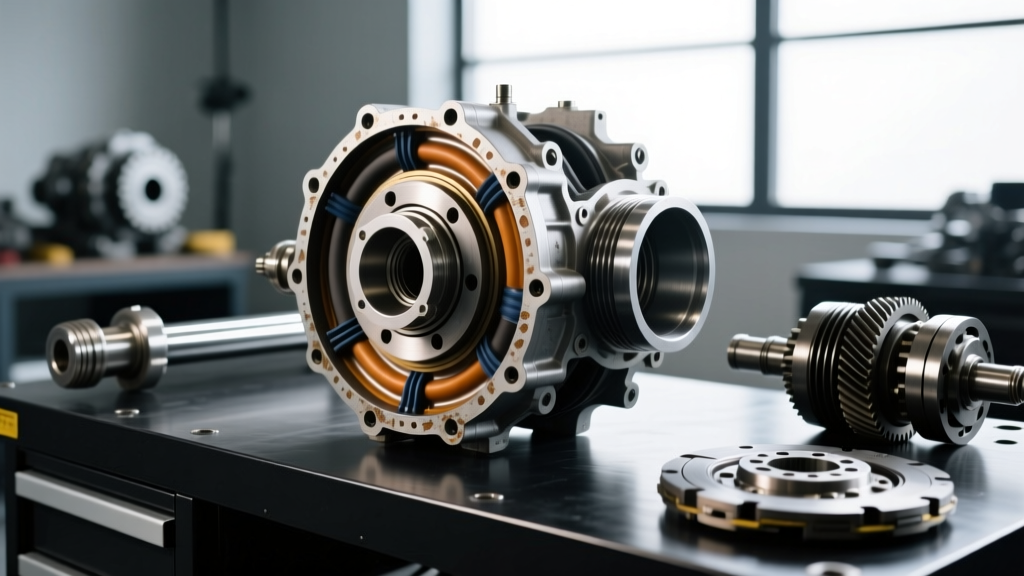
When the diagnosis confirms internal failure, the R&R (Removal and Replacement) procedure demands meticulous attention to fastener torque and software calibration. The ZF 8HP PHEV, widely documented in ZF's official passenger car transmission catalogs, requires specific alignment of the CPA (Centrifugal Pendulum Absorber) during installation.
- Flexplate-to-TC Bolts: Most hybrid flexplate bolts are Torque-To-Yield (TTY). For the Hyundai TMED and ZF 8HP applications, M8x1.0 bolts must be torqued to 25 Nm, followed by a 90-degree angle turn. Reusing these bolts will result in flexplate warping and immediate TCC shudder.
- TC Seating: Hybrids utilize deep-bell housings to accommodate the electric motor. Ensure the torque converter is fully seated into the transmission oil pump. Measure the distance from the bell housing mating surface to the TC mounting pad; it must meet the exact OEM specification (typically 12mm to 15mm recessed). Failure to seat the TC will crush the oil pump gears upon bell housing bolt tightening.
- Software Adaptation: Post-installation, the TCM must undergo a 'Fast Learn' or 'Clutch Adaptation' procedure. This forces the TCM to recalibrate the apply pressure curves for the new TCC friction material. Skipping this step will cause the new torque converter to shudder within the first 50 miles of driving.
Final Thoughts on Hybrid Drivetrain Diagnostics
Diagnosing torque converter issues in hybrid vehicles requires a paradigm shift from traditional transmission repair. Technicians must bridge the gap between mechanical fluid dynamics and high-voltage electrical systems. By relying on live PID data, understanding the specific architecture (TMED vs. PHEV vs. eCVT Damper), and adhering to strict HV safety and torque specifications, you can accurately justify the transmission torque converter replacement cost and restore the seamless drivability that hybrid owners expect. For further technical bulletins and rebuild specifications, professionals should regularly consult resources from the Automatic Transmission Rebuilders Association (ATRA).