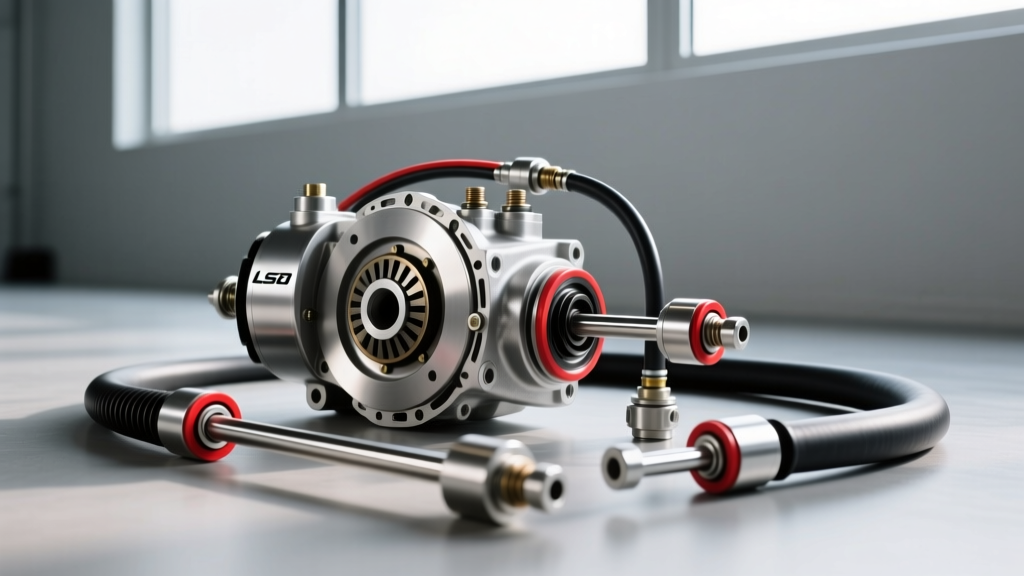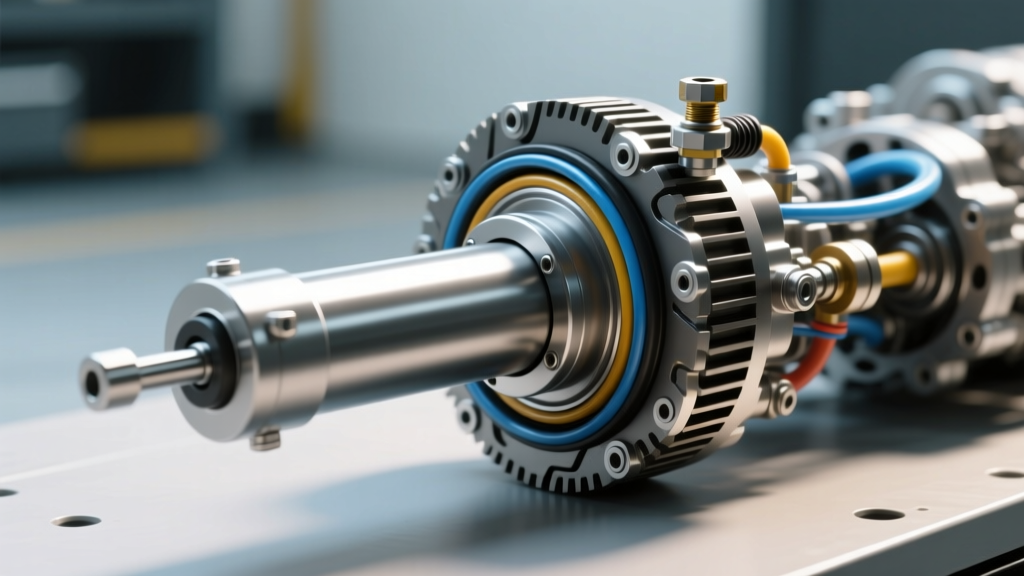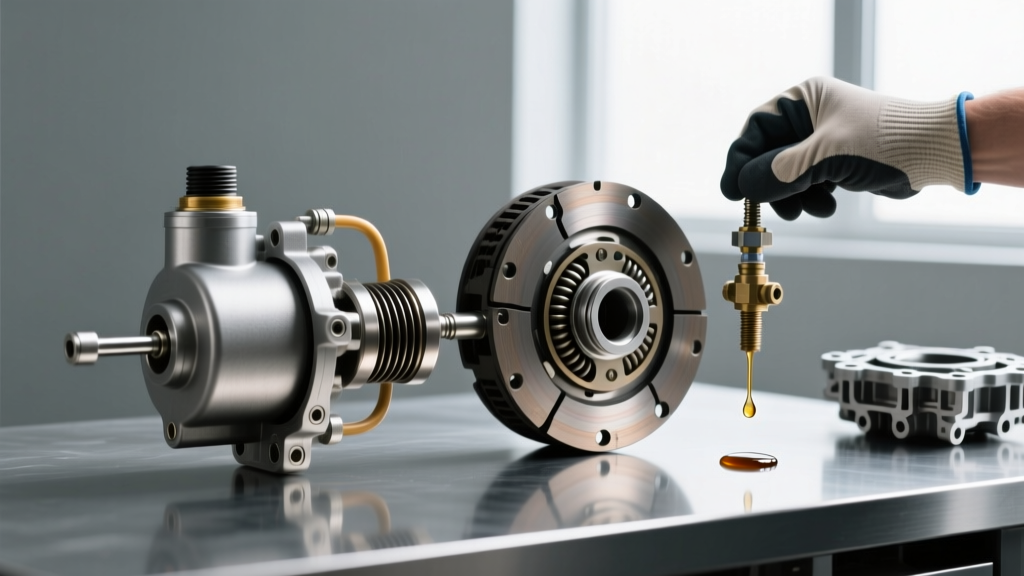
The Hydraulic Clutch Diagnostic Dilemma
Modern manual transmissions rely on a sealed, high-pressure hydraulic loop to translate pedal force into mechanical clutch disengagement. When this system degrades, the immediate result is compromised shifting, gear grinding, or a stranded vehicle. However, misdiagnosing the origin of the pressure drop is a costly mistake. Confusing internal clutch slave cylinder symptoms with the symptoms of clutch master cylinder failure is the difference between a straightforward $150 firewall repair and a $1,500+ transmission removal job.
In this 2026 comparison and buyer's guide, we dissect the exact failure modes, diagnostic procedures, and replacement strategies for both components. Whether you are driving a classic vehicle with an external pushrod slave or a modern performance car equipped with an internal Concentric Slave Cylinder (CSC) mated to a Tremec T56 Magnum or ZF S6-650, understanding the hydraulic topology is critical.
Deconstructing Clutch Slave Cylinder Symptoms
The slave cylinder is the terminus of the hydraulic circuit, mounted either on the exterior of the bellhousing or internally around the transmission input shaft. The symptoms vary drastically depending on this architecture.
External Slave Cylinder Failures
Common on older platforms and heavy-duty trucks, external slaves actuate a mechanical clutch fork. Failure signs include:
- Visible Fluid Weeping: DOT fluid pooling near the bellhousing inspection cover or dripping from the slave cylinder dust boot.
- Incomplete Fork Travel: The pushrod fails to extend the full 0.60 to 0.85 inches required to fully disengage the pressure plate fingers, resulting in gear clash when shifting into 1st or Reverse.
- Spongy Pedal with Reservoir Loss: The pedal feels mushy, and the master reservoir fluid level drops, yet the firewall remains completely dry.
Internal Concentric Slave Cylinder (CSC) Failures
Vehicles from the mid-2000s onward (e.g., GM LS-platform, Nissan Z, Porsche 997) utilize a CSC that rides directly on the transmission input shaft bearing sleeve. Diagnosing a failing CSC is more complex:
- The Bellhousing Weep Hole Drip: Because the CSC is sealed inside the bellhousing, fluid leaks internally. The only external clue is transmission fluid or brake fluid weeping from the bottom bellhousing inspection plug.
- Auditory Bearing Whine: A failing CSC integration bearing will emit a high-pitched metallic whine that changes pitch precisely with clutch pedal travel. This is frequently misdiagnosed as a worn transmission input shaft bearing.
- Pedal Vibration: As the CSC piston seals degrade and bypass fluid, high-frequency hydraulic pulses can be felt through the clutch pedal during engagement.
Identifying the Symptoms of Clutch Master Cylinder Failure
The master cylinder generates the hydraulic pressure. When diagnosing drivetrain issues, accurately identifying the symptoms of clutch master cylinder failure requires inspecting the firewall and cabin before ever looking under the car.
Primary Master Cylinder Failure Modes
- Internal Seal Bypass (The 'Sinking Pedal'): If you hold the clutch pedal depressed at a red light and it slowly sinks toward the floor, the internal primary cup seal inside the master cylinder bore is bypassing fluid back into the reservoir. There are no external leaks, but hydraulic pressure cannot be maintained.
- External Firewall Leak: Fluid pooling on the engine bay side of the firewall, directly behind the master cylinder reservoir. This indicates a failed pushrod boot or rear piston seal.
- Cabin Footwell Leak: Fluid dripping onto the driver's side carpet or pedals. This occurs when the master cylinder's rear seal fails, allowing fluid to bypass the firewall gasket and enter the cabin.
- Reservoir Starvation: A cracked plastic reservoir tank or degraded O-ring where the tank seats into the master cylinder body, leading to air ingestion and a spongy pedal without significant fluid loss.
Diagnostic Comparison Matrix
Use the following matrix to isolate the faulty component based on physical evidence and pedal feedback.
| Diagnostic Metric | Slave Cylinder (Internal CSC) | Slave Cylinder (External) | Master Cylinder |
|---|---|---|---|
| Primary Leak Location | Bellhousing weep hole | External pushrod / boot | Firewall or cabin footwell |
| Pedal Feel | Spongy, may have vibrations | Spongy, low engagement point | Sinking under constant pressure |
| Fluid Reservoir Status | Dropping rapidly | Dropping rapidly | Dropping or empty (if external leak) |
| Labor Intensity (2026 Avg) | High (Transmission R&R) | Low (External access) | Low (Firewall access) |
| Auditory Clues | Whine changing with pedal travel | Squeak at clutch fork pivot | Squeak at pedal pushrod pin |
2026 Buyer's Guide: OEM vs. Aftermarket Selection
When replacing hydraulic components, the old adage 'buy once, cry once' applies heavily—especially for internal CSCs where labor dictates the true cost of the repair.
Concentric Slave Cylinders (CSC)
Never install unbranded, ultra-budget CSCs from online marketplaces. The labor to pull a transmission (e.g., 6.5 hours book time on a C7 Corvette or Ford Mustang GT) demands Tier 1 OEM suppliers.
- Schaeffler (LuK): The gold standard for European and domestic CSCs. Look for the LuK RepSet which includes the CSC, clutch disc, and pressure plate. (e.g., LuK LSC125 for GM LS applications). Price Range: $180 - $320.
- Sachs / ZF: OEM for Porsche, BMW, and Audi manual platforms. Sachs SH series cylinders feature upgraded internal PTFE seals that resist the high thermal loads of modern dual-mass flywheel setups. Price Range: $140 - $260.
- Exedy: Excellent for JDM and high-performance applications (Subaru WRX, Nissan 370Z). Price Range: $120 - $220.
For deep technical validation on CSC integration, refer to the Schaeffler LuK CSC Technical Guide.
Master Cylinders
- FTE Automotive: OEM supplier for Ford and GM. Their aluminum-bore master cylinders resist the micro-pitting that plagues cheap cast-iron reproductions. Price Range: $80 - $160.
- Dorman: Acceptable for budget repairs on daily drivers, but their plastic reservoir welds are known to degrade faster under high under-hood temperatures. Price Range: $45 - $90.
Always cross-reference part numbers via a verified catalog like the RockAuto Clutch Hydraulic Catalog to ensure exact bore diameter matching (typically 5/8' or 3/4' for most passenger vehicles).
Critical Installation Specs: Torque & Fluid Dynamics
Proper installation and bleeding are where most DIY and generalist mechanics fail. Adhere strictly to these parameters.
Torque Specifications
- Slave Cylinder Mounting (Bellhousing): Most internal and external slaves utilize M8x1.25 bolts. Torque to 18-22 lb-ft (25-30 Nm). Over-torquing can crack the cast aluminum slave body or strip the magnesium bellhousing threads.
- Master Cylinder Firewall Nuts: Typically M8 or 5/16' hardware. Torque to 10-15 lb-ft (14-20 Nm). Always use a new crush gasket between the master cylinder and the firewall to prevent cabin vapor leaks.
- Hydraulic Line Banjo Bolts: If your system uses banjo fittings at the slave, torque to 12-15 lb-ft with new copper crush washers. Never reuse copper washers.
Fluid Selection and Bleeding Protocol
Modern clutch systems share fluid with the brake system or utilize standalone DOT fluid reservoirs. According to the SAE J1703 Motor Vehicle Brake Fluid Standard, fluid must maintain specific boiling points under duress.
- Fluid Type: Use DOT 4 LV (Low Viscosity) or DOT 5.1. LV fluids are critical for modern vehicles with ABS-integrated clutch delay valves (e.g., GM Camaro ZL1) to ensure rapid hydraulic response in cold weather. Avoid DOT 5 (Silicone), as it is compressible and will result in a permanently spongy clutch pedal.
- High-Performance Pick: Motul RBF 600 or Castrol SRF for track vehicles, offering dry boiling points over 590°F (310°C) to prevent vapor lock near exhaust headers.
- Bleeding Technique: Gravity bleeding is insufficient for modern hard lines with complex routing and 'loop' traps. Use a Reverse Pressure Bleeder (like the Motive Power Bleeder) attached to the slave cylinder bleeder screw. Pushing fluid UP into the master cylinder reservoir forces air bubbles to rise naturally against the flow of gravity, ensuring a rock-hard pedal in a single pass.
Final Diagnosis Verdict
When confronted with a failing hydraulic clutch, always start your diagnosis at the firewall. If the master cylinder is dry and the pushrod is firm, the fault lies downstream. If you find fluid inside the bellhousing weep hole, prepare for a transmission drop and invest in a premium Tier 1 CSC kit. By accurately differentiating clutch slave cylinder symptoms from the symptoms of clutch master cylinder failure, you save time, money, and the frustration of repeating a repair.