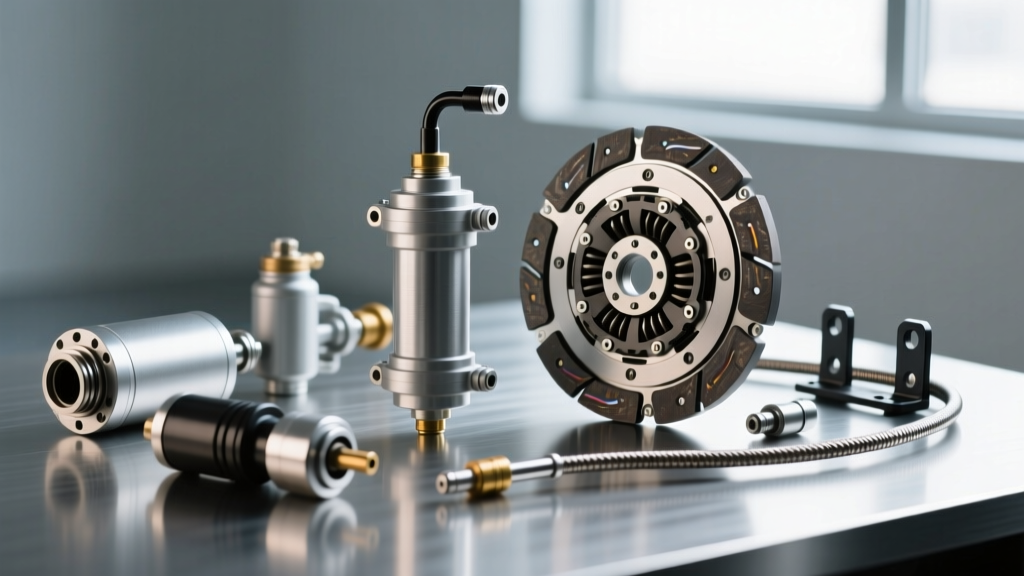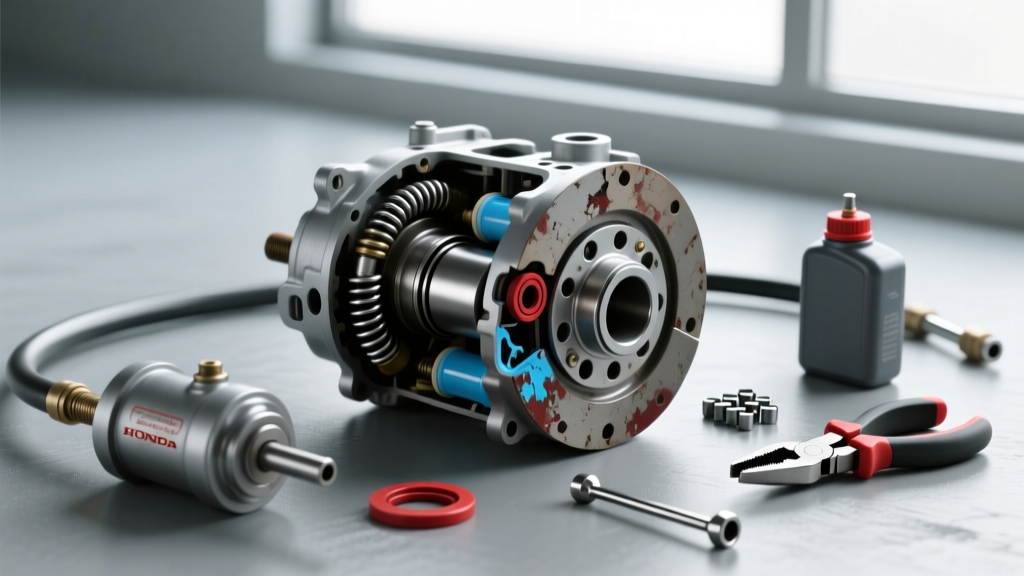
The Symbiosis of Master Fluid and Slave Longevity
In modern manual transmission platforms, the hydraulic actuation system is a closed-loop marvel of fluid dynamics. Yet, it remains one of the most neglected maintenance items in the drivetrain. As we navigate the 2026 automotive landscape, where lightweight dual-mass flywheels and high-clamp-load pressure plates demand precise hydraulic modulation, understanding the relationship between your clutch master cylinder fluid and the slave cylinder's operational lifespan is critical. Preventive maintenance in this sector is not merely about topping off reservoirs; it is about preserving the microscopic tolerances of EPDM (Ethylene Propylene Diene Monomer) seals and preventing catastrophic hydraulic bypass.
This guide bridges the gap between upstream fluid chemistry and downstream mechanical actuation, providing a definitive clutch slave cylinder location guide while establishing a rigorous preventive maintenance baseline for your hydraulic system.
Clutch Master Cylinder Fluid: Chemistry and Preventive Care
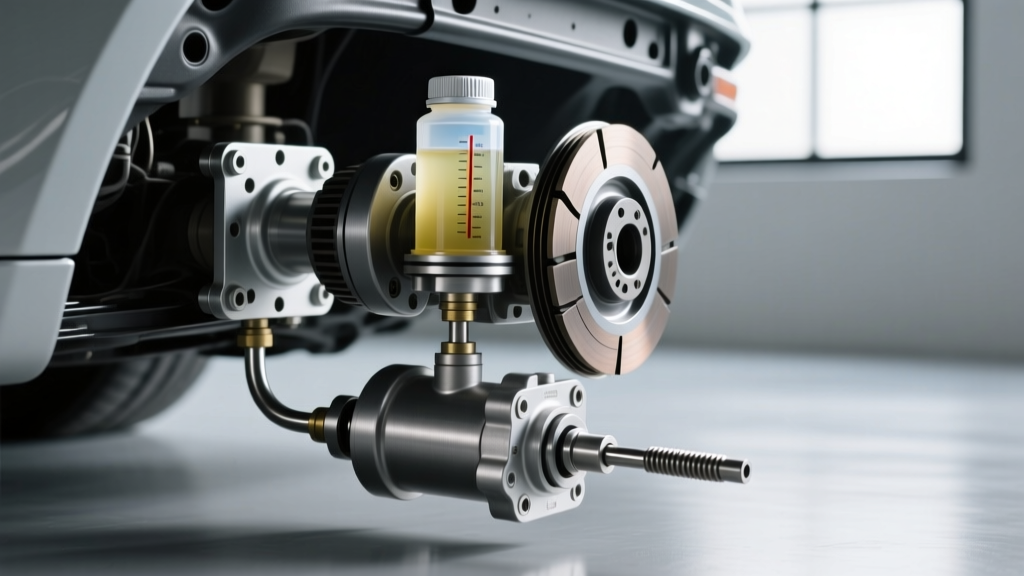
The fluid residing in your master cylinder reservoir is the lifeblood of the entire actuation system. Most OEMs specify DOT 3 or DOT 4 glycol-ether-based fluids. These fluids are inherently hygroscopic, meaning they absorb ambient moisture over time through microscopic pores in rubber hoses and reservoir breather caps.
The Moisture Threat to Slave Cylinders
When clutch master cylinder fluid exceeds a 3% water content by volume, its boiling point plummets, and its corrosive properties accelerate. More importantly to the slave cylinder, water ingress causes internal pitting on the aluminum or steel bore of the slave cylinder. This pitting shreds the delicate slave cylinder piston seals during the high-pressure actuation cycles (which routinely exceed 1,500 PSI during clutch disengagement). Once the seal is compromised, fluid bypasses the piston, resulting in a pedal that drops to the floor and refuses to return.
Fluid Specifications and Service Intervals
To protect the slave cylinder, fluid must be flushed before moisture saturation occurs. Below is the industry-standard preventive maintenance matrix for hydraulic clutch fluids.
| Fluid Type | Viscosity (at -40°C) | Dry Boiling Point | Wet Boiling Point (3.7% H2O) | Preventive Change Interval |
|---|---|---|---|---|
| DOT 3 (Standard OEM) | < 1,500 cSt | 205°C (401°F) | 140°C (284°F) | Every 2 Years / 30,000 Miles |
| DOT 4 (e.g., ATE SL.6) | < 750 cSt | 265°C (509°F) | 175°C (347°F) | Every 2 Years / 30,000 Miles |
| DOT 5.1 (Low Viscosity) | < 750 cSt | 270°C (518°F) | 190°C (374°F) | Every 3 Years / 45,000 Miles |
| DOT 5 (Silicone-Based) | N/A | 260°C (500°F) | 180°C (356°F) | Not Recommended (Swells EPDM) |
Expert Note: Never use DOT 5 silicone fluid in a system designed for glycol-based fluids. Silicone fluid will cause the EPDM seals in both the master and slave cylinders to swell and fail within weeks. For optimal ABS module compatibility and rapid slave cylinder actuation in modern drive-by-wire manual conversions, low-viscosity DOT 4 or DOT 5.1 (such as ATE SL.6) is the 2026 gold standard.
Tracing the Line: Clutch Slave Cylinder Location Guide
Once you have verified the integrity and moisture content of your clutch master cylinder fluid, the next step in preventive maintenance is locating and inspecting the slave cylinder. Slave cylinder architecture is dictated by the transmission bellhousing design and clutch fork geometry. They broadly fall into two categories: External (Push-Type) and Concentric (Internal/Pull-Type).
1. External Slave Cylinders (Push-Type Architecture)
External slave cylinders are mounted on the exterior of the transmission bellhousing. They feature a visible pushrod that actuates a mechanical clutch fork, which in turn pivots the release bearing against the pressure plate diaphragm spring.
- Common Platforms: Tremec T56 Magnum, GM LS-series manual swaps, Honda K-Series (K20/K24), Nissan CD009.
- Location Identifier: Follow the hard line or flexible rubber hose from the chassis down to the bellhousing. The cylinder is typically bolted to the exterior aluminum casing, often on the passenger side (GM) or front-facing (Honda).
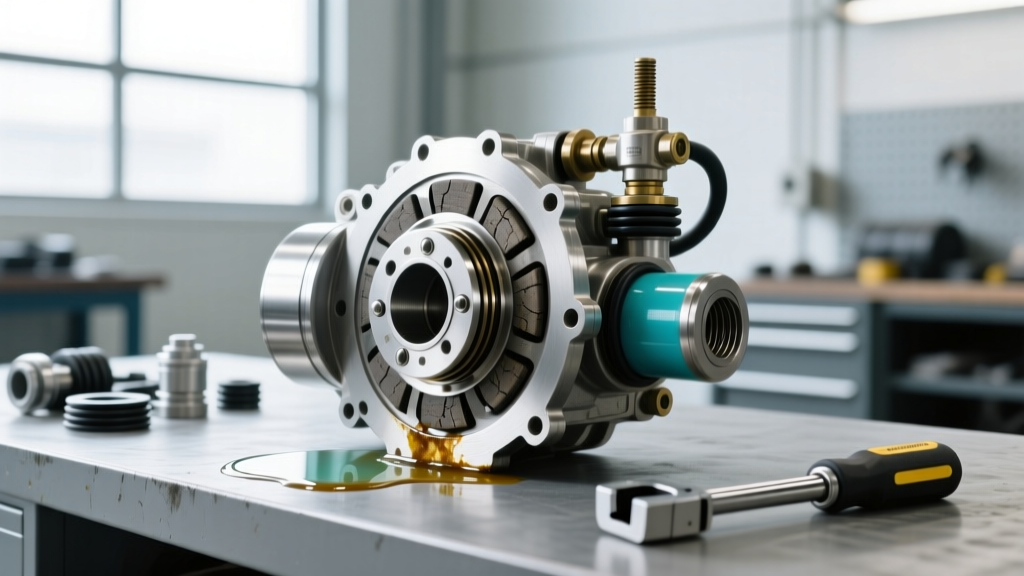
- Preventive Inspection: Check the rubber dust boot at the base of the pushrod. If it is torn, or if you see amber/brown fluid weeping from the boot, the internal bore is already pitted. Inspect the clutch fork pivot ball for wear, as a worn pivot ball alters the slave cylinder's stroke geometry, causing premature seal wear.
2. Concentric Slave Cylinders (CSC / Internal Architecture)
The Concentric Slave Cylinder (CSC) wraps directly around the transmission input shaft, residing entirely inside the bellhousing. It eliminates the mechanical clutch fork, pushing (or pulling) the release bearing directly against the pressure plate. This design reduces moving mass and improves pedal feel but makes inspection significantly more difficult.
- Common Platforms: Ford MT-82 (Mustang), ZF S6-650 (Super Duty), GM 6L80/8L90 manual conversion kits, Porsche G50/G51.
- Location Identifier: Hidden beneath the bellhousing. The only external evidence is the hydraulic line entering a sealed grommet at the top or side of the bellhousing, and a critical inspection weep hole located at the absolute lowest point of the bellhousing casing.
- Preventive Inspection: Because you cannot see the CSC without dropping the transmission, you must inspect the bellhousing weep hole. Use a boroscope camera and a high-lumen flashlight to look inside the weep hole. If you see a steady drip of brake fluid, or a buildup of dark, wet clutch dust, the CSC seal has failed. According to LuK REPXPERT guidelines, CSCs should always be replaced whenever the clutch assembly is serviced, regardless of apparent health, due to the high labor cost of transmission removal.
Platform-Specific Location, Torque, and Part Data
Proper preventive maintenance requires adhering to exact torque specifications during any hydraulic line disconnection or bleeding procedure. Over-torquing a bleeder valve will snap the screw inside the slave body, ruining a $150 component.
| Transmission Model | Slave Architecture | Physical Location | Bleeder / Mount Torque Spec | Est. Replacement Cost (2026) |
|---|---|---|---|---|
| Tremec T56 Magnum | External Push | Passenger Side Bellhousing | Bleeder: 8 Nm / Mount: 25 Nm | $60 - $120 (Part Only) |
| Ford MT-82 | Internal CSC | Inside Bellhousing (Input Shaft) | Banjo Bolt: 15 Nm / Line: 12 Nm | $250 - $400 + $800 Labor |
| Honda K20 / K24 | External Push | Front Transmission Case | Bleeder: 7 Nm / Mount: 12 Nm | $40 - $90 (Part Only) |
| ZF S6-650 (Ford Diesel) | Internal CSC | Inside Bellhousing (Pull-Type) | Quick-Connect: Hand-Tight + Clip | $350 - $600 + $1,200 Labor |
Step-by-Step Preventive Maintenance Protocol
To ensure your clutch master cylinder fluid remains pristine and your slave cylinder seals are protected from abrasive particulates, perform this protocol every 24 months.
Step 1: Moisture and Particulate Testing
Remove the master cylinder reservoir cap. Inspect the fluid surface. If it appears dark brown or black, the rubber hoses are degrading internally, sending microscopic EPDM particulates downstream. These particulates will lodge in the slave cylinder's internal return port, causing the clutch to drag and generating excessive heat that destroys the transmission input shaft seal. Use a digital brake fluid moisture tester; if the LED indicates >2% moisture, a full flush is mandatory.
Step 2: Reverse-Bleeding the System
Traditional gravity bleeding or pump-and-hold methods often trap micro-bubbles in the high loops of the hydraulic line or inside the slave cylinder bore itself. For preventive maintenance, reverse bleeding is superior. By attaching a pressure bleeder to the slave cylinder bleeder valve and pushing fresh, clean DOT 4 fluid upward into the master cylinder reservoir, you force trapped air and heavy, moisture-laden fluid out of the top. This ensures the slave cylinder is packed with dense, incompressible fluid, preserving pedal firmness and reducing the mechanical shock to the slave piston seals.
Step 3: Weep Hole and Boot Verification
With the system pressurized (have an assistant hold the clutch pedal to the floor, generating static line pressure), inspect the external slave cylinder pushrod boot for ballooning or leaks. For internal CSC applications, shine a light into the bellhousing weep hole. A dry weep hole confirms the internal seals are successfully retaining the high-pressure fluid, validating the preventive service.
Conclusion: The Cost of Neglect
The financial disparity between maintaining your clutch master cylinder fluid and replacing a failed slave cylinder is staggering. A preventive fluid flush utilizing a premium low-viscosity DOT 4 fluid costs less than $25 and takes 30 minutes. Conversely, ignoring fluid degradation in a vehicle equipped with an internal Concentric Slave Cylinder (like the Ford MT-82 or ZF S6-650) will inevitably lead to fluid dumping inside the bellhousing. This contaminates the clutch friction material and flywheel, transforming a simple hydraulic service into a $2,500+ drivetrain extraction and rebuild. By mastering the locations, torque specs, and fluid chemistry outlined in this guide, you ensure your manual transmission actuation system remains crisp, reliable, and structurally sound for hundreds of thousands of miles.