Defining the Legacy Workhorse: What Is a Six Speed Automatic Transmission?
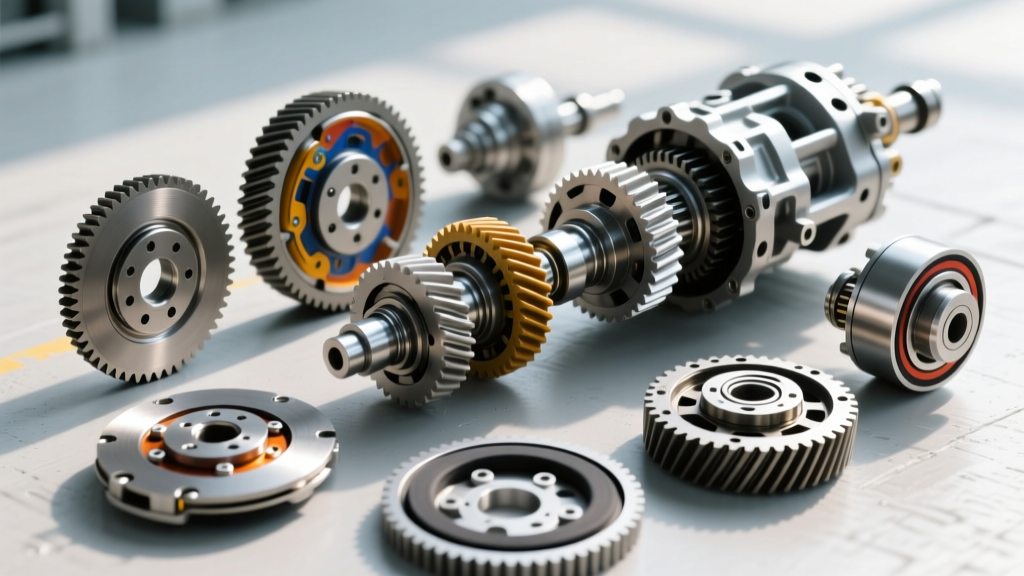
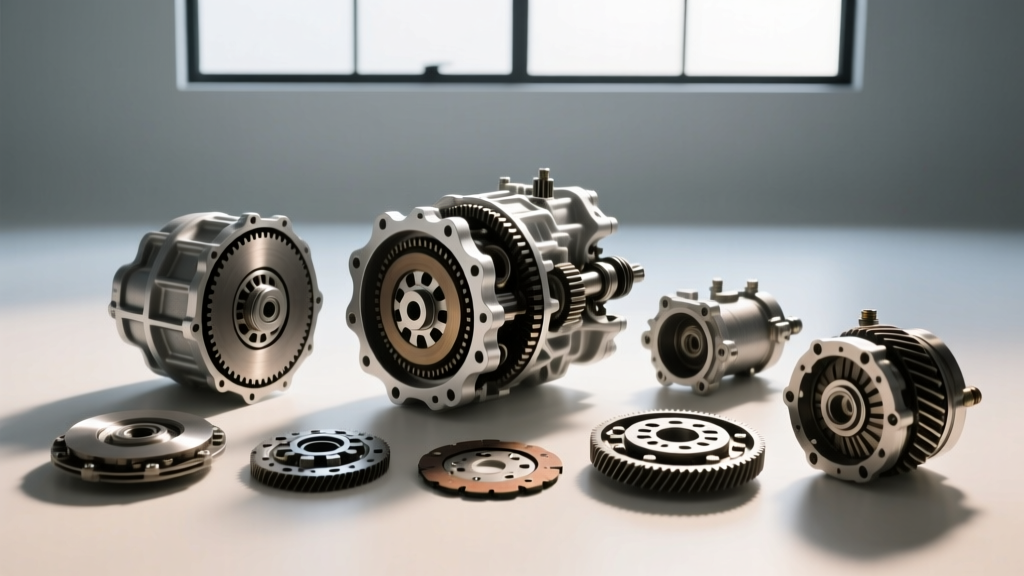
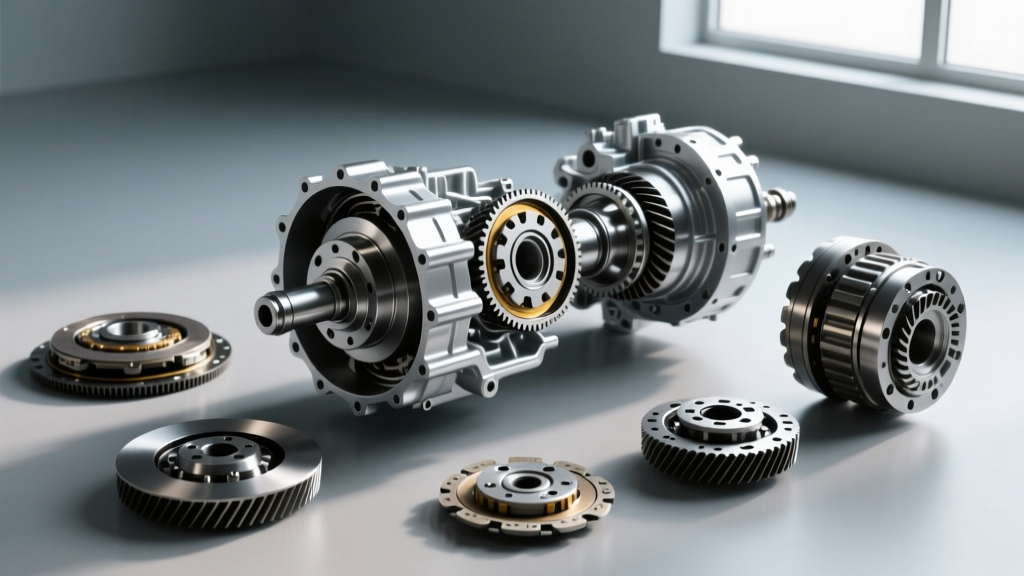
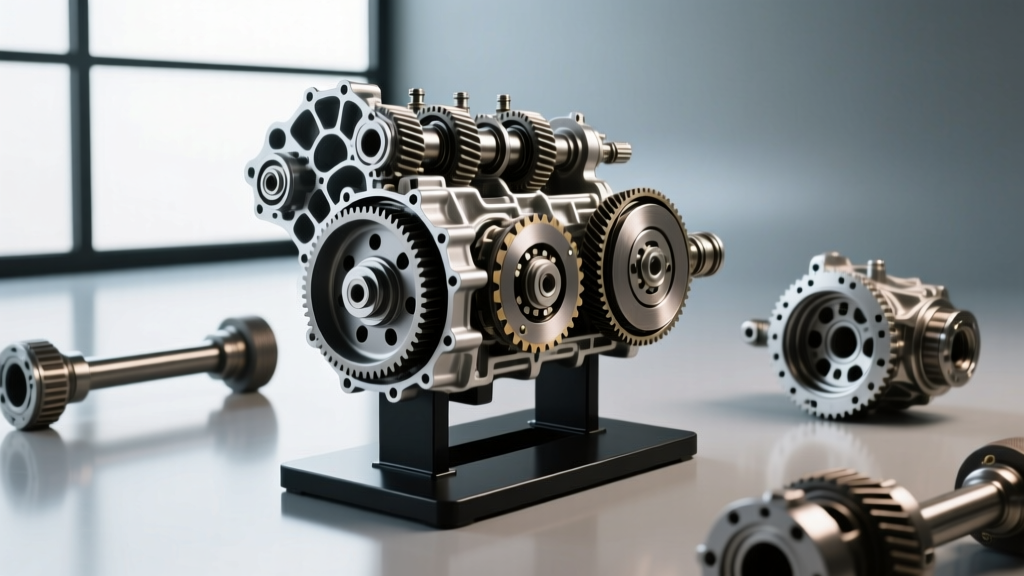
As the automotive landscape of 2026 shifts heavily toward 10-speed automatics, dual-clutch systems, and single-speed EV reducers, technicians and enthusiasts frequently ask: what is six speed automatic transmission technology, and why does it still dominate the global repair landscape? Fundamentally, a six-speed automatic is a complex drivetrain component that utilizes a combination of planetary gearsets—most commonly the Lepelletier or Simpson compound arrangements—and electronically modulated hydraulic clutch packs to provide six distinct forward gear ratios. This design allows internal combustion engines to operate within their optimal torque and efficiency bands across a wider spread of vehicle speeds compared to older 4-speed or 5-speed units.
While automakers have largely moved on from the 6-speed in new passenger vehicles, millions of these transmissions are currently in their prime failure windows (120,000 to 180,000 miles). Diagnosing a 6-speed automatic is not a one-size-fits-all process. The symptoms, failure modes, and diagnostic protocols vary wildly depending on the vehicle type, drivetrain layout, and the specific manufacturer's engineering philosophy. Below, we break down how to troubleshoot the most prolific 6-speed platforms by vehicle category.
Heavy-Duty RWD Trucks & SUVs: The GM 6L80 and 6L90
Introduced in the mid-2000s and produced well into the late 2010s, the GM 6L80 and its heavy-duty sibling, the 6L90, are ubiquitous in Silverado, Sierra, Tahoe, and Escalade platforms. These rear-wheel-drive (RWD) longitudinal transmissions are designed to handle massive towing loads, but their specific architecture creates unique diagnostic scenarios.
Symptom: Torque Converter Shudder and 3-5-R Clutch Failure
The most frequent complaint from truck owners is a rhythmic shudder under light throttle at highway speeds (usually between 40-55 mph), often accompanied by harsh 3-4 shifts or a complete loss of 3rd, 5th, and Reverse gears.
- Diagnosis: The shudder is frequently misdiagnosed as a failing torque converter. However, in the 6L80, this is often caused by debris from the 3-5-R clutch wave plate fracturing and contaminating the torque converter clutch (TCC) apply circuit. If the vehicle throws a P2723 (Pressure Control Solenoid 5 Electrical) or P0741 (TCC System Stuck Off), do not simply replace the converter.
- Technical Action: Drop the transmission pan. The 6L80 utilizes a TEHCM (Transmission Electro-Hydraulic Control Module) mounted directly inside the pan. Inspect the fluid for fine brass or metallic glitter, which indicates wave plate disintegration. If debris is present, a complete teardown, valve body flush, and TEHCM replacement are mandatory. Reusing a contaminated TEHCM will destroy the replacement solenoids within 500 miles.
- Specs & Torque: The 6L80 requires Dexron VI fluid. Dry fill capacity is 11.2 liters (11.8 quarts). When reinstalling the pan, the M6x1.0 bolts must be torqued to exactly 10 Nm (89 lb-in) in a crisscross pattern to prevent TEHCM pin misalignment.
FWD & AWD Crossovers: The Aisin TF-80SC and AW F21
Transverse-mounted 6-speed automatics face entirely different thermal and packaging constraints. The Aisin TF-80SC (and its variants like the AW F21) powers millions of front-wheel-drive and all-wheel-drive crossovers, including the Volvo XC90, Cadillac SRX, and Mazda CX-9. To fit transversely, Aisin utilized a compact Lepelletier gearset, combining a simple planetary with a Ravigneaux set.
Symptom: Harsh 2-3 Shifts and 4-5 Downshift Flares
Owners of aging FWD crossovers often report a 'banging' sensation during the 2-3 upshift when the engine is cold, or a severe RPM flare when downshifting from 5th to 4th gear while decelerating.
- Diagnosis: Unlike the GM trucks where hard parts fail, the Aisin transverse units suffer from hydraulic control degradation. The primary culprit is wear in the valve body's lock-up control valve bore and the clogging of micro-solenoid screens by degrading clutch material. According to Sonnax Technical Resources, the continuous stop-start traffic of modern commuting accelerates this specific valve body bore wear, causing hydraulic cross-leaks.
- Technical Action: Before condemning the transmission, perform a line pressure test and command the solenoids via a bi-directional scanner. If the solenoid duty cycles are maxing out to compensate for pressure drops, the valve body must be rebuilt or replaced with a sleeved aftermarket unit. Furthermore, a fluid exchange using the correct AW-1 (or specific OEM equivalent like Toyota WS or Volvo 31256774) fluid can sometimes restore shift quality if caught early. Total fluid capacity is typically around 7.5 liters.
Performance & Sports Cars: Ford 6R80 and ZF 6HP
In the performance and light-duty truck sector, the Ford 6R80 (a licensed derivative of the ZF 6HP26) is legendary. Found in the 2011-2017 Mustang, F-150, and various European sports sedans, this transmission prioritizes rapid shift speeds and high-RPM torque handling.
Symptom: Sudden Limp Mode and the 'Wrench' Light
A driver accelerating onto a highway may experience a sudden loss of gear indication on the dash, a 'wrench' or check engine light, and the vehicle locking itself into 3rd or 5th gear (limp mode). Restarting the car temporarily clears the issue.
- Diagnosis: This is the hallmark of a failed molded leadframe. The leadframe is a plastic and metal assembly that houses the Output Speed Sensor (OSS) and Turbine Speed Sensor (TSS). Over time, engine bay heat cycles and transmission fluid immersion cause the solder joints connecting the sensors to the wiring harness to crack. This triggers P0720 (Output Speed Sensor Circuit Malfunction) or P0715 (Input/Turbine Speed Sensor Circuit).
- Technical Action: Fortunately, this does not require transmission removal. The leadframe is accessible by dropping the transmission pan and unbolting the mechatronic (valve body) assembly. When replacing the leadframe, it is highly recommended to replace the mechatronic adapter seal (the ZF-style sleeve) simultaneously, as these rubber seals harden and cause hydraulic leaks that lead to low line pressure. As noted in industry analyses by Transmission Digest, failing to replace the adapter seal during a leadframe job is a leading cause of comeback complaints for 6R80 and ZF 6HP units.
- Specs & Fluid: The Ford 6R80 requires Mercon LV fluid, while ZF applications require ZF LifeguardFluid 6. Using the incorrect fluid in these highly sensitive ZF-designed mechatronics will result in immediate shift timing errors due to differing friction modifiers.
6-Speed Platform Diagnostic Cheat Sheet
When a vehicle rolls into the bay, identifying the transmission family is the first step in accurate troubleshooting. Use the table below as a rapid-reference guide for the most common 6-speed automatics.
| Transmission Model | Typical Vehicle Types | Common Failure Point | Primary DTCs | OEM Fluid Spec |
|---|---|---|---|---|
| GM 6L80 / 6L90 | RWD Trucks, SUVs (Silverado, Tahoe) | 3-5-R Wave Plate, TEHCM | P2723, P0741 | Dexron VI |
| Aisin TF-80SC | FWD/AWD Crossovers (Volvo, Mazda) | Valve Body Bore Wear | P0741, P0851 | AW-1 / OEM Specific |
| Ford 6R80 | RWD Performance, Trucks (Mustang, F-150) | Molded Leadframe (OSS/TSS) | P0720, P0715 | Mercon LV |
| ZF 6HP26/28 | RWD Luxury, Sports (BMW, Jaguar) | Mechatronic Adapter Seal | P0730, P17F0 | ZF Lifeguard 6 |
The 2026 Diagnostic Protocol: Beyond the Code Reader
In the modern repair environment, simply pulling an OBD2 code is insufficient for diagnosing a six-speed automatic. The integration of the Transmission Control Module (TCM) into the transmission housing (as seen in the GM TEHCM and ZF/Ford Mechatronic units) means that electrical faults and hydraulic faults often mimic one another.
Expert Rule of Thumb: Never replace an internal electronic component based solely on a solenoid circuit code. Always verify hydraulic line pressure and perform a solenoid apply chart test using a bi-directional scanner to confirm whether the fault is electrical (open/short circuit) or hydraulic (stuck valve, leaking clutch piston).
Furthermore, fluid analysis remains a critical, underutilized diagnostic tool. The color and smell of the fluid tell a story that a scanner cannot. Burnt-smelling fluid with a dark brown hue indicates clutch pack slippage, often caused by a failing seal ring on the clutch drum rather than the friction material itself. Conversely, fluid that looks clean but contains microscopic metallic dust (visible only when wiped on a white paper towel) points to thrust bearing or planetary gear degradation.
Final Thoughts on 6-Speed Longevity
Understanding what a six speed automatic transmission is requires acknowledging its role as the bridge between older, purely hydraulic transmissions and modern, hyper-complex 10-speed units. While they are no longer the cutting edge of automotive engineering, their robust mechanical designs mean that with precise, vehicle-specific diagnostics and adherence to strict torque and fluid specifications, these transmissions can reliably exceed 250,000 miles. For technicians and DIYers in 2026, mastering the nuances of the 6L80, TF-80SC, and 6R80 is not just about preserving history—it is about maintaining the backbone of the current global vehicle fleet.