Decoding the 2011 Silverado Rear Differential Fluid Capacity
The 2011 Chevrolet Silverado remains a benchmark in GM’s light and heavy-duty truck lineage, utilizing robust solid rear axles that require precise maintenance to survive high-torque applications. When owners and technicians search for the 2011 silverado rear differential fluid capacity, they are frequently met with conflicting forum advice. The exact volume depends entirely on the ring gear diameter and the specific RPO (Regular Production Option) code stamped on your glovebox tag.
As of 2026, maintaining these aging axles with modern synthetic lubricants is more critical than ever to prevent bearing failure and clutch pack degradation. Below is the definitive factory-specification capacity chart for the most common 2011 Silverado rear axles.
| Axle Type & Ring Gear | RPO Codes | Fluid Capacity | Recommended Viscosity |
|---|---|---|---|
| 8.25" 10-Bolt (Semi-Floating) | GU6, GT4, G80 | 2.1 Quarts (2.0 Liters) | 75W-90 Synthetic GL-5 |
| 9.5" 14-Bolt (Semi-Floating) | GT4, G80, G86 | 2.75 Quarts (2.6 Liters) | 75W-90 Synthetic GL-5 |
| 10.5" 14-Bolt (Full-Floating 2500HD) | GT4, G80 | 3.5 Quarts (3.3 Liters) | 75W-90 Synthetic GL-5 |
Expert Note: Always fill the differential until the fluid level is exactly flush with the bottom edge of the fill hole. Overfilling causes aeration and seal blowouts, while underfilling leads to catastrophic ring and pinion scoring.
The Anatomy of GM’s Limited Slip and Locking Differentials
To properly service the rear axle, you must understand the mechanical operation of the differential carrier installed in your 2011 Silverado. GM predominantly utilized two distinct traction-aiding devices in this era: the traditional clutch-type Limited Slip Differential (LSD) and the legendary Eaton G80 Automatic Locking Differential.
Clutch-Type LSD Operation
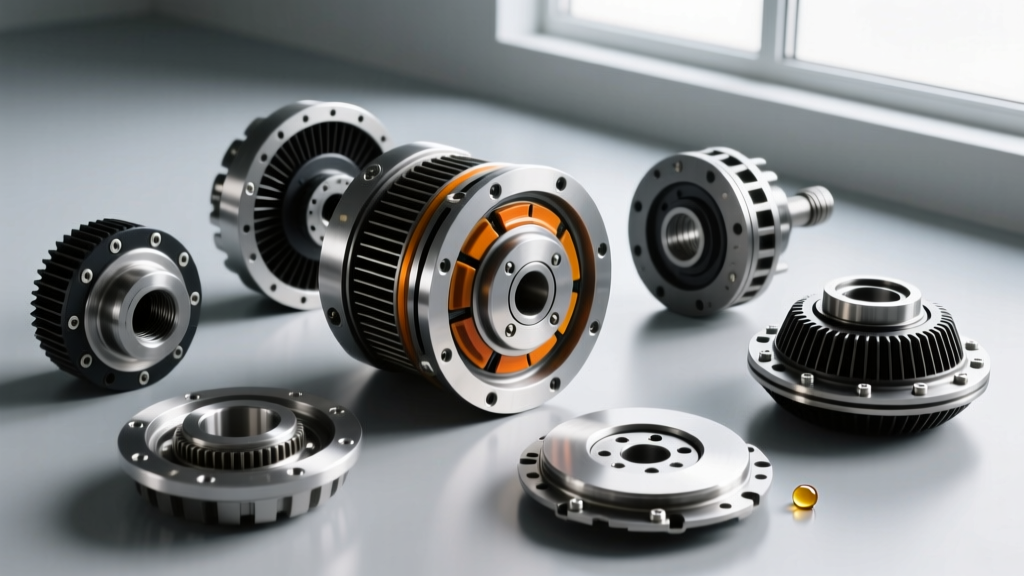
Traditional clutch-type LSDs (such as the Auburn or Eaton Posi units found in performance trims) utilize a stack of friction clutches positioned between the side gears and the carrier case. Pre-load springs force these clutch packs together. When torque is applied, the friction resists the speed differential between the left and right axles, transferring power to the wheel with traction. Over time, the friction material wears, and the clutch packs glaze, leading to the infamous 'one-wheel peel' failure mode.
The Eaton G80: Locking vs. Limited Slip
Most 2011 Silverados equipped with the Z71 or trailering packages feature the RPO G80. While often colloquially called a 'limited slip,' the Eaton G80 is technically an automatic locking differential. It uses a flyweight governor mechanism. When a speed difference of 100-150 RPM is detected between the left and right wheels, the flyweight swings outward, engaging a latching bracket that mechanically locks the left and right axles together via a clutch pack. Once locked, both wheels turn at the exact same speed until the vehicle exceeds 20 MPH or torque is reversed, at which point the governor disengages.
Fluid Dynamics: GL-5 Gear Oil and Friction Modifiers
The hypoid gear design of the Silverado's ring and pinion generates immense sliding friction, necessitating an API GL-5 rated gear oil. According to the American Petroleum Institute's gear oil specifications, GL-5 fluids contain high levels of sulfur-phosphorus extreme pressure (EP) additives designed to protect the gear teeth under heavy shock loads.
The Friction Modifier Debate
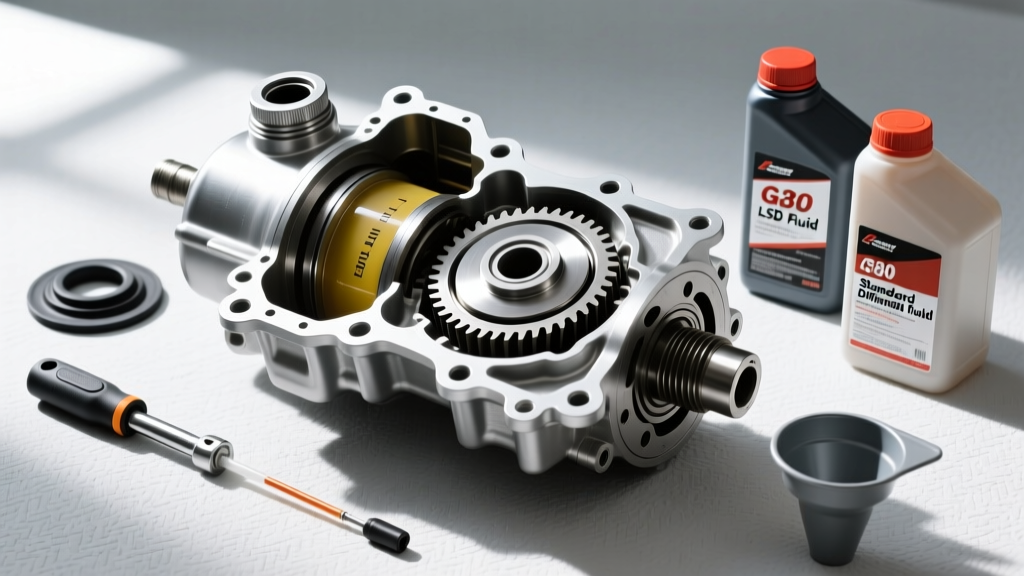
If your 2011 Silverado is equipped with a traditional clutch-type LSD (not the G80 locker), the fluid must contain a friction modifier. Without it, the clutch packs will experience 'stick-slip' friction during low-speed cornering, resulting in a violent shuddering or 'chatter' from the rear axle.
- GM Friction Modifier Additive: P/N 1052358 (4 oz bottle). Add one bottle before topping off with gear oil.
- Pre-Mixed Synthetics: Modern synthetic oils like Mobil 1 Synthetic Gear Lube 75W-90 or Amsoil Severe Gear already contain LSD friction modifiers, eliminating the need for the separate GM additive.
- G80 Locker Exception: The Eaton G80 locker does not strictly require the limited-slip friction modifier for its locking mechanism to function. However, GM officially recommends using the modifier (or a pre-mixed LSD fluid) to ensure the internal clutch pack—which smooths the engagement of the locker—operates quietly and avoids premature wear.
Precision Service: Step-by-Step Axle Maintenance
Performing a differential fluid service on a 2011 Silverado is a straightforward but messy procedure. Budget approximately $50 to $80 for high-quality synthetic fluid, RTV sealant, and brake cleaner if doing it yourself, or expect to pay $130 to $180 at an independent drivetrain shop.
Required Tools and Materials
- 3/8" and 1/2" Drive Socket Set (13mm or 15mm sockets for cover bolts)
- Torque Wrench (inch-pounds and foot-pounds)
- Permatex Ultra Black RTV Silicone (P/N 81878)
- Gear Oil Pump or Squeeze Bottle
- Shop Rags and Brake Parts Cleaner
The Service Procedure
1. Preparation: Drive the truck to warm the differential fluid, which helps suspend metallic particulates. Safely support the rear axle on jack stands. Never let the axle hang by the shock absorbers, as this can damage the internal seals.
2. Cover Removal: Place a drain pan beneath the axle. Loosen all cover bolts. Leave the top-center bolt threaded in by three turns. Use a flathead screwdriver to gently pry the bottom edge of the cover, allowing the fluid to drain controllably. Remove the final bolt once draining slows.
3. Cleaning and Inspection: Wipe the interior of the housing. Inspect the magnetic drain plug (if equipped) and the RTV sealant bead. A small amount of fine, grey metallic paste is normal for a 15-year-old axle. However, chunky metal shards or brass-colored flakes indicate catastrophic spider gear or bearing failure requiring a full rebuild.
4. Resealing: Scrape all old RTV from the cover and housing mating surfaces using a plastic gasket scraper (avoid metal scrapers that gouge the aluminum/steel). Clean both surfaces with brake cleaner. Apply a continuous 1/4" bead of Permatex Ultra Black RTV to the cover. Wait 10 minutes for the RTV to skin over before installation.
5. Torque Specifications: Reinstall the cover bolts hand-tight. Torque the 10-bolt (8.25") cover bolts to 25 lb-ft. Torque the 14-bolt (9.5" and 10.5") cover bolts to 35 lb-ft. Use a star-pattern sequence to ensure even clamping force.
6. Filling: Remove the fill plug (located on the front or side of the axle tube, depending on the housing). Pump the 75W-90 synthetic gear oil (and friction modifier, if applicable) into the housing until it begins to weep out of the fill hole. Reinstall the fill plug and torque to 25 lb-ft.
Diagnosing LSD Chatter and Clutch Pack Degradation
Even with meticulous fluid maintenance, high-mileage 2011 Silverados may develop rear-end chatter. This is characterized by a rhythmic binding, skipping, or shuddering sensation when turning sharply in a parking lot.
The Diagnostic Tree
Step 1: The Fluid Flush. If chatter occurs, drain the fluid immediately. Inspect the old fluid for a burnt smell, which indicates glazed clutch packs. Refill with fresh 75W-90 and a dedicated dose of GM P/N 1052358 friction modifier. Drive the truck in tight figure-eights in an empty lot for 15 minutes to work the modifier into the clutch pores. This resolves 60% of minor chatter issues.
Step 2: Clutch Pack Replacement. If the figure-eight procedure fails, the friction discs are permanently glazed or worn past their service limit. A clutch pack rebuild kit (Eaton P/N 19586-01 for standard 30-spline carriers) costs between $150 and $220. This requires removing the carrier, compressing the S-springs, and replacing the alternating steel and friction discs.
Step 3: Spider Gear Wear. If you hear a distinct 'clunk' upon acceleration or deceleration, accompanied by chatter, the internal spider gears and side gear thrust washers are likely worn. This requires a complete carrier replacement or a master rebuild kit, pushing parts costs to $350+ and requiring specialized dial-indicator setup to verify ring and pinion backlash (typically 0.006" - 0.010" for GM 10-bolt axles).
By adhering to strict fluid capacities, understanding the mechanical nuances of the G80 versus traditional LSDs, and utilizing modern synthetic GL-5 formulations, you can easily extend the life of your Silverado's rear axle well past the 200,000-mile mark.