The Physics of Friction: Automotive Performance Meets Appliance Repair
Whether you are building a high-horsepower track car or maintaining your home's laundry room, the fundamental physics of friction clutches remain identical. As a performance mechanic, your diagnostic skills transcend the garage bay. In 2026, the home DIYer is just as likely to be pulling a transmission tunnel cover on a Tremec T-56 Magnum as they are tearing down a direct-drive washing machine. Understanding the signs you need a clutch replacement requires a deep dive into clamping force, rotational mass, and friction material degradation. This guide covers high-performance automotive clutch diagnostics and upgrades, while also providing a crossover section for those searching for a Whirlpool washer replace clutch tutorial, proving that mechanical aptitude applies to every friction-based system in your life.
5 Critical Signs You Need an Automotive Clutch Replacement
Before you order a performance upgrade kit, you must accurately diagnose the failure mode of your current setup. Modern manual transmissions, from the ZF S6-53 found in BMWs to the Honda K-series cable-driven systems, exhibit specific symptoms when the friction disc or pressure plate reaches the end of its service life.
1. RPM Flare and Slipping Under Load
The most definitive sign of a worn friction disc is RPM flare without a corresponding increase in vehicle speed. If you are running a stock organic clutch in a modified vehicle producing over 350 wheel-horsepower (whp), the clamping force (typically around 2,200 lbs) is no longer sufficient to overcome the engine's torque output. The disc slips against the flywheel, generating immense heat and glazing the friction material.
2. Pedal Engagement Point Migration
Hydraulic clutch systems (like those using a concentric slave cylinder on a GM LS or Ford Coyote engine) self-adjust to a degree. However, as the clutch disc wears thinner, the diaphragm spring fingers extend further outward. If your engagement point has moved all the way to the top of the pedal's travel, the throw-out bearing is overextended, and the disc is dangerously thin. According to ACT Clutches Technical Resources, ignoring this migration can lead to catastrophic pressure plate finger failure.
3. Clutch Chatter and Flywheel Hotspotting
Chatter upon takeoff in first gear is rarely just a worn disc; it is often a symptom of flywheel hotspotting. When a clutch slips excessively, the localized heat warps the flywheel surface or creates hardened 'hotspots.' Even if you install a new clutch disc, it will chatter violently against the uneven flywheel surface. For performance builds, this is the exact moment to upgrade from a heavy cast-iron flywheel to a lightweight Chromoly or Billet Aluminum flywheel to reduce the Moment of Inertia (MOI).
4. Difficulty Shifting into First or Reverse (Clutch Drag)
If the transmission grinds when shifting into first or reverse while stationary, the clutch is 'dragging'—meaning it is not fully disengaging. This can be caused by a warped disc, a failing hydraulic master cylinder, or an improperly adjusted clutch pedal stop. In performance applications using a twin-disc setup, improper intermediate floater plate clearance is a common culprit for drag.
5. Burning Odor and Acoustic Changes
A distinct burning smell (resembling burnt brakes) indicates the organic resin in the friction material is cooking off. Acoustically, a failing throw-out bearing will emit a high-pitched whine that disappears when the clutch pedal is fully depressed, whereas a worn pilot bearing will whine only when the pedal is pressed.
Performance Upgrade Matrix: Choosing Your Next Clutch
When the signs you need a clutch replacement become undeniable, never simply replace a worn OEM unit with another stock part if your vehicle is modified. Upgrading your clutch requires matching the friction material to your power band and driving style. Below is a comparison of popular performance clutch materials for 2026 track and street builds.
| Friction Material | Clamping Force / Torque Capacity | Drivability & Engagement | Best Application |
|---|---|---|---|
| Heavy-Duty Organic (e.g., ACT HDSS) | +40% over OEM (approx. 550 lb-ft) | Smooth, progressive, OEM-like | Street/Strip, Daily Driven Turbo Builds |
| Kevlar / Aramid | +60% over OEM (approx. 650 lb-ft) | Requires 500-mile break-in, slight grab | High-HP Naturally Aspirated, Time Attack |
| Sintered Iron / Cerametallic (e.g., McLeod RXT) | +100%+ over OEM (1,000+ lb-ft) | Aggressive, on/off switch, high chatter | Dedicated Drag, Drift, 800+ whp Builds |
Expert Tip: When upgrading to a sintered iron twin-disc clutch, you must also upgrade your hydraulic lines to stainless steel braided lines to handle the increased pedal effort and prevent line expansion under heavy foot pressure.
Automotive Torque Specs and Installation Best Practices
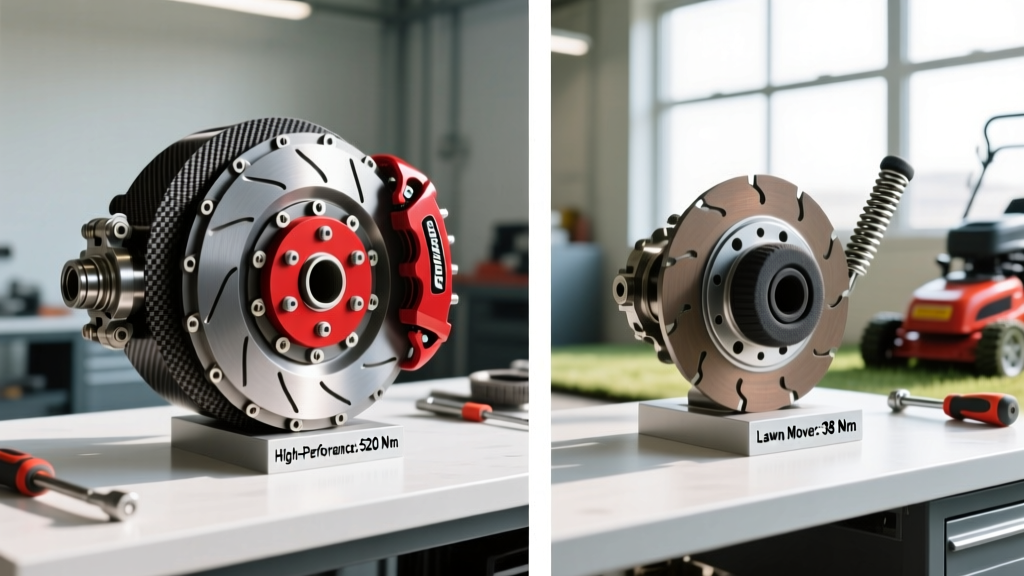
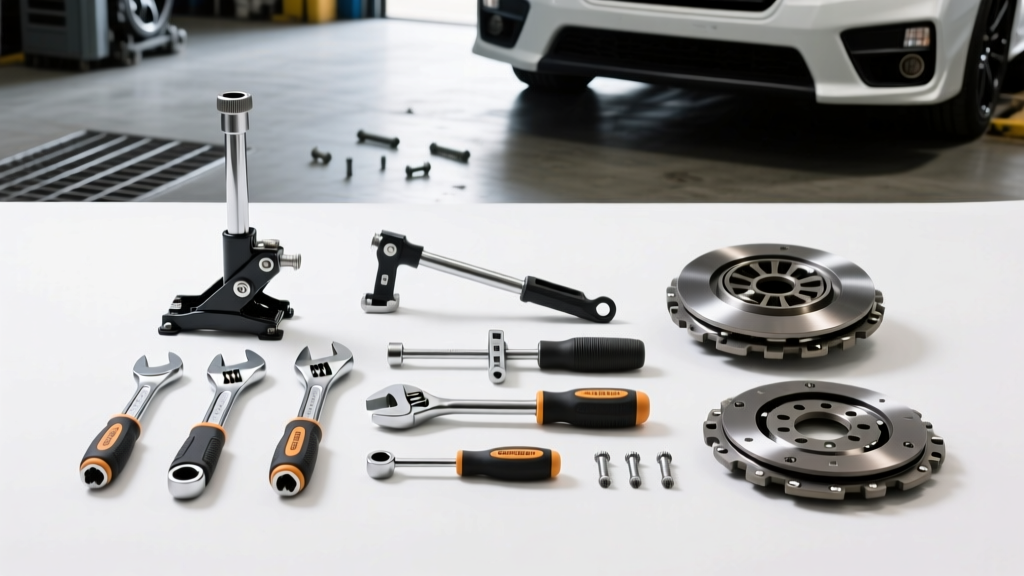
Proper installation is just as critical as the upgrade itself. When mating a new performance clutch to your engine, adhere strictly to manufacturer torque specifications. For example, when installing a new McLeod lightweight steel flywheel on a GM LS-based engine, the flywheel-to-crank bolts must be torqued to 74 lb-ft using Red Loctite 272. The pressure plate bolts must be tightened in a crisscross star pattern to 35 lb-ft to ensure the diaphragm spring is seated evenly. Always use the included alignment tool to prevent input shaft binding, a common issue that mimics the 'clutch drag' symptom mentioned earlier. For deeper transmission-specific installation procedures, refer to the Tremec Transmissions official documentation.
The Appliance Crossover: Whirlpool Washer Replace Clutch Diagnostics
As a home mechanic, your wrenching doesn't stop at the garage door. The same diagnostic logic used to identify a slipping automotive friction disc applies to home appliances. If you are currently troubleshooting a laundry issue and searching for a Whirlpool washer replace clutch guide, you are dealing with a mechanical dog-clutch and friction band system rather than a hydraulic diaphragm spring.
Whirlpool Direct Drive Clutch Symptoms
Whirlpool Direct Drive washers (such as the classic LSR8233EQ0 series) utilize a transmission driven by a motor via a direct coupler. The clutch assembly engages the spin cycle. The signs you need a clutch replacement on these units include:
- Agitates but Will Not Spin: The motor runs and the agitator moves, but the drum remains stationary during the spin cycle. This indicates the clutch band is worn and cannot grip the clutch drum.
- Burning Smell During Spin: Just like an automotive organic disc, the clutch lining material (Part #285792) glazes and burns when it slips against the spinning drum.
- Slow Spin Speeds / Wet Clothes: The clutch spring has lost tension, failing to apply adequate clamping force to the clutch band.
Whirlpool Clutch Part Numbers and Replacement Steps
To execute the Whirlpool washer replace clutch procedure, you will need the complete clutch assembly (Part #285785), which includes the spring, clutch band, and cam driver. According to appliance repair experts at Repair Clinic, the replacement requires dropping the transmission from the washer tub. Unlike an automotive bell-housing removal, this involves releasing the three suspension pads, unclipping the water pump, and removing the three 1/2-inch transmission mounting bolts. Once the transmission is on the bench, the clutch is held in place by a single C-clip and a retaining spring. Swap the new assembly onto the transmission shaft, re-seat the C-clip, and ensure the clutch band is properly hooked into the brake tube notch before reinstalling.
Final Thoughts for the Multi-Disciplinary Mechanic
Whether you are torquing a twin-disc cerametallic clutch to a forged crankshaft to handle 800 whp, or replacing a friction band on a Whirlpool direct-drive transmission to save a load of laundry, the principles of mechanical grip, wear, and clamping force remain universal. Recognizing the signs of failure early saves you from catastrophic collateral damage—be it a shattered automotive flywheel or a seized washer gearcase. Keep your torque wrenches calibrated, your alignment tools handy, and your diagnostic skills sharp across every machine in your arsenal.