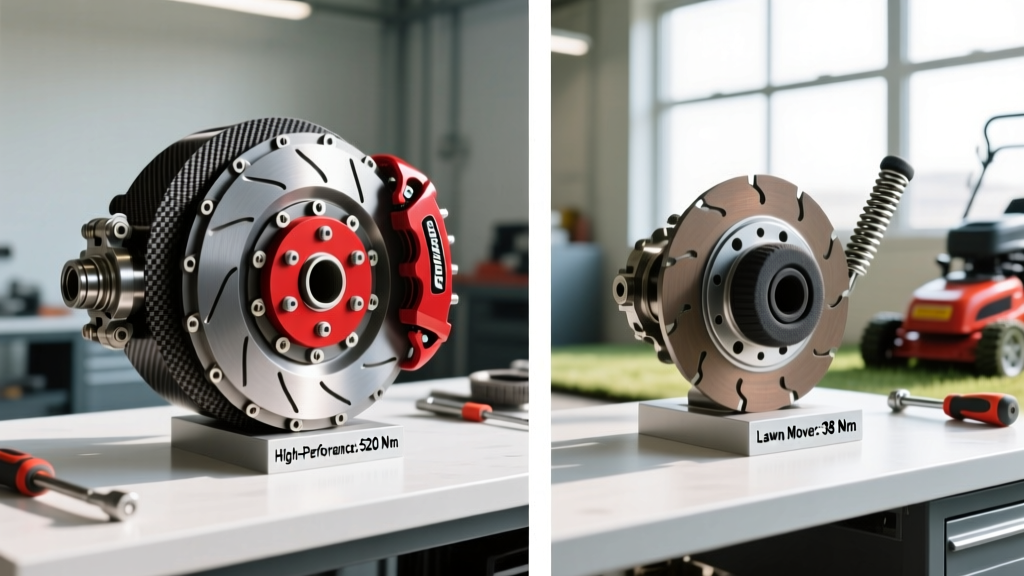
When enthusiasts and DIY mechanics discuss drivetrain maintenance, a common point of sticker shock emerges when comparing everyday equipment to track-ready machines. It is not uncommon for a forum user to ask why a lawn mower clutch replacement costs under $150 and takes an hour, while swapping the clutch on a high-performance vehicle like a C7 Corvette Z06 or a Porsche 911 GT3 can easily exceed $3,500. The answer lies in the fundamental differences in engineering, material science, and labor intensity. In this 2026 cost analysis, we will contrast the simplicity of outdoor power equipment with the extreme demands of high-performance automotive transmissions, providing a definitive price breakdown for track and street enthusiasts.
The Engineering Divide: PTO vs. High-Torque Friction
To understand the cost disparity, we must first look at what is actually being replaced. A standard riding mower utilizes an electromagnetic Power Take-Off (PTO) clutch. A part like the Warner Electric 5218-451-0011 is a self-contained, plug-and-play electromagnetic coil that engages the mower deck blades. Replacing it requires lifting the mower, removing a single center crankshaft bolt (typically torqued to roughly 55-65 lb-ft), disconnecting a two-wire harness, and sliding the new unit on. Total parts cost: ~$130. Total labor: 45 minutes. There is no transmission to drop, no hydraulic system to bleed, and no flywheel to machine.
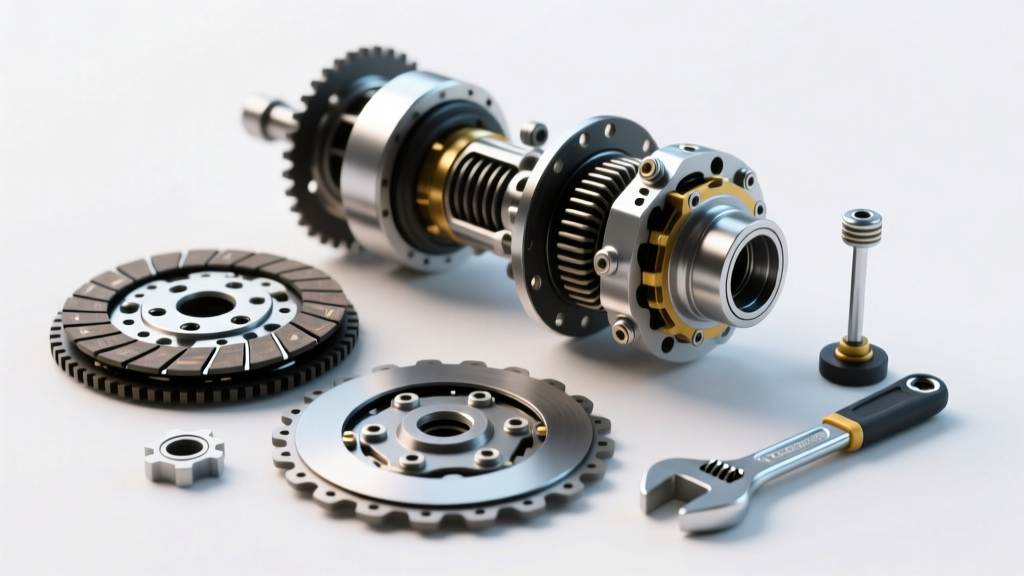
High-performance vehicles, conversely, rely on complex friction disc assemblies designed to handle immense torsional stress. A modern supercharged V8 or a high-revving naturally aspirated flat-six generates anywhere from 500 to over 800 lb-ft of torque at the crank. Managing this power requires multi-disc setups, carbon-ceramic friction materials, and precision-machined chromoly flywheels.
High-Performance Clutch Replacement: 2026 Cost Breakdown
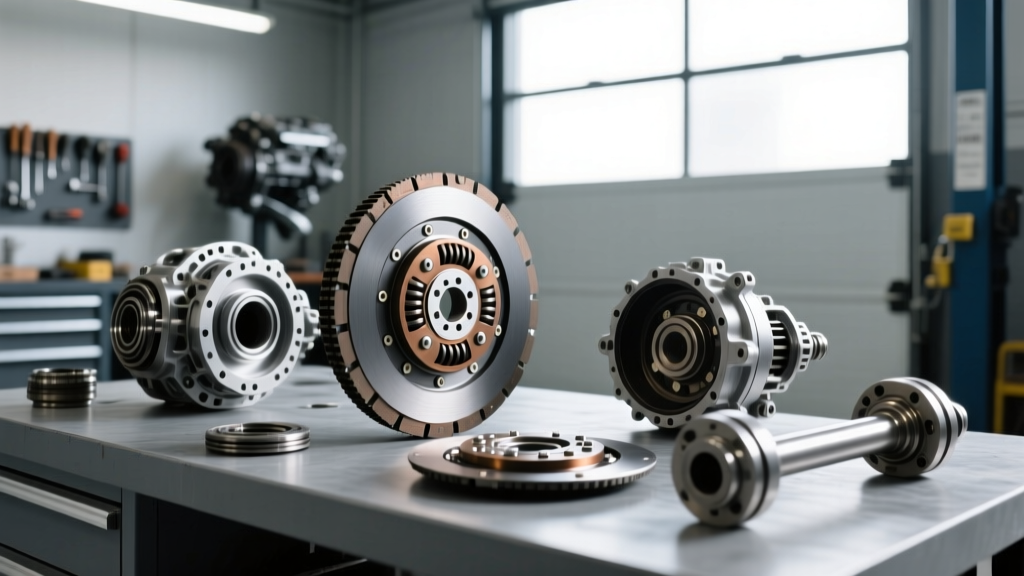
When budgeting for a high-performance clutch replacement, the cost is split into three distinct categories: the friction assembly, the rotating mass (flywheel), and the highly specialized labor required to extract the drivetrain.
1. The Clutch Kit (Parts)
Unlike organic street clutches that cost $300-$500, high-performance setups utilize sintered iron, ceramic, or carbon-carbon materials.
- Sintered Iron / Puck Style: Aggressive engagement, high heat tolerance. Cost: $600 - $900.
- Carbon-Ceramic Twin Disc: Used in dedicated track cars. Offers immense holding power with reduced rotational inertia. Cost: $1,400 - $2,800.
- Triple Disc Carbon-Carbon: Reserved for 1,000+ HP drag or time-attack builds. Cost: $3,500+.
2. Flywheel and Hydraulics
High-performance applications rarely reuse the flywheel. Chromoly steel or billet aluminum flywheels (such as those from RAM Clutches) are mandatory for balancing and safety at high RPMs. Additionally, Concentric Slave Cylinders (CSC) and high-temperature hydraulic fluid (like Motul RBF 660) add $250-$400 to the parts ledger.
Real-World Pricing: High-Performance Platforms
Below is a 2026 market analysis of clutch replacement costs for three popular high-performance platforms. Labor rates are calculated at an average specialist rate of $165/hour.
| Vehicle Platform | Transmission | Clutch Assembly (Example) | Parts Cost | Labor Hours | Total Estimated Cost |
|---|---|---|---|---|---|
| C7 Corvette Z06 | Tremec TR-6070 (7-Speed) | Sachs Performance Twin-Disc Ceramic | $2,150 | 8.5 | $3,552 |
| Shelby GT350 | Tremec TR-3160 (6-Speed) | McLeod RXT Twin Disc (Part #692105) | $1,450 | 7.0 | $2,605 |
| Porsche 997 GT3 RS | G96/90 (6-Speed Manual) | OEM Sachs GT3 RS Carbon Kit | $3,800 | 11.0 | $5,615 |
Material Science: Why Track Clutches Cost More
The friction material dictates the price and the driving experience. According to engineering standards published by SAE International, the coefficient of friction (COF) and thermal degradation thresholds vary wildly between materials.
- Organic (Kevlar/Aramid): COF of ~0.35. Smooth engagement, but prone to glazing and fading above 400°F. Ideal for high-horsepower street cars.
- Ceramic: COF of ~0.45. Withstands up to 800°F. Engagement is abrupt (often described as an on/off switch), which can cause drivetrain shock and wheel hop on street tires.
- Carbon-Carbon: COF of ~0.55+. Paradoxically, carbon-carbon clutches (like those from Tremec approved suppliers) require heat to generate friction. They are nearly undrivable in stop-and-go traffic but offer unmatched slip resistance at 1,200°F+ on the track.
Hidden Costs: Machining, Hardware, and Alignment
A professional high-performance clutch job involves several hidden costs that a basic lawn mower clutch replacement simply does not entail:
- ARP Hardware: OEM flywheel bolts are often Torque-to-Yield (TTY) and cannot be reused. A set of ARP Custom Age 625+ flywheel bolts costs roughly $120 and requires specific stretch measurements or torque-angle sequences (e.g., 85 lb-ft + 50 degrees).
- Driveline Indexing: When reinstalling a Tremec T-56 Magnum or TR-6070, the bellhousing must be indexed to the engine block to ensure the transmission input shaft is perfectly concentric with the crankshaft. Misalignment exceeding 0.005 inches will destroy the pilot bearing and input shaft seal within 1,000 miles. Dial-indicator indexing adds 1.5 hours of labor.
- Hydraulic Bleeding: Modern performance cars use hydraulic throw-out bearings. Bleeding the system of microscopic air bubbles requires specialized vacuum bleeders and elevated DOT 5.1 or racing fluids to prevent vapor lock under track temperatures.
The Critical Break-In Procedure
Unlike a lawn mower PTO clutch which is ready for full engagement immediately upon installation, high-performance ceramic and carbon clutches require a meticulous break-in procedure to burnish the friction surfaces. For a twin-disc ceramic setup, this typically involves 300 to 500 miles of varied RPM driving, avoiding full-throttle launches and heavy stop-and-go traffic. Failing to properly bed the clutch material will result in severe chattering, localized hot spots on the flywheel, and a permanent loss of clamping force. Track cars utilizing pure carbon-carbon setups often require dedicated heat-cycling on a dynamometer or during initial track shakedown laps to achieve their designed coefficient of friction.
DIY vs. Professional Installation
While a mechanically inclined owner can perform a lawn mower clutch replacement with a basic socket set and a floor jack, a high-performance clutch replacement demands specialized infrastructure. You will need a high-capacity transmission jack (capable of safely balancing a 110-lb Tremec TR-6070), a clutch alignment tool specific to the input shaft spline count (e.g., 26-spline for GM, 23-spline for Porsche), and an engine support bar.
Furthermore, dropping a rear transaxle (like in a Porsche 911 or C7 Corvette) requires removing the entire rear suspension subframe, half-shafts, and exhaust system. The risk of damaging a $4,000 carbon fiber torque tube or stripping an aluminum bellhousing thread makes professional installation the only logical choice for 95% of high-performance vehicle owners.
Final Verdict
The leap from a simple electromagnetic PTO swap to a high-performance friction assembly represents the pinnacle of automotive drivetrain engineering. While the sticker shock of a $3,500+ track car clutch replacement is real, the investment guarantees that 700 horsepower actually reaches the tarmac rather than turning into smoke and slipping friction material. When planning your 2026 track season, always budget for the ancillary components—flywheels, hydraulics, and ARP hardware—to ensure your high-performance machine survives the launch pad.