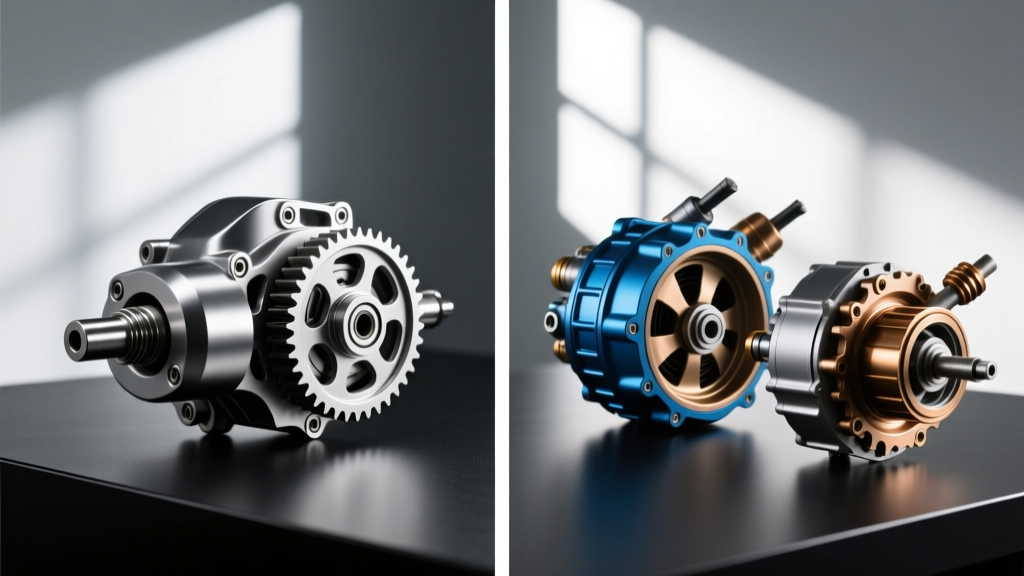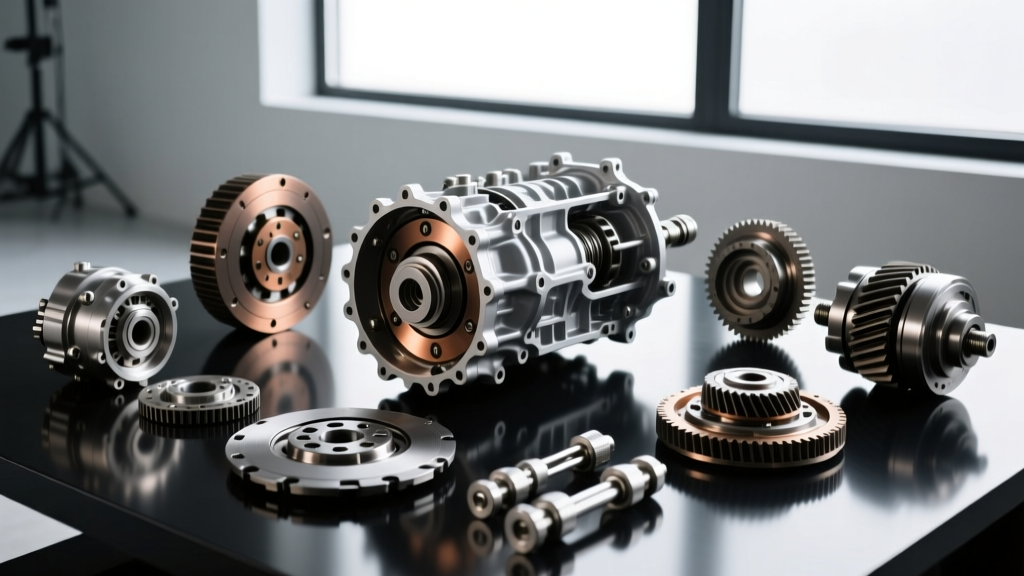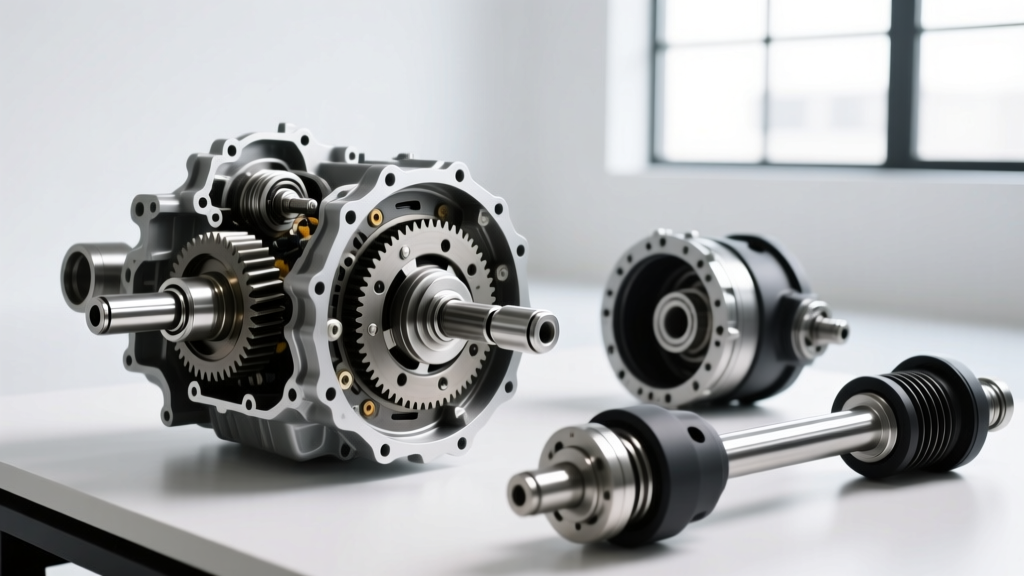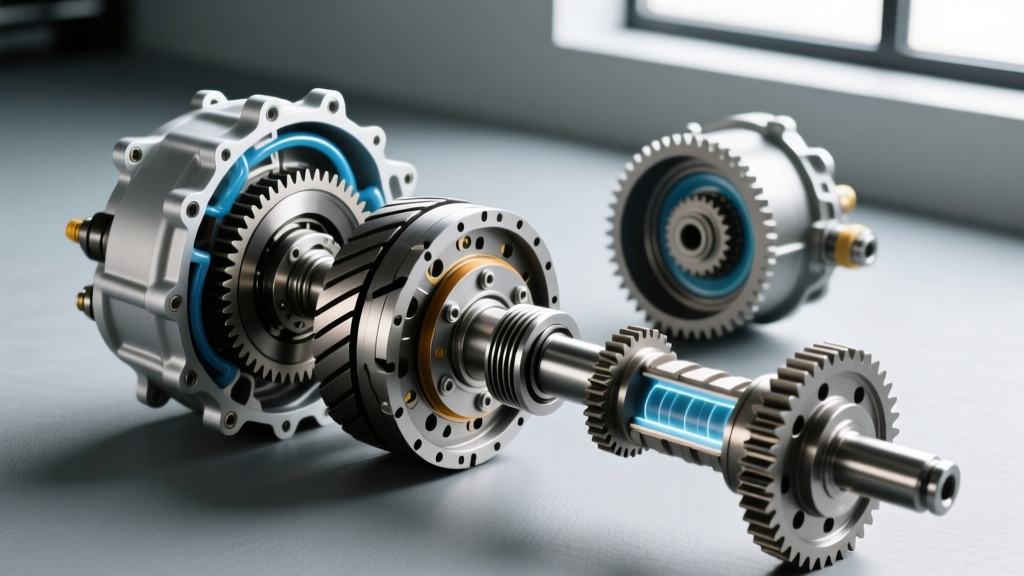
Defining the Architecture: What Is a Semi-Automatic Transmission in Cars?
When drivers and technicians ask what is a semi-automatic transmission in cars, they are typically trying to understand a drivetrain that bridges the gap between a traditional manual and a torque-converter automatic. In engineering terms, this is an Automated Manual Transmission (AMT) or a single-clutch sequential system. Unlike a conventional automatic that uses planetary gearsets and fluid coupling, a semi-automatic transmission utilizes a standard manual gearbox layout—complete with a friction clutch and synchronizers—but replaces the driver's left foot and right hand with electro-hydraulic or electro-mechanical actuators.
According to powertrain engineering data from Bosch Mobility Solutions, these systems rely on a Transmission Control Unit (TCU) to interpret driver inputs via paddle shifters or a sequential gear lever, subsequently triggering solenoids or stepper motors to engage the clutch and slide the shift forks. While they offer the direct mechanical efficiency of a manual, their complex actuator assemblies are prone to highly specific failure modes that require specialized diagnostic approaches.
Hydraulic vs. Electromechanical Actuators: The Core Failure Points
To diagnose a semi-automatic transmission, you must first identify the actuation method. The two dominant architectures are hydraulic (e.g., Ferrari F430 F1, BMW E46 M3 SMG II, Alfa Romeo Selespeed) and electromechanical (e.g., Fiat Dualogic, early Smart Fortwo softouch). Each presents distinct troubleshooting pathways.
Hydraulic Systems: Pressure Loss and Accumulator Fatigue
Hydraulic semi-automatics use a high-pressure gear pump driven by a 12V brushless or brushed DC motor to pressurize fluid into a nitrogen-charged accumulator. This stored pressure actuates the clutch slave cylinder and the gear-selection pistons. The most common symptom of failure here is the TCU throwing a 'Gearbox Fault' warning and refusing to engage first gear or reverse.
- System Pressure Specs: A healthy Selespeed or SMG system should maintain between 50 bar (725 psi) and 70 bar (1015 psi). If the pump runs continuously but pressure stalls at 40 bar, the accumulator's nitrogen bladder has likely ruptured.
- The Pump Relay Trap: On Alfa Romeo and Fiat applications, the 30A pump relay (often part number 46830356) is notorious for welding its internal contacts shut. This causes the hydraulic pump to run until the motor burns out or the battery dies. Always test the relay circuit before condemning a $600 pump motor.
Electromechanical Systems: Stepper Motor and Brush Wear
Electromechanical AMTs use electric stepper motors and worm gears to actuate the clutch and shift rails. Because these systems lack hydraulic dampening, they rely entirely on software calibration to manage clutch bite points. The primary failure mode is brush wear inside the clutch actuation motor, leading to intermittent open circuits and sudden 'Transmission Failure' limp modes.
Diagnostic Data Table: Symptoms, Codes, and 2026 Repair Costs
Below is a troubleshooting matrix for common semi-automatic transmission faults, updated with current 2026 parts pricing and labor estimates.
| Symptom | Probable OBD2 Code | Root Cause & Diagnostic Step | Est. Repair Cost (2026) |
|---|---|---|---|
| Pump runs continuously; harsh shifts | P0944 (Hydraulic Pressure Loss) | Failed accumulator nitrogen charge. Test by measuring pump cycle frequency (more than 3 cycles per minute indicates failure). | $250 - $450 |
| Clutch slip under heavy throttle | P2785 (Clutch Actuator Range) | Worn clutch friction material or uncalibrated wear index. Check clutch wear parameter via bidirectional scan tool. | $800 - $1,500 |
| Refusal to shift; stuck in neutral | P0914 (Gear Shift Position Circuit) | Failed gear selector potentiometer or corroded wiring harness at the TCU. Perform voltage drop test on sensor reference wire. | $350 - $600 |
| Erratic gear hunting in 'Auto' mode | P0700 (General TCU Fault) | Degraded hydraulic fluid causing sticky solenoid valves. Flush system and perform solenoid adaptation reset. | $150 - $300 |
Fluid Specifications and Bleeding Procedures
One of the most frequent causes of premature actuator failure is the incorrect application of automatic transmission fluid (ATF). Semi-automatic hydraulic circuits are incredibly sensitive to fluid viscosity and anti-wear additives. As noted in drivetrain tribology research by Ricardo Engineering, using the wrong fluid can cause the electro-hydraulic valves to stick or the pump gears to score within a few thousand miles.
Critical Fluid Pairings
- Alfa Romeo Selespeed / Ferrari F1: Requires Tutela CS Speed (75W synthetic). Do NOT use standard ATF or power steering fluid. Capacity is approximately 2.5 liters for the hydraulic circuit, separate from the gearbox oil.
- BMW SMG II / III: The hydraulic actuator requires Pentosin CHF 11S, while the underlying manual gearbox requires SAF-XO 75W-90 GL-4.
- Fiat Dualogic (Hydraulic variant): Tutela Hydraulic Fluid or specific Magneti Marelli Selespeed fluid.
The Bleeding Protocol
Unlike a traditional hydraulic clutch, you cannot manually bleed a semi-automatic system by pumping the pedal. The system requires a bidirectional OBD2 diagnostic tool (such as MultiECUScan for FCA vehicles or INPA/ISTA for BMW) to command the solenoids open and cycle the pump. The TCU must be put into 'Bleed Mode', which cycles the clutch actuator and shift pistons to purge trapped air. If air remains in the clutch slave circuit, the TCU will miscalculate the clutch bite point, resulting in severe shudder during takeoff.
Sensor Calibration and Clutch Wear Adaptation
A major misconception among novice technicians is that replacing a worn clutch in a semi-automatic car is a simple 'bolt-in and go' procedure. Because the TCU controls the clutch via an actuator rod, it must know the exact physical thickness of the friction material to modulate engagement smoothly.
As the clutch wears, the actuator rod travels further. The TCU tracks this via a Hall-effect sensor or potentiometer and updates the 'Clutch Wear Index'. When a new clutch is installed, the wear index must be reset to zero, and a 'Clutch Adaptation' or 'End-of-Line (EOL) Calibration' must be performed. This procedure commands the actuator to slowly engage the clutch against the flywheel while monitoring motor current draw. The TCU records the exact millimeter position where friction begins (the bite point) and stores it in non-volatile memory. Skipping this calibration will cause the car to stall, lurch, or throw a P2785 fault code immediately upon driving.
When to Rebuild vs. Replace the Actuator Assembly
When a hydraulic actuator fails internally (e.g., a scored clutch cylinder bore or a shattered shift fork piston), dealerships will typically quote a complete assembly replacement. For a Ferrari F430 F1 actuator, a new OEM unit from the dealer can exceed $8,500 in 2026. However, specialized independent transmission shops can rebuild these units using aftermarket seal kits and honed cylinders for $1,500 to $2,500.
For high-volume consumer vehicles like the Fiat 500 Dualogic or Alfa Romeo MiTo TCT, replacement is often more cost-effective than rebuilding, with remanufactured actuators available in the $900 to $1,200 range. Always verify the part number suffix, as TCU software revisions often dictate specific actuator hardware versions. For deeper insights into modern dual-clutch and automated manual architectures, the ZF transmission engineering archives provide excellent baseline schematics for understanding how these actuator modules integrate with modern CAN-bus networks.
Summary: The Diagnostic Mindset
Answering the question of what is a semi-automatic transmission in cars is only the first step; mastering its repair requires a shift in mindset. You are no longer just a mechanic; you are an electro-hydraulic systems analyst. Always start with a scan tool to read live hydraulic pressure data and clutch wear parameters before turning a single wrench. Verify your fluids, respect the calibration procedures, and remember that 90% of 'catastrophic' gearbox failures in these vehicles are actually $50 sensors, $20 relays, or neglected 2-liter fluid services.