As we navigate the automotive landscape of 2026, the internal combustion engine (ICE) and its drivetrain pairing remain a focal point for enthusiasts, fleet managers, and daily drivers alike. While electrification continues to expand, the debate over manual vs automatic reliability persists in the used and enthusiast markets. From a preventive maintenance perspective, reliability is rarely about which transmission is inherently "unbreakable." Instead, it is about understanding distinct failure modes, adhering to strict fluid service intervals, and recognizing how driver input directly dictates the lifespan of internal components.
The Architecture of Longevity: Friction vs. Hydraulics
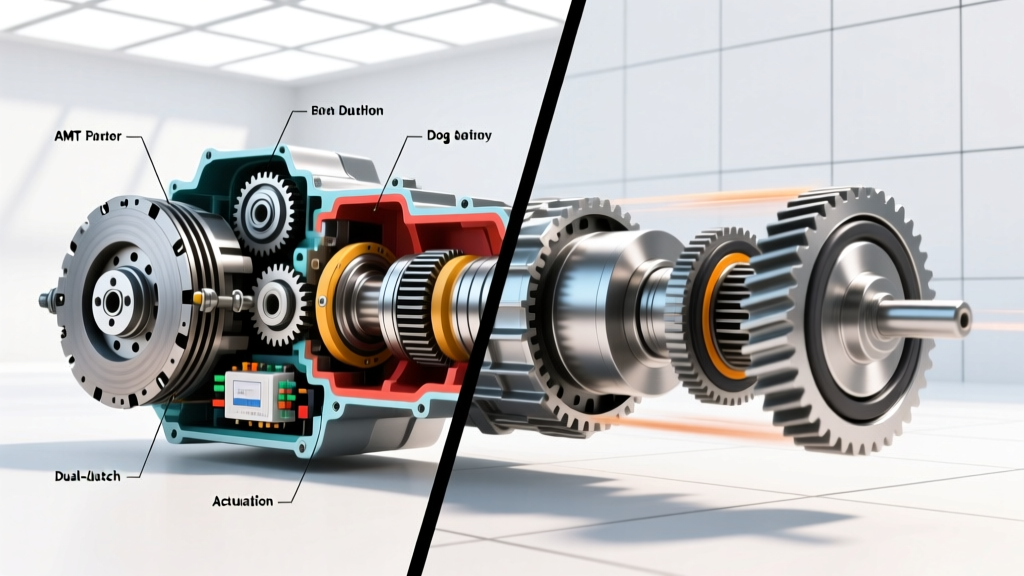
To evaluate long-term reliability, we must first contrast the mechanical philosophy of a manual gearbox against a modern torque-converter automatic. A manual transmission, such as the legendary Tremec T56 Magnum or the Porsche G50, is fundamentally a mechanical device. It relies on physical linkages, synchronizer rings, and a friction clutch to route power. Its reliability is exceptionally high regarding catastrophic internal failure, but its maintenance profile is dictated by wear items that are directly subjected to driver abuse.
Conversely, modern automatics like the ZF 8HP70 or the GM 6L80 are marvels of hydraulic and electronic engineering. They utilize planetary gearsets, multi-plate clutch packs, and complex mechatronic valve bodies. Automatic transmissions are largely insulated from driver error regarding gear engagement, but they are highly vulnerable to thermal degradation, fluid shearing, and solenoid fatigue.
Manual Drivetrains: The Sacrificial Components
In a manual setup, the clutch disc, pressure plate, and throw-out bearing are designed to be sacrificial. A high-quality OEM Luk or Sachs clutch kit can easily last 100,000 to 150,000 miles under normal driving conditions. However, internal manual reliability often hinges on the synchronizers. Modern manuals frequently use carbon-lined synchros, which require specific friction-modified fluids. Using the wrong gear oil—such as a standard GL-5 hypoid gear oil in a transmission designed for synchromesh fluid—will strip the carbon lining, resulting in grinding gears and a $2,500 teardown bill.
Automatic Drivetrains: Thermal and Electronic Bottlenecks
Automatic reliability is threatened by heat. When transmission fluid exceeds 220°F (104°C), it begins to oxidize and lose its frictional properties, leading to clutch pack slippage. Furthermore, electronic components like the ZF 8HP mechatronic sleeve are prone to developing hairline cracks over time, causing internal pressure leaks and harsh 2-3 or 4-5 shifts. Preventive maintenance here is entirely focused on thermal management and fluid exchange.
Operational Technique: Directional Changes and Drivetrain Shock
Expert Insight: The most severe mechanical shock a manual drivetrain experiences isn't during a high-RPM upshift; it occurs during directional changes. Automatics handle these transitions via fluid coupling, whereas manuals require precise mechanical synchronization.
When enthusiasts and daily drivers research how to reverse a car with manual transmission without causing long-term damage, the answer lies in understanding gear spool-down and shift fork mechanics. Unlike forward gears, which utilize robust synchronizer assemblies to match shaft speeds, many manual transmissions (including various Honda K-series 6-speeds and heavy-duty truck manuals) do not feature synchros on the reverse gear. Reverse is often a straight-cut idler gear that is physically slid into mesh.
How to Reverse a Car with Manual Transmission Without Destroying Synchros
Improperly engaging reverse is a leading cause of chipped idler gear teeth and bent shift forks. To preserve your manual transmission's reliability, follow this operational sequence:
- The Complete Stop: Never attempt to engage reverse while the vehicle is still rolling forward. Even a 1 mph roll creates massive rotational resistance against the reverse idler gear.
- The Spool-Down Pause: Depress the clutch pedal fully and wait 2 to 3 seconds before moving the shifter into the reverse gate. This allows the input shaft and clutch disc to stop spinning, eliminating the "grind" when the straight-cut gears mesh.
- Avoid Clutch Riding on Inclines: When reversing uphill, drivers often "ride" the clutch bite point to control speed. This generates immense friction heat, glazing the clutch disc and prematurely destroying the throw-out bearing. Use the brake pedal to hold the car, or apply precise throttle modulation instead of slipping the clutch.
By mastering how to reverse a car with manual transmission smoothly, you eliminate drivetrain shock that can otherwise crack engine mounts, damage the limited-slip differential, and fatigue the transmission casing.
2026 Preventive Maintenance Matrix: Fluids and Hardware
Whether you are rowing your own gears or letting a computer handle the shifts, fluid maintenance is the cornerstone of reliability. Below is a comparative matrix detailing exact specifications for three of the most common enthusiast and daily-driver transmissions on the road today.
| Transmission Model | Required Fluid Spec | Service Capacity | Drain/Fill Torque | Service Interval |
|---|---|---|---|---|
| Tremec T56 Magnum (Manual) | Pennzoil Synchromesh (or GM equivalent) | 3.9 Quarts | 15-25 lb-ft | 50,000 miles |
| ZF 8HP70 (Automatic) | ZF LifeguardFluid 8 | ~8.5 Liters (Pan Drop) | 10 Nm (Pan Bolts) | 60,000 miles |
| GM 6L80 (Automatic) | ACDelco Dexron VI | ~6.0 Quarts (Pan Drop) | 9 Nm (Pan Bolts) | 45,000 - 60,000 miles |
Note: For the ZF 8HP, ZF officially recommends their proprietary LifeguardFluid 8 to maintain exact friction coefficients. According to ZF's official transmission documentation, using incorrect aftermarket fluids can lead to torque converter shudder and mechatronic valve sticking. Similarly, for the Tremec T56, using standard gear oil will destroy the carbon synchros; always use a dedicated synchromesh fluid as outlined by Pennzoil's manual transmission fluid guidelines.
Financial Realities: Wear-Item Replacements vs. Complete Rebuilds
When weighing manual vs automatic reliability, the financial impact of a failure is just as important as the mechanical probability of one occurring. Manuals fail more frequently in the form of wear items, but they are significantly cheaper to repair. Automatics fail less frequently under proper maintenance, but when they do, the costs are staggering.
Manual Drivetrain Repair Costs
- Clutch Kit Replacement (OEM Luk/Sachs): $1,200 – $2,500 (Includes resurfacing or replacing the dual-mass flywheel, which is highly recommended on modern diesel and high-torque ICE vehicles).
- Clutch Master/Slave Cylinder Failure: $300 – $600. A common hydraulic failure point that prevents gear engagement but does not require dropping the transmission if the slave is external.
- Synchromesh/Shift Fork Rebuild: $2,000 – $3,500. Usually the result of chronic gear grinding or improper fluid use.
Automatic Drivetrain Repair Costs
- Torque Converter Replacement: $900 – $1,600. Often required if the TCC (Torque Converter Clutch) solenoid fails or the internal friction material sheds into the valve body.
- Mechatronic Unit / Valve Body: $1,500 – $2,800. Common on European automatics (ZF, DSG) when internal pressure regulators fail.
- Complete Master Rebuild: $3,500 – $6,000+. Required when planetary gears shatter or clutch packs burn out due to neglected fluid changes or severe overheating.
Ultimately, as noted in extensive drivetrain comparisons by Car and Driver, the automatic transmission has largely surpassed the manual in terms of sheer mechanical longevity and shift-speed efficiency. However, the manual transmission remains the undisputed king of cost-effective maintenance and driver engagement. By adhering to strict fluid intervals, respecting the mechanical limits of unsynchronized gears, and mastering proper operational techniques, you can ensure either drivetrain configuration easily surpasses the 200,000-mile mark.