Are All Motorcycles Manual Transmission? The 2026 Reality
When new riders ask, are all motorcycles manual transmission, the short answer is no. While the traditional sequential manual gearbox still dominates the legacy and sportbike markets, the 2026 motorcycle landscape has seen a massive proliferation of automatic and semi-automatic systems. Dual-Clutch Transmissions (DCT) and Continuously Variable Transmissions (CVT) now account for over 25% of new touring, adventure, and urban commuter models.
However, comparing a manual motorcycle transmission to an automatic one isn't like comparing a Ford 4L60E to a ZF 8HP in the automotive world. Motorcycle transmissions are incredibly compact, sharing engine oil (in most manual applications), and rely on entirely different mechanical principles. In this diagnostic guide, we will break down the mechanical differences between manual dog-boxes, DCTs, and CVTs, and provide advanced symptom diagnosis and troubleshooting frameworks for when these systems fail.
The Mechanical Divide: Sequential Dog-Box vs. DCT and CVT
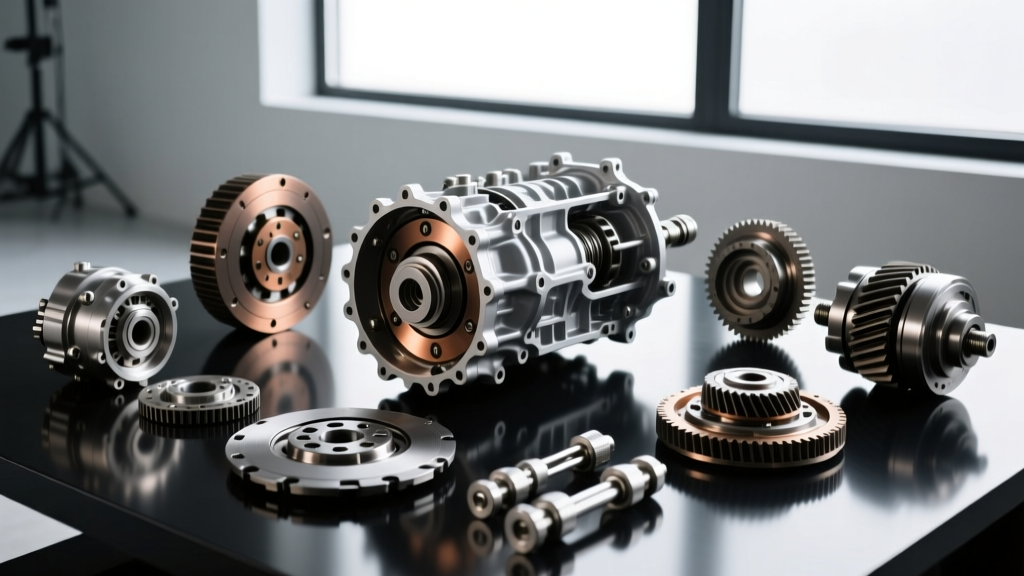
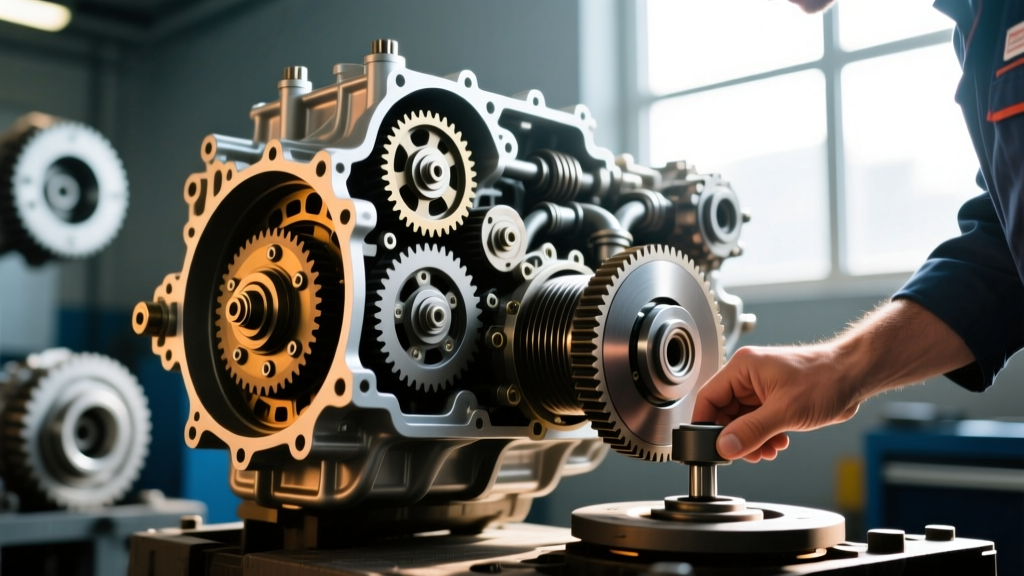
To accurately diagnose transmission faults, you must understand the underlying architecture. A standard manual motorcycle transmission is a constant-mesh sequential dog-box. Gears are always engaged, but power is only transferred when sliding dog rings lock a specific gear to the main shaft via shift forks actuated by a rotating shift drum.
Conversely, automatic motorcycles primarily utilize two distinct systems:
- Dual-Clutch Transmission (DCT): Pioneered in the motorcycle space by Honda, DCT systems use two computer-controlled wet clutches (one for odd gears, one for even) and electro-hydraulic mechatronic units to execute shifts without a clutch lever. Models like the Honda Africa Twin CRF1100L and Gold Wing GL1800 rely on this heavy, complex, but incredibly smooth system.
- Continuously Variable Transmission (CVT): Found predominantly on maxi-scooters and urban commuters (e.g., Yamaha TMAX, BMW C 400 GT), CVTs use a drive belt riding on variable-diameter pulleys (variators) weighted with centrifugal rollers to provide infinite gear ratios.
Symptom Diagnosis: Manual Motorcycle Transmissions
Manual motorcycle gearboxes are robust but highly susceptible to wear from aggressive riding, missed shifts, and poor maintenance. Here is how to diagnose the most common manual transmission failures.
1. False Neutrals and Gear Popping
Symptom: The motorcycle pops out of gear under heavy acceleration or deceleration, or the rider struggles to find neutral at a stoplight.
Diagnosis: This is rarely a clutch issue; it is almost always internal gearbox wear. The sliding dog rings have rounded edges, or the shift forks are bent, preventing full engagement. To diagnose, the engine cases must be split. Using a metric feeler gauge, measure the clearance between the shift fork and the shift drum groove. Standard clearance is typically 0.10mm to 0.25mm. If the clearance exceeds the service limit of 0.40mm, the shift fork is worn. Additionally, check the shift drum endplay; it should not exceed 0.30mm. If the dogs on the gears themselves are rounded off, the gear must be replaced.
Estimated Repair Cost: $800 - $1,500 (Highly labor-intensive due to complete engine teardown).
2. High-RPM Clutch Slippage
Symptom: Engine RPMs surge without a corresponding increase in road speed, particularly in 4th or 5th gear under wide-open throttle.
Diagnosis: First, check the clutch cable free play at the lever. It should be 10mm to 15mm. If the cable is too tight, the clutch is never fully engaging. If free play is correct, the wet multi-plate clutch pack is worn. Remove the clutch cover (torque spec for clutch cover bolts is usually 10-12 Nm). Measure the clutch spring free length with digital calipers. A standard spring might be 45.5mm, with a service limit of 43.0mm. If springs are sagging or friction plates are glazed and measure below the minimum thickness (often 2.8mm), replace the pack with an OEM or high-performance kit like the EBC CK Series.
Symptom Diagnosis: Automatic Motorcycle Transmissions
Automatic motorcycle systems introduce electronics and hydraulics into the drivetrain, creating entirely new failure modes that require specialized diagnostic tools.
1. DCT Jerky Shifting and Overheating
Symptom: The Honda DCT system exhibits harsh, clunky shifts from 1st to 2nd gear, or the dashboard displays a flashing 'D' or wrench icon, indicating mechatronic or hydraulic failure.
Diagnosis: DCT systems rely on precise hydraulic pressure to actuate the shift forks and clutch packs. The first diagnostic step is checking the fluid levels. Unlike a manual bike that shares oil across the engine and transmission, a Gold Wing or Africa Twin DCT has separate fluid chambers. The clutch side requires specific Honda MTF-4 or equivalent dual-clutch fluid (capacity approx. 1.2 Liters), while the gear side takes standard engine oil. The DCT drain plugs require a precise torque of 12 Nm (9 lb-ft) with a new crush washer. If fluid levels and condition are correct, the issue likely lies in a failing shift solenoid or a clogged hydraulic filter inside the mechatronic unit. Reading the ECU via the Honda MCS (Motorcycle Communication System) diagnostic tool is mandatory to pull specific solenoid resistance codes.
Estimated Repair Cost: $150 for fluid/filter service; $2,500+ for mechatronic unit replacement.
2. CVT Shudder, Slipping, and Power Loss
Symptom: A CVT-equipped maxi-scooter shudders violently from a stop, feels sluggish off the line, or loses top-end speed despite high RPMs.
Diagnosis: CVT shudder is almost always caused by belt dust accumulation on the clutch bell or a glazed drive belt. Remove the CVT cover (usually secured by 8mm bolts torqued to 10 Nm). Inspect the Kevlar-reinforced drive belt for cracking, fraying, or a loss of width. A belt that has narrowed by more than 2mm from its OEM spec will not ride high enough in the variator to achieve top gear ratios. Next, inspect the variator rollers. If they have developed 'flat spots', they will bind in the ramps, causing erratic ratio changes. Replace rollers in a complete set, ensuring you match the OEM weight (e.g., 18 grams for standard touring, or 15 grams if tuning for faster acceleration). Finally, check belt deflection; applying 10 kg (22 lbs) of pressure to the center of the belt should yield roughly 10mm to 15mm of deflection.
Diagnostic & Repair Comparison Matrix
To streamline your troubleshooting process, reference the matrix below when comparing manual vs automatic transmission symptoms on modern motorcycles.
| Symptom | Transmission Type | Primary Suspect | Diagnostic Tool Needed | Est. Repair Cost |
|---|---|---|---|---|
| Pops out of gear under load | Manual Dog-Box | Worn shift fork / Rounded dogs | Feeler gauge, Dial indicator | $800 - $1,500 |
| RPM surge without speed increase | Manual / DCT | Glazed friction plates / Weak springs | Digital Calipers, Torque wrench | $200 - $450 |
| Flashing 'D' light / Harsh shifts | DCT (Automatic) | Low hydraulic fluid / Failed solenoid | OBD2/MCS Scanner, Multimeter | $150 - $2,800 |
| Violent shudder from a stop | CVT (Automatic) | Glazed clutch bell / Belt dust | CVT puller tool, Brake cleaner | $80 - $150 |
| Loss of top speed / Sluggishness | CVT (Automatic) | Worn drive belt / Flat variator rollers | Calipers, Belt deflection gauge | $150 - $300 |
Essential Tools and Fluid Specs for 2026 Models
Whether you are maintaining a traditional manual clutch or servicing a complex DCT mechatronic unit, using the correct tools and fluids is non-negotiable. Using standard automotive ATF in a motorcycle DCT will destroy the wet clutch friction modifiers within 500 miles. Always reference the OEM service manual.
- Manual Clutch Holding Tool: Essential for removing the center clutch nut, which is often torqued to 60-80 Nm and secured with a staked washer. Brands like Motion Pro offer universal holding tools.
- DCT Fluid: Honda MTF-4 or Shell Dual Clutch Fluid. Never substitute with standard 10W-40 motorcycle oil, as the friction modifiers will cause DCT clutch pack slip and mechatronic overheating.
- CVT Variator Puller: A specialized threaded tool required to safely remove the variator face from the crankshaft taper without damaging the oil seal.
Conclusion and Authoritative Resources
So, are all motorcycles manual transmission? Absolutely not. The modern rider has access to highly refined DCT and CVT systems that rival automotive automatics in smoothness and efficiency. However, the diagnostic approach required for each system varies wildly. Manual gearboxes demand mechanical precision and clearance measurements, while automatic systems require hydraulic management and electronic diagnostics. By understanding the unique failure modes of dog-boxes, DCTs, and CVTs, you can accurately pinpoint drivetrain issues and avoid catastrophic failures on the road.
For further reading on specific OEM maintenance schedules and advanced diagnostic procedures, consult authoritative resources such as Honda Powersports for DCT technical overviews, and the technical archives at RevZilla and Cycle World for in-depth motorcycle transmission teardowns and clutch adjustment tutorials.