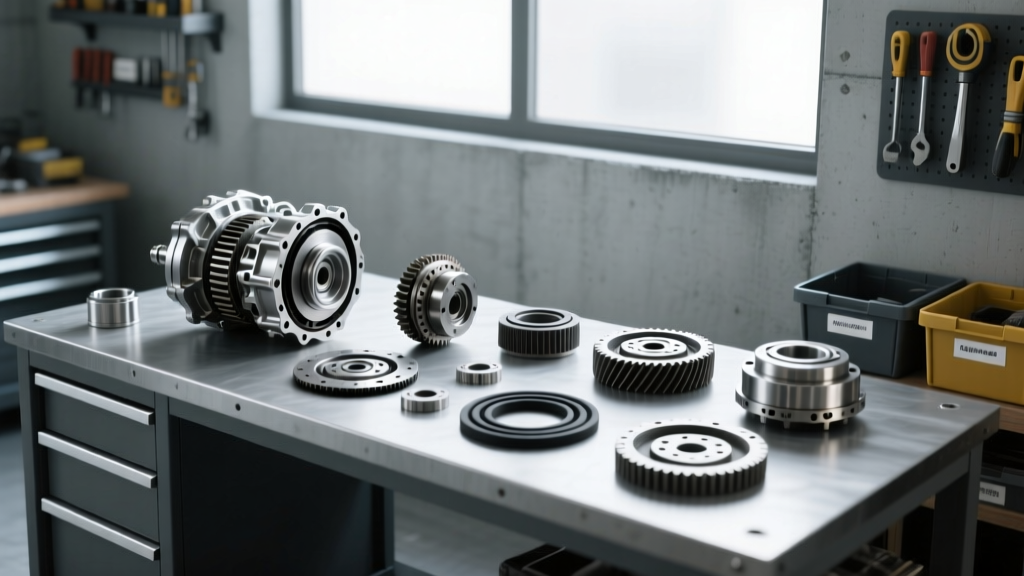
Navigating the stop-and-go traffic on I-35 or towing a boat out to the Hill Country puts immense thermal and mechanical stress on your vehicle's drivetrain. When that stress finally causes a failure, understanding the financial landscape is critical. If you are researching a transmission rebuild San Antonio cost breakdown, you are likely looking for transparency in a market where repair invoices can vary wildly. In 2026, the average local shop rate in Bexar County hovers between $135 and $165 per hour, meaning labor alone can dictate the viability of a repair.
However, as any seasoned drivetrain specialist will tell you, the final invoice is rarely just about labor rates; it is a direct reflection of your preventive maintenance history. Catching a fluid degradation issue early can keep your repair in the 'soft parts' territory, while ignoring it guarantees a catastrophic 'hard parts' failure. This guide breaks down the exact costs of a local rebuild and demonstrates how targeted preventive maintenance is your best financial defense.
The Anatomy of a San Antonio Transmission Rebuild Invoice
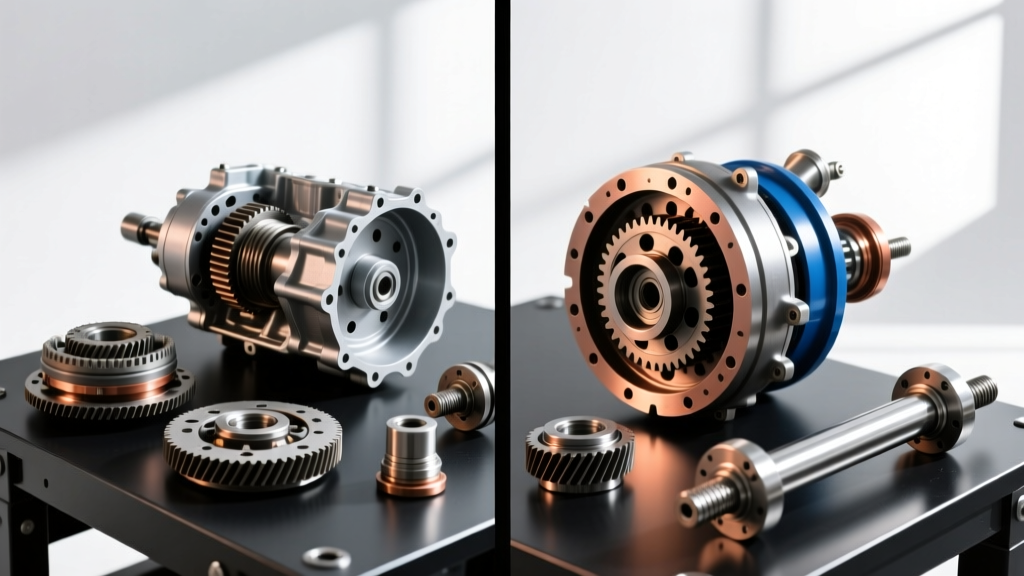
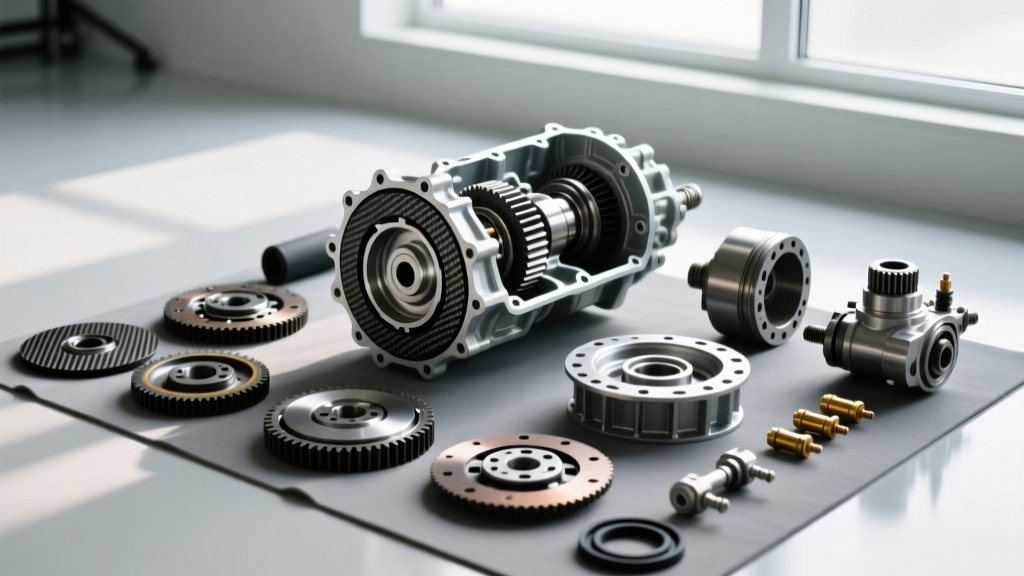
When a reputable shop in San Antonio quotes a transmission rebuild, they are aggregating several distinct cost centers. The difference between a $2,200 bill and a $4,500 bill usually lies in the 'Hard Parts' and 'Machine Shop' categories. Below is a realistic 2026 cost breakdown for a standard rear-wheel-drive truck or SUV transmission (such as the ubiquitous GM 6L80E or Ford 6R80).
| Cost Category | Preventive Maintenance Kept (Low) | Neglected / Catastrophic (High) | What It Covers |
|---|---|---|---|
| Master Rebuild Kit | $250 - $350 | $350 - $550 | Clutches, friction plates, steel separators, O-rings, and gaskets. |
| Hard Parts | $0 - $150 | $800 - $1,600 | Pumps, planetary gears, broken drums, and valve bodies. |
| Torque Converter & Machining | $250 - $350 | $450 - $750 | Mandatory T/C replacement, cooler line flushing, and valve body boring. |
| Labor (R&R and Rebuild) | $1,080 (8 hrs) | $1,650 (12+ hrs) | Removal, teardown, rebuild, and reinstallation at ~$135-$150/hr. |
| Fluids & Consumables | $80 - $110 | $120 - $180 | Synthetic ATF, assembly lubes, and RTV sealants. |
| Total Estimated Cost | $1,660 - $1,960 | $3,370 - $4,730 | Final invoice before local Bexar County taxes and environmental fees. |
The Texas Heat Factor: How Maintenance Dictates Your Bill
San Antonio's ambient summer temperatures regularly exceed 100°F. When you factor in exhaust routing and radiator heat soak, transmission fluid temperatures can easily surpass 220°F under load. According to data cited by the Automatic Transmission Rebuilders Association (ATRA), for every 20-degree increase in fluid temperature above 175°F, the life of the Automatic Transmission Fluid (ATF) is effectively cut in half. Burnt ATF loses its shear stability and friction-modifying properties, leading to clutch slip, which generates metallic debris and destroys hard parts.
Case Study: The GM 6L80E and the 3-5-R Clutch Domino Effect
The GM 6L80E is a staple in Texas, found in countless Silverados, Tahoes, and Yukons. It is a robust unit, but it has a well-documented vulnerability: the 3-5-R clutch wave plate. If preventive fluid exchanges are neglected, the degraded fluid causes micro-slipping in the 3-5-R clutch pack. This excessive heat fatigues the wave plate until it snaps.
When that wave plate shatters, it sends hardened steel shrapnel directly into the transmission pump and the torque converter. The debris circulates through the cooler lines, embedding itself in the radiator's transmission cooler. What could have been a standard preventive fluid service or a minor soft-parts clutch replacement now requires:
- A complete replacement of the transmission oil pump (Hard Part: ~$250).
- A mandatory, specialized power-flush of the radiator cooler lines (Labor: ~$150).
- Replacement of the torque converter (Machining/Parts: ~$400).
By adhering to a strict 30,000-mile severe-duty fluid exchange interval, you maintain the friction modifiers necessary to protect that wave plate, potentially saving over $1,500 in hard parts and extra labor.
DIY Preventive Maintenance: Specs, Fluids, and Torque
For the mechanically inclined truck owner in San Antonio, performing a transmission pan drop and filter change is a highly effective way to monitor the health of your drivetrain and extend its life. However, precision is mandatory. Using the wrong fluid or over-torqueing an aluminum pan bolt will cause immediate damage.
Exact Fluid Capacities and Part Numbers
Always consult your specific vehicle's OEM maintenance schedule, but here are the baseline specifications for the most common local applications:
- GM 6L80E / 6L90E: Requires Dexron VI. Pan drop capacity is approximately 6.0 quarts; total dry fill is 11.2 quarts. Use the ACDelco TF922 filter (Part #24236933) and ACDelco 10-9395 fluid.
- Ford 6R80: Requires Mercon LV. Pan drop capacity is roughly 5.5 quarts; total dry fill is 13.1 quarts. Use the Motorcraft FT-174 filter kit and Motorcraft Mercon LV fluid.
- ZF 8HP (Ram 1500 / Jeep Grand Cherokee): Requires ZF 8-Speed Fluid. The plastic oil pan has an integrated filter and must be replaced as a single unit (Part #68232909AC). Pan drop capacity is roughly 5.5 quarts.
Critical Torque Specifications
The most common DIY mistake that leads to an immediate shop visit is stripping the transmission pan bolts. Modern transmission pans are often stamped steel or cast aluminum mating to an aluminum valve body or case. The bolts are small and easily snapped.
- GM 6L80E Pan Bolts (M6x1.0): Torque to 8 to 10 Nm (71 to 89 lb-IN). Note that this is inch-pounds, not foot-pounds. Using a standard 1/2-inch drive torque wrench set to 10 lb-FT will instantly snap the bolt head off inside the case.
- Ford 6R80 Pan Bolts: Torque to 8 Nm (71 lb-IN) in a crisscross pattern.
- ZF 8HP Plastic Pan Bolts: Torque to 10 Nm (88 lb-IN). These are one-time-use torque-to-yield aluminum bolts. You must replace them every time the pan is removed.
When to Call a Professional: Beyond the Pan Drop
While a pan drop and filter change is excellent preventive maintenance, it is not a cure-all. Modern transmissions require specialized equipment that only a professional San Antonio drivetrain shop possesses. You must escalate to a professional if you notice:
- Delayed Engagements or Flare Shifts: This indicates internal seal leaks or failing clutch packs. A fluid change might temporarily worsen the issue by removing suspended friction material that was 'gluing' the worn clutches together.
- Check Engine Light with TCM Codes: Codes like P0741 (Torque Converter Clutch Circuit Performance) or P0872 (Transmission Fluid Pressure Sensor/Switch 'C' Circuit Low) require electronic diagnostics, line pressure testing, and potentially a valve body replacement or TCM reprogramming.
- Metallic Glitter in the Pan: Fine, silver paste on the transmission pan magnets is normal wear. However, if you find brass-colored bushing material or chunky steel shards, the unit requires an immediate teardown. Continuing to drive will destroy the planetary gearsets.
Vetting San Antonio Rebuilders for Long-Term Value
If your preventive maintenance window has closed and a rebuild is inevitable, choosing the right facility is paramount. The National Institute for Automotive Service Excellence (ASE) certifies technicians who have proven their competence in drivetrain repair. When interviewing shops in the San Antonio area, demand the following:
- Dyno Testing Capabilities: Top-tier rebuilders will dyno-test the transmission on a machine that simulates line pressures and shift points under load before it ever goes back into your vehicle.
- Warranty Transparency: A reputable local rebuild should carry a minimum 12-month/12,000-mile warranty, while national remanufactured units often carry 3-year/100,000-mile coverage. Understand what is covered (e.g., does the warranty cover R&R labor, or just the part?).
- Cooler Line Flushing Guarantees: If a shop does not mandate a complete power-flush or replacement of your radiator's transmission cooler, walk away. Reusing a contaminated cooler will destroy your newly rebuilt transmission within 500 miles.
Conclusion
The cost of a transmission rebuild in San Antonio is not a fixed number; it is a sliding scale dictated by thermal management and maintenance habits. By respecting the severe-duty climate of South Texas, adhering to strict 30,000-mile fluid exchange intervals, and utilizing the correct OEM-specified fluids and torque specs, you can keep your repair costs in the lower echelons of the breakdown chart. When failure does occur, armed with this cost breakdown and technical knowledge, you can confidently navigate the local repair market and ensure your vehicle is rebuilt to survive the next 150,000 miles of Texas roads.