The Financial Reality of SAC Clutch 'Comebacks'
The Self-Adjusting Clutch (SAC) system, pioneered by Schaeffler (LuK) and adopted by ZF (Sachs), is the standard for modern manual transmissions. By utilizing a wear-sensor ring and a ramp mechanism within the pressure plate, the SAC maintains a consistent clutch pedal bite point throughout the friction disc's lifespan. However, when a vehicle returns to the shop with a slipping clutch, a rock-hard pedal, or severe chatter immediately after a replacement, the financial impact on both the shop and the consumer is severe.
In 2026, with average shop labor rates hovering between $145 and $195 per hour, a botched SAC installation is not just a nuisance; it is a massive liability. This cost analysis breaks down the exact mechanical failures that cause post-replacement SAC problems, the true cost of warranty teardowns, and the price differentials between OEM and inferior aftermarket components.
The 'Comeback Tax': A standard FWD transverse SAC replacement (e.g., VW MQB platform) takes roughly 5.5 hours. If the job fails and requires a warranty teardown, the shop absorbs $800 to $1,075 in uncompensated labor, plus the cost of a ruined dual-mass flywheel (DMF) if the initial failure caused localized overheating.
Root Cause 1: Skipping the SAC Alignment Tool (The 'Dead Pedal' Syndrome)
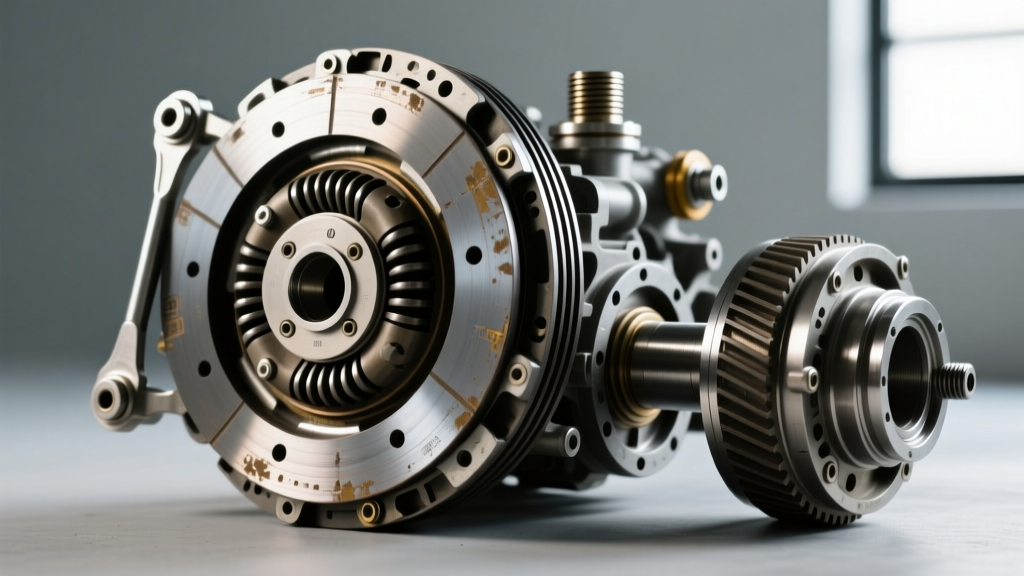
The most common reason for SAC failure immediately post-installation is the failure to use the proprietary SAC setting tool during pressure plate installation. Unlike a traditional diaphragm clutch, the SAC pressure plate is shipped with the wear-compensating ramp ring locked in its 'zero' factory position.
The Mechanical Failure
If a technician uses a standard clutch alignment arbor or presses the pressure plate unevenly onto the flywheel without the LuK SAC alignment tool, the sensor ring is forced out of its zero position. The internal ramps prematurely engage, artificially taking up the clearance meant for future friction material wear.
The Symptom & Cost to Fix
The driver will experience a 'dead pedal' (the clutch engages at the very top of the pedal travel) or immediate slipping under load because the pressure plate cannot apply full clamping force. Fixing this requires a complete transmission removal, discarding the contaminated friction disc, and resetting or replacing the pressure plate.
- Diagnostic Time: 0.5 hours ($75 - $95)
- Teardown & Re-install Labor: 5.5 hours ($800 - $1,075)
- Replacement Friction Disc (if glazed): $85 - $140
- Total Comeback Cost: $960 - $1,310
Root Cause 2: Ignoring DMF Step Height and Flywheel Resurfacing
SAC systems are almost exclusively paired with Dual Mass Flywheels (DMF) to dampen torsional vibrations from high-torque, small-displacement turbocharged engines. A critical, often overlooked specification is the 'step height'—the distance between the DMF friction surface and the pressure plate mounting surface.
The Measurement Mandate
For common applications like the VW/Audi 02Q 6-speed or the BMW ZF S6-45, the DMF step height must strictly fall between 0.5mm and 0.8mm. If a machine shop resurfaces the DMF (which is generally not recommended for DMFs, but still attempted) or if an aftermarket DMF is manufactured with a flat 0.0mm step, the SAC mechanism will over-compensate. The wear ring will rotate to its maximum limit immediately, resulting in severe clutch chatter and premature release bearing failure.
Torque Specifications & Hardware Costs
Furthermore, reusing stretch-to-yield DMF bolts or failing to follow the exact torque sequence will warp the DMF primary mass, causing the SAC sensor ring to bind. For a VW MQB 2.0T application, the M10 DMF-to-crankshaft bolts require exactly 60 Nm + 90 degrees of rotation. The pressure plate-to-DMF bolts require 25 Nm.
Replacing a destroyed DMF due to improper step height or hardware failure adds $450 to $850 to the parts ledger of a comeback job.
Root Cause 3: The Aftermarket SAC Price Trap
Not all SAC pressure plates are created equal. While Tier 1 suppliers like Schaeffler (LuK) and ZF (Sachs) hold the OE patents and metallurgy for the internal ramp rings, the 2026 aftermarket is flooded with 'white-box' imports that mimic the exterior casting but use inferior internal spring steel and poorly machined ramps.
According to ZF Sachs technical documentation, the internal ramp angles require microscopic precision to ensure linear compensation. Cheap copies often feature binding ramps that cause the clutch to self-adjust erratically, leading to a pulsating pedal feel.
2026 OEM vs. Aftermarket SAC Price & Risk Matrix
| Component Tier | Brand / Example Part # (VW GTI 2.0T) | 2026 Avg. Kit Price | Post-Install Failure Risk | Tooling Requirement |
|---|---|---|---|---|
| OEM / Tier 1 | LuK RepSet (624 3153 09) | $380 - $450 | Extremely Low (if installed correctly) | LuK SAC Tool (400 0085 10) |
| Premium Aftermarket | Sachs Performance / OEM Replacement | $350 - $420 | Low | LuK / Sachs SAC Tool |
| Budget 'White-Box' | Generic Import (Various eBay/Amazon) | $140 - $190 | High (Ramp binding, spring fatigue) | Standard Arbor (Fails to set) |
Diagnostic Protocol: Verifying the Failure Before Teardown
Before committing to a $1,000 teardown, technicians must verify if the issue is hydraulic, electronic, or mechanical. Modern SAC systems are monitored by the ECU via the Clutch Position Sensor (e.g., VW G476).
- Scan Tool Adaptation: Using VCDS, OBDeleven, or an advanced bidirectional scanner, check the Clutch Pedal Position Sensor adaptation. If the sensor was not recalibrated after the last replacement, the ECU may incorrectly map the engagement point, causing cruise control cancellation or rev-match errors that mimic clutch slip.
- Hydraulic Bleed Verification: SAC systems are highly sensitive to hydraulic sponginess. A standard gravity bleed is insufficient. A pressure bleeder set to 2.5 bar must be used, followed by the 'pump and hold' manual method to purge air trapped in the concentric slave cylinder (CSC).
- Pedal Travel Measurement: Measure the physical pedal travel. Total travel should be 130mm - 145mm. If the engagement point is less than 15mm from the floor, the hydraulic system has air or the CSC is blown. If engagement is at the very top of the pedal travel, the SAC ramp ring has prematurely deployed (mechanical failure requiring teardown).
The ROI of Proper SAC Tooling
For independent shops and serious DIYers, the cost of the specialized tooling is a necessary business expense. A comprehensive Schaeffler REPXPERT SAC tool kit, which includes the setting tools for various spline sizes and pressure plate diameters, costs between $250 and $400 in 2026.
When compared to the $1,300+ loss incurred from a single warranty comeback caused by a displaced sensor ring, the tooling pays for itself on the very first job. Furthermore, investing in a digital depth gauge to verify DMF step height (costing roughly $85) prevents the catastrophic mismatch that destroys new friction discs within the first 500 miles. In the realm of modern manual transmissions, precision is not optional; it is the only way to protect your bottom line.