The Core Function: What Is a Rear Differential on a Car?
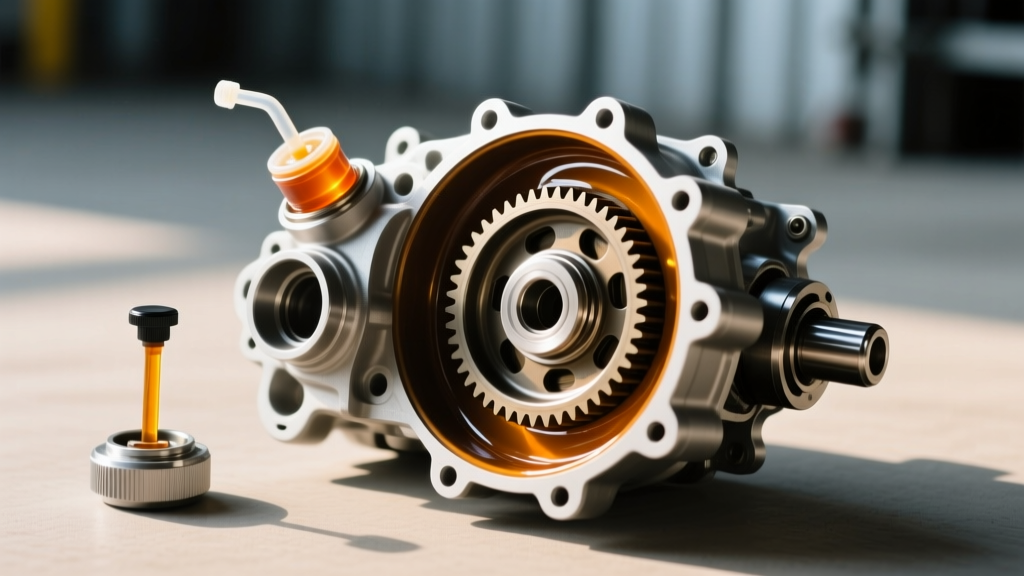
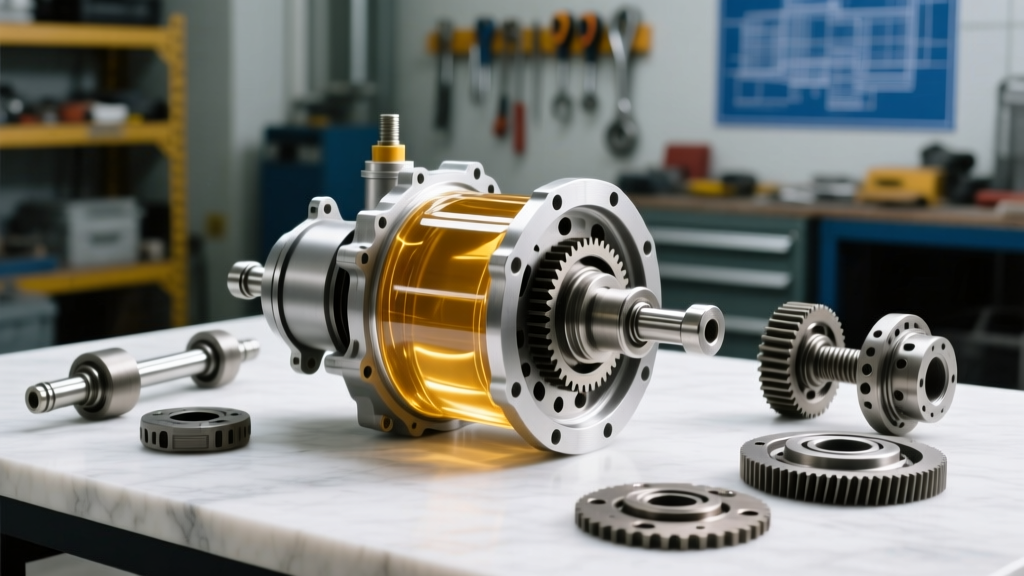
If you are diving into the world of drivetrain modifications, you have likely encountered the term 'ring and pinion' and asked yourself: what is a rear differential on a car? At its most fundamental level, the rear differential is the mechanical gateway that transfers rotational power from the driveshaft to the rear axle shafts. More importantly, it allows the left and right drive wheels to rotate at different speeds when cornering, preventing tire scrubbing, axle binding, and catastrophic drivetrain failure.
However, for performance enthusiasts, the differential is much more than a cornering device. It is the final point of torque multiplication before power reaches the pavement. By altering the internal gear ratio, you can completely transform the acceleration profile, towing capability, and track performance of your vehicle. In this model-specific repair and upgrade guide, we are focusing on one of the most popular performance platforms on the road today: the 2015-2023 Ford Mustang S550 equipped with the 8.8-inch Independent Rear Suspension (IRS) differential.
Why S550 Mustang Owners Change Gear Ratios
From the factory, Ford equipped the S550 Mustang GT with relatively conservative rear differential gear ratios—typically 3.15:1 or 3.55:1. These ratios were chosen by engineers to maximize highway fuel economy and keep engine RPMs low during cruising. While this is great for a daily commuter, it leaves significant performance on the table. The factory 5.0L Coyote V8 produces massive horsepower, but the tall factory gears struggle to multiply that torque effectively off the line, resulting in sluggish 60-foot times at the drag strip and a lack of punch when exiting tight autocross corners.
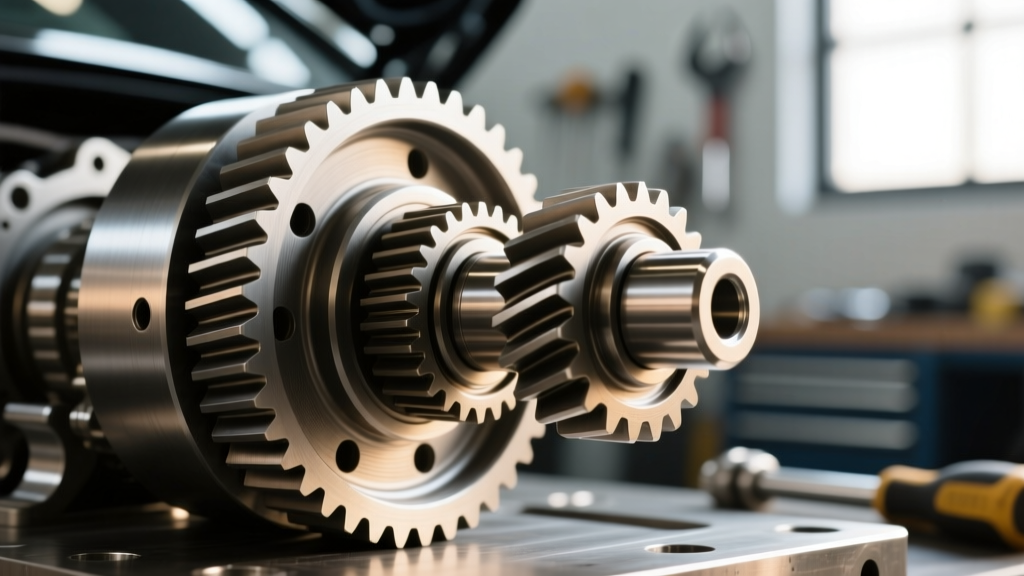
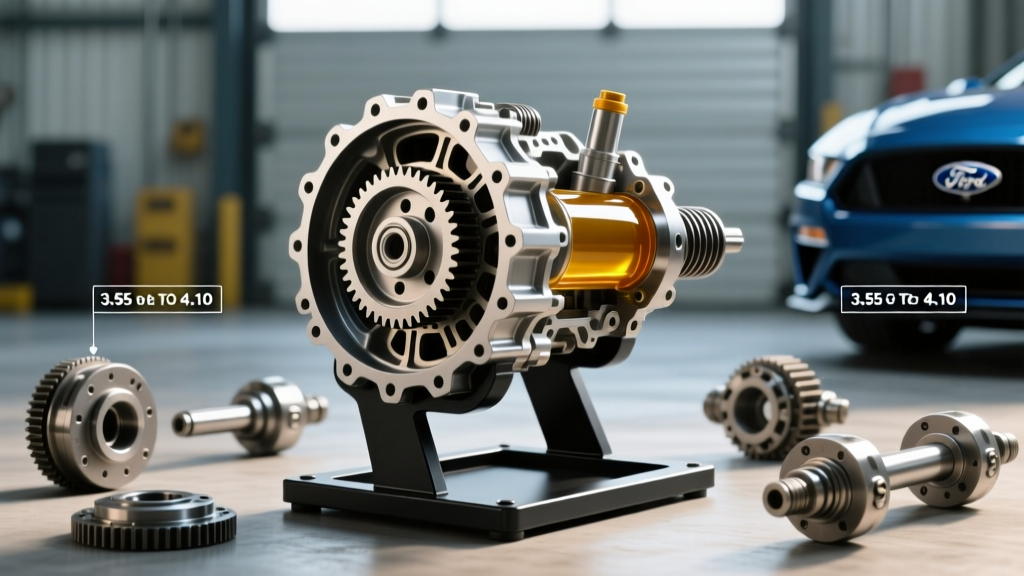
As of 2026, swapping to a numerically higher gear set (such as 3.73:1 or 4.10:1) remains the most cost-effective bolt-on modification to wake up the S550 platform. Below is a comparative look at how different gear ratios affect real-world performance metrics when paired with the MT-82 manual transmission and standard 275-width tires.
| Gear Ratio | Est. 0-60 MPH | 1st Gear Top Speed | 70 MPH Cruise RPM | Best Application |
|---|---|---|---|---|
| 3.15:1 (Factory) | 4.3s | 48 MPH | 1,850 RPM | Highway Cruising / Fuel Economy |
| 3.55:1 (Factory) | 4.1s | 42 MPH | 2,100 RPM | Balanced Street / Occasional Track |
| 3.73:1 (Upgrade) | 3.9s | 40 MPH | 2,250 RPM | Aggressive Street / Road Course |
| 4.10:1 (Upgrade) | 3.7s | 36 MPH | 2,450 RPM | Dedicated Drag / Tight Autocross |
Model-Specific Re-Gear Guide: The S550 8.8 IRS Tear-Down
Unlike the older solid-axle S197 Mustangs, the S550 utilizes an Independent Rear Suspension (IRS). The differential is bolted directly to the rear subframe. Fortunately, you do not need to drop the entire IRS subframe to perform a gear swap. The S550 8.8-inch center section (often called the 'pumpkin') can be removed out the back of the differential housing once the rear cover, axle shafts, and driveshaft are disconnected.
Step 1: Axle Shaft and Driveshaft Removal
After draining the factory gear oil, remove the rear differential cover. You will need to rotate the carrier to access the cross-pin retaining bolt (typically an 8mm or 10mm bolt). Once the cross-pin is slid out, push the axle shafts inward to release the internal C-clips. With the C-clips removed, pull the axle shafts out of the housing. Next, unbolt the 12mm 12-point driveshaft bolts connecting to the rear pinion flange. Support the center section with a transmission jack and unbolt the twelve 18mm nuts securing the center section to the differential housing.
Essential OEM and Aftermarket Part Numbers
When sourcing parts, never reuse the original ring gear bolts or pinion crush sleeve. According to Ford Performance Parts, you should always use a master install kit that includes new Timken bearings, shims, and hardware.
- 3.73 Gear Set: Ford Performance M-4209-88373
- 4.10 Gear Set: Ford Performance M-4209-88410
- Master Install Kit: Motive Gear MK8.8IK (Includes Timken bearings, crush sleeve, pinion nut, seals)
- Rear Cover Gasket: Fel-Pro RDS 55362 (or high-temp RTV Silicone)
Critical Torque Specifications and Setup Measurements
Setting up a ring and pinion is an exercise in precision. If the backlash or pinion depth is off by even a few thousandths of an inch, your new gears will whine, overheat, and eventually shatter under load.
- Ring Gear Bolts: 85 lb-ft (Apply Red Loctite 272 to threads before installation).
- Pinion Bearing Preload: 15-25 inch-pounds of rotational drag (measured with an inch-pound beam torque wrench on the pinion nut). Achieving this requires tightening the pinion nut to approximately 160-220 lb-ft to crush the new sleeve.
- Target Backlash: 0.008 to 0.012 inches (Measured at three different points around the ring gear using a dial indicator).
- Differential Cover Bolts: 24 lb-ft (Use a star-pattern tightening sequence).
Differential Fluid Dynamics: Protecting Your Investment
Understanding what is a rear differential on a car also means understanding the lifeblood that keeps it alive: gear oil. The extreme shearing forces between the hypoid ring and pinion gears require specialized lubrication. When you install a fresh set of gears, fluid selection and maintenance become even more critical.
Viscosity and Friction Modifiers
For a street-driven S550 Mustang, a high-quality 75W-90 or 75W-85 synthetic gear oil is ideal. While many track enthusiasts jump straight to 75W-140, thicker fluids create parasitic drag and run hotter in daily driving scenarios because they do not flow as quickly through the tight tolerances of the bearings. The S550 IRS differential holds approximately 1.5 quarts (1.4 liters) of fluid.
Furthermore, if you are retaining the factory Traction-Lok (clutch-type limited-slip differential), you must add a friction modifier. Without it, the clutches will chatter violently during low-speed turns. Motorcraft XL-3 Friction Modifier is the industry standard; add exactly 4 ounces to the differential before topping off with your base gear oil.
Expert Tip: According to drivetrain specialists at Ring-Pinion.com, synthetic gear oils contain high levels of sulfur-phosphorus additives. Ensure the oil you select is explicitly rated for API GL-5 service to protect the sliding friction of hypoid gear teeth.
The 500-Mile Break-In Protocol
The most common mistake enthusiasts make after a re-gear is ignoring the break-in procedure. Freshly cut ring and pinion gears have microscopic machining marks. During the first few hundred miles, these high spots wear down, generating immense heat and shedding fine metallic particulates into the gear oil. If left unchanged, this metal-laden oil acts like liquid sandpaper, permanently scoring the bearings and gear faces.
Follow this strict break-in protocol to ensure your new S550 differential lasts for 100,000+ miles:
- Initial Drive: Drive the vehicle for 15-20 minutes at varying speeds (30-50 MPH). Do not exceed 50% throttle.
- Cool Down: Let the differential cool completely to ambient temperature. This completes one heat cycle.
- Repeat: Perform this heat-cycle process 4 to 5 times over the first 100 miles.
- Avoid Towing/Launching: Do not use launch control, perform hard drag launches, or tow heavy loads for the first 500 miles.
- The Crucial First Fluid Change: At exactly 500 miles, drain the break-in fluid. You will likely find a thick, glittery sludge on the drain plug magnet. Flush the housing with a half-quart of cheap conventional gear oil to rinse out suspended particulates, then refill with your premium synthetic 75W-90 and friction modifier.
Final Thoughts on S550 Drivetrain Upgrades
So, what is a rear differential on a car? It is the ultimate translator of engine potential into real-world kinetic energy. By upgrading the gear ratio in your S550 Mustang's 8.8 IRS differential, you are tailoring the vehicle's mechanical advantage to your specific driving style. Whether you opt for a 3.73 street setup or a 4.10 track weapon, adhering to precise torque specs, utilizing OEM-grade install kits, and strictly following fluid break-in protocols will ensure your drivetrain performs flawlessly for years to come. For more community-driven troubleshooting and installation photos, the Mustang6G Forums remain an invaluable resource for S550 owners tackling this project in their home garages.