Understanding the Honda S2000 Drivetrain Layout
As we navigate the classic sports car landscape in 2026, the Honda S2000 remains a benchmark for high-revving, naturally aspirated performance. But beyond its legendary 9,000 RPM redline, how does the S2000 drivetrain actually impact fuel economy? For beginners and new owners, understanding the mechanical path from the engine to the rear wheels is crucial for maximizing miles per gallon (MPG) without sacrificing the car's iconic driving dynamics.
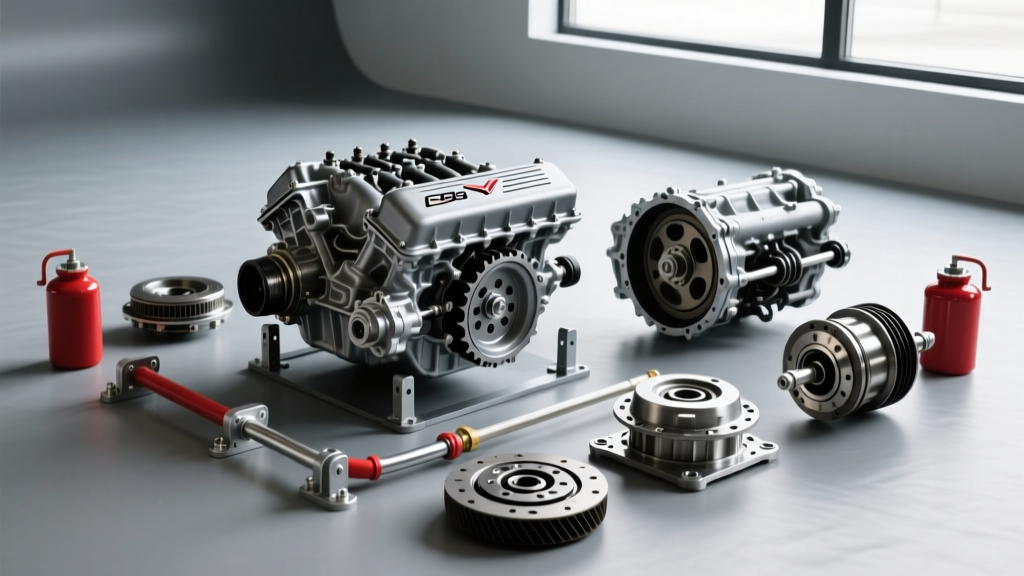
The S2000 utilizes a front-engine, rear-wheel-drive (RWD) longitudinal layout. Unlike front-wheel-drive (FWD) vehicles where the transmission and differential are packaged together in a transaxle, the S2000's power flows rearward through a dedicated transmission, a multi-piece driveshaft, and finally into a rear-mounted differential. This straight-line power delivery minimizes the number of directional changes the rotational force must make, inherently reducing parasitic loss and boosting mechanical efficiency.
AP1 vs. AP2: How Gear Ratios Dictate Highway MPG
One of the most significant factors influencing S2000 fuel economy is the difference in transmission gearing between the early AP1 (1999–2003, F20C engine) and the later AP2 (2004–2009, F22C1 engine). While both feature close-ratio 6-speed manual transmissions, Honda made critical revisions to the AP2's internal ratios to improve daily drivability and highway efficiency.
| Specification | AP1 (1999-2003) | AP2 (2004-2009) | Efficiency Impact |
|---|---|---|---|
| 6th Gear Ratio | 0.742 | 0.654 | AP2's taller 6th gear drops cruising RPM, saving fuel. |
| Final Drive Ratio | 4.080 | 4.100 | AP2's slightly shorter final drive offsets the taller 6th gear for better acceleration. |
| RPM at 70 MPH (6th) | ~3,450 RPM | ~3,050 RPM | 400 RPM drop in AP2 yields ~1.5 to 2.0 MPG highway gain. |
| EPA Highway Estimate | 24 MPG | 25 MPG | Real-world AP2 highway cruising can exceed 27 MPG. |
According to data from FuelEconomy.gov, the AP2 holds a slight edge in highway fuel efficiency. The 400 RPM drop at highway speeds means the F22C1 engine is consuming less fuel and experiencing less internal friction during sustained cruising. However, because the VTEC crossover happens at 6,000 RPM, keeping the engine below this threshold in 6th gear is the golden rule for S2000 fuel economy.
Parasitic Loss: Where Does the Power Go?
The S2000's F20C produces 240 horsepower at the crank (237 hp for the F22C1). However, dyno tests consistently show roughly 200 to 215 horsepower at the rear wheels. This 10% to 15% drivetrain loss is exceptionally efficient for a longitudinal RWD car, but understanding where this energy is lost helps you maintain optimal fuel economy.
The Torsen Limited-Slip Differential
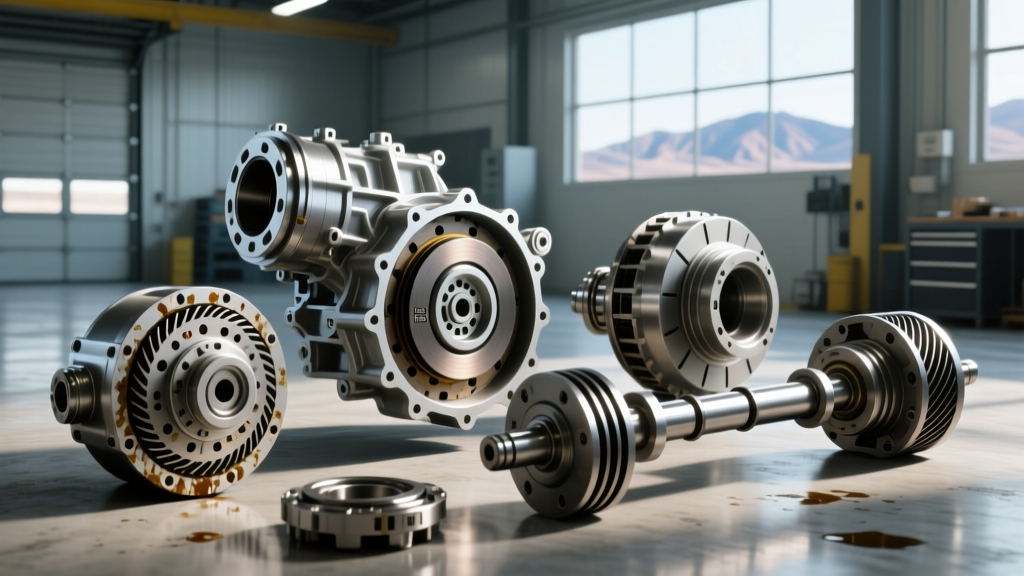
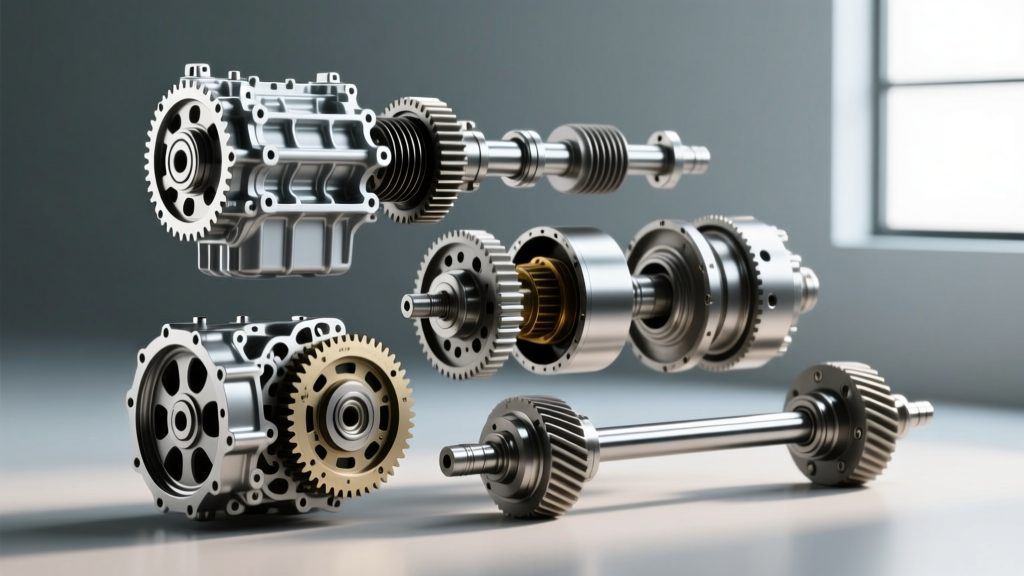
Honda equipped the S2000 with a Torsen (Torque Sensing) Type 1 helical gear limited-slip differential. Unlike clutch-pack LSDs found in many aftermarket setups or older sports cars, the Torsen unit relies on precision-cut helical gears. Helical gears operate with an efficiency rate of 98% to 99%. Because there are no clutch discs dragging through thick fluid when driving in a straight line, the Torsen diff introduces minimal parasitic drag, directly benefiting your fuel economy.
Driveshaft and U-Joint Friction
The AP1 and AP2 utilize a multi-piece steel driveshaft connected by universal joints (U-joints). Over decades of use, the needle bearings inside these U-joints can lose their grease, develop rust dust, and begin to bind. A binding U-joint forces the engine to work harder to rotate the shaft, silently robbing you of 1 to 2 MPG and causing a noticeable vibration at 55-65 MPH.
Fluid Selection: The Secret to Drivetrain Efficiency
Fluid viscosity is the silent killer of fuel economy. Thicker fluids create higher churning resistance (fluid drag) inside the transmission and differential casings. Honda engineered specific low-viscosity fluids for the S2000 drivetrain to minimize this drag while protecting the high-load gear surfaces.
- Manual Transmission Fluid (MTF): Honda Genuine MTF (Part# 08798-9031) is a specialized low-viscosity fluid. Using a standard, thicker 75W-90 gear oil in the S2000's 6-speed will cause sluggish cold-weather shifting and increase rotational drag, reducing MPG. Capacity: 1.5 Liters (1.6 US qts).
- Rear Differential Fluid: Honda Hypoid Gear Oil HGO-1 85W-90 GL-5 (Part# 08200-9007). The Torsen differential requires GL-5 or GL-6 rated fluid due to the extreme pressure at the ring and pinion gear mesh point. Capacity: 1.2 Liters (1.3 US qts).
Expert Tip: Never use friction-modifier additives meant for clutch-type LSDs in your S2000's rear differential. The Torsen unit relies on gear binding, not clutch friction. Additives can alter the fluid's shear stability and reduce mechanical efficiency.
Actionable Maintenance Checklist for Maximum MPG
To ensure your S2000 drivetrain operates at peak efficiency, follow this exact maintenance protocol. Regular fluid changes remove microscopic metal shavings that increase fluid friction and heat.
- Drain and Fill the Transmission: Do this every 30,000 miles. The drain plug requires a 3/8-inch square drive. Torque Spec: 44 lb-ft (59 Nm).
- Replace Crush Washers: Never reuse aluminum crush washers on the drain and fill plugs. Use Honda Part# 90471-PX4-000 (18mm). A leaking fill plug will drop fluid levels, causing gear whine and massive friction-induced efficiency loss.
- Service the Rear Differential: Change every 30,000 to 50,000 miles. Torque Spec for Diff Drain/Fill: 33 lb-ft (44 Nm).
- Inspect U-Joints: With the car on a lift, rotate the driveshaft by hand. It should move with smooth, consistent resistance. Any 'notchy' feeling or visible orange rust dust at the bearing caps means the U-joints must be replaced immediately to stop parasitic drag.
Hidden Drag Culprits: Beyond the Drivetrain
While the S2000 drivetrain is highly efficient, external factors often mimic drivetrain drag. As noted by veteran mechanics on the S2KI Community Archives, the S2000's front brake caliper slide pins are notorious for seizing due to age and lack of lubrication. A seized slide pin causes the brake pad to drag continuously against the rotor. This rolling resistance forces the drivetrain to overcome constant braking friction, devastating fuel economy and causing uneven rotor wear.
Additionally, ensure your wheel bearings are properly preloaded. The S2000 uses tapered roller bearings in the front hubs. If the spindle nut is over-tightened during a brake job, the bearing preload becomes excessive, generating heat and rotational drag that the engine must constantly fight against.
Summary: Balancing Performance and Economy
The Honda S2000 drivetrain is a masterpiece of mechanical efficiency. By understanding the differences between AP1 and AP2 gearing, utilizing the correct low-viscosity Honda MTF, and eliminating parasitic drag from aging U-joints and brake components, you can easily achieve the upper echelons of the car's MPG potential. Whether you are carving canyons or cruising on the highway, a well-maintained S2000 drivetrain ensures that every drop of fuel is translated directly into forward motion.