Decoding the Drivetrain FWD Meaning vs. RWD Architecture
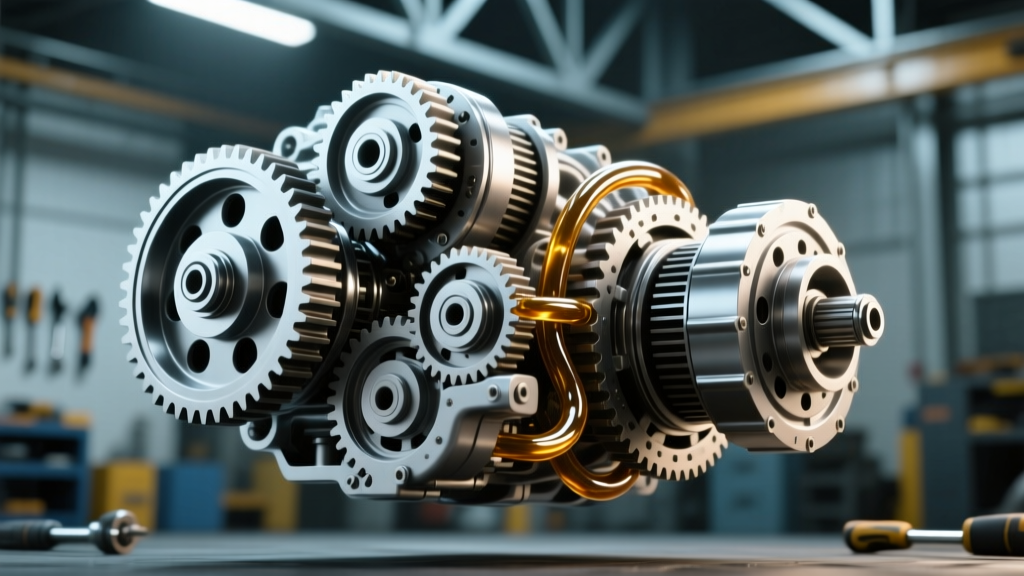
When consumers and enthusiasts search for the drivetrain fwd meaning, they are typically trying to understand the fundamental packaging of front-wheel-drive vehicles, where the engine, transmission, and differential are consolidated into a single transaxle unit that pulls the vehicle. While this layout offers packaging efficiency and lower initial manufacturing costs, it stands in stark contrast to the mechanical complexity and dynamic superiority of rear-wheel drive (RWD) system operation. In an RWD configuration, power is routed longitudinally from the engine through a standalone transmission, down a driveshaft, and into a rear-mounted differential that pushes the vehicle forward.
Understanding the drivetrain fwd meaning is crucial for baseline automotive literacy, but for owners of performance sedans, trucks, and luxury vehicles equipped with RWD, the primary concern shifts from basic definitions to long-term maintenance, repair costs, and mechanical longevity. As we navigate the 2026 automotive landscape, the cost of maintaining complex RWD systems—featuring 8-speed and 10-speed automatic transmissions and advanced limited-slip differentials—requires a meticulous financial and technical breakdown. This guide provides an expert-level cost analysis of RWD system operation, contrasting its financial footprint with FWD platforms.
The Anatomy of RWD System Operation: Technical Deep Dive
Rear-wheel drive system operation relies on separating the power generation, gear reduction, and lateral torque distribution into distinct, heavy-duty components. This separation allows for optimal weight distribution (often approaching 50/50 front-to-rear) and accommodates massive torque loads that would easily destroy a compact FWD transaxle.
Longitudinal Transmissions: ZF 8HP and GM 10L90
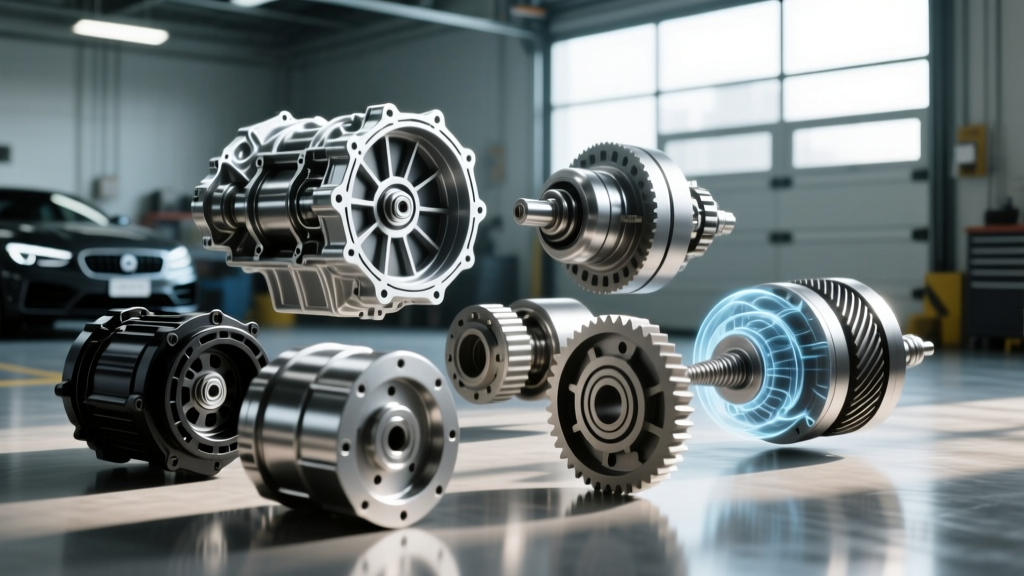
Modern RWD operation is dominated by longitudinal automatic transmissions. The ZF 8HP series (found in BMW, Dodge, and Jaguar applications) and the GM/Ford co-developed 10L90/10R80 10-speed automatics are the industry benchmarks. Unlike FWD transaxles that use compact chain-driven final drives, these RWD transmissions utilize complex planetary gearsets and sophisticated mechatronic valve bodies to manage shift pressures exceeding 1,200 PSI.
- ZF 8HP70: Requires exact adherence to ZF LifeguardFluid 8 specifications. Dry fill capacity is approximately 9.5 liters. The mechatronic unit is highly sensitive to fluid degradation, leading to the infamous 'bushing leak' that requires a $45-$85 OEM sleeve (Part# 24117583803) replacement before it damages the transmission casing.
- GM 10L90: Utilizes Motorcraft MERCON ULV or ACDelco Dexron ULV (Ultra Low Viscosity) fluid. A common failure mode in early models was torque converter shudder, requiring a fluid flush and the installation of an updated torque converter clutch (TCC) control valve kit.
The Driveshaft and Differential Interface
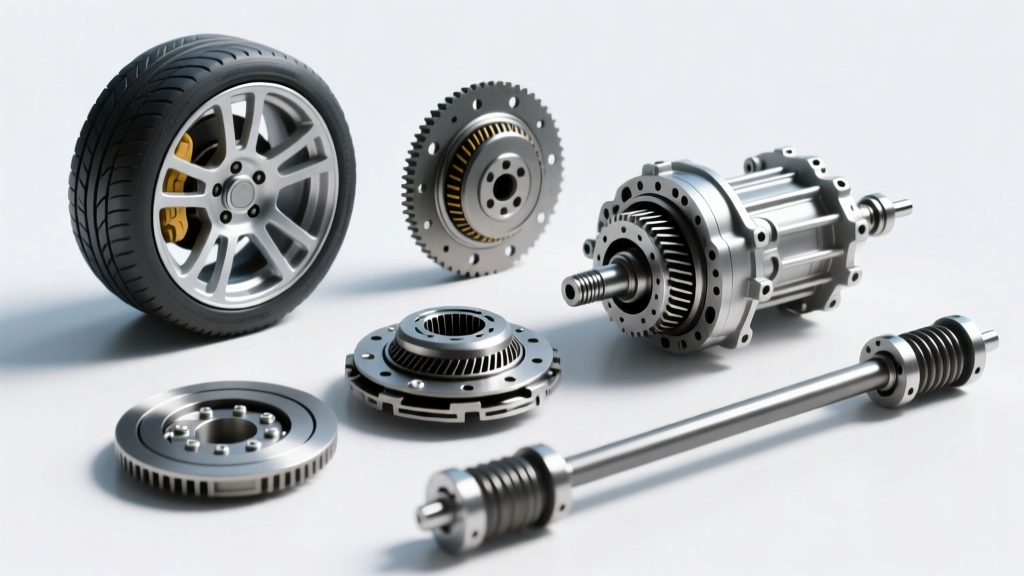
Power exits the transmission via a slip yoke or fixed flange, transferring into the driveshaft. Modern RWD vehicles often use two-piece aluminum or carbon-fiber driveshafts with a center support bearing to reduce NVH (Noise, Vibration, and Harshness). The rotational force is then redirected 90 degrees at the rear axle via the ring and pinion gear set inside the differential housing. Whether equipped with an open differential, a Torsen helical gear LSD, or a clutch-type limited-slip differential, the rear axle must handle immense shear forces during hard acceleration.
2026 RWD Drivetrain Repair & Maintenance Cost Breakdown
Because RWD system operation involves more discrete components than the FWD meaning implies, the sheer volume of potential failure points is higher. However, the modular nature of RWD often means individual components can be serviced without dropping the entire powertrain. Below is a realistic 2026 cost analysis for common RWD drivetrain services, factoring in an average independent shop labor rate of $135 to $165 per hour.
| Component / Service | Part Cost (2026 Est.) | Labor Hours | Critical Specs & Fluids |
|---|---|---|---|
| ZF 8HP Mechatronic Adapter Sleeve | $45 - $85 | 3.5 - 4.5 hrs | Torque: 8 Nm; ZF Lifeguard 8 (9.5L) |
| GM 10L90 Pan & Filter Service | $120 - $180 | 1.5 - 2.0 hrs | Pan Bolts: 10 Nm; Dexron ULV |
| Aluminum Driveshaft Replacement | $650 - $1,200 | 1.2 - 1.8 hrs | Flange Bolts: 85 Nm; U-joint straps: 25 Nm |
| Center Support Bearing Replacement | $80 - $150 | 2.5 - 3.5 hrs | Bearing Mount: 45 Nm; Requires shaft alignment |
| Rear Differential Rebuild (Clutch LSD) | $450 - $850 (Parts) | 5.0 - 7.0 hrs | Pinion Nut: 285 Nm (Crush Sleeve); 75W-140 + Friction Modifier |
| Independent Rear CV Axle Shaft | $180 - $350 | 1.0 - 1.5 hrs | Axle Nut: 210 Nm; Inspect snap-rings |
Note: Dealership labor rates in major metropolitan areas can exceed $220/hour in 2026, which will significantly inflate the total cost of the labor-intensive differential rebuilds and mechatronic services listed above.
Common RWD Failure Modes and Diagnostic Costs
Diagnosing RWD drivetrain issues requires specialized knowledge of rotational harmonics and hydraulic pressures. A common complaint in high-mileage RWD vehicles is a 'clunk' during gear engagement or a high-speed vibration. According to SAE International technical papers on driveline NVH, these issues are rarely isolated to a single failing part but rather a degradation of the entire system's harmonic balance.
Driveline Shudder and Vibration
If a vehicle exhibits a vibration between 50-70 mph, the culprit is often the driveshaft. In a two-piece RWD setup, the rubber isolator in the center support bearing degrades, allowing the shaft to orbit off its true centerline. Furthermore, worn universal joints (U-joints) can cause a cyclic vibration that intensifies under load. Replacing U-joints on a modern staked (non-serviceable) aluminum driveshaft often necessitates buying an entire new driveshaft assembly, pushing the repair cost past $1,000.
Differential Whine and Chatter
A howling noise that changes pitch with vehicle speed indicates ring and pinion gear wear or improper backlash setup. If the noise occurs only during coast-down (deceleration), the coast side of the gear teeth is worn. Conversely, clutch-type limited-slip differentials are prone to 'chatter' during low-speed turns if the friction modifier additive in the 75W-140 gear oil has broken down. A simple $40 fluid and additive swap can cure the chatter, but ignoring it will glaze the clutch packs, resulting in a $1,500+ differential overhaul.
FWD vs. RWD: Long-Term Ownership Cost Analysis
Returning to the drivetrain fwd meaning, the fundamental advantage of the front-wheel-drive layout is cost-efficiency. FWD vehicles eliminate the driveshaft, rear differential, and rear axle shafts, reducing both vehicle weight and the number of components that require fluid changes. A standard FWD transaxle fluid drain and fill requires roughly 4 to 6 quarts of ATF and takes 30 minutes. There is no rear differential to service, and CV axle replacements are generally straightforward.
However, the FWD layout forces the front tires to handle steering, braking, and acceleration simultaneously. This results in front tire wear rates that are often 30% to 50% faster than the rear tires, necessitating strict rotation schedules and premature tire purchases. Furthermore, the concentrated heat and stress inside an FWD transaxle—especially in turbocharged applications—can lead to catastrophic differential or chain failures that require a complete $4,000+ transaxle replacement.
RWD system operation, while requiring more frequent fluid services (transmission, rear differential, and sometimes a transfer case in AWD-biased RWD systems), spreads the mechanical stress across a larger footprint. Rear tires handle the acceleration, while front tires handle steering and the bulk of braking, leading to more even tire wear. For enthusiasts and fleet operators who plan to keep vehicles beyond the 100,000-mile powertrain warranty, the modular repairability of RWD components often balances out the higher initial maintenance costs.
Expert Tips for Minimizing RWD Drivetrain Expenses
- Strict Fluid Adherence: Never substitute ZF LifeguardFluid 8 with generic 'multi-vehicle' ATFs. The friction modifiers and viscosity indices are specifically calibrated for the ZF 8HP clutch materials. Using the wrong fluid will cause micro-slip and premature clutch pack failure.
- Monitor Driveshaft Angles: If you modify your vehicle's suspension (lowering springs or lift kits), you alter the operating angles of the U-joints. Operating a U-joint outside its optimal 1-to-3-degree operating angle will cause rapid needle-bearing failure and severe driveline vibration.
- Catch Leaks Early: The rear pinion seal on the differential is a $15 part, but if it leaks and the differential runs low on oil, the ring and pinion will overheat and gall. Inspect the rear differential cover and pinion flange for seepage every 15,000 miles.
- Use OEM Fasteners: Drivetrain components are subject to extreme rotational torque. Always use new, OEM-spec prevailing torque nuts for pinion flanges and axle nuts. Reusing a stretched axle nut can lead to wheel hub bearing failure or a detached CV axle.
Conclusion
While grasping the basic drivetrain fwd meaning is essential for understanding mainstream automotive packaging, the mechanical symphony of RWD system operation offers unparalleled performance, durability, and driving dynamics. The 2026 cost analysis reveals that while RWD layouts demand more rigorous maintenance and feature higher component counts, their modular design allows for targeted, cost-effective repairs that can keep vehicles on the road for hundreds of thousands of miles. By adhering to strict torque specifications, utilizing exact OEM fluids, and addressing harmonic vibrations early, owners can mitigate the financial risks and fully exploit the engineering brilliance of the rear-wheel-drive layout.