Decoding Next Gen Drivetrain Reviews: Where Does Your MPG Go?
When automotive journalists and engineers publish next gen drivetrain reviews, the conversation almost always pivots to a single, critical metric: fuel economy. As we navigate the 2026 automotive landscape, the quest for higher MPG and extended EV range has forced engineers to completely reimagine how power travels from the crankshaft to the contact patch. For beginners, understanding drivetrain efficiency can feel like deciphering a foreign language. However, the core concept is remarkably simple: every component between the engine and the wheels steals a little bit of energy. This theft is known as parasitic loss.
In this beginner-friendly explainer, we will break down the exact mechanical realities of drivetrain efficiency, comparing legacy systems to modern marvels, and providing actionable maintenance specs to keep your vehicle operating at peak economy.
According to the EPA's Green Vehicles guide, drivetrain friction and rotational mass account for nearly 15% of the total energy loss in a conventional internal combustion vehicle, making it the second-largest source of inefficiency after engine thermal losses.
The Hidden Thief: Parasitic Loss in AWD Systems
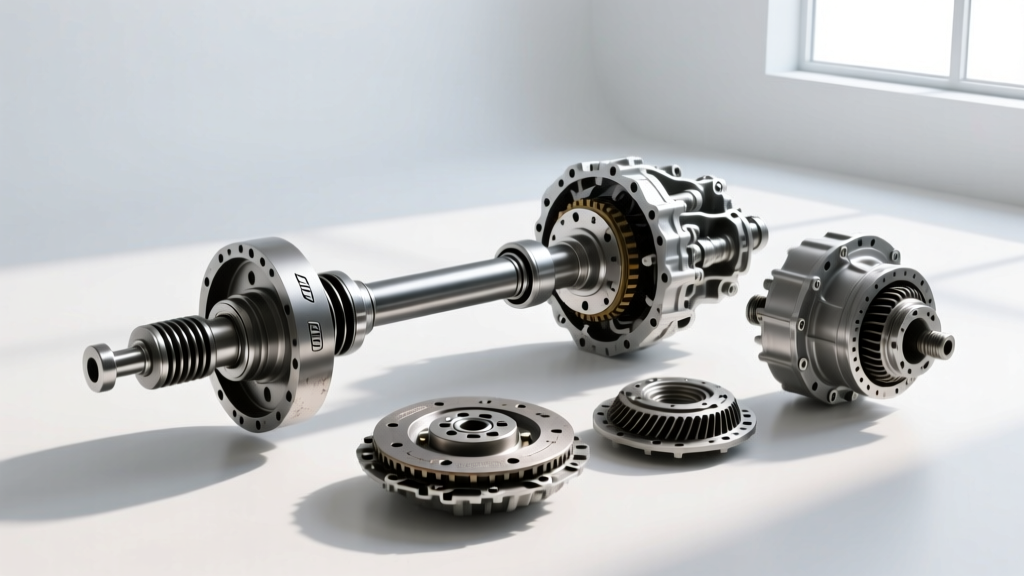
To understand why front-wheel drive (FWD) vehicles historically dominate fuel economy charts, you must understand the mechanical penalty of all-wheel drive (AWD). In a traditional, full-time AWD system, the engine must constantly spin a heavy steel driveshaft, a Power Transfer Unit (PTU), and a Rear Drive Unit (RDU)—even when the rear wheels do not require torque. This creates massive churning losses inside the gear oil and rotational inertia.
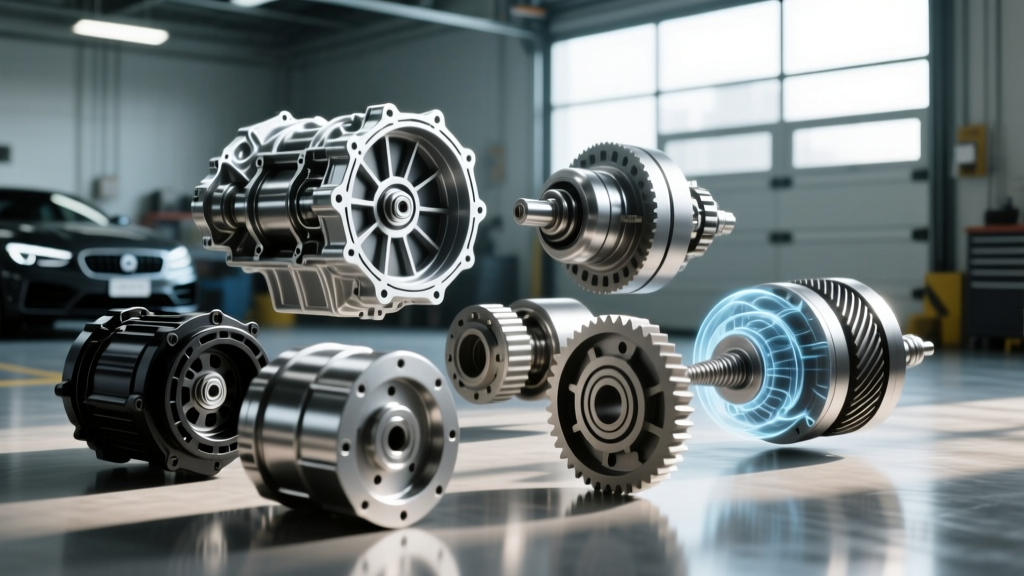
Historically, this parasitic drag cost the average consumer between 2 and 4 MPG compared to a FWD equivalent. However, modern next gen drivetrain reviews heavily praise the advent of 'Disconnect AWD' systems. Vehicles like the latest Ford Escape and various GM crossovers utilize a physical dog-clutch inside the PTU or RDU. When the vehicle is cruising in a steady state, this clutch disengages, allowing the driveshaft to come to a complete stop. By eliminating the rotational mass of a spinning driveshaft, these systems recover up to 12 horsepower of parasitic loss, effectively bridging the MPG gap between FWD and AWD configurations.
Transmission Efficiency: The Torque Converter Revolution
The automatic transmission is the largest source of drivetrain inefficiency in internal combustion vehicles. Older, ubiquitous transmissions like the GM 4L60E relied heavily on fluid coupling. The torque converter acts like a fluid fan, allowing the engine to spin independently of the transmission input shaft at low speeds. While great for smooth launches, this 'slip' generates immense heat and wastes kinetic energy.
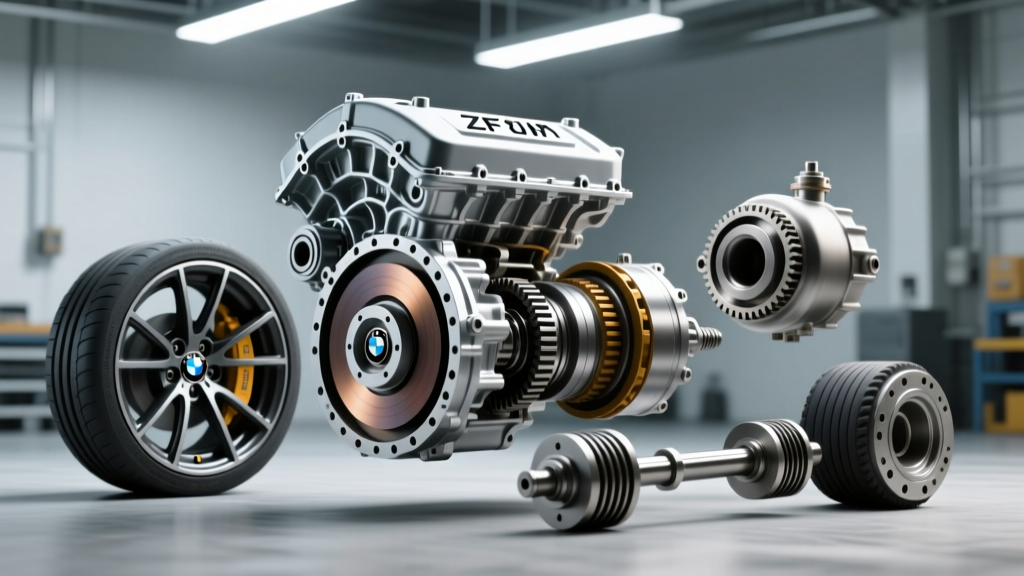
Modern engineering has drastically reduced this slip. The legendary ZF 8HP (8-speed automatic) found in countless BMW, Chrysler, and Jaguar applications utilizes a sophisticated multi-plate lock-up clutch with an integrated torsion damper. Unlike older units that only locked up in top gear at highway speeds, the ZF 8HP transmission can lock the torque converter as early as 2nd gear. This creates a near-direct mechanical link between the engine and the wheels, vastly improving efficiency.
For consumers reading through next gen drivetrain reviews, the shift from 6-speed to 8-speed and 10-speed automatics isn't just about having more gears; it's about keeping the engine in its narrowest, most efficient BSFC (Brake Specific Fuel Consumption) sweet spot. A wider gear ratio spread—often exceeding 8.0:1 in modern 10-speeds—allows for incredibly low numerical final drive ratios. Cruising at 70 MPH in a 10th gear with a 2.41 rear axle ratio drops engine RPM to roughly 1,400, drastically reducing fuel consumption.
Drivetrain Configuration Efficiency Comparison
| Drivetrain Layout | Typical Parasitic Loss (HP) | Estimated MPG Penalty (vs FWD) | Key Efficiency Tech |
|---|---|---|---|
| FWD (Transverse) | 8 - 12 HP | Baseline | Integrated Transaxle, no driveshaft |
| RWD (Longitudinal) | 15 - 20 HP | -1 to -2 MPG | Low-friction bearings, ULV fluids |
| Traditional AWD | 25 - 35 HP | -3 to -5 MPG | Viscous couplings, open diffs |
| Disconnect AWD | 10 - 14 HP (Cruising) | -0.5 to -1 MPG | PTU Dog-Clutch, RDU disconnect |
Hybrid Transaxles: The Planetary Gearset Advantage
When evaluating hybrid platforms, the traditional stepped-gear automatic is often replaced by an e-CVT (Electronic Continuously Variable Transmission). The most famous example is the Toyota P810 transaxle used in the Prius lineup. Instead of using belts and pulleys like a Nissan or Subaru CVT—which suffer from high friction and slippage—the P810 uses a brilliantly simple planetary gearset known as a Power Split Device.
This device seamlessly blends the torque of the internal combustion engine with the electric motor (MG2) while using a secondary generator (MG1) to control the ratio. Because there are no traditional clutches to slip, no torque converter to generate heat, and no belts to stretch, the mechanical efficiency of the P810 transaxle exceeds 95%. This is a primary reason why Toyota's hybrid synergy drive remains the benchmark in real-world fuel economy, a fact consistently highlighted by FuelEconomy.gov data.
Actionable Maintenance: Preserving Your Drivetrain MPG
Even the most advanced drivetrain will suffer fuel economy penalties if neglected. Fluid degradation increases friction coefficients and causes the transmission control module (TCM) to delay shift points to protect the hardware. Here is how to maintain peak efficiency:
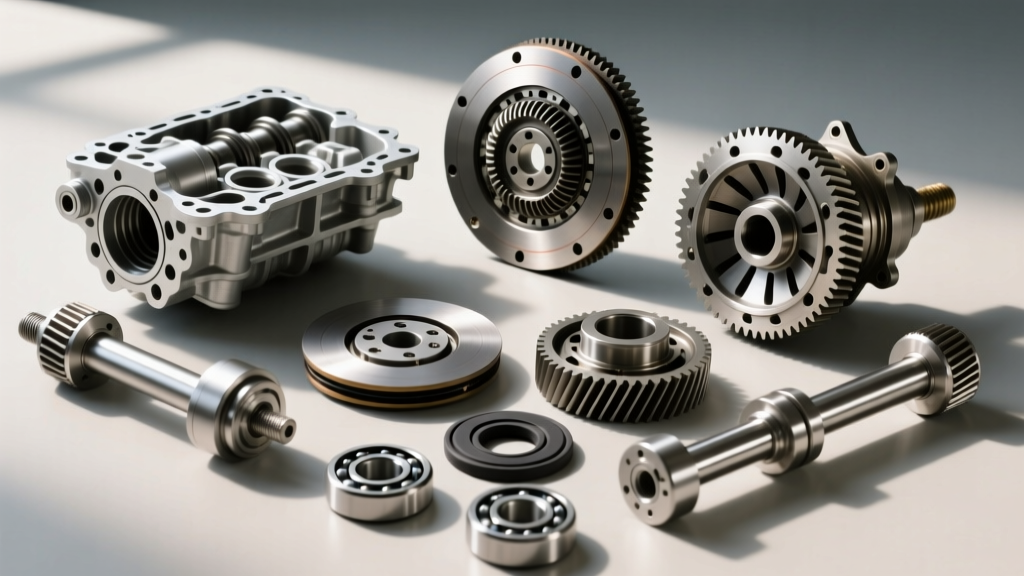
- Differential Fluid: Replace factory gear oil with a high-quality synthetic 75W-80 GL-5. Thinner than the traditional 75W-90, it reduces churning losses in the ring and pinion gear while maintaining extreme pressure protection.
- Torque Specs: When performing a differential drain and fill, always use a torque wrench. Over-tightening an aluminum differential drain plug can strip the threads, while under-tightening leads to leaks. The standard specification for most Japanese and American rear differential drain plugs is 35 Nm to 40 Nm (approx. 26-30 lb-ft).
- Transfer Case Maintenance: For 4WD trucks utilizing an active transfer case (like the BorgWarner 4484), the fluid is often neglected because it is mistakenly assumed to be 'sealed for life.' In reality, the clutch packs inside the transfer case shed microscopic friction material into the fluid. This degraded fluid causes the clutch packs to drag, sending unintended torque to the front axle and creating massive binding and fuel economy loss. Drain and fill the transfer case every 60,000 miles using the exact OEM specified fluid, and torque the fill plug to 20 Nm.
- Transmission Fluid Temperature: Efficiency drops drastically when fluid is cold. Modern vehicles utilize thermal bypass valves to keep fluid in the pan until it reaches 40°C (104°F). If your vehicle's thermostat is failing and running the engine too cold, your MPG will suffer.
Final Thoughts on Drivetrain Efficiency
Ultimately, the drivetrain is a complex web of compromises between durability, cost, and efficiency. By understanding the mechanics of parasitic loss, torque converter lockup, and fluid dynamics, you can make smarter purchasing decisions. The next time you read through next gen drivetrain reviews, look past the horsepower figures and pay close attention to the mechanical innovations happening beneath the floorboards. Whether it is a disconnecting rear axle or an ultra-low viscosity 10-speed fluid, these hidden engineering triumphs are the true heroes of modern fuel economy.