As we navigate the automotive landscape in 2026, the debate between drivetrain configurations extends far beyond performance metrics and traction capabilities. For technicians, fleet managers, and enthusiast owners, the long-term financial implications of drivetrain layouts are paramount. While front-wheel drive (FWD) platforms dominate the commuter segment due to packaging efficiency, the rear-wheel drive (RWD) architecture remains the undisputed king of heavy-duty towing, sports cars, and luxury sedans. Understanding the mechanical nuances and the true cost of ownership requires a deep dive into rear-wheel drive system operation and a direct financial comparison against the integrated front wheel drive differential.
The Mechanics of Rear-Wheel Drive System Operation
Rear-wheel drive system operation relies on a longitudinal power flow that separates the transmission from the final drive unit. In a typical RWD vehicle—whether equipped with a ZF 8HP70, a GM 10L80, or a Ford 10R80 automatic transmission—power is routed rearward via a multi-piece or single-piece aluminum/steel driveshaft. This driveshaft utilizes universal joints (U-joints) or constant velocity (CV) joints to accommodate suspension articulation and pinion angle changes.
The heart of the RWD system is the standalone rear axle assembly. Popular configurations like the Ford 8.8-inch, GM 8.6-inch (10-bolt), and the legendary Dana 44 utilize a hypoid gear set. The pinion gear, driven by the driveshaft, meshes with the ring gear at a 90-degree offset. Because the centerline of the pinion gear is below the centerline of the ring gear, the gear teeth experience massive sliding friction alongside rolling friction. This operational reality dictates the need for specialized extreme pressure (EP) lubricants, specifically API GL-5 rated synthetic gear oils in viscosities like 75W-90 or 75W-140. The mechanical separation of the transmission and the differential means that RWD vehicles require two distinct fluid reservoirs, two separate cooling circuits (in high-performance applications), and independent maintenance schedules.
Contrast: How the Front Wheel Drive Differential Operates
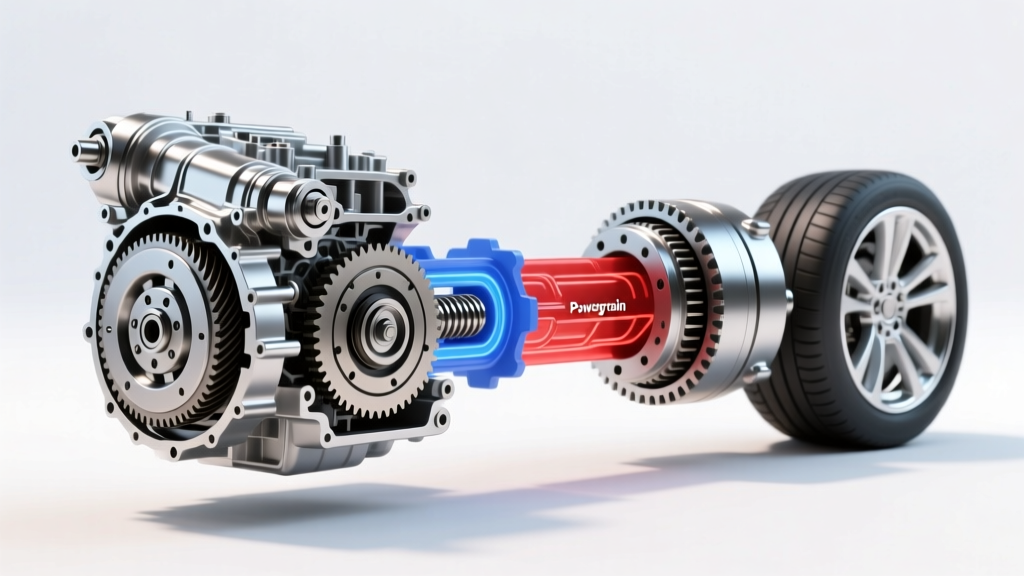
To accurately assess costs, we must contrast the RWD layout with the front wheel drive differential. In an FWD transverse platform, the differential is not a standalone unit; it is fully integrated into the transaxle casing. Instead of hypoid gears, FWD differententials typically utilize helical-cut planetary or spur gear sets, which operate with significantly less sliding friction.
Crucially, the front wheel drive differential shares its lubrication with the transmission's planetary gearsets, torque converter, and clutch packs. This means an FWD differential relies on Automatic Transmission Fluid (ATF) or specialized Continuously Variable Transmission (CVT) fluids, such as Toyota WS or Honda DW-1. While this integration saves weight and reduces manufacturing costs, it creates a single point of failure: if the differential bearings shed metal shavings, the entire transaxle hydraulic valve body and clutch pack system is compromised, leading to catastrophic repair bills.
2026 Maintenance Cost Breakdown: RWD vs. FWD
When analyzing the cost of ownership, component isolation heavily favors the RWD system in terms of catastrophic repair mitigation, even if routine maintenance requires slightly more labor. Below is a comprehensive 2026 cost analysis comparing standard drivetrain services and failure scenarios.
| Service / Component | RWD System (Parts + Labor) | FWD Transaxle System | Service Interval / Notes |
|---|---|---|---|
| Differential Fluid Service | $45 - $85 | $120 - $180 | RWD requires GL-5 gear oil; FWD requires full transaxle ATF drain. |
| Output / Pinion Seal Replacement | $140 - $220 | $250 - $450 | RWD seal is external; FWD requires axle removal and transaxle fluid loss. |
| Driveshaft U-Joint vs. CV Axle | $90 - $160 (Per U-Joint) | $250 - $550 (Per CV Axle) | Spicer U-joints are inexpensive; FWD CV axles are complex, integrated parts. |
| Complete Differential Rebuild | $1,200 - $2,800 | $3,500 - $6,000+ | RWD diff is a standalone drop-out; FWD requires full transaxle teardown. |
Deep Dive: Rear Differential Service Specs and Pricing
The standalone nature of the rear differential makes it a favorite for DIY mechanics and independent shops, drastically reducing labor overhead. A standard fluid service on a GM 10-bolt or Ford 8.8 rear end requires roughly 2.5 quarts of 75W-90 synthetic gear oil (such as Mobil 1 or Amsoil Severe Gear), costing about $35 to $50 in materials. If the vehicle is equipped with a limited-slip differential (LSD), a $12 bottle of friction modifier (e.g., Motorcraft XL-3) is required to prevent clutch pack chatter during low-speed cornering.
However, RWD system operation does involve complex torque specifications when internal repairs are necessary. Consider a pinion seal leak—a common issue on high-mileage trucks. Replacing a Motorcraft BR-15 pinion seal on a Ford 8.8 axle costs less than $20 for the part. Yet, the labor requires precise execution. The pinion nut must be tightened to crush the internal spacer sleeve and achieve the correct bearing preload.
Expert Torque Specification Warning: When servicing a crush-sleeve rear differential, the pinion nut torque is typically between 175 and 225 lb-ft. However, the true metric of success is rotational torque. Using an inch-pound torque wrench on the pinion flange, used bearings should exhibit 12 to 18 in-lbs of rotational drag, while new bearings require 20 to 28 in-lbs. Over-tightening the nut by even a fraction of a turn will over-crush the sleeve, requiring a complete teardown to install a new sleeve and reset the gear contact pattern.
Conversely, replacing a leaking differential side seal on a front wheel drive differential requires draining the transaxle, unbolting the strut assembly, pulling the CV half-shaft, and prying out the seal. The $15 seal ultimately costs the consumer upwards of $300 in shop labor due to the cascading disassembly required.
Driveline Component Failures and Repair Economics
The physical connection between the transmission and the differential highlights another major cost divergence. RWD vehicles utilize driveshafts equipped with U-joints or CV joints. According to Spicer Parts, a standard 1310 series U-joint (part number 210-1310X) costs between $25 and $45. Replacement takes roughly an hour of shop time, as the driveshaft can often be serviced while still partially suspended under the vehicle.
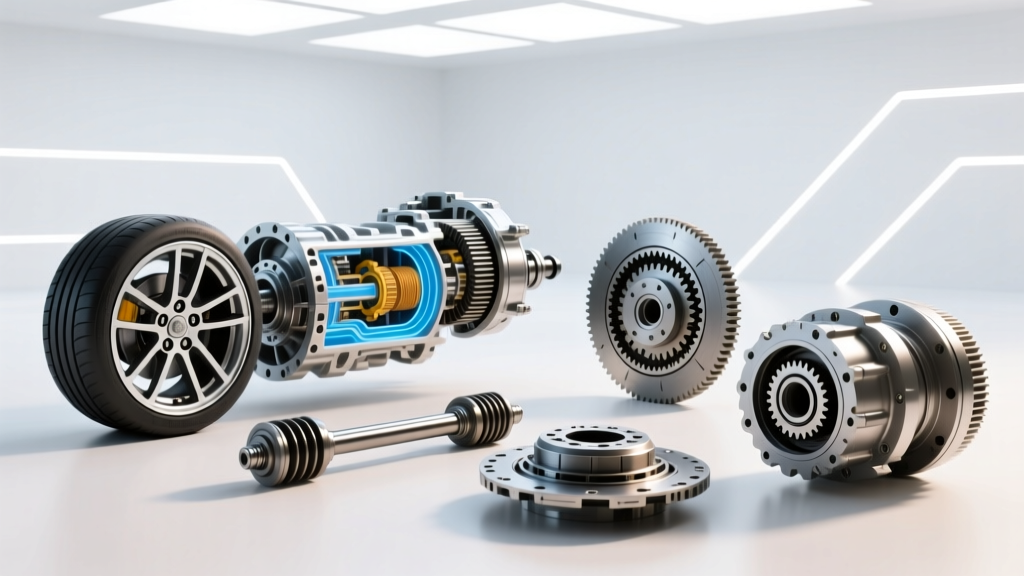
In contrast, FWD vehicles rely on CV half-shafts to transfer power from the integrated front wheel drive differential to the wheel hubs. These shafts must accommodate severe steering angles and vertical suspension travel simultaneously. When a CV joint boot tears and contaminants destroy the bearing races, the entire half-shaft assembly is typically replaced. While aftermarket options from RockAuto range from $80 to $150, OEM dealership pricing for a complete CV axle assembly can easily exceed $450, plus 1.5 to 2 hours of labor per side.
Furthermore, as highlighted in Tremec's technical documentation regarding drivetrain efficiency and NVH (Noise, Vibration, and Harshness), RWD systems allow for larger, more robust gearsets in the final drive because they are not constrained by the transverse packaging limits of an engine bay. This means an RWD differential can handle massive torque loads (e.g., 600+ lb-ft in modern performance trucks) with a relatively low cost of entry for aftermarket upgrades, such as installing 4.10 ratio ring and pinion sets or Detroit Lockers. Upgrading the internal differential of an FWD transaxle is highly specialized, limited in aftermarket support, and prohibitively expensive due to the precision machining required within the transaxle casing.
Long-Term Ownership Cost Verdict
When evaluating rear-wheel drive system operation against FWD alternatives from a purely financial perspective, the context of the vehicle's purpose dictates the winner. For high-volume commuter vehicles, the front wheel drive differential's integrated design saves weight, improves fuel economy, and reduces initial assembly costs, making it the pragmatic choice for budget-conscious daily driving.
However, for vehicles subjected to heavy towing, track use, or high-torque tuning, the RWD layout offers superior economic resilience. The isolation of the differential means that a catastrophic gear failure does not destroy the transmission. Routine maintenance is cheaper and faster, and heavy-duty component replacements—like U-joints and pinion seals—are accessible, standardized, and highly affordable. In 2026, as repair labor rates continue to climb, the modular serviceability of the RWD drivetrain remains a massive financial advantage for those willing to accept the slight penalty in cabin packaging and curb weight.