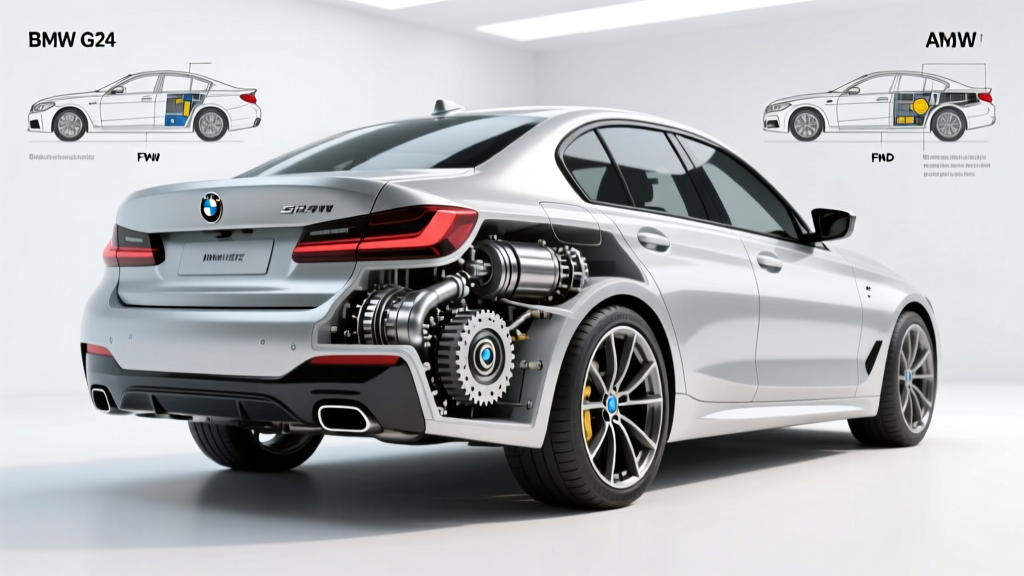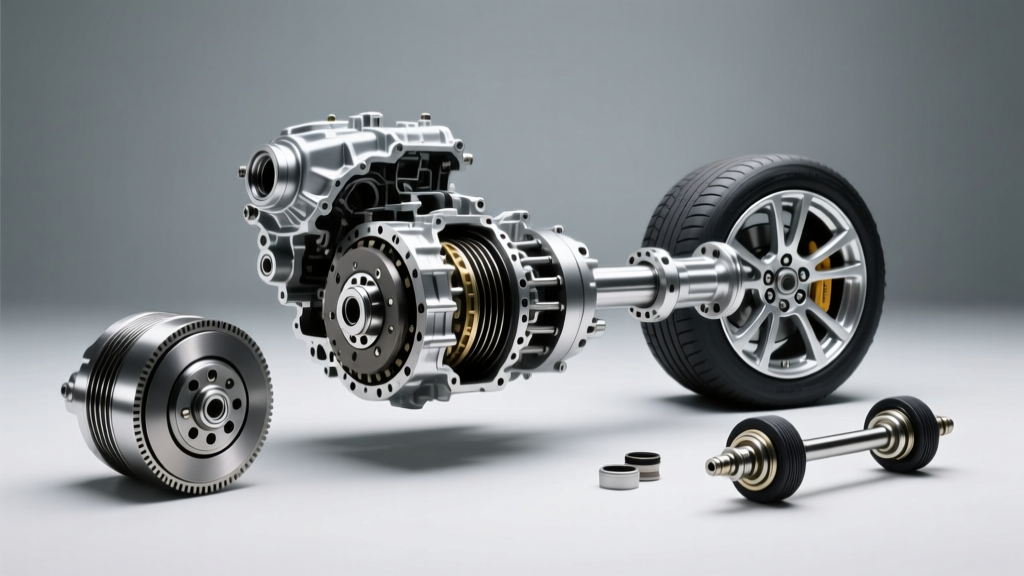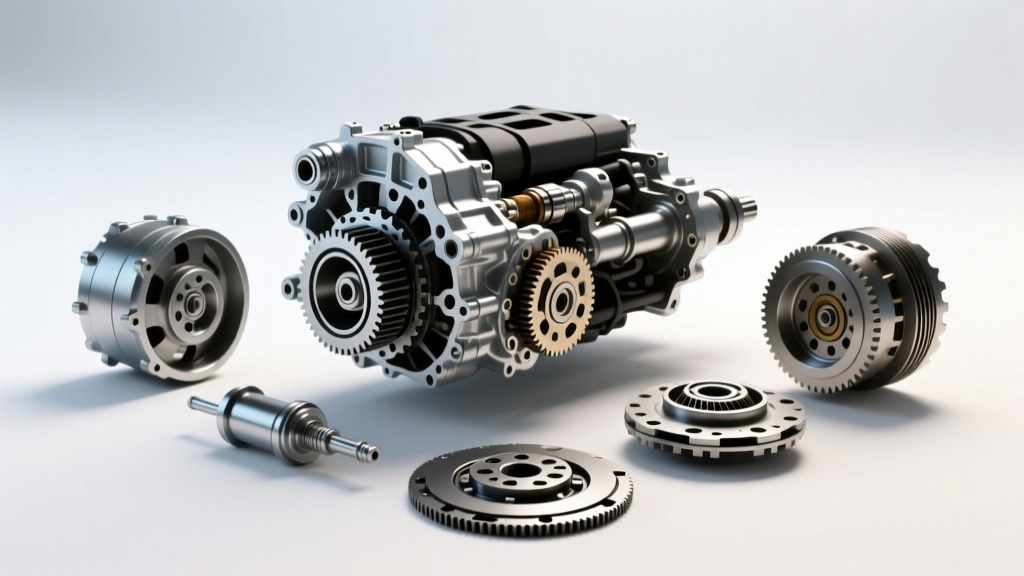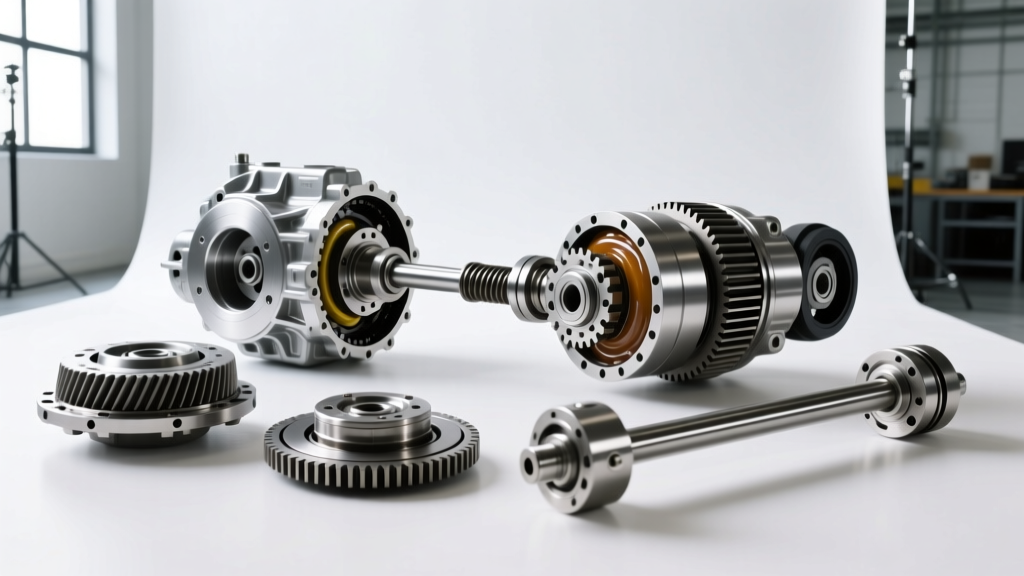
When vehicle owners experience a vibration at highway speeds or a whining noise from the rear axle, they often turn to search engines asking, 'whats a drivetrain?' The distinction between a powertrain (which includes the engine) and a drivetrain (which strictly handles power delivery to the wheels) is critical, especially when analyzing repair invoices. For rear-wheel drive (RWD) platforms, the drivetrain is a robust, mechanically linked system subject to immense rotational forces.
In this comprehensive cost analysis, we dissect the operation of RWD systems, examining specific components like the ZF 8HP transmission, Spicer driveshafts, and GM 8.6-inch differentials, while providing a realistic 2026 price breakdown for maintenance and repairs.
The Anatomy and Operation of a Rear-Wheel Drive System
Unlike front-wheel drive setups that package the transmission and differential into a single transaxle, an RWD drivetrain stretches the length of the vehicle. The operation follows a strict linear torque flow:
- Transmission Output: Torque exits the transmission (e.g., a GM 6L80 or ZF 8HP70) via the output shaft.
- Driveshaft & U-Joints: A tubular steel or aluminum driveshaft transmits this rotational energy rearward. Spicer 1310 or 1350 series universal joints (U-joints) compensate for the vertical articulation of the rear suspension.
- Pinion & Ring Gear: The driveshaft connects to the differential's pinion flange. The pinion gear meshes with the ring gear, translating longitudinal rotation into lateral rotation (a 90-degree turn).
- Axle Shafts: Splined axle shafts transfer the multiplied torque from the differential carrier to the rear wheel hubs.
2026 RWD Drivetrain Cost Breakdown: Parts and Labor
Repair costs have shifted significantly into 2026, driven by supply chain normalization but offset by increased technician labor rates, which now average $150 to $220 per hour at specialized driveline shops. Below is a detailed cost matrix for common RWD drivetrain services.
| Component / Service | OEM / Premium Part Example | Parts Cost (2026) | Labor Time | Total Estimated Cost |
|---|---|---|---|---|
| U-Joint Replacement (Spicer 1310) | Spicer 5-153X (Non-greaseable) | $35 - $55 | 1.5 Hours | $260 - $385 |
| Differential Fluid Service | Motul Gear 300 75W-90 (GL-5) | $60 - $90 | 0.75 Hours | $170 - $255 |
| Pinion Seal Replacement | Timken / National Seal | $25 - $40 | 2.0 Hours | $325 - $480 |
| Ring & Pinion Overhaul | Motive Gear 3.73 Ratio Set | $250 - $400 | 6.0 - 8.0 Hours | $1,150 - $1,760 |
| Limited-Slip Differential (LSD) Upgrade | Eaton Detroit Truetrac | $650 - $800 | 4.0 Hours | $1,250 - $1,680 |
Note: Prices reflect independent specialist shops. Dealership rates will increase total labor costs by approximately 30-40%.
Technical Specifications and Torque Requirements
Proper RWD drivetrain operation relies heavily on precise assembly tolerances. A common DIY mistake is under-torquing driveline fasteners, leading to catastrophic failure. Here are critical specifications for popular RWD platforms:
- Differential Cover Bolts (GM 10-Bolt / 8.6-inch): 25 lb-ft (34 Nm). Use a star-pattern sequence to prevent housing warpage.
- Driveshaft Strap Bolts (Spicer 1310): 18 lb-ft (25 Nm). Always use new stretch bolts or apply medium-strength threadlocker (Loctite 243) if reusing standard hardware.
- Pinion Nut Torque: This is not a fixed number. It must be tightened until the pinion bearing rotational preload reaches 15-25 in-lb (measured with an inch-pound beam torque wrench). For a GM 8.6-inch, this often requires upwards of 250-300 lb-ft of breakaway torque.
- ZF 8HP70 Transmission Pan/Filter: The filter is integrated into the plastic pan. Torque the aluminum pan bolts to exactly 8 Nm (71 lb-in) to avoid stripping the transmission case threads.
Drivetrain vs. Powertrain: Warranty and Coverage Implications
Understanding exactly what is covered under your vehicle's warranty can save thousands of dollars. While a 5-year/60,000-mile powertrain warranty typically covers the engine block, cylinder heads, and the transmission case and internal gears, the drivetrain components situated behind the transmission are often treated differently.
For many manufacturers, the driveshaft, U-joints, and rear differential assembly fall under the standard 3-year/36,000-mile bumper-to-bumper warranty. If a pinion bearing fails at 45,000 miles, the owner is likely responsible for the entire repair bill out-of-pocket unless they purchased an extended driveline-specific warranty. Always review the OEM warranty booklet specifically for 'driveline' or 'drivetrain' exclusions, as wear items like U-joints and clutch-type LSD friction discs are almost universally excluded from coverage.
Common RWD Failure Modes and Diagnostic Insights
Highway Speed Vibrations (45-65 MPH)
If a vehicle exhibits a cyclic vibration that peaks around 55 MPH and diminishes when letting off the throttle, the issue is almost always driveline angle or U-joint related. Worn Spicer U-joints develop 'play' in the trunnion bearings. Diagnosing this requires checking for radial play; if the joint moves more than 0.005 inches, replacement is mandatory. Furthermore, improper pinion angle (the angle between the transmission output shaft and the differential pinion flange) can cause similar vibrations even with brand-new U-joints.
Differential Whine vs. Gear Rattle
A 'howl' that changes pitch with vehicle speed (but not engine RPM) indicates worn ring and pinion gear teeth or failing pinion bearings. Conversely, a 'clunk' upon shifting from reverse to drive suggests excessive backlash. The acceptable backlash for most street-driven RWD differentials is between 0.006 and 0.010 inches, measured via a dial indicator mounted to the axle housing. Adjusting this requires swapping carrier shims, a labor-intensive process that drives up the cost of a differential overhaul.
Upgrading the Rear End: Helical vs. Clutch-Type LSD
When an open differential fails, or when owners seek better traction, upgrading to a Limited-Slip Differential (LSD) is a common path. The two primary options present different cost-to-benefit ratios:
- Clutch-Type (e.g., Eaton Positraction): Uses friction clutches to transfer torque. It is generally cheaper upfront ($450-$600 for parts) but requires specialized friction modifier additives in the gear oil to prevent chatter during tight turns. The clutches wear out over time, requiring eventual rebuilds.
- Helical Gear-Type (e.g., Eaton Detroit Truetrac): Uses planetary gear sets to bias torque. It costs more upfront ($650-$800) but requires no special friction modifiers and is virtually maintenance-free for the life of the vehicle. For a daily-driven RWD car, the helical design offers superior long-term value.
Fluid Capacities and Maintenance Intervals
Neglecting fluid degradation is the leading cause of premature RWD drivetrain failure. Modern synthetic lubricants last longer, but thermal breakdown in the differential is inevitable.
- GM 6L80 Transmission: Requires 10.0 quarts (9.5L) of Dexron VI for a dry fill, or roughly 6.0 quarts for a pan-drop service. Interval: 60,000 miles for severe use.
- ZF 8HP Series: Requires 8.5 to 9.0 liters of ZF LifeguardFluid 8. While some automakers claim 'lifetime' fluid, ZF's own technical guidelines recommend replacement at 60,000 miles (100,000 km) for aggressive driving or towing.
- Standard Hypoid Rear Differential: Typically holds 2.0 to 2.5 quarts of 75W-90 GL-5 gear oil. Interval: Every 50,000 miles, or immediately if the vehicle is submerged in water, as differentials lack positive air pressure seals when cooling down, which can suck water past the axle seals.
Final Verdict: Maintaining the RWD Advantage
Understanding the intricacies of an RWD layout means appreciating the mechanical purity and serviceability of the system. While RWD platforms require more maintenance points than FWD transaxles—specifically regarding the driveshaft and standalone rear differential—their robustness makes them the preferred choice for performance, towing, and heavy-duty applications. By adhering to strict torque specifications, utilizing high-viscosity synthetic fluids, and addressing U-joint wear before it damages the transmission output shaft, owners can ensure their RWD drivetrain operates flawlessly for well over 200,000 miles.
For further reading on drivetrain safety and component recalls, refer to the National Highway Traffic Safety Administration (NHTSA) database, and for real-time parts pricing verification, consult catalogs like RockAuto.