Front-wheel drive (FWD) systems are marvels of packaging efficiency, combining the transmission, differential, and final drive into a single transaxle unit. However, this compact architecture means that FWD components must simultaneously manage power delivery and extreme steering articulation. For owners of Dodge FWD platforms—most notably those equipped with the ubiquitous Chrysler 62TE 6-speed transaxle found in the Dodge Journey and Grand Caravan—drivetrain noises are a common concern. When a clunk, whine, or vibration emerges, the immediate question is whether the repair falls under the dodge drivetrain warranty or if it is an out-of-pocket expense.
As of 2026, diagnosing FWD drivetrain faults requires a methodical approach to isolate whether the failure originates from the internal transaxle differential, the intermediate shaft, or the outer constant velocity (CV) joints. This guide provides a master-level troubleshooting protocol for Dodge FWD systems and clarifies how warranty adjusters evaluate these claims.
Understanding Front-Wheel Drive Power Flow
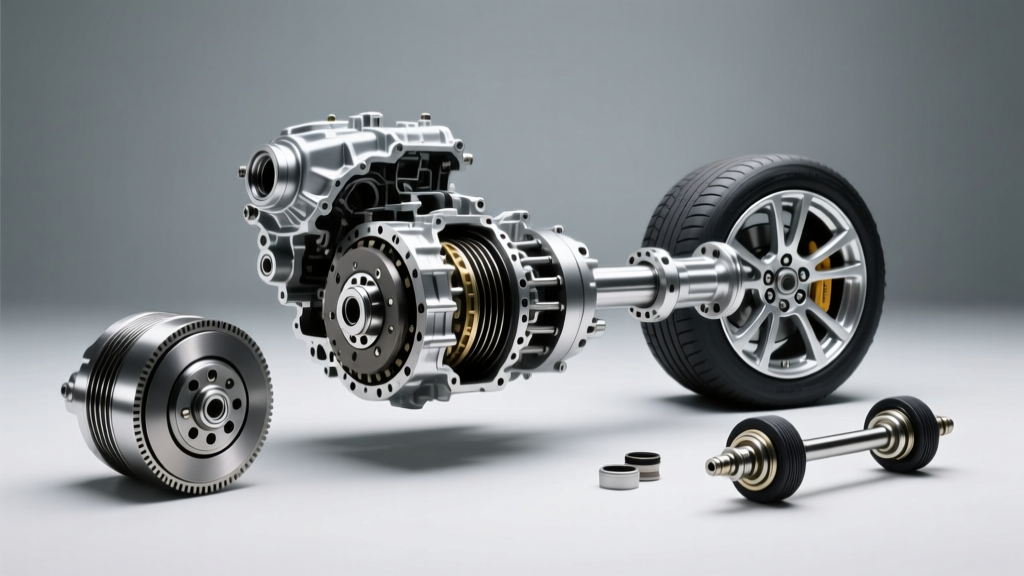
To diagnose a fault, you must first understand the power flow. In a typical Dodge FWD application, engine torque is multiplied by the torque converter and routed through planetary gearsets inside the transaxle. From there, power enters an integrated hypoid or helical differential. The differential splits the torque to two output paths:
- Driver Side (Left): A short, direct halfshaft connects the transaxle output directly to the left wheel hub.
- Passenger Side (Right): Power is routed through an intermediate shaft (jackshaft) supported by a bracket-mounted bearing, which then connects to a longer halfshaft to reach the right wheel hub. This equalizes the effective length of the driveshafts, reducing torque steer.
Because the halfshafts must accommodate both vertical suspension travel and horizontal steering angles, they utilize inner tripod-style CV joints and outer Rzeppa-style ball-and-cage CV joints. Failure at any of these nodes produces distinct acoustic and vibrational signatures.
Symptom Matrix: Isolating FWD Drivetrain Faults
Use the following diagnostic matrix to correlate customer complaints with specific FWD component failures. This is the first step in determining if your issue qualifies for a dodge drivetrain warranty claim.
| Symptom | Operating Condition | Probable Component Failure | Warranty Coverage Likelihood |
|---|---|---|---|
| Rhythmic clicking / popping | Tight turns at low speed | Outer CV joint (Rzeppa) wear or cage failure | Low (Often denied due to torn boot/neglect) |
| Heavy clunking / shudder | Hard acceleration from a stop | Inner CV joint (Tripod) housing wear | Moderate (Covered if boot is intact) |
| High-speed vibration (55-70 mph) | Cruising, load-independent | Inner CV joint imbalance or intermediate shaft bearing | High (Internal bearing failure is covered) |
| Load-dependent whine / howl | Changes pitch on throttle lift-off | Transaxle differential bearings or spider gears | High (Internal transaxle defect) |
| Harsh clunk on gear engagement | Shifting from Park to Drive/Reverse | Excessive differential backlash or worn output splines | High (Covered under powertrain warranty) |
Deep-Dive Component Diagnostics
1. The Intermediate Shaft and Support Bearing
The right-side intermediate shaft is a frequent culprit for high-speed vibrations in Dodge FWD vehicles. The shaft is supported by a sealed ball bearing pressed into an aluminum bracket bolted to the engine block. Over time, water ingress and heat cycling degrade the bearing grease. Diagnostic Test: Raise the vehicle on a hoist and run it at 45 mph in gear. Use a chassis ear or a mechanic's stethoscope on the intermediate shaft bracket. A growling or grinding noise confirms bearing failure. Because this bearing is an integral part of the drivetrain's power transfer path, it is frequently covered under the powertrain warranty, provided there is no evidence of collision damage or aftermarket suspension lifting.
2. Outer CV Joints and the "Boot Exclusion" Clause
Outer CV joints operate at extreme angles (up to 47 degrees during full-lock turns). When the thermoplastic CV boot tears, centrifugal force expels the specialized molybdenum-disulfide grease, while water and road grit enter the joint. This causes rapid pitting of the bearing races, resulting in the classic "clicking on turns" symptom.
Warranty Warning: Stellantis warranty adjusters routinely deny CV joint replacements if the root cause is a torn boot. The boot is classified as a wear-and-tear/seal item. However, if the CV joint fails internally while the boot is perfectly intact and the grease is uncontaminated, you have a strong case for a dodge drivetrain warranty claim based on metallurgical defect.
3. Transaxle Differential Whine (62TE Specifics)
The Chrysler 62TE transaxle is known for occasional differential whine, often traced to the pinion shaft bearings or differential side bearings preloading incorrectly from the factory. If you hear a whine that increases with vehicle speed and changes pitch when you lift off the throttle (coast vs. drive side of the gear teeth), the internal differential is failing. According to NHTSA service bulletins and technician forums, this requires a transaxle teardown or replacement. Internal differential failures are universally covered under the 5-year/60,000-mile Powertrain Limited Warranty.
Fluid Analysis: The First Step in Internal Diagnosis
Before authorizing a teardown, extract a 50ml sample of the transaxle fluid. The 62TE requires specific Mopar ATF+4 (Part # 05013457AA). Fluid condition tells a critical story:
- Dark Red / Slight Burnt Smell: Normal wear for high-mileage FWD units. Clutches may be slipping, but the differential is likely intact.
- Glitter / Fine Metallic Mica: Normal for the first 30,000 miles as thrust washers and planetary gears seat. Not a cause for immediate teardown.
- Chunky Metal Flakes / Brass Colored Particles: Catastrophic differential bearing or cage failure. Brass indicates the synchro rings or specific bushing materials are disintegrating. This guarantees an internal mechanical failure and solidifies your dodge drivetrain warranty claim.
Navigating the Dodge Drivetrain Warranty Claim Process
To successfully navigate a warranty claim for FWD components, you must understand the boundary between the "Powertrain" and "Bumper-to-Bumper" (Basic) warranties. The Dodge 5-year/60,000-mile Powertrain Limited Warranty covers internally lubricated parts, the transaxle case, output shafts, and the differential assembly.
Pro-Tip for Dealership Negotiations: If a service advisor claims your halfshaft vibration is a "suspension issue" and attempts to deny the dodge drivetrain warranty claim, request that they document the play. If the play is in the tripod housing or the shaft itself (not the wheel bearing or control arm bushings), it is a drivetrain component. Cite the Stellantis Powertrain Warranty manual, which explicitly lists "driveshafts, CV joints, and intermediate shafts" as covered powertrain components, barring external damage.
Always ensure your vehicle's maintenance history is up to date. While FWD halfshafts do not require fluid changes, the transaxle fluid should be inspected. If a transaxle differential fails and the dealer finds the fluid was contaminated by water due to a submerged vehicle or aftermarket dipstick modification, the claim will be voided. For authoritative reliability data and consumer complaint tracking, resources like Consumer Reports Auto Reliability can help you determine if your specific model year has a known pattern failure, which can sometimes lead to extended warranty coverage or Technical Service Bulletins (TSBs).
Essential Torque Specifications & Reassembly Data
If you are performing out-of-warranty diagnostics or verifying a dealership's repair, adherence to factory torque specifications is non-negotiable. Improper torque on FWD components leads to rapid hub bearing failure and spline fretting.
| Component | Specification (ft-lbs / Nm) | Notes |
|---|---|---|
| Front Hub / Axle Nut | 180 ft-lbs (244 Nm) | Must be replaced with a new prevailing-torque nut every removal. Do not use an impact wrench for final torque. |
| Strut-to-Knuckle Bolts | 85 ft-lbs (115 Nm) | Critical for maintaining camber/caster alignment after halfshaft service. |
| Intermediate Shaft Bracket Bolts | 40 ft-lbs (54 Nm) | Apply blue threadlocker to prevent harmonic loosening. |
| Inner CV Joint to Transaxle | Snap-Ring Seated | Verify the snap-ring is fully seated by pulling outward on the shaft with 40 lbs of force. |
Diagnosing a front-wheel drive system requires a blend of acoustic analysis, mechanical inspection, and fluid forensics. By accurately isolating the fault to the transaxle differential or the intermediate shaft, and understanding the precise language of the dodge drivetrain warranty, you can ensure that covered FWD failures are rectified without unfair out-of-pocket expenses.