Executive Summary: Upgrading the differential gear ratio on a modern Land Rover platform requires a deep understanding of the electronic locking mechanism. This model-specific repair guide covers the intersection of the rr differential lock (Range Rover electronic rear locker) and performance gear ratio selection, complete with OEM torque specifications, backlash tolerances, and 2026 diagnostic calibration protocols.
The Engineering Behind the RR Differential Lock
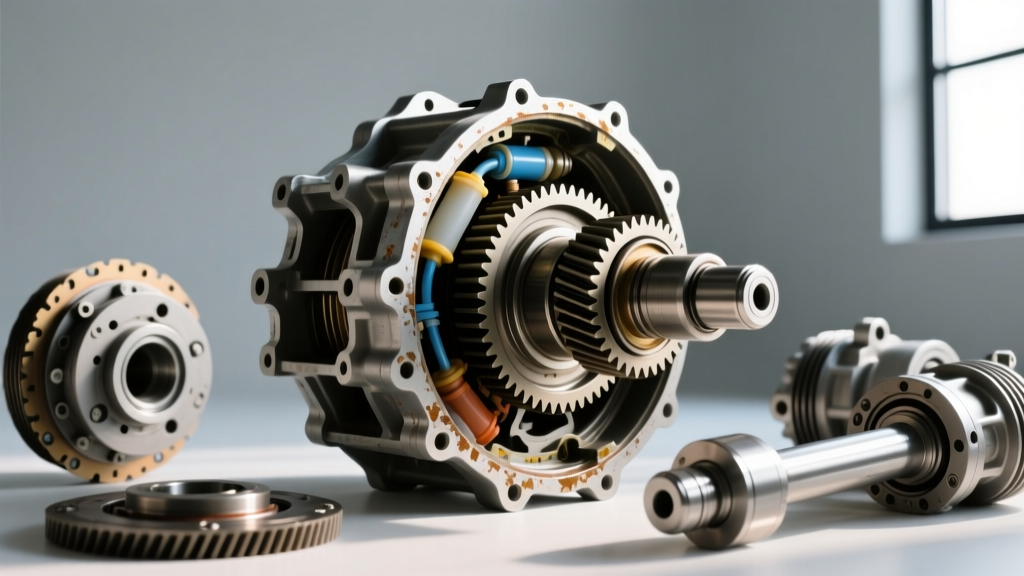
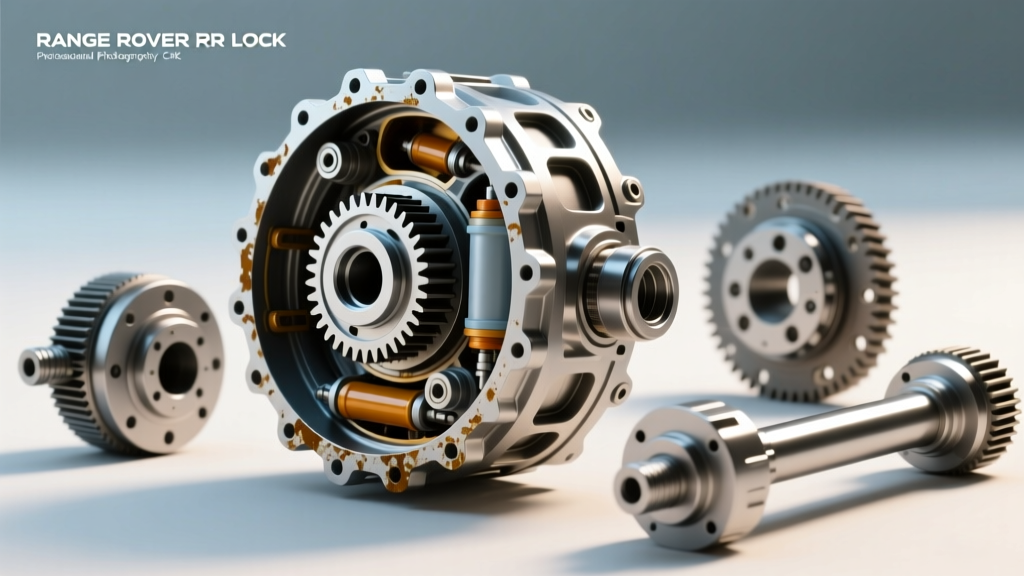
When specialists and off-road enthusiasts refer to the rr differential lock, they are referencing the rear electronic locking differential (eDiff) architecture found in the Land Rover Range Rover (L405) and Range Rover Sport (L494) platforms. Unlike traditional mechanical lockers that rely on internal dog clutches or air-actuated shift forks, the JLR eDiff utilizes a heavy-duty, Eaton-sourced multi-plate clutch pack integrated directly into the rear axle assembly. You can explore the foundational engineering principles of these systems via Eaton's electronic locking differential catalog.
The eDiff actuator motor (often failing around the 90,000-mile mark due to moisture ingress or brush wear) applies precise clamping force to the clutch pack. This allows the vehicle's Terrain Response system to seamlessly transition from an open differential to a fully locked rear axle in milliseconds. However, when you introduce a differential gear ratio and performance upgrade into this ecosystem—typically to compensate for larger 33-inch to 37-inch all-terrain tires—the physical stress on the eDiff clutch pack and the ring-and-pinion gear set changes dramatically.
Differential Gear Ratio and Performance Matrix
Changing the gear ratio alters the torque multiplication factor before it reaches the eDiff clutch pack. If you re-gear an L405 3.0L Supercharged V6 from its stock 3.31:1 ratio to a 4.10:1 ratio without recalibrating the eDiff clamping pressure, the clutch pack will slip under heavy load, leading to catastrophic thermal failure and glazing of the friction plates.
| Gear Ratio | Target Tire Size | RPM @ 70 MPH | Torque Multiplication | eDiff Clutch Stress Level | Primary Use Case |
|---|---|---|---|---|---|
| 3.31:1 (Stock) | 31.5' (OEM) | 1,950 | Baseline | Low | Highway Cruising / Stock |
| 3.55:1 | 33' AT | 2,150 | +7.2% | Medium | Light Overlanding / Towing |
| 3.73:1 | 35' MT | 2,380 | +12.6% | High | Heavy Off-Road / Rock Crawling |
| 4.10:1 | 37' MT | 2,610 | +23.8% | Extreme (Requires Tune) | Expedition / Competition |
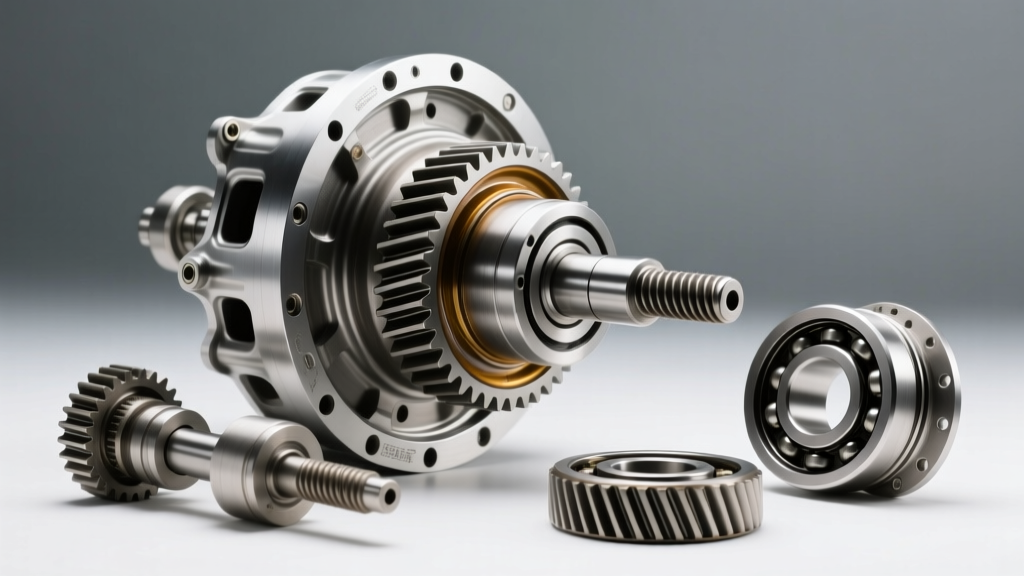
As of 2026, the aftermarket has developed robust 3.73:1 and 4.10:1 ring and pinion sets specifically cut for the Land Rover rear axle housing. When moving to a 3.73 or 4.10 ratio, the increased torque multiplication places exponentially higher shear forces on the ring gear bolts and the eDiff cross-pin shafts.
Model-Specific Repair & Re-gearing Protocol
Executing a gear ratio swap on an eDiff-equipped Range Rover requires meticulous teardown, measurement, and reassembly procedures. The rear differential is a sealed, pressurized unit with an integrated fluid pump for the clutch pack.
Step 1: Teardown and Actuator Diagnostics
Before splitting the case, test the eDiff actuator motor. Disconnect the 3-pin electrical connector on the rear diff cover. Using a multimeter, measure the resistance across the motor pins; a healthy OEM actuator should read between 2.5 and 4.0 ohms. If the motor is seized or reading open-loop, replace the actuator assembly (Part # LR093643 or updated supersession) before reassembling with new gears.
Step 2: Ring and Pinion Setup and Torque Specifications
The L405 rear axle uses a reverse-cut (high-pinion) ring and pinion design to optimize ground clearance and driveshaft angle. When installing the new performance gear set, adhere strictly to these specifications:
- Pinion Bearing Preload: If converting to a solid spacer kit (highly recommended for 4.10:1 off-road builds to prevent crush sleeve failure), set preload to 1.4 - 1.8 Nm (measured at the pinion flange).
- Ring Gear Bolts: M10x1.25 high-tensile bolts. Apply Loctite 262 (Red) to the threads. Torque to 115 Nm, followed by a 90-degree torque-to-yield turn.
- Backlash Tolerance: Set ring gear backlash between 0.13 mm and 0.18 mm (0.005' - 0.007'). Measure at four equidistant points around the ring gear; variance must not exceed 0.02 mm.
- Differential Bearing Caps: Torque to 145 Nm.
Step 3: eDiff Clutch Pack Clearance
When the axle is opened, the multi-plate clutch pack must be inspected. If the friction material is glazed or if the steel separator plates show heat bluing, the entire clutch pack must be replaced. The clutch pack clearance is non-adjustable via shims on this specific Eaton/JLR design; it relies on the hydraulic pressure from the internal pump and the mechanical clamping of the actuator motor. Ensure the internal pump pickup screen is completely free of metallic debris, or the eDiff will fail to engage post-rebuild.
Fluid Dynamics: Why 75W-140 is Non-Negotiable
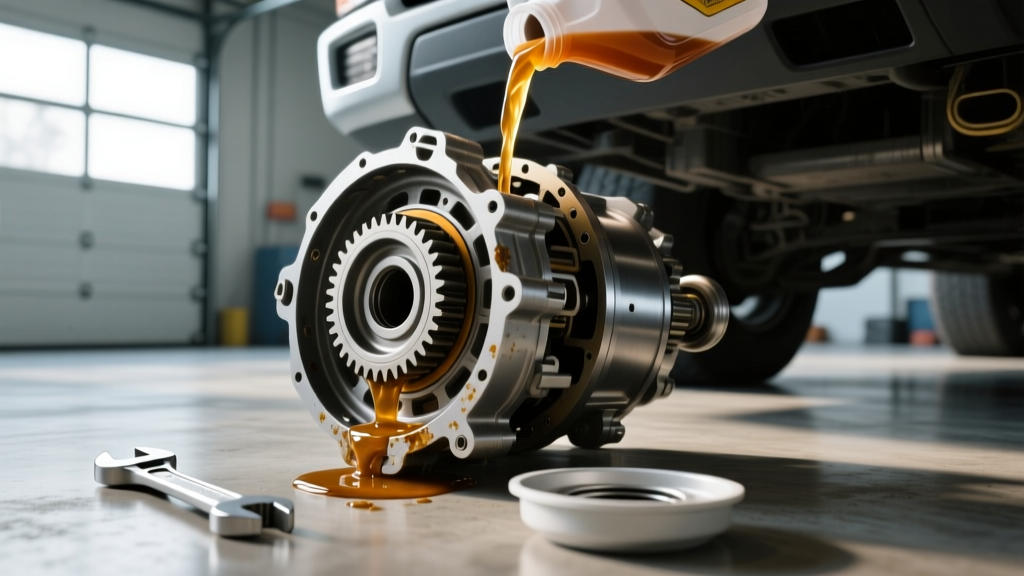
The intersection of high-torque gear ratios and an electronic locking mechanism demands specialized lubrication. Standard 75W-90 GL-5 gear oil will shear down under the extreme localized heat generated by the eDiff clutch pack during slip-events. Land Rover specifies Castrol Syntrax Limited Slip 75W-140 (or an exact API GL-5 LS equivalent meeting JLR specification J435).
Fluid Capacity & Fill Procedure:
- The rear differential sump holds exactly 1.2 Liters of 75W-140.
- Because the eDiff utilizes an internal circulation pump, the axle must be filled to the exact level of the fill plug (35 Nm torque on the 10mm hex plug).
- Do not use aftermarket limited-slip friction modifier additives. The Castrol Syntrax 75W-140 already contains the precise friction modifier package required for the eDiff's carbon-fiber clutch plates. Adding extra modifier will cause the clutch pack to slip, triggering a 'Differential Fault' on the dash and disabling the Terrain Response locking functions.
Performance Validation: Post-Rebuild Calibration
The physical repair is only half the battle. Whenever the rr differential lock is serviced, or the internal gear ratio is altered, the vehicle's Driveline Control Module (DCCM) must be recalibrated. Using the official JLR Pathfinder diagnostic software (the 2026 standard replacing the older SDD system), navigate to the 'Chassis' and 'Driveline' modules.
Run the 'eDiff Clutch Pack Calibration' routine. This software function commands the actuator motor to cycle the clutch pack through various pressures while monitoring the rear wheel speed sensors to calculate the exact slip threshold. Furthermore, if you have changed the gear ratio to 3.73 or 4.10, you must update the 'Tire Size / Axle Ratio' configuration in the PCM and DCCM. Failing to update the axle ratio parameter in the software will result in harsh transmission shifts, incorrect ABS intervention thresholds, and a permanent driveline fault code, completely negating the performance benefits of your mechanical upgrade.