The Critical Role of the Center Differential Gear Box in AWD Systems
In any All-Wheel-Drive (AWD) vehicle, the center differential gear box is the unsung hero of the drivetrain. While front and rear differentials manage left-to-right wheel speed variations, the center differential manages the front-to-rear torque split and accommodates the rotational speed differences between the front and rear axles during cornering. When this component begins to fail, the symptoms can range from subtle drivetrain shuddering to catastrophic mechanical bind-up. As we navigate the 2026 automotive landscape, where AWD systems are increasingly integrated with active torque-vectoring and hybrid powertrains, accurate symptom diagnosis of the center differential gear box is more critical than ever.
Troubleshooting these units requires a methodical approach. Unlike an open rear differential, the center differential is often packaged inside the transmission extension housing, a dedicated transfer case, or bolted directly to the transaxle. Misdiagnosing a center diff issue as a transmission or rear axle failure can lead to unnecessary teardowns and thousands of dollars in misdirected labor. This guide provides transmission and drivetrain experts with a definitive framework for diagnosing center differential failures across viscous, helical (Torsen), and electronic clutch-pack architectures.
Core AWD Center Differential Architectures
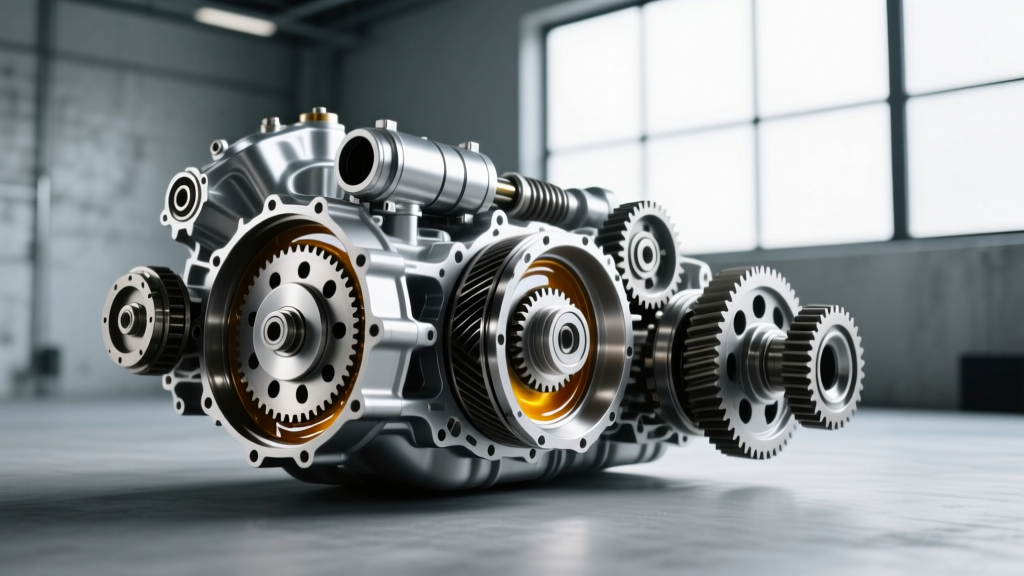
Before pulling a drain plug, you must identify the specific architecture of the center differential gear box you are diagnosing. The internal mechanics dictate the failure modes and the required diagnostic tests.
- Viscous Coupling (LSD): Common in older Subaru Symmetrical AWD and early Toyota systems. Uses a shear-thickening silicone fluid to transfer torque when slip is detected. Prone to overheating and fluid degradation.
- Helical Gear (Torsen): Found in iconic systems like Audi’s Quattro and the Subaru WRX STI. Relies on worm gear friction and torque biasing. Extremely robust but susceptible to fluid starvation and gear lash issues.
- Electromagnetic Clutch-Pack: The modern standard (e.g., Nissan ATTESA, Toyota Dynamic Torque Vectoring, ZF-based xDrive systems). Uses a PWM-controlled solenoid to clamp friction plates. Failures here are often electronic, hydraulic, or related to friction material glazing.
Symptom Diagnosis: Drivetrain Binding and Cornering Hopping
The most common complaint brought into the shop regarding the AWD center differential gear box is “hopping,” “skipping,” or “binding” during tight, low-speed turns (such as pulling into a parking space). This occurs when the center differential fails to accommodate the rotational speed difference between the front and rear driveshafts, effectively locking the drivetrain into a 50/50 split on dry pavement.
The Tire Circumference Factor
Before condemning the center differential, you must measure the tires. In AWD systems, the tires act as the final gear ratio. According to Tire Rack’s AWD Tire Replacement Guide, a tread depth variance of more than 2/32 to 4/32 of an inch between axles can force the center differential to operate continuously, even on straightaways. This constant micro-slipping generates immense heat.
- Viscous Systems: The silicone fluid shears, overheats, and eventually turns into a solid, tar-like sludge, permanently locking the coupling.
- Clutch-Pack Systems: The friction discs glaze, and the PWM solenoid is forced to operate at maximum duty cycle, leading to premature burnout of the solenoid coil or the transfer case control module.
Diagnostic Step: Use a pi-tape or a staggered tread depth gauge across all four corners. If the variance exceeds 3/32”, replace or shave the tires before attempting internal differential repairs. If the tires are matched and binding persists, drain the center diff fluid. A burnt smell or metallic glitter confirms internal clutch-pack failure or viscous coupling rupture.
Symptom Diagnosis: High-Pitched Whining and Gear Rattle
A whining noise that pitches up with vehicle speed (typically most audible between 45-65 mph) points to mechanical wear within the helical gears or the supporting tapered roller bearings of the center differential gear box.
Bearing Preload Loss and Gear Lash
In Torsen-style center differentials (like those found in the Audi 0B5 DL501 transaxle transfer case), the helical gears rely on precise bearing preload to maintain proper mesh. Over time, thermal cycling and fluid breakdown cause bearing wear, increasing gear lash. This results in a distinct whine that changes pitch under load vs. coast.
Diagnostic Step: Lift the vehicle on a four-post lift or use a chassis dyno. Run the vehicle up to 50 mph and shift to neutral, killing engine load. If the whining noise immediately disappears or changes drastically, the issue is gear mesh (lash) under torque. If the noise persists identically on coast, suspect a failing driveshaft support bearing or a pinion bearing in the rear differential rather than the center box.
Symptom Diagnosis: AWD Warning Lights and Torque Transfer Failure
Modern AWD systems monitor the center differential gear box via input and output speed sensors. If the Transmission Control Module (TCM) or AWD ECU detects a slip ratio that exceeds the commanded clutch pressure, it will trigger an AWD warning light and default to FWD or RWD mode to protect the drivetrain.
Solenoid and Sensor Circuit Testing
Do not immediately pull the transfer case. Electronic faults mimic mechanical failures. Using a bidirectional scan tool, command the center differential clutch solenoid duty cycle from 10% to 90% while monitoring the front/rear propshaft speed sensors.
- No RPM change / No torque transfer: Check solenoid resistance. Most PWM transfer case solenoids should read between 4.0 and 8.0 ohms at 68°F (20°C). An open circuit (OL) indicates a burnt coil or severed wiring harness in the tail housing.
- Erratic RPM drops / Shuddering: Indicates sticking clutch plates or contaminated fluid blocking the solenoid’s micro-filter screen.
Diagnostic Matrix: Symptom vs. Root Cause
| Observed Symptom | Probable Component Fault | Verification Test | Est. Repair Cost (2026) |
|---|---|---|---|
| Low-speed cornering bind/hop | Glazed clutch pack or seized viscous coupler | Fluid inspection (burnt smell); Tire circumference check | $800 - $1,400 |
| Speed-sensitive whining (45-65 mph) | Helical gear lash / Tapered roller bearing wear | Chassis dyno coast-down test; Stethoscope on extension housing | $1,200 - $2,500 |
| AWD Light / No rear torque | PWM Solenoid failure or Speed Sensor fault | Multimeter ohm test; Live data PID monitoring | $250 - $600 |
| Clunk on throttle tip-in | Excessive spline wear on center diff output shaft | Driveshaft rotational free-play measurement (should be < 15°) | $1,500 - $3,000 (Assembly) |
OEM Fluid Specifications and the "Lifetime" Myth
Many OEMs market their center differential gear box fluid as “lifetime.” From a drivetrain engineering perspective, “lifetime” simply means the fluid will last the duration of the warranty period. For vehicles subjected to towing, track use, or severe weather, the fluid’s friction modifiers and shear-stability polymers degrade rapidly. Using the wrong fluid in a clutch-based center diff will cause immediate shuddering due to incorrect friction coefficients.
Critical OEM Fluid Part Numbers
- Subaru (Viscous/DCCD 5MT/6MT): Requires specific Hypoid Gear Oil Extra MT (75W-90 GL-5) for the gears, but the DCCD electromagnetic clutch requires specialized fluid (Part # SOA635075 or equivalent) to prevent clutch chatter. Never mix standard GL-5 into a DCCD clutch reservoir.
- Audi (Quattro Torsen/Ultra): Transfer case and center diff assemblies typically require G 055 145 A2. This is a highly specialized synthetic fluid designed for the extreme pressures of worm-gear biasing.
- Toyota (Dynamic Torque Vectoring): Requires Transfer Case Oil LF (Part # 08885-81080). Standard 75W-90 will cause the internal electromagnetic clutches to slip and overheat.
Step-by-Step Troubleshooting Workflow
- Visual & Tire Audit: Verify tire brand, model, size, and tread depth variance. Inspect the transfer case/extension housing for leaks around the output shaft seals.
- Electronic Scan: Pull codes from the AWD/TCM modules. Look for hidden solenoid circuit codes or speed sensor correlation codes.
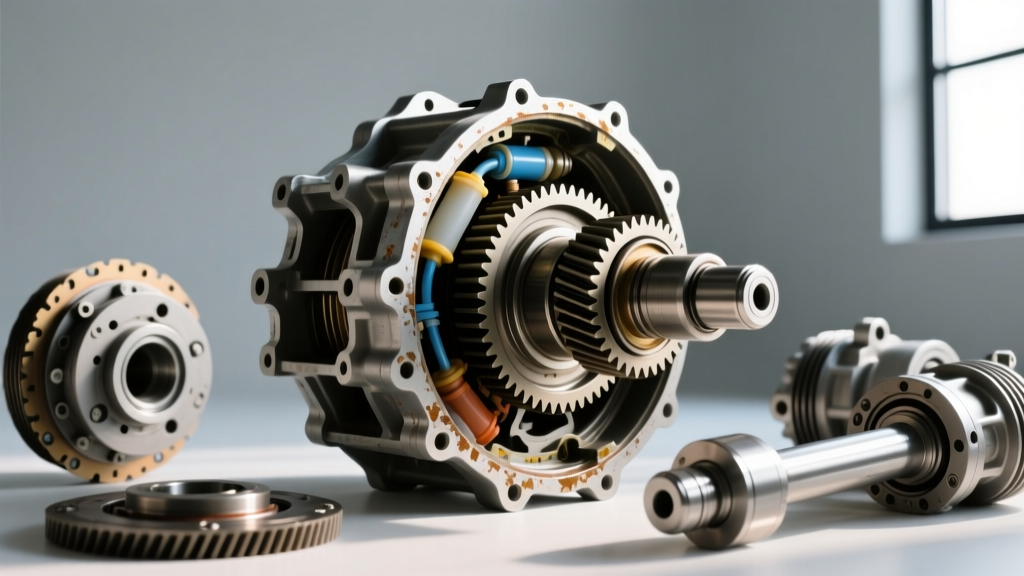
- Fluid Extraction & Analysis: Drain the center differential gear box. Inspect the magnetic drain plug. A fine, silvery paste is normal wear. Chunky metal shards or brass-colored flakes indicate catastrophic gear or synchronizer ring failure.
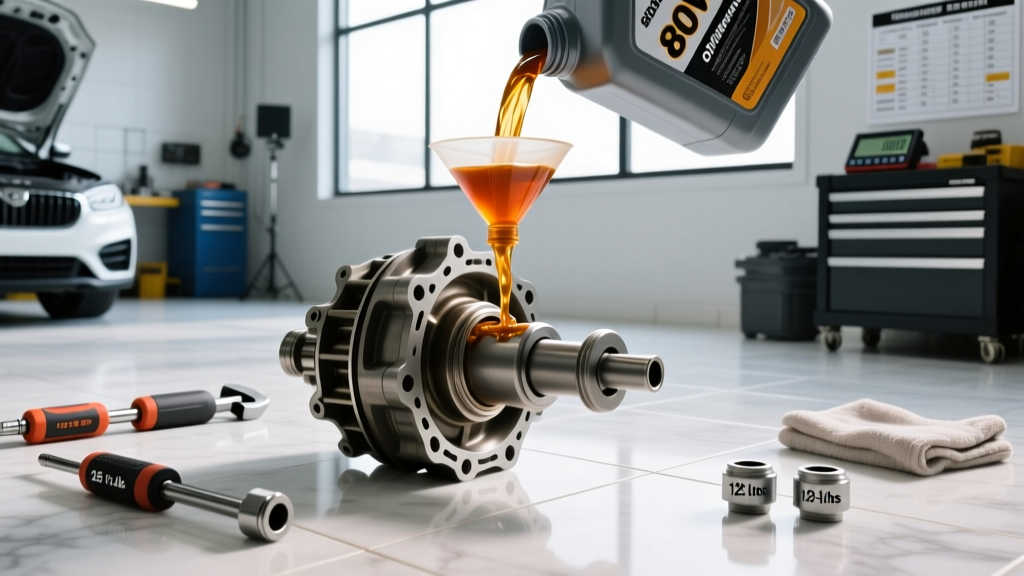
- Refill & Adaptation: Refill to the exact OEM specification. On modern electronic systems (like BMW xDrive or Ford Intelligent AWD), you must use a scan tool to perform a “Transfer Case Clutch Adaptation” or “Calibration” after a fluid change to reset the clutch wear index.
Crucial Torque Specifications
Stripping a drain or fill plug on a cast aluminum transfer case is a costly mistake. Always use a calibrated torque wrench.
- Subaru 5MT/6MT Extension Housing (Center Diff): Drain and Fill plugs require 33 lb-ft (44 Nm). Use a new 14mm aluminum crush washer.
- Toyota RAV4 / Highlander Transfer Case: Drain and Fill plugs require 29 lb-ft (39 Nm). Ensure the fill plug is removed before the drain plug to avoid stranding the vehicle without fluid.
- ZF / Audi Transfer Case Assemblies: Many use a fluid level check procedure rather than a fixed volume. Fluid must be filled until it overflows the check port while the fluid temperature is between 30°C and 40°C (86°F - 104°F), verified via OBD-II live data.
Conclusion
Diagnosing the AWD center differential gear box requires looking beyond the metal casing and understanding the symbiotic relationship between tire circumference, fluid chemistry, and electronic clutch control. By following a strict diagnostic hierarchy—verifying tire stagger, testing electronic circuits, and analyzing fluid degradation—technicians can accurately pinpoint failures, avoid unnecessary transmission removals, and restore the seamless torque-vectoring performance that modern AWD owners expect. For deeper insights into drivetrain architectures, consult ZF’s Drivetrain Technology resources to stay updated on the latest transfer case integration standards.