The Reality of the 2018 Nissan Rogue Rear Differential
When enthusiasts and owners begin researching traction upgrades for the T32 platform, they frequently encounter a massive wall of misinformation regarding the 2018 Nissan Rogue rear differential. Unlike body-on-frame trucks such as the Nissan Frontier or Toyota Tacoma, the Rogue utilizes a transverse-engine, front-wheel-drive-based unibody architecture. This means the rear axle assembly is fundamentally different from a traditional solid-axle or independent rear suspension (IRS) setup found in performance cars.
To make informed performance and upgrade decisions, you must first understand that the Rogue does not possess a traditional rear differential that accepts mechanical locking units like an ARB Air Locker or a Detroit Locker. Instead, the rear assembly houses an open ring-and-pinion gearset paired with an electromagnetic clutch pack known as the ITCC (Intelligent Torque Controlled Coupling). In this comprehensive guide, we will break down locking differential types, explain how Nissan simulates a "locked" axle, and provide exact specifications for upgrading and maintaining your Rogue's rear drivetrain for maximum traction and longevity.
Understanding Locking Differential Types (And Why They Don't Fit)
To select the right upgrade, we must categorize the types of locking differentials available in the automotive aftermarket and evaluate their compatibility with crossover AWD systems.
1. Mechanical Lockers (Selectable & Automatic)
Devices like the ARB Air Locker (selectable via air pressure) or the Eaton E-Locker (selectable via electromagnetic coil inside the carrier) physically lock the left and right axle shafts together. Automatic lockers, like the Detroit Locker or Lockright, use ratcheting mechanisms to lock under load. Compatibility with Rogue: None. The Rogue's rear differential carrier is a small, lightweight, sealed unit designed strictly for open-differential operation. There is no aftermarket support to install a mechanical left/right locker into the Rogue's rear diff.
2. Limited-Slip Differentials (LSD)
Helical gear-driven LSDs (like the Torsen T-2) or clutch-type LSDs use internal friction or gear binding to transfer torque to the wheel with traction. Compatibility with Rogue: While theoretically possible to custom-machine a helical LSD for the Rogue's specific Hitachi/Jatco rear gearset, the cost of fabrication exceeds the value of the vehicle. Furthermore, the factory traction control system relies on an open rear diff to function correctly.
3. Electronic Clutch-Based "Lockers" (The ITCC System)
This is where the Rogue actually "locks." The ITCC (Intelligent Torque Controlled Coupling) is mounted directly to the rear differential housing. When you press the "AWD LOCK" button on the dashboard, the vehicle's ECU sends a 12V signal to an electromagnetic coil inside the ITCC. This compresses a pack of friction clutch discs, effectively locking the front driveshaft to the rear pinion gear. This creates a rigid 50/50 front-to-rear torque split, mimicking a locked transfer case in a traditional 4x4.
4. Brake-Limited Slip Differential (BLSD)
Nissan's primary method for managing left-to-right wheel slip at the rear axle is BLSD. When the ABS module detects that one rear wheel is spinning faster than the other (indicating a loss of traction), it aggressively applies the brake caliper to the spinning wheel. Because the rear differential is an open type, the resistance from the brake forces the ring gear to transfer torque to the opposite wheel that still has grip.
Comparison Chart: Traction Upgrade Paths for the Rogue
| Traction System | How It Works | Rogue Compatibility | Performance Benefit |
|---|---|---|---|
| Mechanical Locker (ARB/Eaton) | Physically locks L/R axles together | Not Compatible | N/A |
| Helical LSD (Torsen) | Torque-biasing gear design | Custom Fabrication Only | Improved cornering grip |
| ITCC AWD Lock (Factory) | Electromagnetic F/R clutch pack | Native (Dashboard Button) | 50/50 F/R split up to 25 MPH |
| BLSD (Brake-LSD) | ABS braking on spinning wheel | Native (Always Active) | Simulates L/R locking |
| Aftermarket AWD Controller | Overrides ITCC duty cycle | Requires Custom ECU Tuning | Adjustable F/R torque bias |
The Best Performance Upgrades for the Rear Axle
Since you cannot drop a mechanical locker into the 2018 Nissan Rogue rear differential, your performance and upgrade guide must focus on optimizing the ITCC coupling, preserving the ring-and-pinion, and maximizing the BLSD system's efficiency.
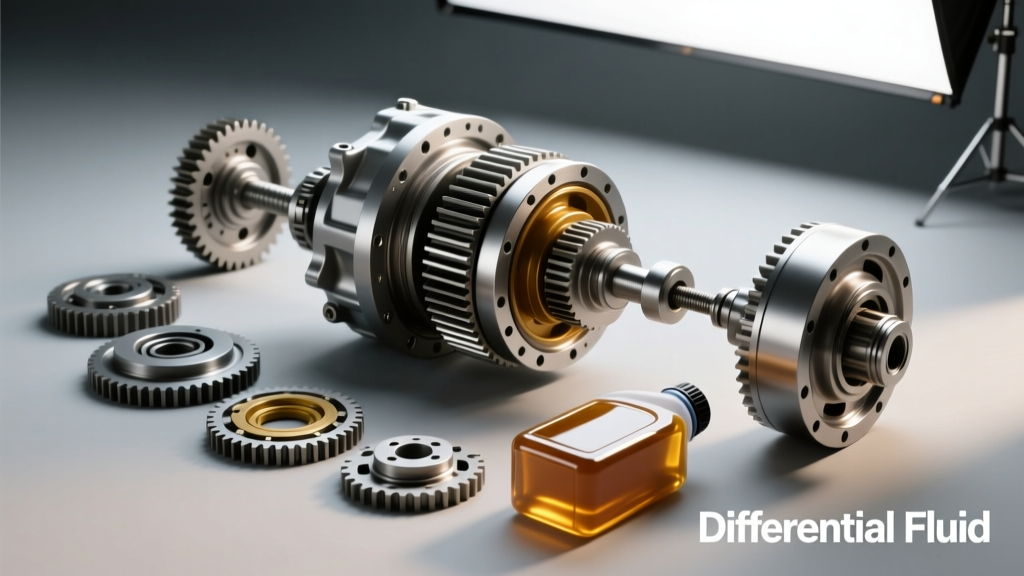
Upgrade 1: High-Performance Synthetic 75W-90 Fluid
The ITCC clutch pack and the rear ring-and-pinion share a highly stressed thermal environment. When the ITCC is engaged (such as driving through deep snow or mud), the clutch discs generate immense heat. If the fluid degrades, the clutches glaze, resulting in the dreaded "AWD Error" dashboard warning and a forced reversion to FWD mode.
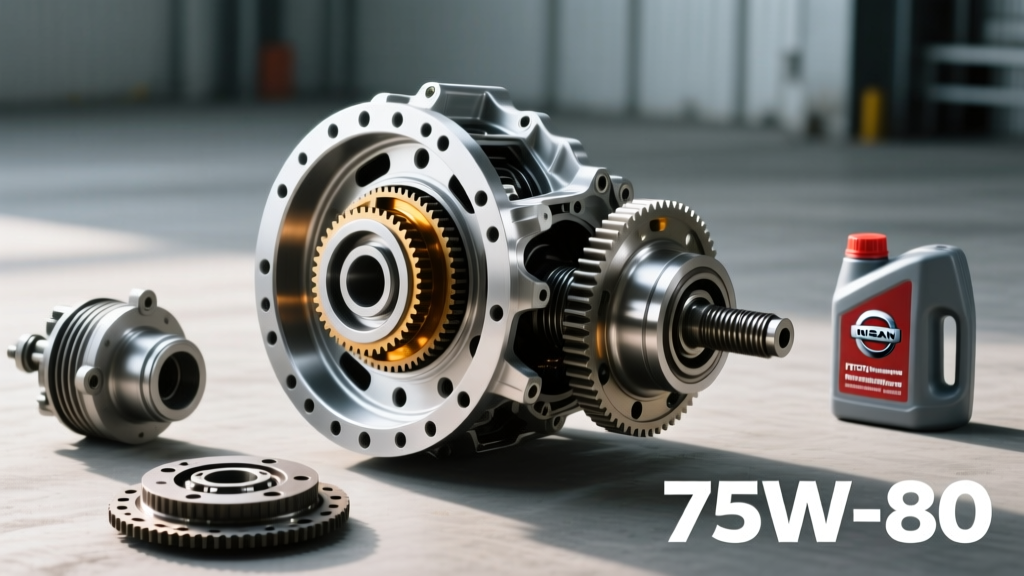
- OEM Spec: Nissan Differential Fluid SAE 75W-90 (API GL-5). Part Number: 999MP-RT7590P.
- Best Aftermarket Alternative: Mobil 1 Synthetic Gear Lube 75W-90. Its superior synthetic base stocks resist thermal breakdown far better than conventional mineral oils, protecting the ITCC friction material during prolonged AWD LOCK usage.
- Capacity: Approximately 0.43 Liters (14.5 oz).
- Crucial Warning: Do not add limited-slip friction modifiers (like Ford XL-3 or GM EOS). The Rogue rear diff is an open gearset; the ITCC handles the locking. Friction modifiers can alter the coefficient of friction on the ITCC clutch plates, leading to shudder or slip.
Upgrade 2: Strict Tire Diameter Matching
The most common cause of catastrophic rear differential and ITCC failure on the T32 Rogue is mismatched tire wear. The ITCC is designed to engage when there is a speed differential between the front and rear driveshafts. If you replace only two tires, or if your tires are worn unevenly, the constant rotational speed difference will cause the ITCC clutch to micro-slip continuously at highway speeds. This generates enough heat to burn out the electromagnetic coil and destroy the rear pinion bearings.
Pro Tip: Always replace all four tires at the same time. If you suffer a blowout and must replace a single tire, have it "shaved" to match the tread depth of the remaining three tires to protect your AWD system and rear differential.
Step-by-Step: Servicing the Rear Diff for Maximum Clutch Life
To maintain the "locking" capability of the ITCC, the fluid must be changed every 30,000 miles if you frequently use the AWD LOCK button or tow near the Rogue's 1,100 lb capacity.
- Preparation: Drive the vehicle for 10 minutes to warm the gear oil, ensuring suspended metal particulates flow out. Level the vehicle on jack stands.
- Access: Remove the rear underbody aerodynamic splash shield (requires a 10mm socket and plastic trim clip remover).
- Drain: Locate the rear differential. You will see two plugs: the top Fill plug and the bottom Drain plug. Use a 10mm hex (Allen) bit or a 3/8" drive square (depending on exact build month/supplier). Always remove the Fill plug first to ensure you can refill it.
- Drain Torque Spec: Break the drain plug loose and drain the 14.5 oz of fluid into a catch pan. Inspect for excessive metal shimmer (fine paste is normal; chunks indicate gear failure).
- Refill: Using a fluid transfer pump, fill with exactly 0.43L of 75W-90 GL-5 synthetic gear oil until it begins to weep out of the fill hole.
- Torque Specs: Reinstall both plugs. Torque to 25 ft-lbs (34 Nm). Do not overtighten, as the aluminum housing threads are easily stripped.
Sourcing Parts and Authoritative References
When sourcing OEM replacement parts, seals, or ITCC components for the 2018 Nissan Rogue rear differential, rely on verified catalogs rather than generic auto parts store cross-references, which often confuse the ITCC coupling with the internal gearset. You can verify exact OEM part numbers and assembly diagrams via the Nissan Parts Deal OEM Catalog. For official maintenance schedules and torque specifications, always cross-reference your specific VIN with the Nissan USA Owner's Portal.
Ultimately, upgrading the traction of your 2018 Nissan Rogue isn't about installing a mechanical locker; it's about mastering the electronic and fluid dynamics of the ITCC system. By utilizing premium 75W-90 synthetics, maintaining exact tire tolerances, and understanding the limits of BLSD, you can extract maximum off-pavement performance from Nissan's intelligent crossover platform.