What is a Robot Drivetrain in the Automotive World?
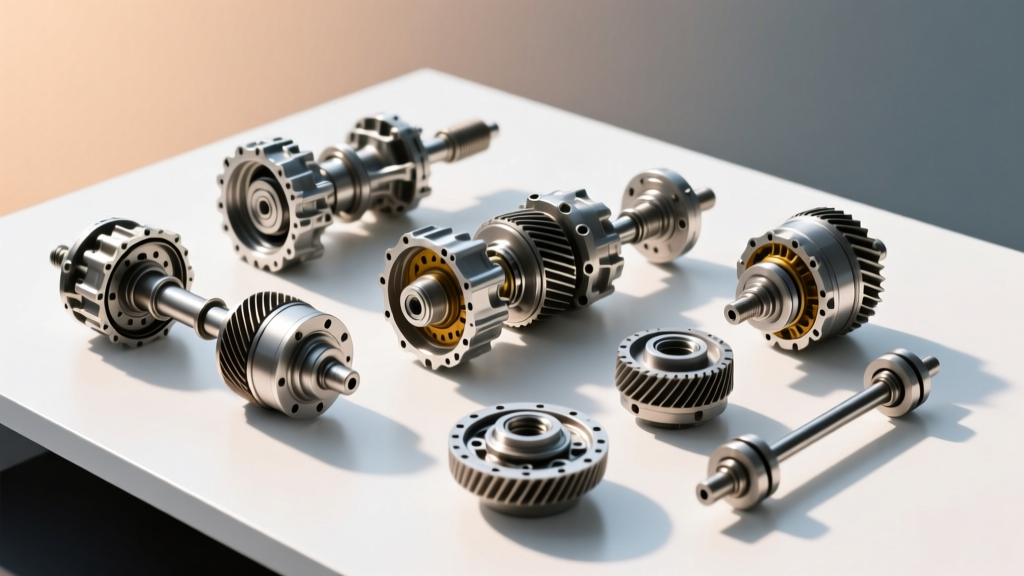
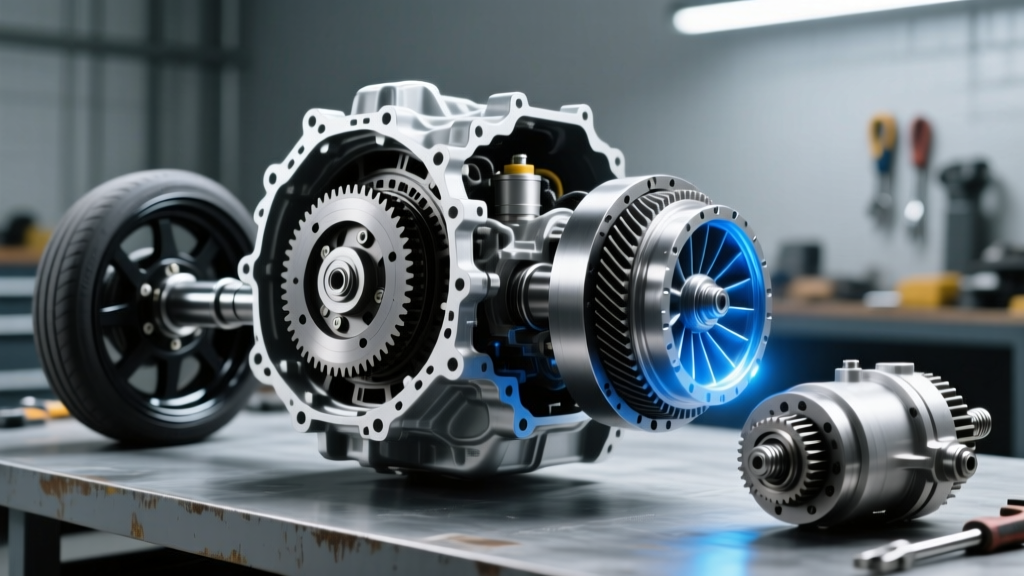
While the exact phrase "robot drivetrain" might initially bring to mind competitive robotics, FIRST competitions, or industrial automation, in the automotive engineering sector, it refers to highly automated, computer-controlled power transfer systems. Specifically, this encompasses Automated Manual Transmissions (AMTs), Dual-Clutch Transmissions (DCTs), and the sophisticated single-speed reduction gears found in modern electric vehicles (EVs). Unlike a traditional automatic transmission that relies on a fluid-coupled torque converter, a robotized automotive drivetrain uses physical mechanical clutches actuated by electro-hydraulic or electro-mechanical "robots" (servos and solenoids) to execute shifts with superhuman precision. For beginners looking to understand how these systems impact fuel economy, the secret lies in the elimination of parasitic loss and the optimization of engine mapping.
The Enemy of MPG: Parasitic Drivetrain Loss
To understand why a robot drivetrain maximizes fuel economy, you must first understand where fuel efficiency dies in a traditional vehicle. In a conventional automatic transmission (like the ubiquitous GM 6L80 or ZF 8HP), engine power is transferred to the transmission via a torque converter. While modern torque converters feature a lock-up clutch, they still rely on hydraulic fluid coupling during low-speed maneuvers, gear changes, and heavy acceleration. This fluid coupling creates "slip," generating heat and wasting kinetic energy—a phenomenon known as parasitic loss.
Hydraulic Pumps vs. Electric Actuators
Traditional automatics require a continuous mechanical hydraulic pump driven directly by the engine to maintain line pressure, siphoning off anywhere from 5 to 12 horsepower just to keep the transmission functioning. A true robotized drivetrain, such as an AMT or a dry-clutch DCT, utilizes a physical friction clutch (just like a manual car). Because the mechanical connection is solid when engaged, there is zero slip. Furthermore, many modern robotized systems use on-demand electric actuators rather than engine-driven hydraulic pumps, completely severing the parasitic drain on the engine's crankshaft. According to data published by SAE International, eliminating torque converter slip and utilizing on-demand electric shift actuators can improve baseline drivetrain efficiency by 4% to 7% in combined city/highway driving cycles.
Efficiency Showdown: Robotized vs. Traditional Automatics
Let us break down the mechanical efficiency differences across popular drivetrain configurations. The table below illustrates how power is managed and where energy is lost.
| Drivetrain Type | Example Transmission | Coupling Method | Parasitic Loss Source | Est. Drivetrain Efficiency |
|---|---|---|---|---|
| Traditional Automatic | GM 6L80 / ZF 8HP | Torque Converter (Fluid) | Fluid shear, continuous hydraulic pump | 82% - 86% |
| Robotized AMT | Magneti Marelli Dualogic | Single Dry Friction Clutch | Electric actuator draw (minimal) | 92% - 95% |
| Wet Dual-Clutch (DCT) | Getrag DQ250 / DQ381 | Wet Multi-Plate Clutches | Clutch pack drag, on-demand hydraulic pump | 88% - 92% |
| EV Robotized Reducer | Tesla Model 3 Rear Drive Unit | Direct Mechanical Gearing | Bearing friction, gear windage | 96% - 98% |
Real-World Fuel Economy: The Data
How does this mechanical theory translate to the gas pump or the charging station? The U.S. Department of Energy's Fuel Economy Guide consistently shows that vehicles utilizing robotized manual transmissions achieve higher highway MPG ratings than their torque-converter counterparts, provided the vehicle weight and aerodynamics remain constant. For instance, early Fiat 500 models equipped with the Dualogic AMT saw a 3 to 4 MPG increase on the highway compared to the traditional Aisin automatic. In the EV space, the "robot drivetrain" concept reaches its zenith. Tesla's highly automated rear drive units use precision-machined helical gears and active thermal management to ensure that over 95% of the electrical energy from the battery reaches the wheels, a stark contrast to the 75-80% efficiency of internal combustion engines mated to traditional automatics.
"The shift toward robotized drivetrains is not merely about shift speed; it is fundamentally about thermodynamic efficiency. Every watt of energy lost to hydraulic fluid shear is a watt stolen from forward momentum."
Maintenance, Fluids, and Torque Specs for Robotized Systems
While a robot drivetrain offers superior fuel economy, it demands strict adherence to maintenance schedules. The electro-hydraulic actuators and mechatronic units are highly sensitive to fluid degradation and particulate contamination. If you are maintaining a robotized system, here are the critical specifications you must know:
- VW/Audi DQ250 Wet DCT: Requires Pentosin FFL-4 or OEM G 052 182 fluid. Service capacity is approximately 5.5 liters (dry fill is 7.2L). The drain plug torque specification is strictly 45 Nm, while the fill/check plug requires 15 Nm. Failure to use the exact fluid will cause clutch pack shudder and ruin fuel economy.
- Fiat/Alfa Romeo AMT Actuators: The hydraulic fluid for the shift robot (often Tutela CS Speed) must be bled using a bi-directional OBD2 scan tool. Replacement cost for a failed Magneti Marelli shift actuator ranges from $1,200 to $1,800 in parts alone.
- Getrag 7DCT300 (Wet DCT): Found in many modern European compacts, this transmission requires specific low-viscosity fluids to minimize churning losses. The mechatronic unit filter must be replaced every 60,000 miles to prevent solenoid starvation, which leads to micro-slipping and a 2-3 MPG drop in real-world efficiency.
- EV Reduction Gears (e.g., Tesla Model 3): While often labeled "lifetime," draining and replacing the gearbox fluid (typically 75W-85 synthetic gear oil, ~2.4 liters capacity) every 60,000 miles reduces gear windage and bearing friction, preserving that 97% peak efficiency as the vehicle ages.
Beginner Tips for Maximizing Automated Efficiency
If you drive a vehicle equipped with a robotized drivetrain, your driving habits directly dictate how effectively the computer can manage fuel economy. First, avoid "creeping" in stop-and-go traffic. In a traditional automatic, the torque converter handles creeping effortlessly. In an AMT or dry-clutch DCT, creeping forces the robot to intentionally slip the friction clutch, generating massive heat and wearing the clutch material prematurely. Instead, wait for a gap in traffic and apply steady throttle. Second, utilize the vehicle's "Eco" mode, which alters the mechatronic shift mapping to upshift earlier and keep engine RPMs in the lowest possible BSFC (Brake Specific Fuel Consumption) sweet spot. BSFC is a measure of how efficiently an engine burns fuel to produce power; by keeping the engine in its most efficient RPM range, the robot drivetrain ensures maximum miles per gallon. Finally, ensure your tire pressures are optimized, as robotized systems are calibrated for specific rolling resistance parameters. By understanding the mechanical realities of your robot drivetrain, you can unlock the full fuel-saving potential of modern automotive engineering.