The Intersection of Precision Gearing and Fluid Dynamics
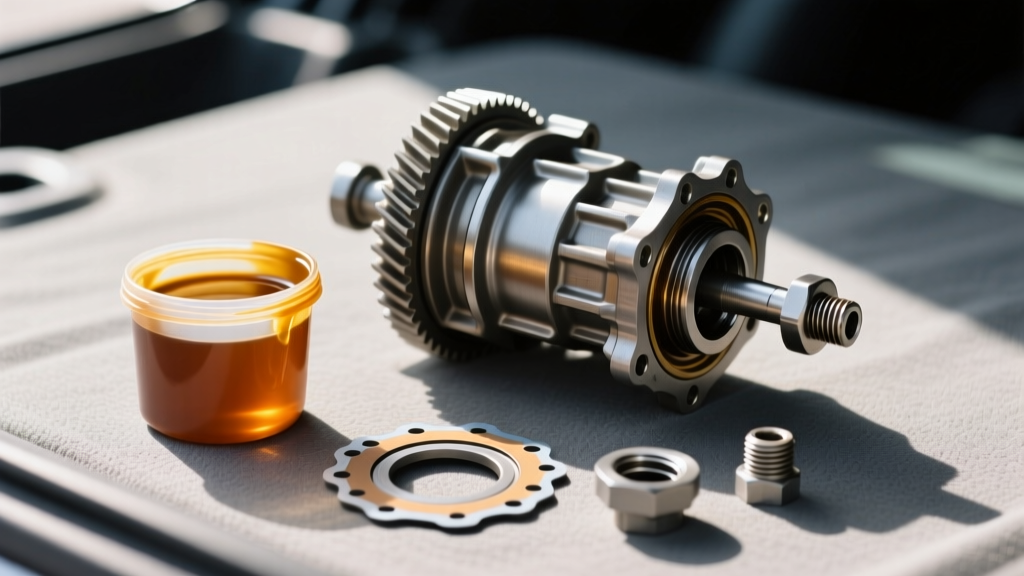
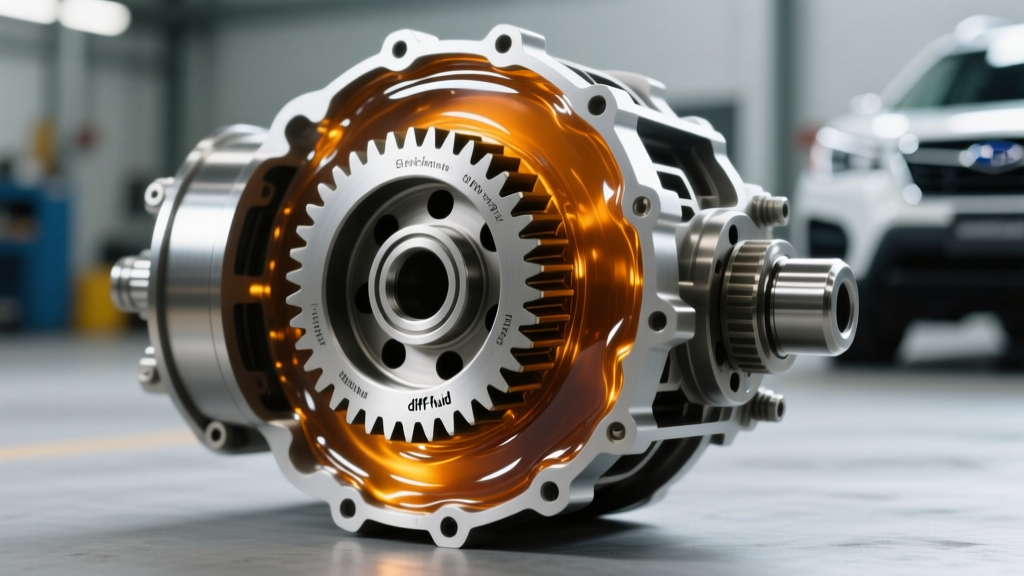
Most DIY enthusiasts approach drivetrain maintenance with a simple drain-and-fill mentality. However, when you crack open the rear axle of your AWD crossover, you are interacting with a masterclass in mechanical engineering. Understanding the intricacies of a ring and pinion gear setup not only demystifies how your vehicle transfers power to the pavement, but it also highlights exactly why routine maintenance—specifically regarding your Subaru Forester rear differential fluid—is the single most critical factor in determining the lifespan of those gears.
In this beginner-friendly explainer, we will bridge the gap between advanced gear setup theory and practical, everyday drivetrain maintenance. Whether you are simply performing a 60,000-mile fluid service or preparing to rebuild an R160 rear differential, grasping these concepts will elevate your automotive expertise.
The Physics of the Hypoid Gear Set
To understand why setup and lubrication are so intertwined, you must first understand the geometry of the Subaru rear axle. Unlike standard spur gears that roll against one another, the ring and pinion in a Subaru Forester are hypoid gears.
In a hypoid design, the centerline of the pinion gear is offset below the centerline of the ring gear. This architectural choice allows for a lower driveshaft tunnel, improving interior cabin space and lowering the vehicle's center of gravity—a hallmark of the Subaru Symmetrical AWD system. However, this offset creates a massive amount of sliding friction across the gear teeth during rotation. It is this sliding action that makes the ring and pinion setup incredibly sensitive to both microscopic tolerances and chemical lubrication.
Why Subaru Forester Rear Differential Fluid Dictates Gear Survival
Because hypoid gears slide rather than purely roll, standard motor oil or transmission fluid would instantly shear and fail under the extreme pressure. This is why your Subaru Forester rear differential fluid must meet strict API GL-5 specifications.
GL-5 gear oils are heavily fortified with Extreme Pressure (EP) additives, typically utilizing sulfur-phosphorus compounds. When the sliding friction of the hypoid gears generates intense localized heat, these additives react chemically with the steel surface to form a sacrificial, microscopic solid-film barrier. This barrier prevents metal-on-metal welding and micropitting.
- Standard R160 Differential Capacity: 0.8 Liters (27.1 US oz)
- Heavy-Duty R180 Differential Capacity (Wilderness/XT): 1.2 Liters (40.6 US oz)
- OEM Fluid Recommendation: Subaru HP Gear Oil (Part # SOA635040) or a high-quality synthetic 75W-90 GL-5 alternative like Red Line 75W-90.
- Drain/Fill Plug Torque Spec: 33 ft-lbs (45 Nm)
If you neglect this fluid change, the EP additives deplete over time. Once the sacrificial layer fails, the gear teeth begin to microscopically tear, leading to the infamous 'diff whine' and eventual catastrophic failure.
Demystifying the Ring and Pinion Setup Variables
If you are rebuilding a differential or diagnosing a noise issue, you must understand the 'Holy Trinity' of gear setup. A gear set cannot simply be bolted together; it must be mathematically positioned. According to the Subaru Technical Information System, setup revolves around three primary measurements:
1. Pinion Depth
Pinion depth dictates how deeply the pinion gear meshes into the ring gear. This is adjusted by placing precision shims of varying thicknesses behind the inner pinion bearing. The exact depth is usually engraved on the head of the pinion gear itself (e.g., '+2' or '-1'), indicating a deviation from the nominal factory baseline. If the pinion is too deep, it will bind; if it is too shallow, it will ride on the very edges of the ring gear teeth, causing rapid wear.
2. Backlash
Backlash is the rotational clearance between the mating teeth of the ring and pinion. It is measured using a dial indicator mounted to the differential housing while holding the pinion flange stationary. For the common Subaru R160 rear differential, the target backlash specification is incredibly tight: 0.12 mm to 0.16 mm (0.0047 to 0.0063 inches). Backlash is adjusted by moving the entire carrier assembly left or right using side shims or threaded adjusters.
3. Bearing Preload
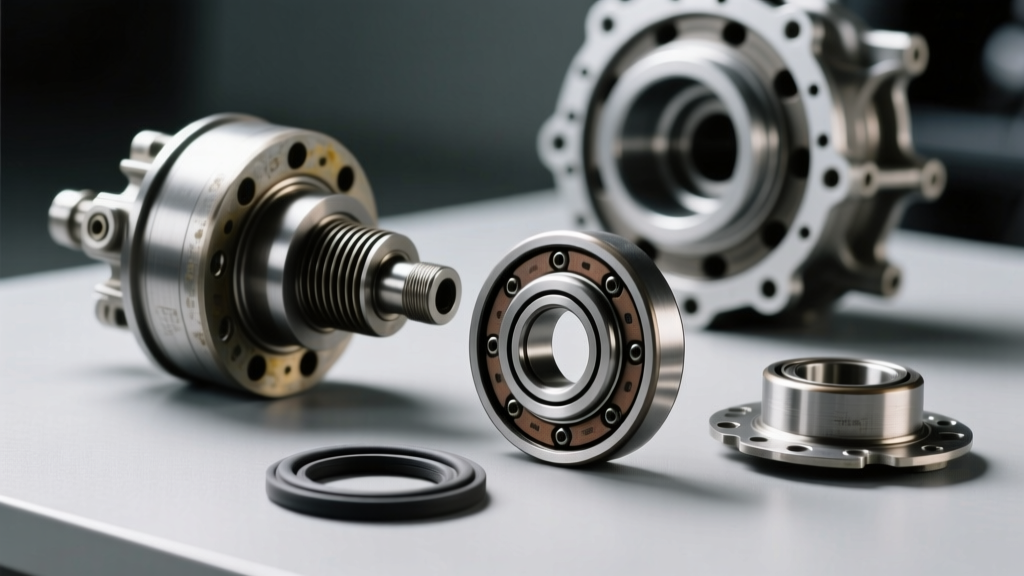
Preload is the compressive force applied to the tapered roller bearings to eliminate play. Pinion bearing preload is measured in inch-pounds of rotating friction (typically 1.0 to 1.6 Nm, or 8.8 to 14.2 in-lbs for the pinion). Carrier bearing preload ensures the ring gear does not deflect away from the pinion under heavy torque loads, such as when towing or launching from a stop.
Subaru R160 Rear Differential Setup Specifications
When performing a rebuild, having the exact factory specifications at your fingertips is non-negotiable. Below is a reference table for the standard R160 open rear differential found in most non-turbo Forester models.
| Measurement Parameter | Metric Specification | Imperial Specification | Adjustment Method |
|---|---|---|---|
| Ring Gear Backlash | 0.12 - 0.16 mm | 0.0047 - 0.0063 in | Carrier Side Shims |
| Pinion Bearing Preload | 1.0 - 1.6 Nm | 8.8 - 14.2 in-lbs | Crush Sleeve / Solid Spacer |
| Ring Gear Runout | Less than 0.05 mm | Less than 0.002 in | Ring Gear Bolts / Carrier Face |
| Ring Gear Bolt Torque | 70 - 80 Nm | 52 - 59 ft-lbs | Threadlocker & Torque Wrench |
Reading the Gear Contact Pattern: The Art of the Setup
Numbers on a dial indicator only tell half the story. The ultimate validation of a ring and pinion setup is the physical contact pattern. Mechanics apply a specialized yellow ochre marking compound to the ring gear teeth and rotate the assembly under mild resistance to see where the pinion makes contact.
A gear tooth is divided into four zones: the Face (top), the Flank (bottom), the Toe (inner edge), and the Heel (outer edge).
The Golden Rule of Gear Patterns: A perfect pattern will sit squarely in the center of the face and flank, slightly biased toward the toe under drive, and centered on the heel during coast. If the pattern rides high on the face, the pinion is too shallow. If it rides low on the flank, the pinion is too deep.
Adjusting the pattern requires a compromise. Changing pinion depth shims will alter the pattern but will also change your backlash. Therefore, gear setup is an iterative process of adjusting depth, measuring backlash, checking the pattern, and repeating until all three variables fall within the Subaru factory tolerances.
Diagnostic Guide: What Your Drain Plug is Telling You
You do not need to tear down the differential to diagnose a failing ring and pinion. When you perform your scheduled Subaru Forester rear differential fluid service, the magnetic drain plug acts as a forensic black box.
- Fine, Dark Gray Paste: This is completely normal. It represents the microscopic wear of the clutch packs (if equipped with a limited-slip) and the initial break-in of the hypoid gears. Wipe it off, refill with fresh 75W-90, and reset your maintenance minder.
- Brass or Copper Glitter: This indicates wear on the carrier bearing cages or the pinion bearing retainers. While not an immediate gear failure, it warrants a teardown and bearing replacement within the next 10,000 miles.
- Chunky, Metallic Flakes or Shards: This is the death knell. It means the ring and pinion teeth are chipping, or a bearing has catastrophically shattered. The differential must be rebuilt or replaced immediately, and the axle housing must be flushed with solvent to remove embedded steel debris.
Essential Tools for the DIY Drivetrain Enthusiast
If you are moving beyond simple fluid changes and want to verify backlash or diagnose a whining differential, you will need specialized tools. A standard automotive toolkit will not suffice for precision measurement.
- Dial Indicator with Magnetic Base: Essential for measuring backlash to the ten-thousandth of an inch. Ensure the plunger is perpendicular to the ring gear teeth.
- Inch-Pound Torque Wrench: Do not use a standard foot-pound torque wrench for pinion preload. The rotating friction measurement requires a highly sensitive inch-pound beam or dial wrench.
- Gear Marking Compound: Yellow ochre paste is mandatory for reading the contact pattern. Do not substitute with grease or paint.
- 22mm Socket (6-point): The standard size for Subaru rear differential drain and fill plugs. Always use a 6-point socket to prevent rounding the soft aluminum or steel plug heads.
Conclusion: Respect the Hypoid
The ring and pinion gear setup is a masterclass in precision engineering, balancing immense torque loads against microscopic clearances. As a Subaru owner, your primary defense against the extreme sliding friction inherent in this design is strict adherence to fluid maintenance intervals. By understanding the relationship between hypoid geometry, API GL-5 chemistry, and precise mechanical setup, you ensure that your Forester remains capable, quiet, and reliable on any surface, in any weather, for hundreds of thousands of miles.