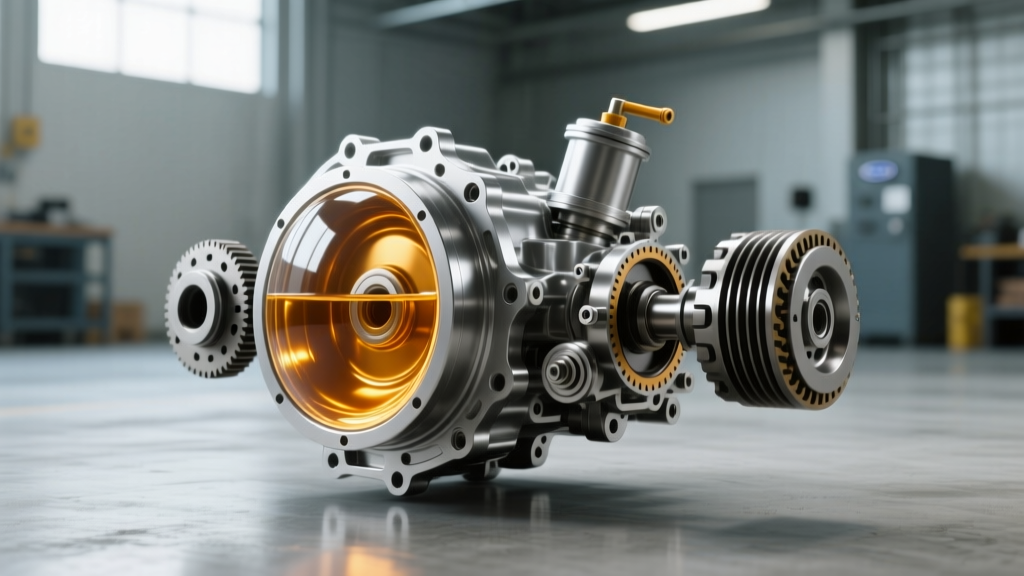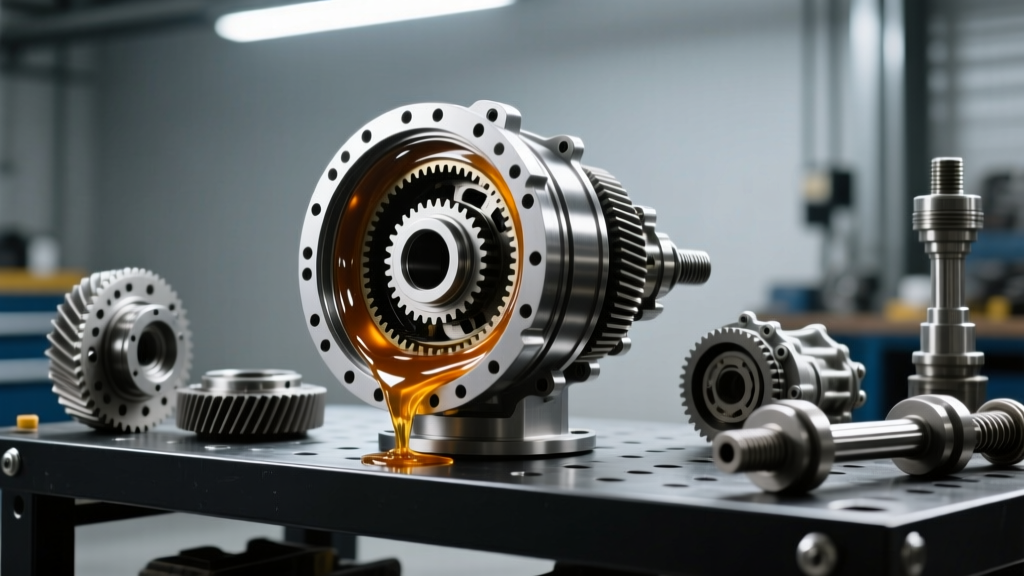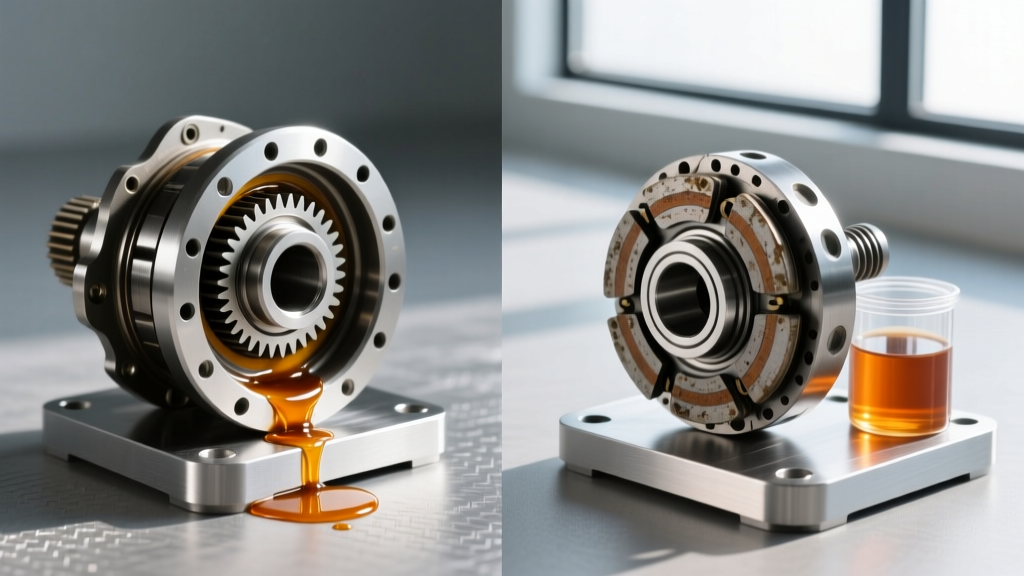
When you crawl under your truck or SUV to perform routine axle maintenance, it is easy to view the process as a simple drain-and-fill procedure. However, if you are researching differential oil car maintenance, you are only seeing half the picture. The lifeblood of your axle is the gear oil, but the heart of the system is the ring and pinion gear set. Understanding how these massive steel gears are set up—and how those microscopic setup tolerances dictate your fluid choices—is the difference between a differential that lasts 200,000 miles and one that catastrophically fails on the highway.
In this beginner-friendly guide, we will demystify the ring and pinion setup process, explore the critical measurements that axle builders obsess over, and explain exactly why your gear oil chemistry is the only thing standing between your ring gear and total destruction.
What Exactly is a Ring and Pinion Gear Set?
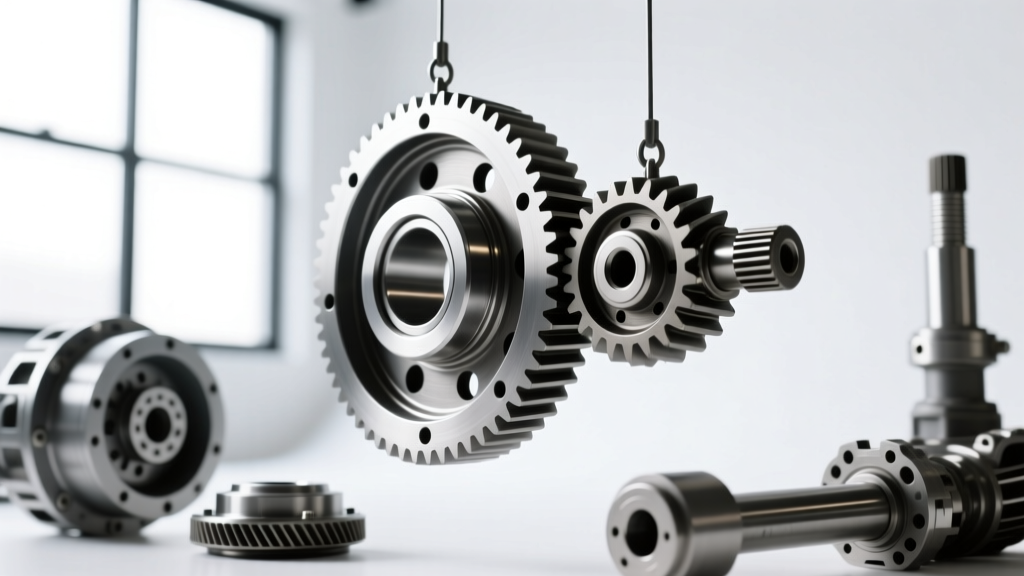
The ring and pinion (R&P) is the final reduction point in your vehicle’s drivetrain. The driveshaft transfers rotational power from the transmission to the pinion gear, a small, cone-shaped gear attached to the pinion shaft. The pinion meshes with the ring gear, a massive, flat, circular gear bolted to the differential carrier.
This setup accomplishes two things: it reduces rotational speed while multiplying torque, and it changes the direction of that torque by 90 degrees to turn your wheels. A common ratio like 3.73:1 means the pinion gear (which might only have 11 teeth) must spin 3.73 times to turn the ring gear (which has 41 teeth) exactly one time. Because the pinion is so small and spinning so fast, it generates immense friction and heat at the contact patch, making proper setup and high-quality lubrication absolutely vital.
The 'Big Three' Setup Measurements
Setting up a ring and pinion is not as simple as bolting two gears together. The teeth are cut on complex spiral bevel or hypoid curves. To ensure they mesh silently and without excess wear, an axle technician must dial in three precise measurements. According to setup guidelines from Yukon Gear & Axle, missing any of these by even a few thousandths of an inch will result in gear whine, overheating, and rapid tooth shearing.
1. Pinion Depth
Pinion depth refers to how far the pinion gear sits into the ring gear. This is adjusted using precision shims placed behind the inner pinion bearing. If the pinion is too shallow, it rides on the very tips of the ring gear teeth. If it is too deep, it binds at the root of the teeth. Depth is measured in thousandths of an inch (e.g., +0.003" or -0.002" from a nominal baseline stamped on the pinion head).
2. Backlash
Backlash is the amount of rotational 'slop' or clearance between the mating teeth of the ring and pinion before they make contact. It is adjusted by moving the entire differential carrier left or right using side bearing adjusters. Proper backlash allows the gears to expand as they heat up without binding. Typical specifications range from 0.006" to 0.010".
3. Bearing Preload
Preload is the amount of tension placed on the pinion and carrier bearings to eliminate play. Pinion preload is usually achieved by tightening a massive pinion nut to crush a steel 'crush sleeve' until a specific rotational torque (measured in inch-pounds) is reached. Carrier preload is set by shimming or threading the side bearings tightly into the housing.
| Measurement | Typical Target Spec | Failure Mode if Incorrect |
|---|---|---|
| Pinion Depth | Within 0.001" of nominal | Heel/Toe wear, catastrophic tooth snapping |
| Backlash | 0.006" - 0.010" | Gear whine (too tight) or clunking/binding (too loose) |
| Pinion Preload | 15 - 30 in-lbs (rotational) | Bearing overheating (too tight) or pinion wobble (too loose) |
How Gear Setup Dictates Your Differential Oil Car Requirements
Why does a beginner doing a fluid change need to know about pinion depth and backlash? Because the clearances inside a properly set-up differential are microscopic. When the backlash is set to 0.008", the gap between the gear teeth is thinner than a human hair. At highway speeds, the hypoid sliding action between the ring and pinion generates localized temperatures exceeding 300°F (150°C).
This is where your differential oil car fluid choice becomes critical. Standard motor oil would instantly vaporize or shear under these extreme pressure (EP) conditions. Hypoid gear sets require API GL-5 rated gear oil. GL-5 oils contain 4% to 5% sulfur-phosphorus additives. When the microscopic oil film is squeezed out from between the tightly meshed, perfectly set-up gears, the sulfur-phosphorus reacts chemically with the steel surface to create a sacrificial solid-film barrier. This prevents metal-on-metal welding.
The Viscosity Debate: 75W-90 vs. 85W-140
If your ring and pinion is set up perfectly for daily driving, a full-synthetic 75W-90 GL-5 is the gold standard for most modern car and truck axles. It flows quickly at startup to protect the pinion bearings and maintains a stable film at operating temperature. However, if you have re-gearing your axle for deep crawling or heavy towing (e.g., installing a 4.88 or 5.13 gear set), the pinion gear becomes physically smaller and runs significantly hotter. In these high-stress, low-speed scenarios, stepping up to an 85W-140 synthetic provides a thicker hydrodynamic wedge to protect the gear teeth.
Real-World Setup & Fluid Specs: Ford 8.8 vs. Dana 44
To give you a practical perspective, let us look at two of the most common axles on the road and trail. Whether you are maintaining a stock commuter SUV or a built off-roader, adhering to the manufacturer's torque specs and fluid capacities is non-negotiable. Dana Spicer engineering documents heavily emphasize the use of specific friction modifiers when limited-slip differentials are paired with their ring and pinion sets.
| Axle Model | Ring Gear Bolt Torque | Pinion Nut Torque (Crush) | Fluid Capacity | Recommended Oil |
|---|---|---|---|---|
| Ford 8.8 (Super 8.8) | 70 - 85 ft-lbs (with Loctite) | 200 - 250 ft-lbs | 2.0 - 2.5 Quarts | 75W-140 Synthetic GL-5 |
| Dana 44 (Standard) | 55 - 65 ft-lbs | 160 - 220 ft-lbs | 2.0 Quarts | 80W-90 or 75W-90 GL-5 |
| GM 10-Bolt (8.5") | 75 ft-lbs | 140 - 190 ft-lbs | 2.1 Quarts | 75W-90 Synthetic GL-5 |
Note: If your axle features a clutch-type Limited Slip Differential (LSD), you must add a specialized friction modifier (usually 2-4 oz) to your GL-5 oil to prevent the clutch packs from chattering during tight turns, which can indirectly shock-load and damage the ring and pinion teeth.
Reading the Tea Leaves: What Your Old Oil Tells You
When you pull the differential cover or drain plug to perform your differential oil car service, do not just let the fluid drain into the pan and walk away. The old oil and the magnetic drain plug are diagnostic tools that tell you the health of your ring and pinion setup.
- Fine Metallic Glitter: A small amount of fine, silvery paste on the magnet is normal for the first 10,000 miles after a new gear setup. It is the result of the lapping-in process where the microscopic high spots on the gear teeth wear smooth.
- Chunky Metal Flakes: If you find distinct, jagged pieces of metal, your pinion depth or backlash is likely incorrect, or your carrier bearings are failing. The gears are physically tearing themselves apart. A fluid change will not fix this; the axle must be torn down and reset.
- Burnt Smell / Black Sludge: Gear oil turns black over time, but if it smells sharply of sulfur and burnt toast, the differential is overheating. This points to excessive pinion preload (causing bearing drag) or a lack of proper ventilation causing the axle to suck in water, destroying the oil's EP additive package.
Final Thoughts for the DIYer
While setting up a ring and pinion requires dial indicators, inch-pound torque wrenches, and yellow marking compound, maintaining it simply requires knowledge and the right fluids. By understanding the extreme pressures your hypoid gears endure, you can make informed decisions about your differential oil car maintenance. Always use high-quality, API GL-5 certified synthetic gear oils, respect the torque specifications of your specific axle housing, and always read the wear patterns left behind in your old fluid. Your drivetrain will reward you with decades of quiet, reliable service.