The Heart of the Axle: What You Are Actually Servicing
When you crawl under your 4x4 truck or SUV to replace front differential fluid, you are performing one of the most vital maintenance tasks for your drivetrain. But to truly understand why this fluid matters, and why the service interval is so critical, you must understand the mechanical ballet happening inside the housing: the ring and pinion gear setup. For beginners, the differential can seem like a sealed, mysterious vault. In reality, it is a precision instrument that requires microscopic tolerances to survive the immense torque generated by your engine and multiplied by the transfer case.
Whether you are driving a Jeep Wrangler with a Dana 30, a Ford Super Duty with a Dana 60, or a Chevy Silverado with a GM 8.25 Independent Front Suspension (IFS), the fundamental physics of the hypoid gear set remain the same. Before you drain a single drop of old gear oil, let us break down the anatomy of your front axle and explore why a proper gear setup dictates the lifespan of your drivetrain.
The Anatomy of the Hypoid Gear Set
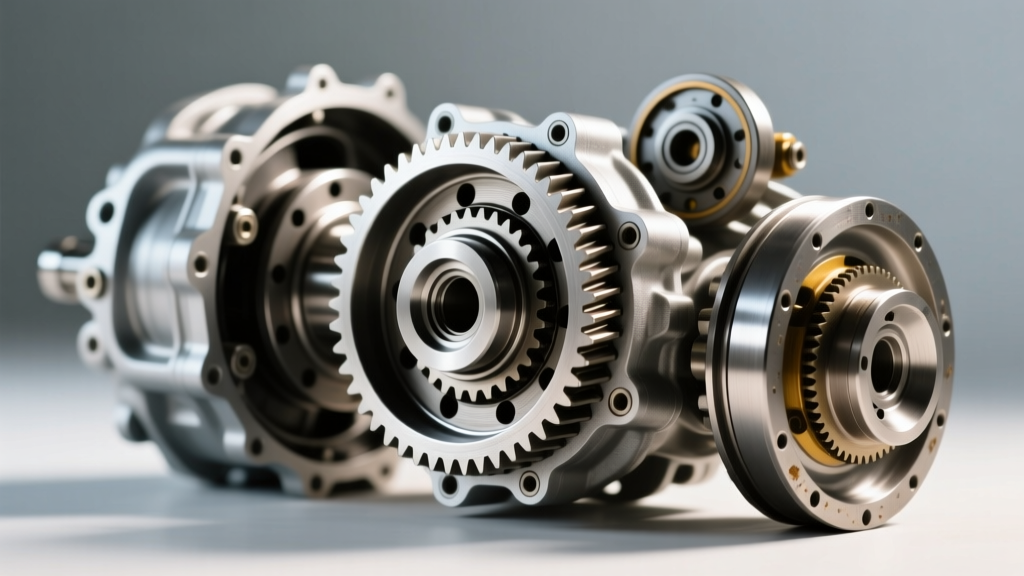
The front differential's primary job is to take the rotational energy from the front driveshaft and turn it 90 degrees to spin the front axle shafts. This is accomplished through two main components:
- The Pinion Gear: A small, elongated gear attached to the pinion shaft, which connects directly to the front driveshaft via a yoke or flange. It spins at a much higher RPM than the ring gear.
- The Ring Gear: A large, circular gear bolted to the differential carrier. It houses the spider gears (in an open diff) or the clutch packs (in a limited-slip diff) and ultimately turns the axle shafts.
Because these are hypoid gears, the pinion gear does not intersect the centerline of the ring gear; it sits slightly below it. This offset allows for a smoother, quieter operation and greater ground clearance, but it also introduces massive sliding friction between the gear teeth. This sliding friction is exactly why your front axle requires high-quality, extreme-pressure (EP) 75W-90 GL-5 gear oil, and why the setup tolerances must be flawless.
The Holy Trinity of Gear Setup: Pattern, Backlash, and Preload
Setting up a ring and pinion is not simply bolting the parts together. It requires adjusting three interdependent measurements. If one is off, the others will fail, leading to catastrophic gear destruction.
1. Tooth Contact Pattern
The contact pattern is the physical footprint the pinion gear leaves on the ring gear teeth under load. Using a yellow ochre gear marking compound, technicians paint the ring gear and rotate the assembly to inspect the 'drive' (acceleration) and 'coast' (deceleration) sides of the teeth. A perfect pattern sits squarely in the middle of the tooth face. If the pattern is too high, too low, too deep, or too shallow, the technician must adjust the pinion depth shims (located behind the inner pinion bearing) or the carrier side shims to move the gears closer together or further apart.
2. Backlash
Backlash is the amount of rotational 'slop' or play between the ring and pinion gears. It is measured in thousandths of an inch using a dial indicator mounted to the axle housing. Backlash is necessary because as the steel gears heat up under heavy load, they expand. If the gears are set with zero backlash, thermal expansion will cause them to bind, overheat, and weld themselves together. If backlash is too wide, the gears will slam into one another, chipping the teeth and causing a loud clunking noise.
3. Bearing Preload
Preload refers to the amount of friction applied to the bearings to keep them seated and prevent them from rattling or shifting under load. There are two types of preload to worry about:
- Pinion Bearing Preload: Achieved by crushing a steel sleeve (the crush sleeve) or using a solid spacer kit. It is measured in inch-pounds of rotational drag.
- Carrier Bearing Preload: The side-to-side pressure applied to the differential carrier, adjusted via threaded adjusters or side shims.
Front Axle Setup Specifications (Data Table)
To give you an idea of the microscopic tolerances involved, here is a comparison chart of factory specifications for three of the most common front axles found in modern 4x4s. According to Spicer Parts technical documentation, adhering to these exact numbers is non-negotiable for warranty compliance and gear longevity.
| Front Axle Model | Backlash Spec | Pinion Preload (Used Bearings) | Ring Gear Bolt Torque | Fluid Capacity |
|---|---|---|---|---|
| Dana 30 (Jeep JK Wrangler) | 0.006' - 0.010' | 15 - 25 in-lbs | 70 ft-lbs (with Loctite) | 2.5 Pints |
| Dana 44 (JK Rubicon / HD) | 0.006' - 0.010' | 20 - 30 in-lbs | 85 ft-lbs (with Loctite) | 3.0 Pints |
| GM 8.25 IFS (Silverado 1500) | 0.005' - 0.009' | 12 - 22 in-lbs | 75 ft-lbs (with Loctite) | 3.5 Pints |
The Break-In Period: Why Your First Fluid Change is Critical
This is where the art of gear setup directly intersects with your maintenance schedule. When a new ring and pinion set (such as a Yukon Gear & Axle Master Overhaul Kit, Part # MK D30, retailing around $180) is installed, the gears are not perfectly mated. During the first 500 miles of driving, the microscopic high spots on the forged steel teeth wear down to create a custom, mirrored mating surface.
This process generates intense heat and sheds microscopic metal shavings into the gear oil. Furthermore, the yellow marking compound used during setup will wash off and contaminate the fluid. Therefore, the very first time you replace front differential fluid after a gear swap is the most important service you will ever perform.
Expert Warning: Never use full-synthetic gear oil for the initial 500-mile break-in period. Synthetic oils are engineered to be too slippery and contain friction modifiers that will prevent the gears from wearing into their proper pattern. Use a high-quality, conventional (mineral-based) 75W-90 GL-5 gear oil for the break-in, then drain it and switch to your preferred synthetic for the long haul.
Essential Tools and Torque Specs for the Job
If you are moving beyond simply draining and filling, and decide to tackle a gear setup or a pinion seal replacement, you will need specialized tools. Budget roughly $150 to $250 for the following setup equipment:
- Dial Indicator with Magnetic Base: Must read in 0.0001-inch increments to accurately measure backlash.
- Inch-Pound Beam-Style Torque Wrench: Essential for measuring pinion bearing preload. Click-style foot-pound wrenches are not sensitive enough for the 15-25 in-lb range.
- Dead Blow Hammer and Brass Drift: For seating bearings and tapping the carrier into the housing without damaging the machined surfaces.
- Loctite 242 (Blue): Mandatory for all ring gear bolts to prevent them from backing out under high-torque off-road loads.
- Crush Sleeve Eliminator Kit: Highly recommended for off-road vehicles. It replaces the one-time-use crush sleeve with a solid machined spacer and shims, allowing you to set pinion preload perfectly without the risk of over-crushing the sleeve and ruining the bearing.
Diagnosing Setup Issues by Sound
Your front axle will talk to you if the gear setup was performed incorrectly. Learning to decipher these sounds can save you from a complete axle rebuild. As outlined in the Yukon Gear & Axle installation guides, noise diagnosis is a primary troubleshooting step:
- Whine on Deceleration (Coast Side): The pinion depth is typically too shallow. The pinion gear needs to be moved closer to the ring gear centerline via shims.
- Whine on Acceleration (Drive Side): The pinion depth is too deep. The gears are binding under load, which will quickly lead to overheating and fluid breakdown.
- Loud Clunk on Engagement: Backlash is set too wide, or the carrier bearing preload is insufficient, allowing the entire differential assembly to shift inside the housing.
- Steady Howling at Highway Speeds: This usually indicates failing pinion or carrier bearings, often caused by improper preload or water contamination in the gear oil.
Summary: Respect the Gears, Protect the Fluid
Understanding the ring and pinion gear setup transforms how you view axle maintenance. The fluid inside your front differential is not just a lubricant; it is a vital cooling agent and protective barrier for a highly stressed, precision-machined gear set. Whether you are checking for leaks, diagnosing a whine, or preparing to replace front differential fluid for the first time after a regear, knowing the principles of pattern, backlash, and preload ensures your 4x4 stays on the trail and out of the repair shop. Always consult your specific axle manufacturer's service manual for exact torque specifications and shim thicknesses before turning a single wrench.