The Hidden Bottleneck When Replacing Transmission Cooler Lines
As we move through 2026, a massive wave of 2014–2020 heavy-duty and light-duty trucks are hitting the 100,000-mile mark. For owners of GM Silverados with the 6L80/6L90 or Ram 2500s with the 68RFE, replacing transmission cooler lines has become a mandatory piece of preventative maintenance. Factory rubber hoses dry rot, and steel hard lines succumb to road salt corrosion. However, when enthusiasts and mechanics drop the lines to install stainless steel braided replacements or auxiliary cooler loops, they frequently ignore a critical component sitting right in the middle of the circuit: the thermostatic bypass valve.
If you are replacing transmission cooler lines due to a leak or an upgrade, you are already paying for the labor to access the cooler circuit. Ignoring the bypass valve—or worse, reusing a degraded OEM valve—can result in catastrophic overheating or chronic overcooling. This buyer's guide breaks down the engineering behind the bypass valve, compares your replacement options, and provides the exact torque specs and part numbers needed to do the job right.
How the Thermostatic Bypass Valve Actually Works
Modern automatic transmissions require precise thermal management. Cold automatic transmission fluid (ATF) is thick, causing excessive drag, poor shift quality, and increased wear on the torque converter. To combat this, manufacturers install a thermostatic bypass valve in the cooler return line or integrated into the transmission case.
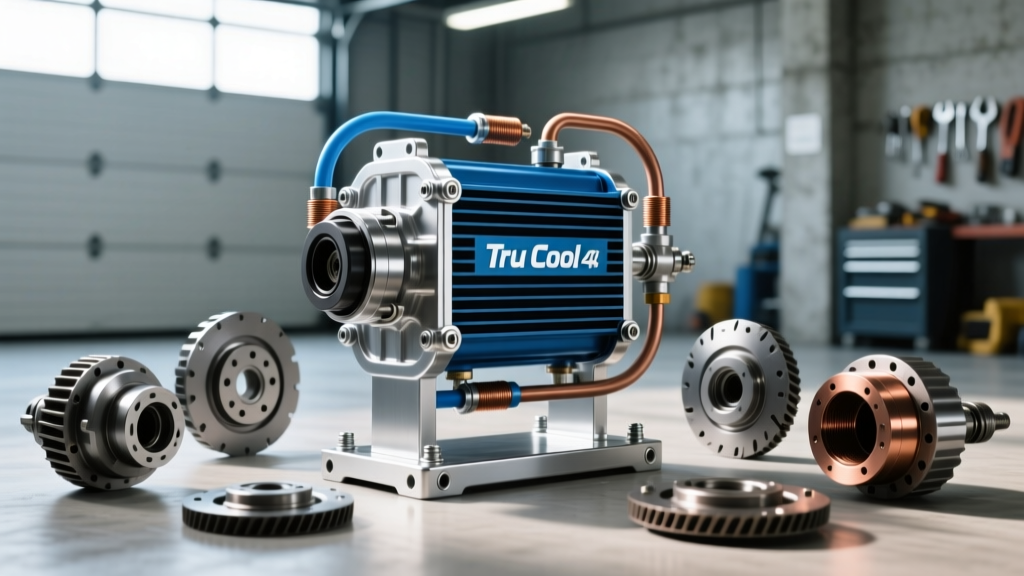
Inside the OEM valve is a wax-element pellet. When the ATF is below roughly 185°F (85°C), the wax is solid, and a spring forces the valve shut. This routes the fluid around the transmission cooler, allowing the transmission to reach operating temperature quickly. Once the fluid hits the target threshold, the wax melts and expands, pushing a piston that opens the valve and routes the hot fluid to the cooler.
The Failure Mode: According to Sonnax Technical Resources, the most common failure of the OEM wax-element valve is the pellet degrading or the internal spring fatiguing. If it fails "closed," fluid never reaches the cooler, resulting in rapid overheating and burnt clutches. If it fails "open," the transmission runs too cold, leading to condensation buildup, sludge, and poor fuel economy.
OEM vs. Delete vs. Upgraded: A Buyer's Comparison
When replacing transmission cooler lines, you must decide what to do with the bypass valve. Below is a comparison of the three primary paths available in the 2026 aftermarket.
| Valve Type | Target Temp | 2026 Avg. Cost | Best Application | Primary Risk |
|---|---|---|---|---|
| OEM Wax-Element | 185°F (85°C) | $50 - $75 | Stock daily drivers, cold climates | Wax pellet degradation, stuck closed |
| Full Delete (Orifice) | N/A (Always Flows) | $25 - $40 | Dedicated drag racing, sled pulling | Overcooling, condensation in street use |
| Performance Thermostatic | 160°F (71°C) | $75 - $110 | Towing, off-road, tuned vehicles | Slightly longer warm-up times |
1. The OEM Replacement (The Safe Baseline)
If your vehicle is a stock daily driver operating in northern climates, sticking with an OEM replacement is logical. For the GM 6L80/6L90, the OEM valve (GM Part #24236933) is relatively inexpensive. However, you are simply resetting the clock on a known design flaw. The plastic housing on early GM units is prone to warping under high line pressures.
2. The Full Delete Kit (The Racing Option)
A delete kit replaces the valve with a simple machined aluminum spacer and a fixed orifice. This ensures 100% of the fluid flows to the cooler 100% of the time. While popular in the diesel tuning community, Transmission Digest warns against using delete kits on street-driven vehicles. ATF operating below 150°F will not burn off internal condensation, leading to premature internal corrosion and varnish buildup.
3. The Performance Thermostatic Upgrade (The Expert Choice)
For 90% of truck owners who tow, wheel, or run mild tunes, an upgraded thermostatic valve is the correct choice. Companies like Sonnax offer redesigned valves (e.g., Sonnax Part #135101-01K for the 6L80) that utilize superior internal metallurgy and open at a slightly lower threshold (around 160°F to 170°F). This provides the warm-up benefits of a thermostat while ensuring the cooler engages before the fluid reaches dangerous heat-soak temperatures during heavy towing.
Vehicle-Specific Integration & Torque Specifications
Replacing transmission cooler lines requires specific tooling and adherence to torque specifications to avoid stripping aluminum transmission cases or cracking fragile fittings.
GM 6L80 / 6L90 (Silverado, Sierra, Corvette)
- Valve Location: Inline on the cooler return line, just outside the transmission pan rail.
- Line Fitting Torque: 18–22 lb-ft at the transmission case.
- Tooling: You must use an 18mm flare nut wrench (crowfoot wrench) to avoid rounding the soft OEM nuts. If upgrading to aftermarket braided lines, use AN-wrenches to hold the adapter fittings.
- Pro-Tip: The OEM plastic quick-connects at the radiator side are notorious for snapping when you try to remove 10-year-old lines. Buy a set of GM transmission line disconnect tools and have replacement aluminum quick-connect adapters on hand before starting.
Ram 68RFE (2500/3500 Cummins)
- Valve Location: Integrated into the thermal management valve block bolted to the side of the transmission case.
- Line Fitting Torque: 15–18 lb-ft.
- Fluid Note: The 68RFE requires ATF+4. Do not flush the system with generic multi-vehicle fluids when bleeding the new cooler lines, as the friction modifiers in the 68RFE clutch packs are highly specific.
ZF 8HP (Ram 1500, BMW, Jeep Grand Cherokee)
The ZF 8HP utilizes a highly advanced thermal management system. In many applications, the bypass valve is integrated directly into the mechatronic unit (valve body) inside the pan, meaning you cannot replace it without dropping the pan and replacing the entire mechatronic assembly or using a specialized sleeve kit. However, on external inline applications, the lines use push-to-click plastic fittings. When replacing transmission cooler lines on a ZF 8HP, always replace the horseshoe retention clips and use a specialized quick-connect release tool to avoid tearing the internal O-rings.
Bleeding the Cooler Circuit Post-Replacement
A common mistake when replacing transmission cooler lines and swapping the bypass valve is failing to properly bleed the auxiliary cooler. The 6L80 holds roughly 11.2 quarts (dry fill), but a cooler line swap only drops about 1.5 to 2 quarts from the pan. However, a large aftermarket auxiliary cooler and new lines can trap up to a full quart of air.
The Correct Bleed Procedure:
- Fill the transmission pan to the correct cold-fill level on the dipstick.
- Start the engine and let it idle. Do not rev the engine.
- With your foot firmly on the brake, cycle the shifter through P-R-N-D, pausing for 3 seconds in each gear. This actuates the valve body circuits and pushes fluid into the torque converter and cooler lines.
- Leave the vehicle in Park and let it idle until the transmission pan reaches the thermostat opening temperature (use an infrared thermometer on the pan; target 185°F).
- With the engine still running, check the fluid level again and top off to the HOT mark. Installing a deep aftermarket pan with a threaded temperature sensor port (like those from PPE or Fleece) makes monitoring this process significantly easier.
Final Verdict: Which Setup Should You Buy?
If you are already committing the time and budget to replacing transmission cooler lines, spending an extra $80 on a performance thermostatic bypass valve is one of the highest-ROI upgrades you can make for your drivetrain. Skip the full delete kits unless your vehicle never sees the street. By pairing high-quality stainless steel braided lines with an upgraded, lower-temp thermostatic valve, you eliminate the risk of catastrophic heat-soak on mountain grades while preserving the cold-weather shift quality your transmission was engineered to deliver.
For further reading on ATF thermal degradation thresholds and cooler flow rates, consult the technical bulletins available through ATRA (Automatic Transmission Rebuilders Association).