The Critical Role of Center Differential Bearings in AWD Systems
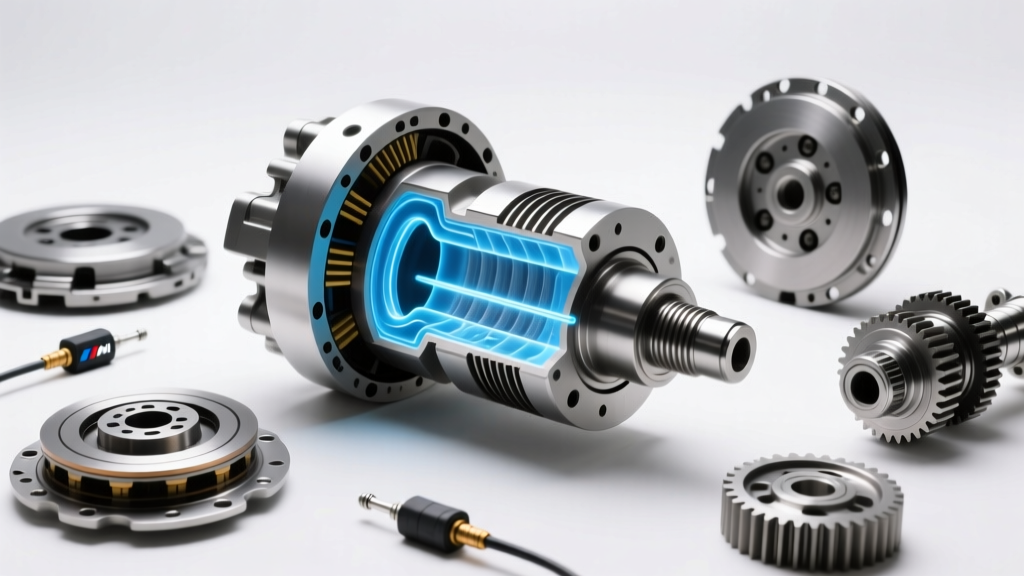
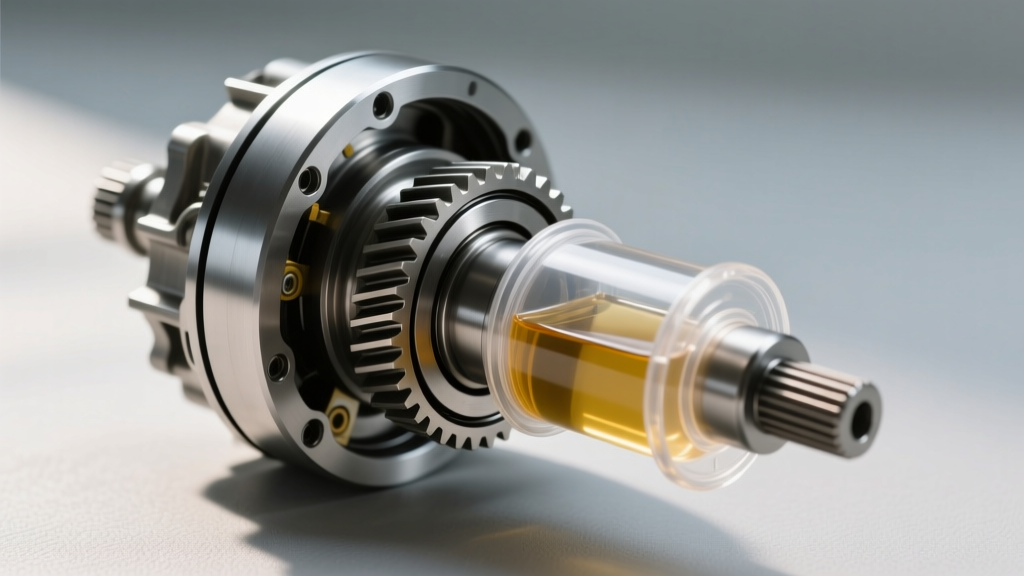
In all-wheel-drive (AWD) and four-wheel-drive (4WD) architectures, the center differential is the unsung hero of torque management. Whether it utilizes a viscous coupling, a Torsen helical gear set, or an electronically controlled clutch pack, the entire assembly relies on precision tapered roller or ball bearings to maintain gear alignment under immense torsional load. When these bearings degrade, gear mesh is compromised, leading to catastrophic internal failure. Knowing exactly when to replace differential bearings in the center diff can save you from a $3,000+ transfer case or transmission replacement.
From a 2026 diagnostic perspective, modern AWD systems are more tightly integrated than ever. In transverse platforms (like the Haldex-based VW 4Motion), the center diff mechanism is often bolted directly to the transmission extension. In longitudinal platforms (like the Audi Quattro or Subaru Symmetrical AWD), the center diff resides inside the transmission tail housing or a dedicated transfer case. Diagnosing bearing wear in these enclosed environments requires a systematic approach to symptom isolation, fluid analysis, and precise measurement.
4 Definitive Symptoms You Need to Replace Differential Bearings
Bearing failure rarely happens overnight. It follows a predictable lifecycle of fatigue, spalling, and eventual seizure. Watch for these four critical indicators:
1. High-Pitch Whining That Changes with Vehicle Speed
Unlike wheel bearing noise, which changes pitch during lateral cornering loads, a failing center differential bearing produces a steady whine or howl that correlates strictly with driveshaft rotational speed. If the noise pitch rises identically whether you are coasting in neutral or accelerating under load, the tapered roller bearings supporting the center diff output shaft are likely experiencing raceway spalling.
2. Chatter or Binding During Low-Speed Turns
When bearing preload is lost due to cage wear or crush sleeve collapse, the center diff gears (especially in Torsen or crown-gear setups) lose their precise mesh tolerance. This results in a rhythmic "chatter" or binding sensation during tight, low-speed parking maneuvers. The AWD system fails to smoothly bias torque front-to-rear, causing the driveline to hop.
3. Metallic Flakes in the Transfer Case / Center Diff Fluid
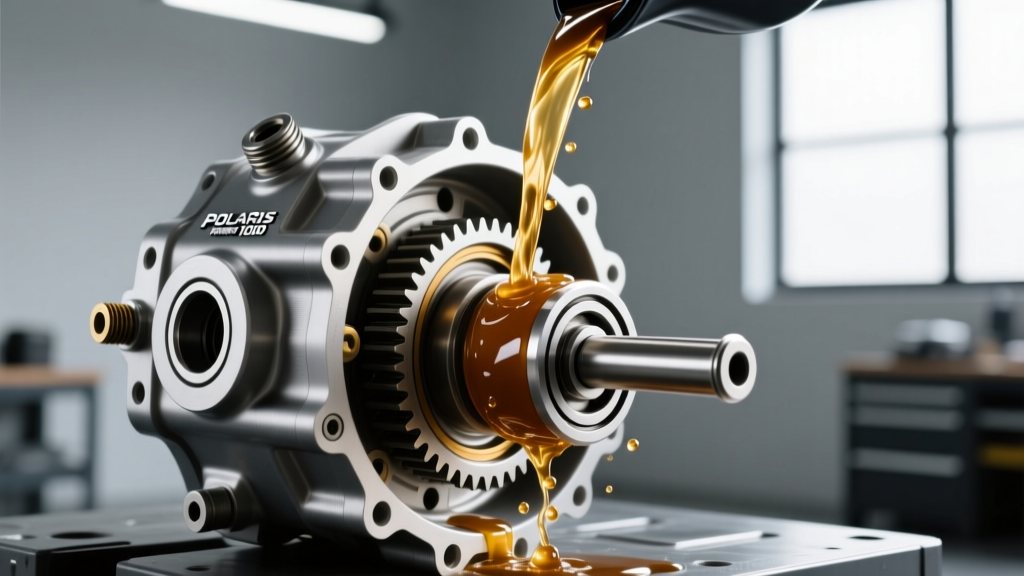
The most objective diagnostic step is pulling the drain plug. While a fine, silvery sheen on the magnetic plug is normal for the first 10,000 miles, distinct metallic flakes, brass-colored shavings (indicating cage failure), or chunky ferrous debris mean the bearing surfaces are actively disintegrating.
4. Driveline Vibration at Highway Speeds
Advanced bearing wear introduces radial play into the center diff output shaft. This play allows the rear driveshaft to operate at an improper angle, inducing a high-frequency vibration typically felt in the floor pan or center console between 65 mph and 80 mph.
Diagnostic Framework: Isolating the Center Diff
Misdiagnosing a center diff bearing as a rear differential pinion bearing or a transmission output shaft bearing is a costly mistake. Use the following matrix to isolate the fault.
| Symptom Profile | Test Condition | Likely Culprit | Verification Method |
|---|---|---|---|
| Whine changes on decel vs. accel | Coast vs. Load test at 50 mph | Ring & Pinion Gear Mesh (Front/Rear) | Check gear backlash and tooth wear pattern |
| Whine correlates strictly to RPM/Speed | Lift vehicle, run in gear at 60 mph | Center Diff / Transfer Case Bearing | Use chassis ear stethoscope on extension housing |
| Growling that shifts left to right | Slalom / Sweeping turns | Front or Rear Axle Wheel Bearing | Check hub assembly for axial play and ABS tone ring |
| Clunk on throttle tip-in / tip-out | Shift from Reverse to Drive | Center Diff Backlash / Worn U-Joints | Measure rotational slop at the rear driveshaft flange |
Platform-Specific Failure Modes and Replacement Specs
Every AWD manufacturer approaches the center differential differently. Here is a deep dive into two of the most common platforms requiring center diff bearing service.
Subaru Symmetrical AWD (5MT / 6MT Viscous & Helical LSD)
In Subaru manual transmissions, the center differential is housed in the rear extension of the transmission case. The most common failure point is the tapered roller bearing supporting the rear output shaft (Subaru OEM P/N: 803042020 or equivalent SKF 32207). When this bearing fails, the viscous coupler or helical LSD gears bind, often destroying the center diff casing.
- Bearing Preload Specification: Measured via rotating torque. Target is typically 10–15 in-lbs for new bearings using the factory shim selection tool.
- Companion Flange Nut Torque: 145–160 ft-lbs (always use a new staked nut, P/N 800442130).
- Fluid Protocol: If the bearing failed internally, the entire transmission must be flushed. Subaru recommends 75W-90 GL-5 gear oil. Capacity is approximately 3.5 liters for the manual transmission, which shares fluid with the center diff mechanism.
Audi Quattro (Torsen Type C / Crown Gear in ZF & 0B6 Transmissions)
Longitudinal Audi platforms utilize a purely mechanical Torsen center differential. In the 0B6 6-speed manual and various ZF 8HP automatic integrations, the center diff is supported by heavy-duty angular contact and tapered roller bearings. Failure here often manifests as a high-frequency whine originating from the rear of the transmission bell housing.
- Flange Bolt Torque: The rear output flange is secured by an M10x1.5 bolt. Audi spec requires 40 Nm + 90 degrees of rotation. This bolt is one-time-use (stretch bolt).
- Bearing Extraction: Requires a specialized blind-hole puller or hydraulic press setup. Heating the aluminum transfer case housing to 80°C (176°F) is recommended to prevent case cracking during outer race removal.
Teardown, Preload, and Precision Measurement
Deciding to replace differential bearings is only half the battle; the installation requires strict adherence to preload specifications. If you install tapered roller bearings too loose, the center diff gears will deflect under torque, causing tooth spalling. If installed too tight, the bearings will overheat and seize within 500 miles.
Expert Tip: Never rely solely on the "feel" of a crush sleeve. Always use a beam-style or digital inch-pound torque wrench to measure the rotating torque of the output shaft without the axle seals installed, as seal drag will skew your preload measurements by up to 4 in-lbs.
For shim-adjusted center differentials (common in Toyota Land Cruiser full-time 4WD transfer cases), you must use a dial indicator mounted to the housing to measure output shaft endplay. The target endplay for most Toyota center diff assemblies is between 0.002" and 0.004". You will need a micrometer to measure shims in 0.05mm increments to dial this in perfectly.
Post-Failure Fluid Analysis and Refill Protocols
Because the center differential shares lubrication with adjacent components (or relies on a small, dedicated fluid chamber), bearing failure contaminates the entire system. According to SKF's bearing damage analysis guidelines, spalling generates microscopic work-hardened steel particles that act as lapping compound, accelerating wear on all remaining gears.
Flushing the Contaminated System
- Initial Drain: Remove the fill plug before the drain plug. Inspect the magnetic drain plug. If chunks larger than 2mm are present, the housing must be removed and hot-tanked or aggressively flushed with a cheap GL-4 flush oil.
- First Fill & Run: Fill with a low-cost 80W-90 GL-5 fluid. Run the vehicle on a lift, cycling the AWD system by binding the front and rear axles slightly (applying brake to one axle while driving the other) to force the center diff to bias torque and circulate fluid through the internal galleries.
- Second Drain & Final Fill: Drain the flush oil after 50 miles of road testing. Inspect the magnet again. If clean, proceed with the final fill.
Selecting the Correct Final Fluid
Modern AWD center differentials are highly sensitive to friction modifiers. According to Red Line Oil's drivetrain technical documentation, using a fluid with the wrong coefficient of friction can cause clutch-based center diffs (like the Subaru DCCD or electronically controlled transfer cases) to slip or bind erratically.
- Helical / Torsen Center Diffs: Require a high-quality 75W-90 GL-5 synthetic. The extreme pressure (EP) additives protect the sliding helical gears. (e.g., Motul Gear 300 75W-90).
- Viscous Couplings / Clutch Packs: Often require dedicated transfer case fluids (e.g., Nissan Matic-S, Toyota TF-0753) or specific GL-5 oils without limited-slip friction modifiers, which can cause clutch chatter.
Cost Breakdown and Final Verdict
Ignoring the early symptoms of a failing center differential bearing will inevitably lead to a destroyed transfer case or transmission casing. Here is what you can expect to invest when addressing this issue proactively in 2026.
| Component / Service | Estimated Cost (USD) | Notes |
|---|---|---|
| OEM / SKF Center Diff Bearings (Pair) | $80 - $180 | Never use unbranded aftermarket bearings for AWD preload applications. |
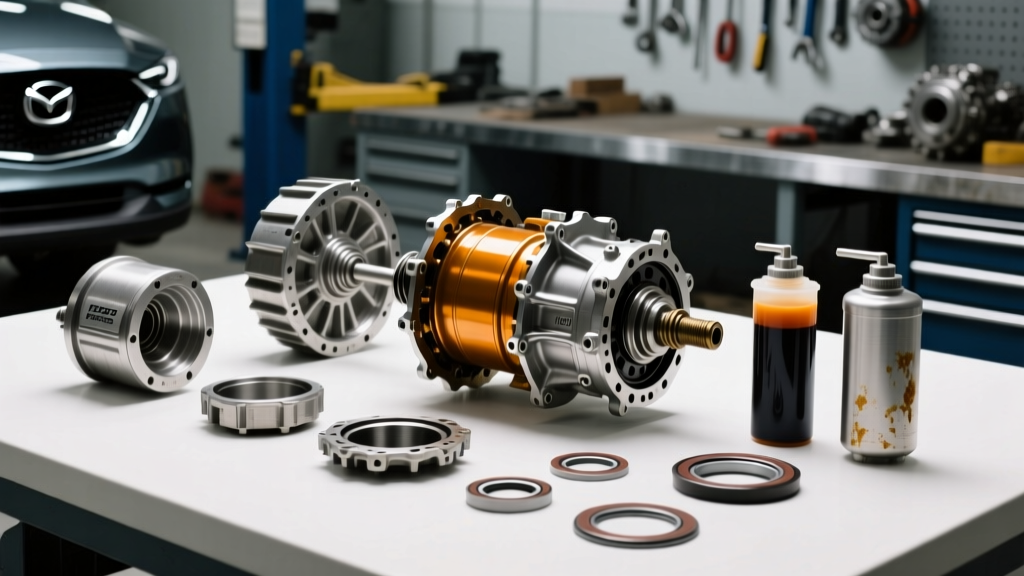
| Output Shaft Seals & O-Rings | $25 - $60 | Always replace seals when pulling the flange. |
| Synthetic 75W-90 GL-5 Fluid | $40 - $90 | Price varies based on total system capacity and flush requirements. |
| Professional Labor (R&R and Preload Setup) | $600 - $1,400 | Highly dependent on whether the transmission must be dropped from the vehicle. |
Ultimately, deciding when to replace differential bearings in an AWD center differential comes down to listening to the driveline and analyzing the fluid. By catching the high-pitch whine early, verifying the fault with a stethoscope and rotating torque test, and adhering to strict factory preload specifications, you can preserve the sophisticated torque-vectoring capabilities of your AWD system for another 150,000 miles. For further reading on drivetrain component tolerances, consult the technical resources available at Ring & Pinion's technical support portal.