The Polaris Ranger XP 1000 is a cornerstone of both recreational trail riding and heavy-duty utility work. However, the Independent Rear Suspension (IRS) and Demand Drive systems place immense stress on the rear gearcase. When drivetrain vibrations, whining, or binding occur, the root cause is frequently traced back to neglected fluid maintenance, incorrect lubricants, or water ingestion. As an automotive and powersport drivetrain specialist, I see too many ring and pinion sets destroyed because owners relied on guesswork rather than factory engineering specifications.
When diagnosing drivetrain issues, owners frequently look up the Polaris Ranger 1000 rear differential oil capacity to verify if their gearcase is underfilled or overfilled. Getting this metric right is only half the battle; understanding the internal mechanics of the Demand Drive clutch and the precise diagnostic symptoms of fluid degradation is what separates a routine maintenance task from a catastrophic failure prevention strategy. In this 2026 guide, we will break down the exact specifications, symptom diagnosis, and advanced troubleshooting protocols for the Ranger 1000 rear differential.
Factory Specifications: Capacity, Torque, and Fluid Types
Before cracking the drain plug loose, you must have the correct OEM materials on hand. The rear gearcase on the Ranger 1000 utilizes a highly specific friction-modified fluid to accommodate the internal overrunning clutch. Using standard automotive 75W-90 gear oil will cause immediate clutch chatter and eventual mechanical lockup.
| Specification | Ranger 1000 Rear Gearcase Data |
|---|---|
| Fluid Type | Polaris Demand Drive Fluid (Do NOT use AGL or 75W-90) |
| OEM Part Number | 2879295 (1 Quart Bottle) |
| Exact Oil Capacity | 8.5 oz (250 ml) — Verify via fill-plug weep method |
| Drain/Fill Plug Torque | 14 ft-lbs (19 Nm) |
| Plug Tool Size | 14mm Hex or 3/8" Square Drive (Year Dependent) |
| Seal/Washer | Replace OEM Aluminum Crush Washer at every service |
For sourcing genuine OEM components and verifying VIN-specific part numbers, referencing the Partzilla Polaris catalog or the official Polaris parts and accessories portal is highly recommended to ensure you are ordering the correct crush washers and seals for your specific model year.
Diagnostic Matrix: Decoding Rear Gearcase Symptoms
Troubleshooting a rear differential requires isolating the noise or behavior and correlating it to internal component wear. Below is a diagnostic framework for the most common Ranger 1000 rear diff complaints.
1. Deceleration Whine (The "Coast" Howl)
Symptom: A high-pitched whining or howling noise that is only present when you let off the throttle and the machine is coasting.
Diagnosis: This is a classic indicator of pinion bearing preload loss or ring and pinion gear wear on the coast side of the teeth. If the fluid level was allowed to drop below the 8.5 oz threshold, the pinion bearings starve of lubrication, leading to micro-pitting. Action: Drain the fluid immediately and inspect for metallic glitter. If the whine persists with fresh Demand Drive fluid, a differential rebuild and backlash reset are required.
2. Binding and Chatter in Tight Turns
Symptom: The rear end feels locked up, hops, or chatters when making slow, tight turns on hard-packed dirt or pavement, even with Turf Mode disengaged.
Diagnosis: The Ranger 1000 rear diff uses a Hilliard-style overrunning clutch (Demand Drive) to lock the rear axles together when the front wheels slip. If someone previously serviced the diff with standard 75W-90 gear oil or Polaris AGL, the friction modifiers required for the sprag clutch are absent. The clutch drags instead of freewheeling. Action: Perform a complete fluid flush. It may take 2-3 drain-and-fill cycles with genuine Demand Drive fluid to purge the incorrect lubricant from the clutch pores.
3. Turf Mode Lockup (Failure to Disengage)
Symptom: The electronic Turf Mode switch is turned OFF, but the rear differential remains fully locked, tearing up grass and causing severe driveline bind.
Diagnosis: While this can be an electrical solenoid issue, it is frequently a mechanical failure inside the gearcase. If the gearcase was overfilled past the bottom thread of the fill hole, hydraulic pressure builds up as the fluid heats and expands. This pressure can force the locking collar into engagement against the spring tension. Action: Drain the fluid, verify the exact 8.5 oz capacity, and ensure the vent tube is clear.
Step-by-Step Service & Troubleshooting Protocol
Proper service technique is critical to avoiding stripped threads and ensuring the correct fluid volume. Follow this exact sequence:
- Level the Machine: Park the Ranger on a perfectly flat surface. The rear gearcase must be level side-to-side and front-to-back to ensure an accurate fill level.
- Remove the FILL Plug First: This is the golden rule of differential service. If you drain the fluid and then discover the fill plug is seized or stripped, you are stranded. Break the fill plug loose before touching the drain plug.
- Drain and Inspect: Remove the drain plug and allow the fluid to empty into a clean, white drain pan. The white background is crucial for the next step.
- The Magnet Autopsy: The drain plug features a magnetic tip. A fine, paste-like metallic fuzz is normal gear wear. However, if you find jagged metal shards, chunks of steel, or brass-colored flakes (indicating thrust washer failure), the differential must be torn down and rebuilt. Do not simply refill it.
- Reinstall Drain Plug: Install a brand new aluminum crush washer. Torque the drain plug to exactly 14 ft-lbs (19 Nm). Overtightening will crack the cast aluminum housing.
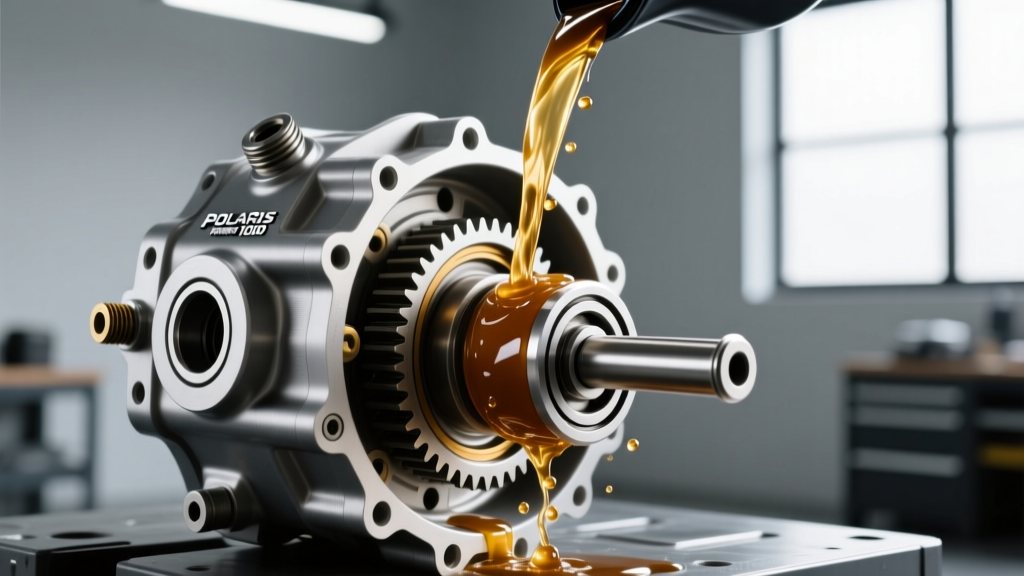
- Fill to the Weep Point: Using a fluid pump, inject Polaris Demand Drive Fluid into the fill hole. The true Polaris Ranger 1000 rear differential oil capacity is dictated by the physical level, not just a volume measurement. Stop pumping the exact moment the fluid begins to weep out of the bottom threads of the fill hole.
- Reinstall Fill Plug: Wipe the threads clean, apply a fresh crush washer, and torque to 14 ft-lbs (19 Nm).
The Silent Killer: Water Ingestion and Vent Tube Routing
The most common cause of catastrophic rear differential failure in the Ranger 1000 is not mileage; it is water ingestion. The rear gearcase sits exceptionally low to the ground. When crossing creeks or deep mud, the diff is submerged. As the hot gearcase is suddenly cooled by the water, the internal air contracts, creating a vacuum. If the vent tube is submerged, or if the axle seals are compromised, water is sucked directly into the gearcase.
Diagnosing Water Ingestion: If your drained fluid resembles a chocolate milkshake or mayonnaise, the fluid has emulsified with water. This emulsion destroys the lubricating boundary layer, leading to rapid rusting of the pinion bearings and Hilliard clutch failure.
The Vent Tube Modification
From the factory, the rear differential vent tube is often routed too low, sometimes terminating near the rear wheel well. To prevent hydro-locking your rear gearcase, you must reroute the vent line. Disconnect the factory vent hose from the gearcase nipple, attach a longer section of 5/16" fuel line hose, and route it up high into the engine bay or under the rear bed, securing it near the airbox. Install a small inline breather filter at the end to prevent dust ingestion. This single $10 modification will save you a $1,200 differential rebuild.
Final Thoughts on Drivetrain Longevity
Maintaining the Polaris Ranger 1000 rear differential requires strict adherence to OEM fluid chemistry and precise volume metrics. By respecting the 8.5 oz capacity limit, utilizing only Demand Drive fluid, and keeping a close eye on the diagnostic symptoms of clutch drag and bearing wear, you can easily push the lifespan of your rear gearcase well past 10,000 trail miles. Always treat the drain plug magnet as your primary window into the health of your ring and pinion, and never ignore the early signs of deceleration whine.