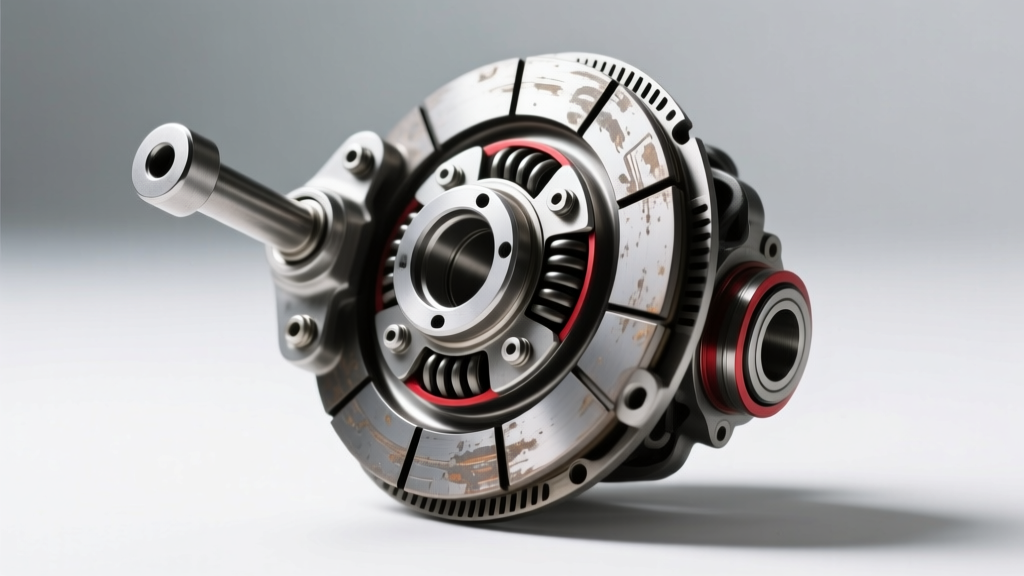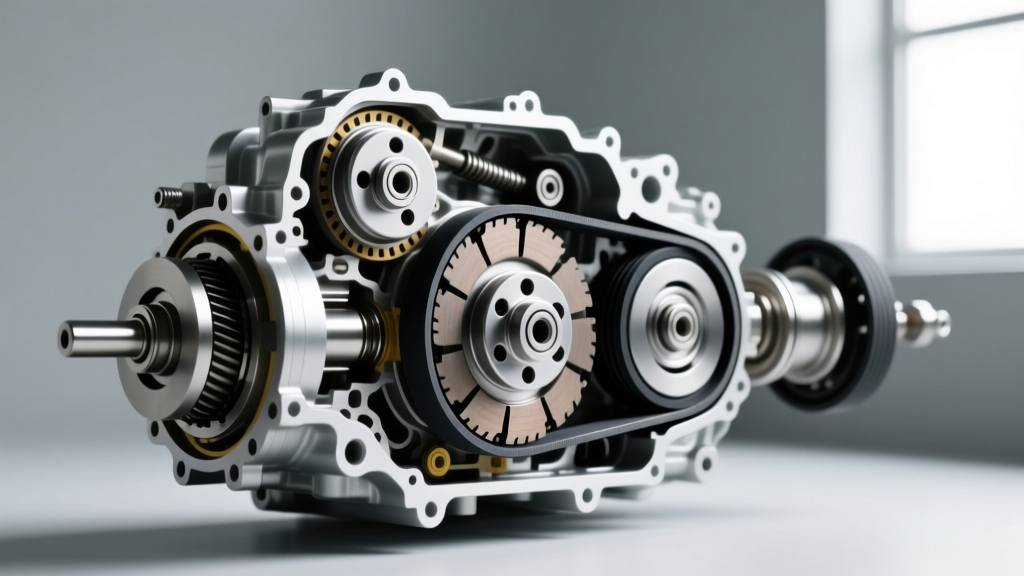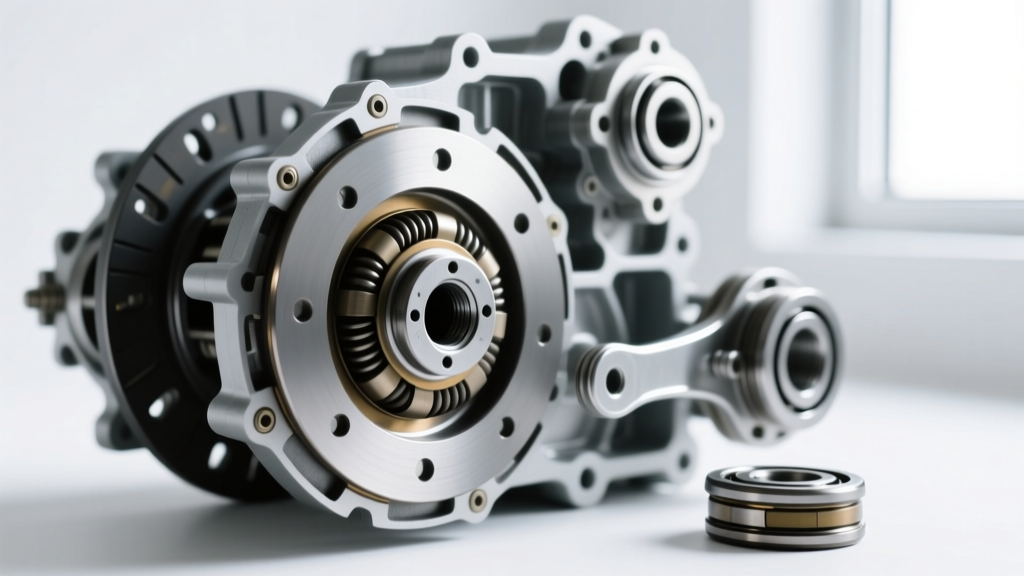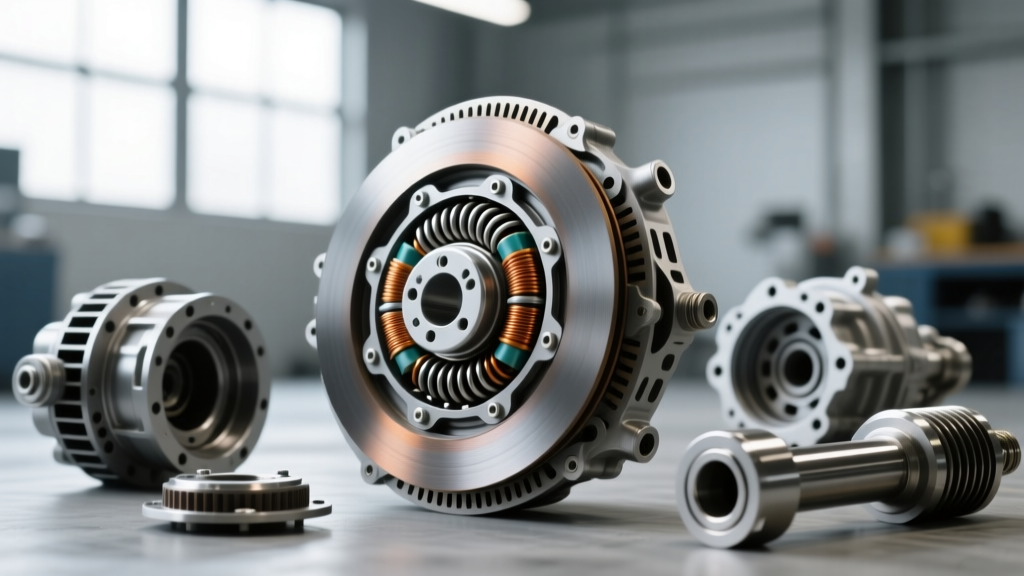
There are few things more frustrating for a vehicle owner or an independent shop than a comeback repair. You have already paid the labor and parts cost to replace an AC compressor clutch, only to find the system slipping, clicking, or completely unresponsive a week later. While the electromagnetic clutch on an automotive air conditioning system is not a drivetrain component like a manual transmission clutch, it operates on strict mechanical and electromagnetic tolerances. When those tolerances are ignored during installation, the result is immediate post-replacement failure.
In this 2026 cost analysis and diagnostic guide, we break down the exact pricing for AC compressor clutch replacement, explore the mechanical root causes of post-repair failures, and provide a structured financial and technical framework for diagnosing a newly installed clutch that refuses to perform.
Baseline Pricing: What It Costs to Replace AC Compressor Clutch Components
Before analyzing post-repair failures, we must establish the baseline cost to replace AC compressor clutch assemblies in the current market. Unlike a full compressor replacement, swapping just the clutch coil, pulley, and friction plate (hub) can often be done without evacuating the refrigerant system, provided the technician uses the correct puller tools and there is adequate clearance in the engine bay.
- Parts (OEM/Premium Aftermarket): A high-quality clutch kit from manufacturers like Denso, Sanden, or Four Seasons typically ranges from $90 to $220 in 2026. Cheap, unbranded kits can be found for $45, but they frequently suffer from weak electromagnetic coils and inferior friction materials that glaze under high ambient temperatures.
- Labor (Clutch Only): If the compressor remains on the vehicle and the refrigerant is not recovered, labor usually books at 1.0 to 1.5 hours. At an average shop rate of $140/hour, expect to pay $140 to $210.
- Total Initial Investment: $230 to $430 for a successful, first-time repair.
However, if the initial installation was botched, or if underlying system issues were ignored, that $400 investment is about to turn into a much larger financial liability.
The Financial Drain of Post-Replacement Clutch Failures
When a brand-new AC clutch fails within the first 500 miles, it is rarely a defective part. It is almost always a symptom of improper installation technique or a failure to diagnose the root cause of the original clutch's demise. Here are the three most common post-repair clutch problems and the costs associated with fixing them.
1. Incorrect Air Gap Shimming (The Silent Killer)
The air gap between the friction plate and the pulley/rotor assembly is the most critical measurement in clutch installation. The specification for most modern Denso and Sanden compressors is between 0.4mm and 0.6mm (0.015 to 0.025 inches).
If a technician reuses old shims or guesses the gap, two things happen:
- Gap Too Wide (>0.030"): As the clutch coil heats up during operation, its electrical resistance increases, weakening the magnetic field. The coil will no longer be able to pull the friction plate across the wide gap, resulting in a clutch that engages when cold but slips or disengages entirely when the engine bay is hot.
- Gap Too Narrow (<0.010"): The friction plate will constantly drag against the spinning pulley. This generates immense heat, melting the coil winding insulation, destroying the front compressor seal, and ruining the pulley bearing.
Fix Cost: Adjusting the air gap requires removing the center bolt (typically torqued to 11-15 Nm), pulling the hub, and adding or removing precision shims. If caught early, this is a $120 to $150 labor charge. If the dragging plate destroyed the pulley bearing, you will need a new clutch kit, pushing the cost back to $350+.
2. High-Side Pressure Spikes and Friction Plate Glazing
Why did the original clutch fail? If the original clutch burned up due to slippage, simply bolting on a new one without checking system pressures is a guaranteed comeback. According to the Mobile Air Climate Systems Association (MACS), excessive high-side pressure forces the compressor to work harder than the clutch's friction material can handle.
If the condenser fan is failing, or the system is overcharged with R134a or R1234yf, head pressures can spike above 350 PSI (R134a) or 425 PSI (R1234yf). Under this extreme mechanical load, the new clutch will slip. Slippage creates friction heat, which glazes the friction plate surface. Once glazed, the clutch will slip even when pressures return to normal.
Fix Cost: You must recover the refrigerant, flush the condenser, replace the clutch assembly again, and recharge the system with exact OEM weight specifications. Total cost: $650 to $900.
3. Parasitic Voltage Drops and Sticking Relays
An AC clutch coil requires a solid 12 volts to generate maximum magnetic flux. Standard Motor Products (SMP) technical bulletins frequently highlight that sticking AC compressor relays or corroded ground wires are leading causes of premature clutch coil failure. If the relay supplies only 9.5 volts due to internal resistance, the clutch will partially engage, slip continuously, and overheat the coil windings until they short out.
Fix Cost: Diagnosing the voltage drop requires a multimeter and a wiring diagram. Replacing a compressor relay costs $25 to $60 in parts and $140 in diagnostic labor. However, if the low voltage burned out the new clutch coil, the coil must be replaced ($180 to $300 total).
2026 Cost Analysis: Initial Repair vs. Comeback Diagnostics
The table below illustrates the compounding financial impact of ignoring root-cause diagnostics when replacing an AC compressor clutch.
| Service Scenario | Parts Cost | Labor Cost | Total Estimated Cost |
|---|---|---|---|
| Baseline Clutch Replacement (Properly diagnosed, correct shimming) | $90 - $220 | $140 - $210 | $230 - $430 |
| Comeback: Air Gap Adjustment (Clutch slipping due to wide gap) | $0 (Shims only) | $120 - $150 | $120 - $150 |
| Comeback: Burned Coil (Due to voltage drop or dragging plate) | $110 - $180 | $140 - $210 | $250 - $390 |
| Catastrophic Failure (Clutch seized, destroyed compressor front seal/bearing) | $350 - $650 (Full Compressor + Oil) | $450 - $600 (R&R, Evac, Recharge) | $800 - $1,250 |
As the data demonstrates, failing to spend 20 minutes verifying the air gap and checking the compressor relay during the initial repair can easily triple the total cost to the consumer or destroy a shop's profit margins through unpaid warranty work.
Expert Diagnostic Protocol for a Failing New Clutch
If you are facing a post-replacement clutch issue, follow this exact diagnostic sequence before ordering any new parts or tearing down the front of the compressor again.
- Verify the Center Hub Torque: Using a torque wrench, check the center friction plate bolt. It should be seated firmly. If it is loose, the plate will wobble, causing an inconsistent air gap and a rhythmic clicking noise at idle. Torque to OEM spec (usually 11-15 Nm or 8-11 lb-ft).
- Measure the Air Gap: Use a metric feeler gauge. Insert it at three equidistant points around the clutch perimeter. If the gap varies by more than 0.1mm across the three points, the friction plate is bent or the pulley bearing is failing. Replace the affected component.
- Test Coil Resistance: Disconnect the clutch electrical connector. Set your multimeter to Ohms. Place the probes on the coil terminals. A healthy 12V coil should read between 3.0 and 4.5 ohms. If it reads infinite (open) or near zero (shorted), the coil is dead and must be replaced.
- Perform a Voltage Drop Test: With the engine running and the AC commanded ON, back-probe the clutch connector. You must see battery voltage (minimum 13.2V with the alternator charging). If you read 11V or lower, trace the circuit backward through the relay, pressure switches, and HVAC control module to find the resistance.
- Hook Up Manifold Gauges: Verify that high-side pressures are within normal operating ranges for the current ambient temperature. If the high side is spiking while the low side is dropping, you have a restriction (like a clogged orifice tube or failing TXV) that is overworking the compressor and causing the clutch to slip.
When to Abandon the Clutch Kit and Replace the Entire Compressor
There is a definitive point where attempting to save money by replacing just the clutch becomes a false economy. If a post-repair failure resulted in the friction plate welding itself to the pulley, or if the excessive heat from a dragging clutch has transferred down the compressor snout and scorched the front shaft seal, the internal integrity of the compressor is compromised.
Furthermore, if the compressor is a variable displacement model (such as the widely used Sanden SD7V16 or Denso 10S17C) and the internal control valve has failed, the compressor will stroke to maximum displacement continuously. This creates immense mechanical drag that no standard electromagnetic clutch can hold without slipping. In these scenarios, referencing Denso's technical service bulletins will confirm that a complete compressor assembly replacement, along with a full system flush and expansion valve replacement, is the only permanent, cost-effective solution.
By understanding the precise mechanical tolerances and electrical requirements of AC clutch systems, technicians and vehicle owners can avoid the devastating costs of repeat failures and ensure the AC system operates reliably through the harshest summer conditions.