Expert Builder's Note: When enthusiasts ask, "Can you rebuild a torque converter?" they are often conflating a standard OEM remanufacturing process with custom performance modification. True performance rebuilding requires a lathe, TIG welding, dynamic balancing, and a deep understanding of fluid dynamics. It is not a weekend driveway project.
The Reality of the Question: Can You Rebuild a Torque Converter?
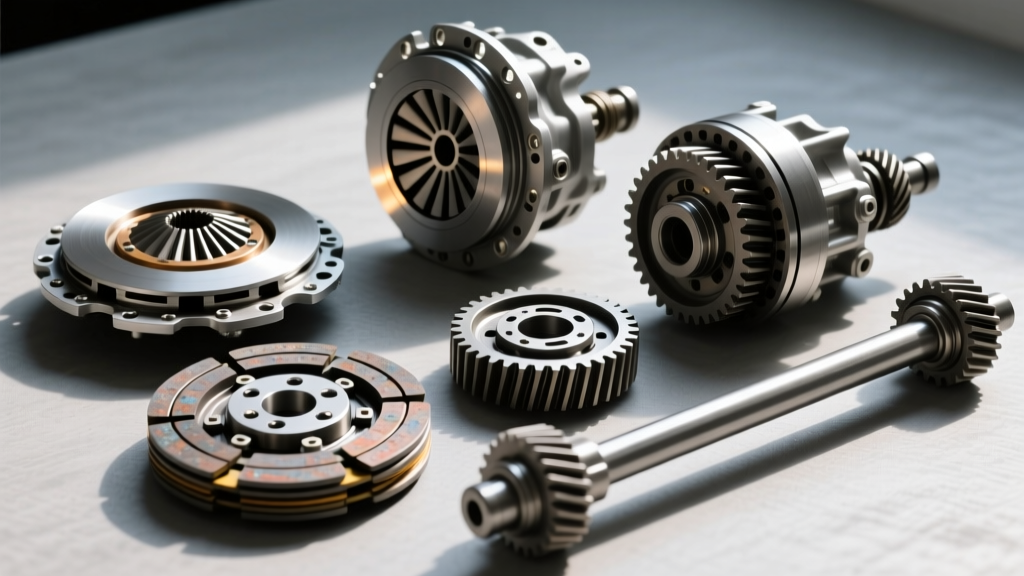
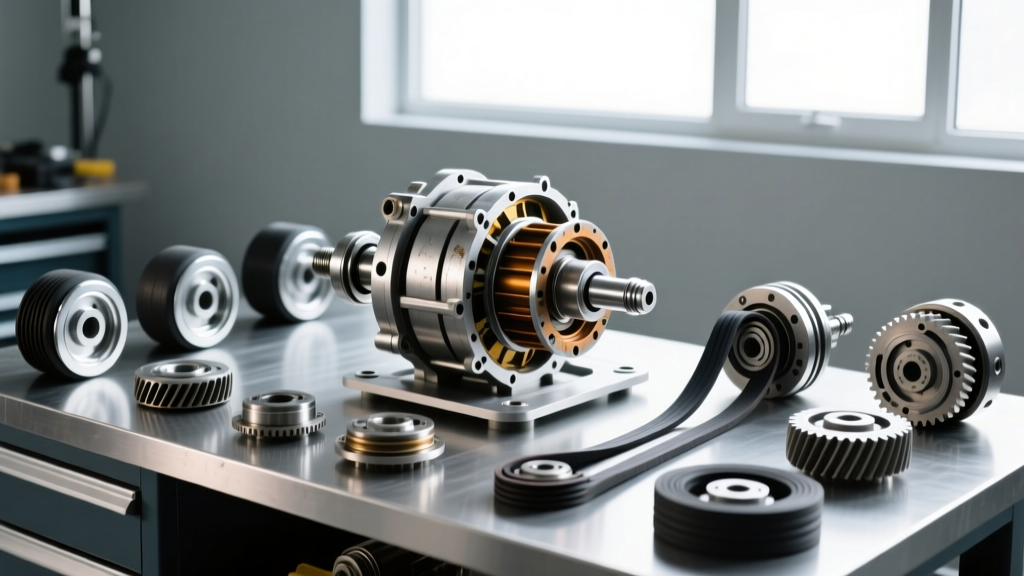
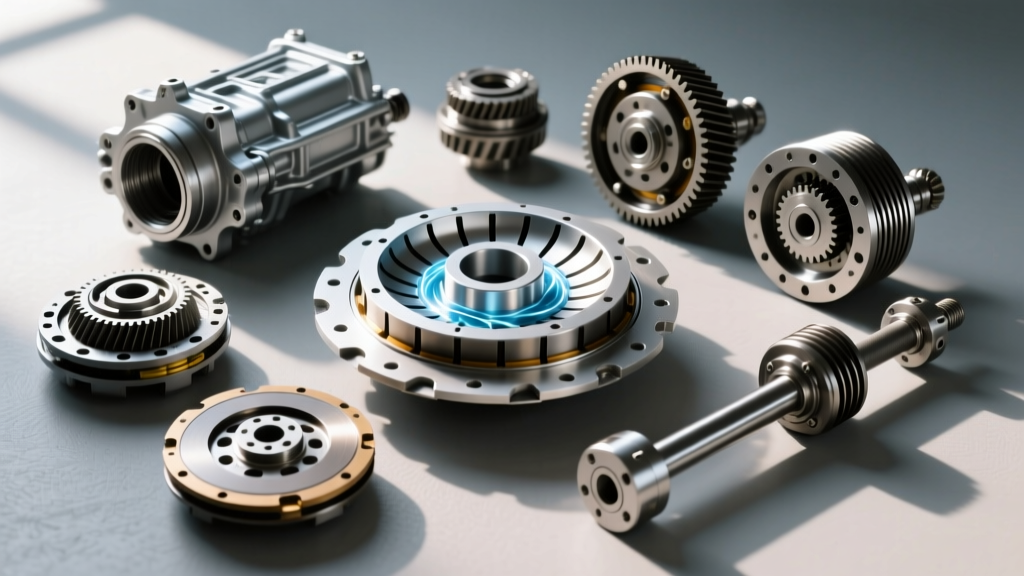
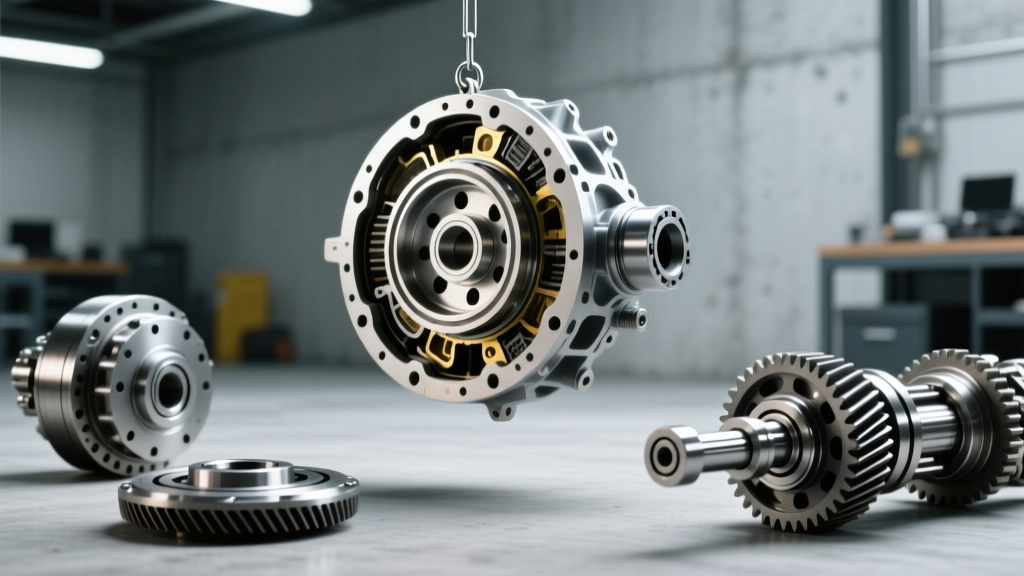
To answer the question directly: yes, you can rebuild a torque converter, but the terminology is slightly misleading in the performance automotive sector. Unlike a carburetor or a brake caliper, a torque converter is a sealed, precision-welded hydraulic coupling. "Rebuilding" one actually involves mounting the unit on a heavy-duty lathe, slicing the outer cover off at the weld seam, extracting the internal turbine, stator, and impeller, and then modifying or replacing those components before TIG-welding the cover back on and dynamically balancing the assembly.
As of 2026, the aftermarket transmission landscape has evolved dramatically. With the proliferation of 8-speed and 10-speed automatics (like the GM 10L90 and Ford 10R80), the internal complexity of torque converters has skyrocketed. However, for legacy and highly popular performance platforms like the GM 4L60E, 4L80E, and the 6L80, custom rebuilding remains a cornerstone of drag racing, street/strip, and high-horsepower towing applications. Understanding what goes into a performance rebuild is critical before deciding whether to cut open your stock unit or buy an off-the-shelf billet performance converter.
Why Performance Applications Demand More Than a Stock Rebuild
A standard OEM remanufactured torque converter is designed for fuel economy, low-speed drivability, and NVH (Noise, Vibration, and Harshness) reduction. Performance applications require the exact opposite: aggressive torque multiplication, tailored stall speeds, and the ability to handle immense thermal and mechanical loads without ballooning.
The Role of the Stator and Fin Angles
The stator is the heart of torque multiplication. In a performance rebuild, the stock cast stator is often discarded in favor of a billet steel stator with aggressively re-machined fin angles. By altering the pitch of the stator fins, a builder can dictate exactly where the converter reaches its stall speed. For a naturally aspirated 408ci LS3 build, a custom stator can be tuned to flash at exactly 3,200 RPM, perfectly matching the engine's torque curve. According to fluid dynamics research published by Sonnax, altering the stator and turbine fin angles directly impacts the K-factor (speed ratio) and the torque multiplication ratio, which can be pushed from a stock 1.8:1 to an aggressive 2.4:1 or higher for drag applications.
Anti-Ballooning and Billet Steel Covers
When horsepower exceeds 450 HP at the crank, the internal hydraulic pressure and centrifugal force can cause the stamped steel cover of a stock torque converter to expand outward—a catastrophic failure mode known as ballooning. This destroys the transmission front pump and the converter itself. A proper performance rebuild involves machining the stock cover down and welding on a billet steel anti-ballooning plate, or replacing the front cover entirely with a CNC-machined billet unit.
Cost vs. Benefit: Rebuilding vs. Buying Billet
One of the most common dilemmas for transmission builders is whether the labor and machinery cost of rebuilding a stock core outweighs the cost of purchasing a purpose-built performance unit. Below is a comparative breakdown based on 2026 aftermarket pricing for a standard GM 6L80 application.
| Converter Type | Estimated Cost (USD) | HP/TQ Limit | Best Application |
|---|---|---|---|
| OEM Remanufactured (Stock) | $250 - $400 | 350 HP / 400 lb-ft | Daily driving, towing, fuel economy |
| Custom Rebuilt Stock Core | $600 - $850 | 600 HP / 650 lb-ft | Street/strip, mild forced induction |
| Full Billet Performance (e.g., Circle D, TCI) | $900 - $1,600+ | 1,000+ HP / 1,000+ lb-ft | Dedicated drag racing, high-boost turbo |
While a full billet unit from manufacturers like TCI Automotive or Circle D Specialties offers the highest reliability, rebuilding a stock core with billet internals is highly cost-effective for the 500-700 horsepower bracket, provided the builder has access to precision balancing equipment.
Modern Lockup Clutches (TCC): The Carbon-Kevlar Advantage
In modern overdrive transmissions, the Torque Converter Clutch (TCC) is crucial for locking the engine directly to the transmission input shaft, eliminating slip and reducing heat. Stock TCC friction material is typically a basic paper/cellulose composite that will glaze and fail under high-horsepower lockup conditions.
During a performance rebuild, the TCC piston is machined to accept a multi-disc clutch pack or a single, high-density Carbon-Kevlar friction ring. Carbon-Kevlar offers vastly superior thermal resistance and a higher coefficient of friction. For platforms like the ZF 8HP found in modern Dodge Chargers and Ford Mustangs, the TCC is highly modulated by the TCM (Transmission Control Module). Upgrading the friction material allows the TCM to apply the lockup clutch much earlier and more aggressively without inducing the dreaded "TCC shudder," a common symptom of failing stock converters under load.
Transmission-Specific Rebuild Considerations
Not all torque converters are created equal, and the rebuild process varies wildly depending on the mating transmission.
The GM 4L60E / 4L80E Legacy
These are the most straightforward converters to rebuild. The 4L80E converter features a robust lockup piston and a large turbine. Builders frequently upgrade the 4L80E stator to a 30-spline billet unit and install a heavy-duty turbine hub to prevent stripping under high torque. The primary focus here is stall speed tuning and anti-ballooning.
The GM 6L80 / 6L90 Complexities
The 6L80 introduced a dual-clutch TCC system in some iterations and a highly regulated apply circuit. Rebuilding a 6L80 converter requires meticulous attention to the damper springs. High-horsepower 6L80 builds often suffer from broken damper springs inside the converter, which then circulate through the transmission and destroy the valve body. A performance rebuild must include upgrading to heavy-duty, heat-treated damper springs or utilizing a rigid-hub setup for dedicated drag cars where TCC slip is managed via tuning.
The ZF 8HP and Centrifugal Pendulum Absorbers
Rebuilding a ZF 8HP torque converter in a home garage is virtually impossible. These converters utilize a Centrifugal Pendulum Absorber (CPA) to cancel out engine vibrations at low RPM lockup. Disrupting the CPA mass weights during the cutting and welding process will result in catastrophic NVH issues. For ZF applications, buying a pre-engineered performance replacement is the only viable route.
Critical Installation Specs: Clearances and Torque
Whether you rebuild a torque converter or buy a new billet unit, the installation specifications are non-negotiable. Failure to adhere to these metrics will result in immediate front pump failure or flexplate cracking.
- Hub-to-Pump Clearance: The distance between the torque converter hub and the transmission front pump gear must be between 0.080" and 0.125". Less than 0.080" will cause the converter to bottom out and crack the pump housing. More than 0.125" indicates the converter is not fully seated on the input shaft and stator support.
- Pilot Clearance: The converter pilot must slide into the engine crankshaft flange with a slight drag. If it is loose, it will cause severe harmonic vibrations. If it requires a hammer, it will push the crankshaft thrust bearing out of specification.
- Flexplate-to-Converter Bolts: Use only high-strength alloy steel bolts (typically 3/8"-24 or 7/16"-20 fine thread). Apply a medium-strength threadlocker (like Loctite 242). Torque specs generally range from 35 to 45 lb-ft, depending on the fastener grade and manufacturer spec. Never use impact guns to seat these bolts.
- Dynamic Balancing: A rebuilt converter must be dynamically balanced on a specialized machine to a tolerance of less than 0.02 oz-in. At 6,000 RPM, an unbalanced converter acts like a sledgehammer on the transmission input shaft and engine thrust bearing.
The Builder's Verdict: When to Cut and When to Buy
So, can you rebuild a torque converter for high performance? Absolutely, but it is a job for a specialized transmission machine shop, not a general mechanic. If you are building a 500 HP street/strip 4L60E or 6L80 and have access to a reputable local converter builder who can custom-match the stator to your camshaft and rear gear ratio, a custom rebuild of a stock core is an incredibly cost-effective and highly tailored solution.
However, if you are pushing past 800 horsepower, running a modern ZF 8HP, or require a triple-disc lockup clutch for high-boost towing, the economics and safety margins heavily favor purchasing a newly manufactured, full-billet performance torque converter. In the realm of high-horsepower drivetrains, the torque converter is the ultimate bottleneck; compromising on its internal architecture is a guaranteed path to mechanical failure.