Decoding Rear Differential Noises: A Troubleshooting Matrix
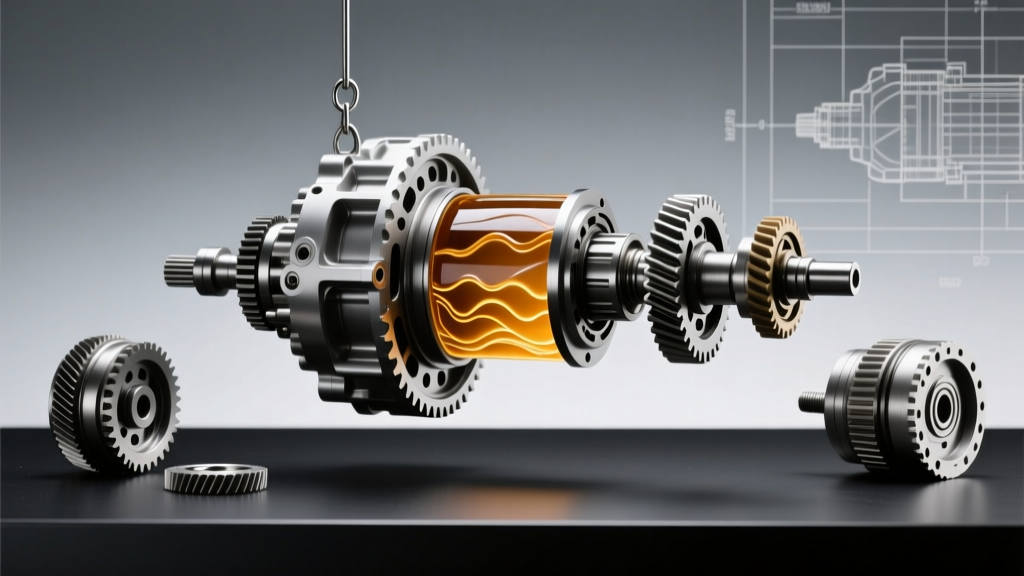
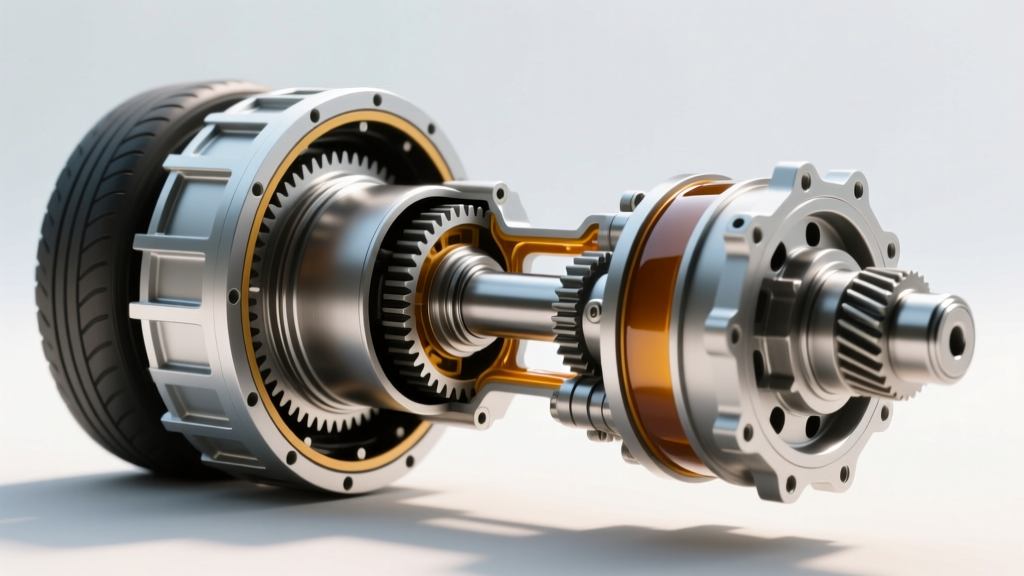
The rear differential is a marvel of hypoid gear engineering, tasked with splitting torque while allowing outer wheels to rotate at different speeds during cornering. Yet, it operates in a brutal environment, submerged in extreme-pressure (EP) gear oil that degrades under high thermal loads and heavy towing. When symptoms arise, distinguishing between a simple fluid service and catastrophic gear failure is critical. This guide provides a master-level troubleshooting framework for rear axle anomalies, helping you decide whether to break out the socket set or tow your rig to the professionals.
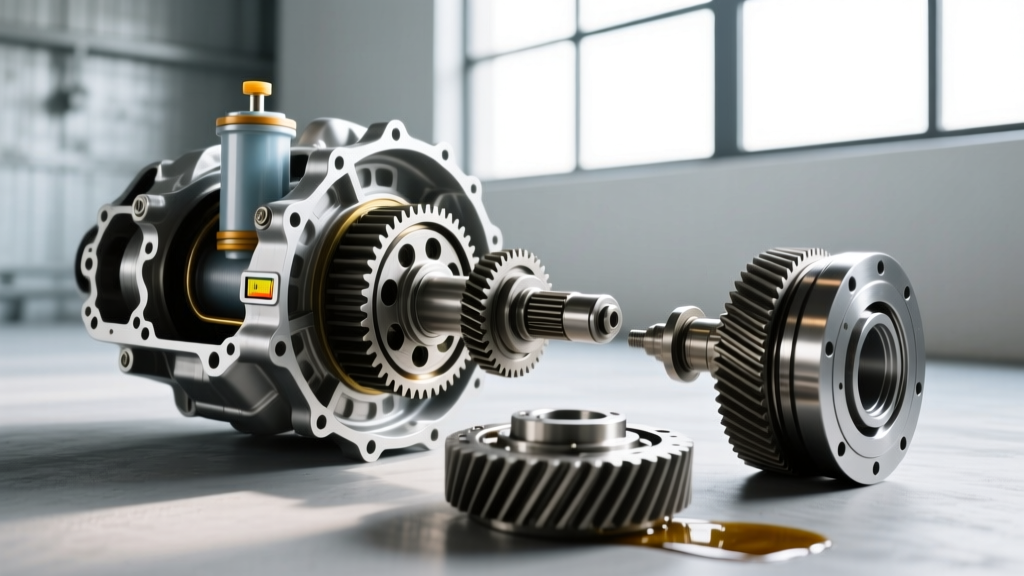
Hypoid ring and pinion gears operate with a complex sliding and rolling motion. This generates specific acoustic signatures when clearances fall out of specification or when lubrication fails. Use the diagnostic matrix below to isolate the root cause of your drivetrain noise.
| Noise Signature | Speed/RPM Dependency | Probable Failure Mode | Immediate Diagnostic Action |
|---|---|---|---|
| Whine on Acceleration | Proportional to vehicle speed | Drive-side gear wear or low pinion bearing preload | Drain fluid; check for metallic glitter. Measure pinion preload. |
| Howl on Deceleration | Proportional to vehicle speed | Coast-side wear or excessive ring gear backlash | Inspect ring gear backlash with a magnetic dial indicator. |
| Rumble or Grinding | Above 20 mph, continuous | Carrier or pinion bearing brinelling (spalling) | Lift vehicle, spin wheels by hand, listen with a mechanic's stethoscope. |
| Clunk on Engagement | Shift from Park to Drive/Reverse | Excessive backlash, worn spider gears, or sloppy U-joints | Check driveline U-joints first, then measure ring gear backlash. |
Fluid Chemistry: GL-5 EP Additives and Thermal Breakdown
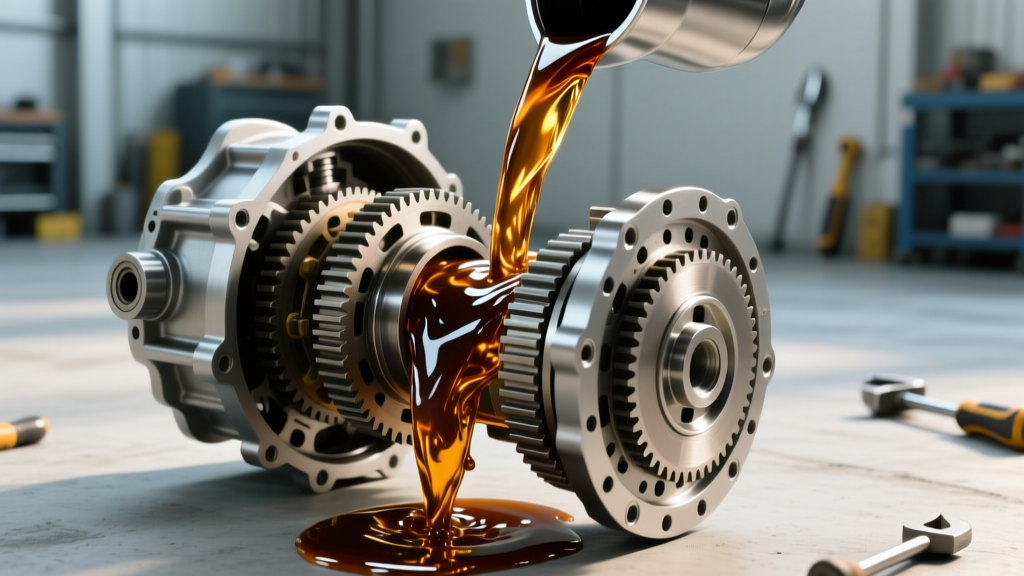
Modern rear axles rely heavily on API GL-5 rated gear oils. These fluids contain sulfur-phosphorus extreme-pressure additives that bond to the hypoid gear teeth, preventing metal-on-metal contact during the high-sliding action of the gear mesh. However, these additives are highly sensitive to thermal breakdown.
When towing heavy loads or climbing steep grades, differential sump temperatures can easily exceed 250°F (121°C). At these temperatures, standard 75W-90 fluids can experience viscosity shearing, leading to a collapsed lubricant film. This is why OEMs frequently specify SAE 75W-140 synthetic gear oil for vehicles equipped with factory towing packages. The heavier base oil resists thermal thinning, protecting the ring and pinion from micro-welding and subsequent pitting. If your drained fluid smells severely burnt (resembling sulfur and scorched metal) or contains a fine, magnetic paste on the drain plug, your differential has been operating in a starved-lubrication state.
Limited-Slip Chatter: The Friction Modifier Deficit
Clutch-type limited-slip differentials (LSDs), such as the Ford Trac-Loc, Dana Trac-Lok, and Eaton Positraction, rely on alternating stacks of friction and steel discs. When the gear oil loses its friction-modifying additive package, the clutches bind and slip rapidly during low-speed turns. This manifests as a violent "chatter" or "judder" felt through the chassis.
Before condemning the clutch packs and ordering a rebuild kit, perform a targeted fluid flush. Use a high-quality synthetic like Amsoil Severe Gear or Mobil 1 Synthetic Gear Lube, and crucially, add the OEM-specific friction modifier.
- Ford 8.8 Trac-Loc: Motorcraft XL-3 Friction Modifier (Part # XL-3)
- GM Eaton Posi: ACDelco Limited Slip Axle Lubricant Additive (Part # 10-4016)
- Dana Trac-Lok: Spicer Performance Friction Modifier
After filling the axle, drive the vehicle in a series of tight, slow-speed figure-eights for 10 to 15 minutes. This forces the modifier into the porous friction material, often curing the chatter instantly.
Hydrostatic Pressure and the Clogged Breather Tube
A frequently misdiagnosed "leaking differential" is actually a victim of a clogged axle breather. As the differential heats up during highway driving, the internal air and fluid expand. If the breather valve—typically a small plastic or metal cap located on the upper axle tube or differential cover—is clogged with mud, ice, or debris, internal hydrostatic pressure spikes.
Expert Tip: This pressure seeks the path of least resistance, forcing gear oil past the pinion seal or axle shaft seals. Before replacing a leaking pinion seal (such as the Timken 710482 for the Ford 8.8), locate the breather tube, remove the cap, and blow it out with compressed air. If you replace seals without fixing the breather, the new seals will blow out again within 500 miles.
OEM Rear Axle Service Specifications and Torque Data
Proper maintenance requires strict adherence to OEM torque specifications and fluid capacities. Over-tightening differential cover bolts can warp stamped steel covers, leading to persistent leaks, while under-tightening can cause gear oil to weep under pressure. Below is a blueprint for the three most common solid rear axles found in light-duty trucks and SUVs.
| Axle Model | Ring Gear Size | Fluid Specification | Capacity | Cover Bolt Torque | Pinion Bearing Preload |
|---|---|---|---|---|---|
| Ford 8.8 | 8.8-inch | 75W-140 Synth (Tow) | 2.5 Quarts | 25-30 lb-ft | 15-25 in-lbs (New) |
| Dana 44 | 8.5-inch | 75W-90 GL-5 | 2.0 Quarts | 20-25 lb-ft | 15-20 in-lbs (New) |
| GM 10-Bolt | 8.5 / 8.6-inch | 75W-90 GL-5 | 2.1 Quarts | 22 lb-ft | 12-18 in-lbs (New) |
Note: Pinion bearing preload is measured in inch-pounds using a specialized dial torque wrench. It requires the installation of a new crush sleeve. Never reuse a crush sleeve, and never attempt to set preload by simply torquing the pinion nut to a static foot-pound number, as this will result in fatal bearing failure. For comprehensive setup kits and engineering schematics, Ring & Pinion remains an industry-standard resource.
Advanced Troubleshooting: Backlash and Pattern Checking
If the fluid is full, the correct viscosity, and the breather is clear, but a whine persists, the gear mesh pattern must be verified. This requires removing the differential cover and using yellow gear marking compound painted across the teeth of the ring gear. By rotating the pinion yoke under light brake pressure, you can read the drive and coast side contact patterns.
Backlash must be measured using a magnetic base dial indicator mounted to the axle housing, with the indicator tip resting on the drive face of a ring gear tooth. Typical OEM backlash specifications range tightly from 0.006" to 0.010". If backlash exceeds 0.015", the ring and pinion are wearing out, or the carrier bearings have collapsed, allowing the ring gear to deflect away from the pinion under load. Adjusting backlash requires moving the carrier side shims or threaded adjusting nuts, a task that demands specialized pullers and deep drivetrain knowledge.
DIY Fluid Swaps vs. Visiting the Differential and Axle Shop
While draining and filling 75W-90 gear oil is a standard driveway task that extends the life of your drivetrain, internal diagnostics require a professional touch. If your marking compound reveals a pattern concentrated dangerously close to the toe or heel of the gear teeth, or if you detect metallic chunks larger than a grain of sand in the drained fluid, the differential requires a complete teardown.
This is the exact moment you must visit the differential and axle shop. Attempting to shim a worn ring and pinion, or pressing new Timken carrier bearings without a hydraulic press and dedicated setup fixtures, will result in catastrophic failure the moment you apply throttle. Professionals at a dedicated drivetrain facility possess the tooling to measure pinion depth shims, set carrier bearing preload to exact inch-pound specifications, and guarantee the hypoid gear contact patch is centered. For OEM replacement parts, spline counts, and axle ratio identification, authoritative databases like Spicer Parts are invaluable for both DIYers and shop technicians alike.
Final Maintenance Takeaway
Do not ignore the subtle acoustic warnings of a failing rear end. A slight whine on deceleration today is a shattered pinion gear on the highway tomorrow. By understanding the chemistry of your gear oil, monitoring your axle breather, and knowing the exact limits of DIY troubleshooting, you can keep your truck or SUV hauling reliably for hundreds of thousands of miles.