The Drivetrain Divide: Why Differential Type Matters
When it comes to drivetrain maintenance, a rear differential oil change is often treated as a generic task. However, treating all axles the same is a fast track to ruined clutch packs, severe cornering chatter, and premature ring-and-pinion failure. As we navigate the 2026 automotive landscape, the proliferation of high-torque turbocharged engines and heavy-duty EV trucks places unprecedented stress on hypoid gearsets. Whether you are servicing a daily-driven commuter or a dedicated off-road rig, understanding the mechanical and chemical differences between open and limited slip differentials (LSD) is critical for selecting the correct gear oil, additives, and service procedures.
Mechanical Architecture: Open vs. Limited Slip
The Open Differential
The open differential is the baseline for most standard passenger vehicles and base-model trucks. Its primary function is to allow the left and right wheels to rotate at different speeds during cornering. It achieves this via a set of spider gears that distribute torque equally. The fatal flaw of the open design is its path-of-least-resistance torque biasing: if one wheel loses traction (e.g., on ice or mud), 100% of the rotational force is sent to the slipping wheel, leaving the vehicle stranded. From a maintenance perspective, open differentials are incredibly forgiving. They require only a high-quality API GL-5 gear oil to protect the hypoid sliding surfaces of the ring and pinion gears.
Clutch-Type Limited Slip Differentials (LSD)
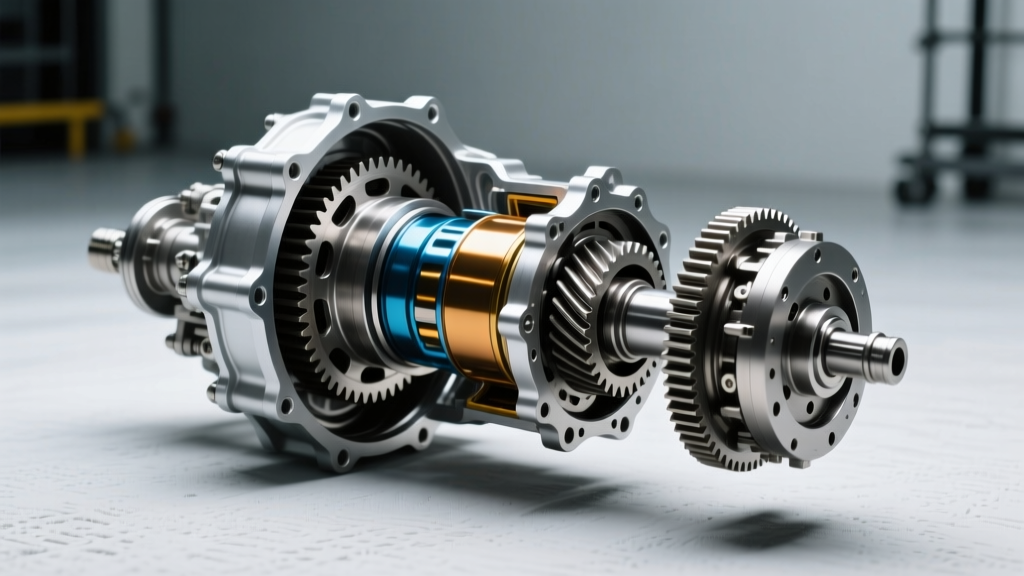
Clutch-type LSDs—such as the Eaton Posi, Auburn Pro-Series, and Ford's OEM Traction-Lok—utilize a series of alternating friction and steel clutch packs positioned behind the side gears. When a speed differential occurs between the wheels, the internal thrust rings force the clutch packs together, locking the axles and transferring torque to the wheel with grip. Because these clutch packs rely on precise friction coefficients to engage and disengage smoothly, they are highly sensitive to fluid chemistry.
Helical Gear LSDs (Torsen/Truetrac)
Unlike clutch-based systems, helical gear LSDs like the Eaton Truetrac use a complex arrangement of worm gears and pinion pockets to create torque biasing mechanically, without any friction clutches. This design is virtually maintenance-free regarding additives, making it a favorite for heavy towing and off-road applications where clutch wear is a concern.
Fluid Chemistry: The Science of the Rear Differential Oil Change
The Role of API GL-5 and Extreme Pressure (EP) Additives
Regardless of whether your axle houses an open diff or an LSD, the ring and pinion gears feature a hypoid cut. This design offsets the pinion gear below the centerline of the ring gear, lowering the driveshaft and reducing cabin intrusion. However, this offset creates a massive sliding motion between the gear teeth under load. Standard GL-4 fluids cannot withstand this sheer pressure. You must use an API GL-5 rated fluid (typically 75W-90 or 80W-90 synthetic), which contains sulfur-phosphorus Extreme Pressure (EP) additives that form a sacrificial chemical film on the gear teeth to prevent microwelding and spalling.
The Friction Modifier Imperative
If you are performing a rear differential oil change on a clutch-type LSD, GL-5 gear oil alone is insufficient. The sulfur-phosphorus additives in standard GL-5 fluids cause the clutch packs to grab too aggressively, resulting in a phenomenon known as 'stick-slip.' This manifests as a violent shuddering or chattering noise when making tight, low-speed turns (like pulling into a driveway). To counteract this, a specialized friction modifier—composed of long-chain organic esters—must be added. This modifier coats the clutch material, ensuring smooth engagement and quiet operation.
"The most common DIY mistake during a rear differential fluid service is pouring the friction modifier in after the housing is full of gear oil. The modifier must be added directly to the empty housing or onto the clutch packs first. This ensures the heavy additive pools at the bottom and is drawn directly into the clutch pack clearances upon initial rotation."
— AutogearNexus Drivetrain Engineering Team
Specifications & Torque Data Table
Precision is paramount during drivetrain service. Over-torquing differential cover bolts will warp the housing and cause leaks, while under-torquing fill plugs leads to fluid loss and catastrophic gear failure. Below is a reference guide for popular light-truck and SUV axles.
| Axle Model | Diff Type | Fluid Capacity | Cover Bolt Torque | Fill Plug Torque | Modifier Required? |
|---|---|---|---|---|---|
| Ford 8.8" | Traction-Lok (Clutch) | 2.5 - 3.0 pints | 24 - 29 lb-ft | 33 lb-ft | Yes (Motorcraft XL-3) |
| GM 8.5" 10-Bolt | Eaton Posi (Clutch) | 2.1 quarts | 22 lb-ft | 25 lb-ft | Yes (GM EOS 88900338) |
| Dana 44 (JK/JL) | Trac-Lok / Auburn | 2.0 - 2.5 quarts | 30 - 35 lb-ft | N/A (Drain Plug) | Yes (Mopar Additive) |
| Dana 44 (Aftermarket) | Eaton Truetrac (Helical) | 2.0 - 2.5 quarts | 30 - 35 lb-ft | N/A | No (Standard GL-5) |
Buyer’s Guide: Upgrading from Open to LSD
Many enthusiasts purchase a vehicle with an open differential and immediately plan an upgrade. If you are considering swapping your open carrier for a limited slip unit, you must factor in both the upfront costs and the long-term maintenance implications of your future rear differential oil changes.
Cost Analysis and Maintenance Implications
- Eaton Posi / Auburn Clutch LSD: The carrier itself costs between $450 and $650. However, installation requires a master rebuild kit (bearings, shims, crush sleeve) adding $150. Professional setup and labor will run $400 to $600 to ensure correct ring-and-pinion backlash and gear contact patterns. Total Swap Cost: $1,000 - $1,400. Maintenance requires a $10-$15 bottle of friction modifier every 30,000 miles.
- Eaton Truetrac (Helical): Priced higher at $650 to $850, plus $150 for the rebuild kit and identical labor costs. Total Swap Cost: $1,200 - $1,600. Maintenance is cheaper and simpler long-term, as it requires zero friction modifiers—just standard synthetic 75W-90 GL-5 gear oil.
For dedicated track cars or rock crawlers, clutch-type LSDs offer immediate, predictable lockup. For daily drivers, tow rigs, and overland vehicles, the helical Truetrac is the superior investment due to its lack of wear-prone clutch packs and simplified fluid requirements. For deeper technical insights on fluid compatibility, refer to the AMSOIL Technical Bulletin on LSD Additives.
Execution: Best Practices for the Service Procedure
Performing a rear differential oil change on an LSD requires a meticulous sequence to guarantee the longevity of the clutch packs and the integrity of the hypoid gears.
Step 1: Drain, Clean, and Inspect
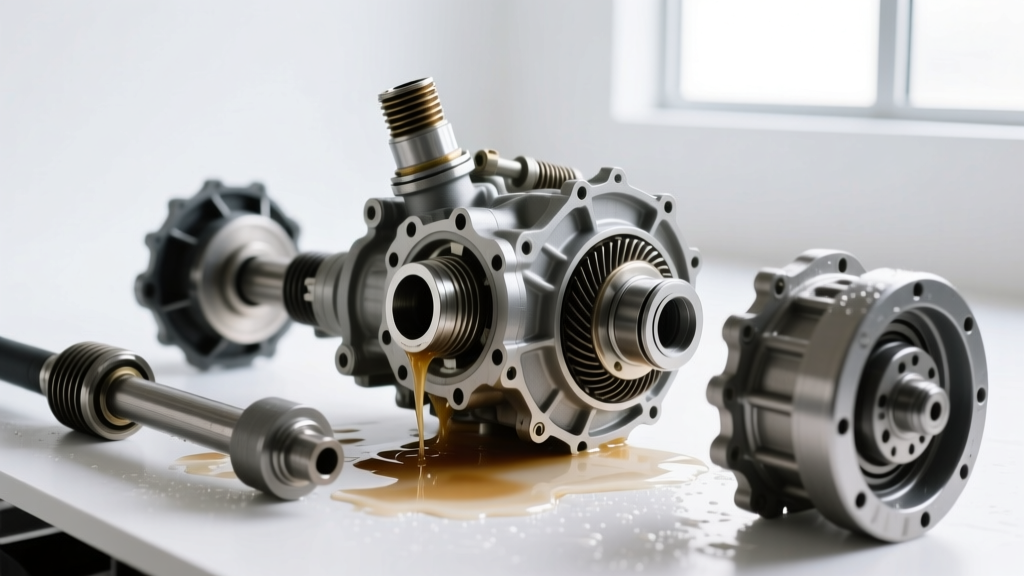
Remove the differential cover (or drain plug, if equipped). Allow the fluid to drain completely. Inspect the fluid for metallic glitter—a fine, silver paste on the magnet is normal wear from the thrust washers. However, jagged metal chunks indicate catastrophic bearing or gear failure requiring a full rebuild. Clean the housing interior with lint-free shop towels and brake cleaner. Scrape all old RTV silicone from the mating surfaces using a plastic gasket scraper to prevent aluminum gouging.
Step 2: Additive Sequencing and Refill
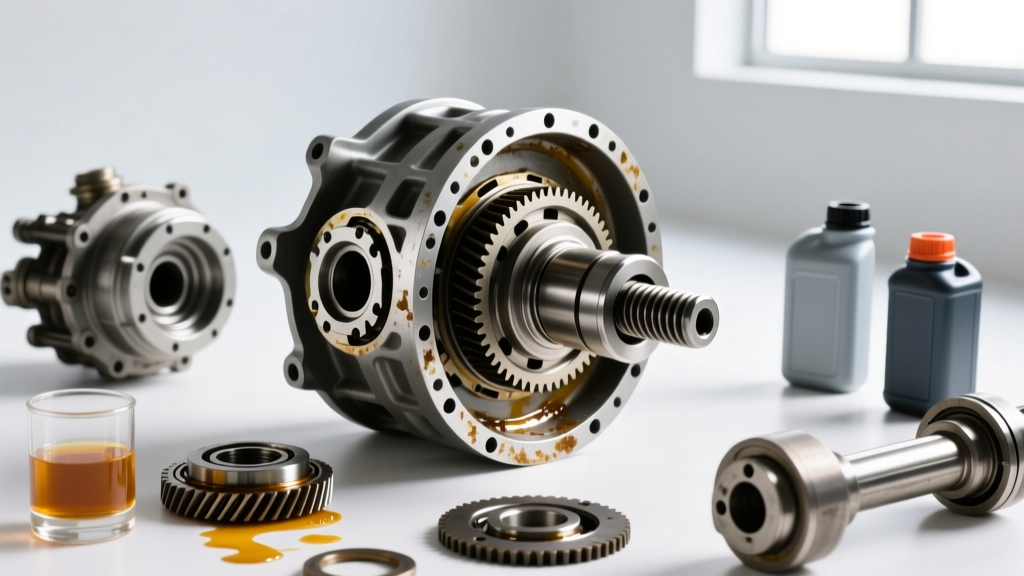
If servicing a clutch-type LSD, pour the entire bottle of OEM-specified friction modifier directly into the empty housing. Next, pump in your chosen 75W-90 Synthetic GL-5 gear oil until it reaches the bottom of the fill hole. For vehicles subjected to heavy towing or steep inclines, consider installing an aftermarket differential cover with integrated cooling fins and a magnetic drain plug to increase fluid capacity and thermal dissipation.
Step 3: Sealing and Torquing
Apply a continuous 3mm bead of high-temp RTV silicone (such as Permatex Ultra Black) to the differential cover. Avoid over-applying, as excess silicone can break off internally and clog the oil pickup galleries. Reinstall the cover and torque the bolts in a crisscross star pattern to the manufacturer's specification (e.g., 24-29 lb-ft for the Ford 8.8). Allow the RTV to cure for the time specified on the tube before filling the axle to the final level and torquing the fill plug.
Final Verdict
A rear differential oil change is not a one-size-fits-all procedure. The distinction between open, clutch-based, and helical limited slip differentials dictates your fluid chemistry, additive requirements, and long-term maintenance budget. By matching the correct API GL-5 fluid and friction modifier to your specific carrier design, and adhering strictly to torque specifications, you ensure maximum traction, silent operation, and a drivetrain capable of handling the torque demands of modern performance and heavy-duty applications.