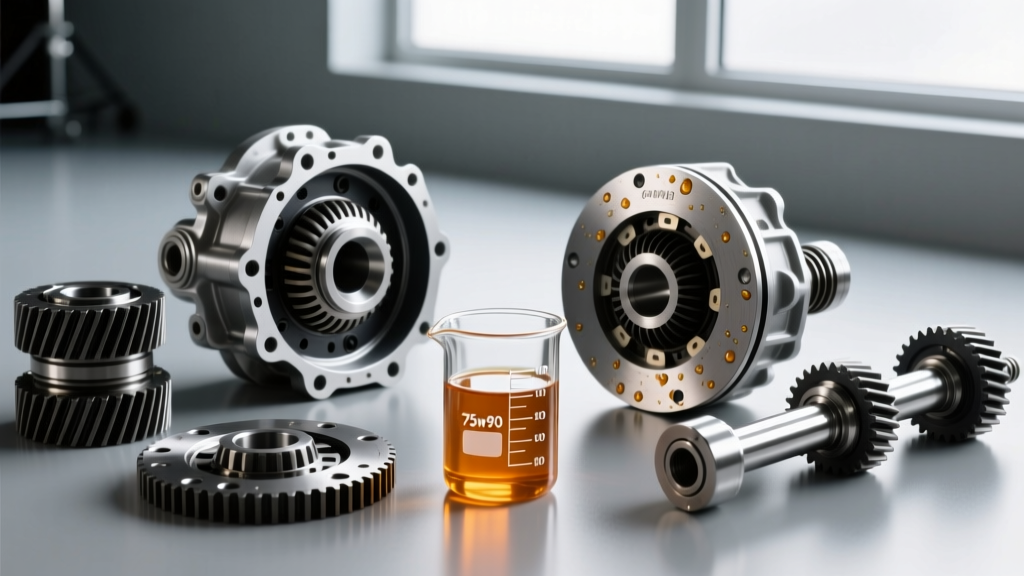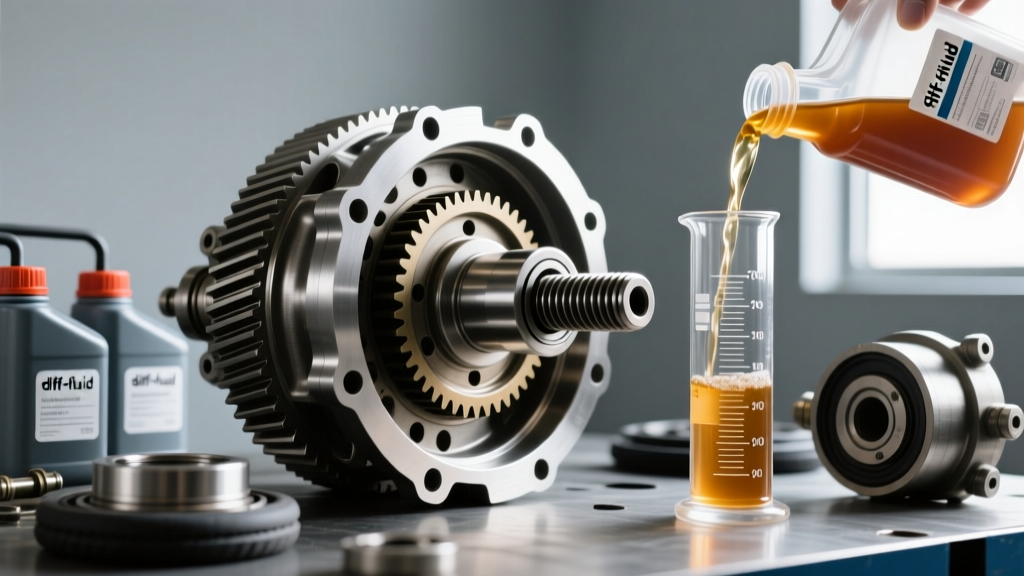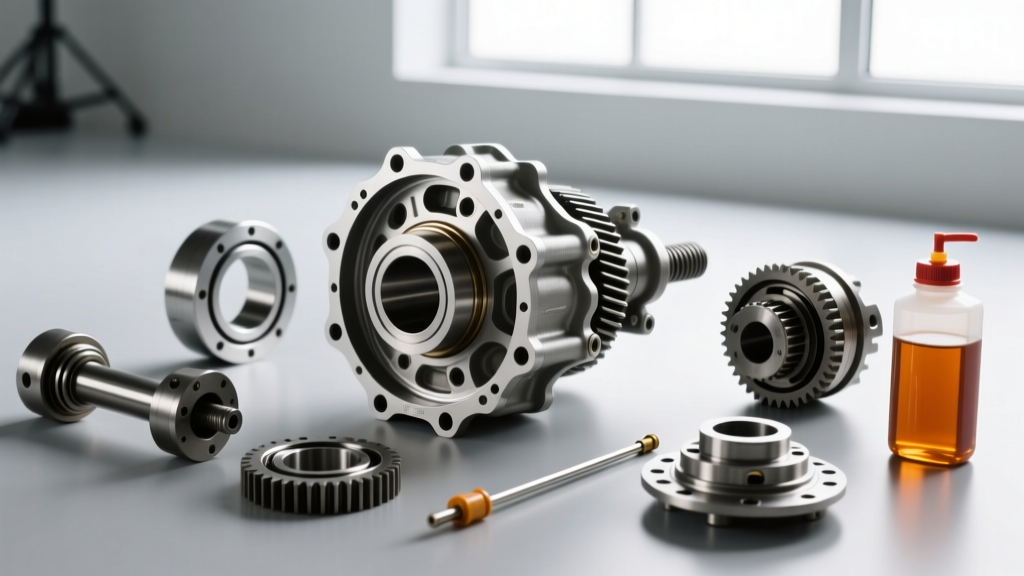
Understanding the Core: What Are Rear Differentials?
Before diving into complex teardowns and fluid diagnostics, we must answer a fundamental question: what are rear differentials? In any rear-wheel-drive (RWD) or four-wheel-drive (4WD) vehicle, the rear differential is the final mechanical gateway that transfers rotational power from the driveshaft to the rear axles. More importantly, it allows the left and right wheels to rotate at different speeds when cornering. Without this mechanical splitting of torque, your tires would scrub, bind, and rapidly destroy the drivetrain during a simple turn.
Modern rear differentials generally fall into three categories: Open (standard power routing), Limited-Slip (LSD, utilizing clutch packs or helical gears like the Torsen to bias torque), and Locking (mechanically forcing both wheels to turn at the exact same RPM for off-road traction). As we navigate the 2026 automotive landscape—where high-torque turbocharged trucks and heavy EVs place unprecedented shear stress on hypoid gears—understanding how to diagnose, service, and maintain these units is critical for drivetrain longevity.
The Anatomy of Failure: Rear Differential Symptom Diagnosis
Rear differentials rarely fail without warning. Hypoid gear sets operate under extreme sliding friction, and the acoustic signature of a failing differential is highly specific to the damaged component. Use this diagnostic framework to isolate the root cause before ordering replacement parts.
1. Whining on Deceleration vs. Acceleration
- Coast-Down Whine (Deceleration): If the differential howls when you lift off the throttle between 40-60 mph, you are likely dealing with pinion bearing preload loss or wear on the 'coast' side of the ring and pinion teeth. The pinion nut may have backed off, or the crush sleeve has fatigued.
- Drive Howl (Acceleration): A whine that appears only under load points to wear on the 'drive' side of the gear teeth, or critically low gear oil levels causing localized overheating and glazing of the bearing races.
2. Chatter and Binding on Tight Turns
If your vehicle is equipped with a clutch-type Limited-Slip Differential (LSD) and you feel a rhythmic 'chatter' or binding sensation from the rear axle during low-speed, tight-radius turns (like pulling into a driveway), the friction modifier in your gear oil has depleted. The clutch packs are grabbing and releasing instead of slipping smoothly. This requires an immediate fluid service with a dedicated friction modifier additive.
3. Rumble and Clunking
- Constant Rumble (40+ mph): This is the hallmark of pitted or brinelled carrier bearings. Because carrier bearings support the entire ring gear assembly, their failure will eventually lead to catastrophic ring and pinion misalignment.
- Engagement Clunk: A harsh 'clunk' when shifting from Reverse to Drive usually indicates excessive ring-and-pinion backlash, worn spider gears, or a failing pinion yoke. Expert Tip: Always inspect the rear U-joints and driveshaft slip yoke first, as they mimic differential clunking perfectly and cost a fraction of the price to replace.
Master Technician Insight: Never ignore a minor pinion seal leak. A loss of just 15% of the differential's fluid capacity will starve the pinion bearings first, as they sit highest in the housing. A $12 pinion seal replacement can save you from a $1,200 complete rear-end rebuild.
Rear Differential Service: Fluids, Capacities, and Intervals
Routine rear differential service and maintenance is the single most cost-effective way to prevent hypoid gear spalling. While many OEMs label their differential fluid as 'lifetime,' independent tribology studies and heavy-duty fleet data show that gear oil shear stability degrades significantly after 50,000 miles of severe use (towing, off-roading, or track use).
| Differential Model | Fluid Capacity | Recommended Viscosity | Fill/Drain Plug Torque | Cover Bolt Torque |
|---|---|---|---|---|
| Ford 8.8" (Super 8.8) | 2.5 - 3.0 Pints | 75W-140 Synthetic | 33 lb-ft (Fill) | 28-38 lb-ft |
| GM 10-Bolt (8.625") | ~2.1 Quarts | 75W-90 Synthetic | 22 lb-ft (Fill/Drain) | 25 lb-ft |
| Dana 44 (Jeep/Truck) | ~2.0 Quarts | 80W-90 or 75W-140 | 25-35 lb-ft (Fill) | 30-35 lb-ft |
| Chrysler 8.25" | ~2.2 Quarts | 75W-90 Synthetic | 25 lb-ft (Fill) | 30 lb-ft |
Choosing the Right Gear Oil and Additives
For most modern applications, a high-quality synthetic like AMSOIL Severe Gear 75W-90 provides superior film strength and thermal stability compared to conventional petroleum-based 80W-90. Synthetics resist foaming under high-RPM towing conditions, ensuring the hypoid gears remain coated.
The LSD Additive Rule: If you service a clutch-type LSD (like the Auburn or Eaton posi units), you must add a friction modifier (e.g., GM ACDelco 10-9003 or Ford XL-3). Add 4 oz of modifier, perform a series of figure-eight turns in a parking lot to work the fluid into the clutches, and re-evaluate. If chatter persists, add another 2 oz. Do not overfill the modifier, or the differential will slip excessively under hard acceleration.
Step-by-Step Rear Differential Maintenance Protocol
Performing a rear differential fluid change requires precision, cleanliness, and adherence to torque specifications. Here is the professional-grade workflow for a differential with a removable rear cover (e.g., GM 10-bolt or Dana 44).
- Preparation and Extraction: Jack up the rear axle and support it securely on jack stands. Place a drain pan beneath the differential. If equipped with a drain plug, remove it first to relieve vacuum pressure. Then, loosen the bottom cover bolts and gently pry the cover using a flathead screwdriver to break the seal.
- Internal Inspection: As the fluid drains, inspect it for metallic glitter (normal wear) versus large metal shards or chunks (imminent bearing or gear failure). Check the housing magnet; it should be coated in a fine, dark paste, not jagged metal fragments.
- Cleaning: Spray the interior of the housing, the ring gear, and the ABS reluctor ring with non-chlorinated brake cleaner. Wipe the mating surfaces of the axle housing and the differential cover with isopropyl alcohol to ensure a perfect seal.
- Sealing (RTV vs. Gasket): While pre-cut cork/rubber gaskets (like the Fel-Pro RDS55028) are convenient, high-end rebuilders prefer RTV silicone. Apply a continuous 1/4-inch bead of Permatex Ultra Black (Part #81878) to the cover. Critical: Allow the RTV to skin over for 10 minutes before mating it to the housing, and wait 1 hour before filling with fluid to allow the silicone to cure and prevent extrusion into the gear mesh.
- Torque and Fill: Reinstall the cover using a star-pattern sequence, torquing the bolts to the manufacturer's specification (usually 25-30 lb-ft). Fill the differential through the top plug until the fluid reaches the absolute bottom edge of the fill hole. Reinstall and torque the fill plug.
Advanced Troubleshooting: Checking Backlash
If your differential is noisy but the fluid is clean and full, you must check the ring and pinion backlash. According to Ring & Pinion Technical Installation Guides, improper backlash is the number one cause of premature gear failure in rebuilt differentials.
Mount a magnetic dial indicator to the axle housing so the plunger rests perpendicular to the face of a ring gear tooth. Hold the pinion yoke completely stationary and rock the ring gear back and forth. Most OEM street differentials require a backlash reading between 0.006" and 0.010". If the backlash exceeds 0.015", the carrier bearings are worn, or the adjuster sleeves have backed out, allowing the ring gear to pull away from the pinion under load. This requires a partial teardown, carrier bearing replacement, and reset of the side bearing preload.
When to Rebuild vs. Replace
Diagnosing a differential often leads to a financial crossroad. If the ring and pinion show deep spalling, pitting, or if the pinion bearing has spun on the race, a full rebuild is required. A professional rebuild (including a master bearing kit from Timken, a new ring and pinion from Yukon Gear, and machine shop labor) typically ranges from $900 to $1,600 depending on the axle model.
However, if the housing is warped or multiple internal components have shattered, sourcing a remanufactured drop-in third member or complete axle assembly from suppliers like Jasper Engines or Detroit Axle may be more cost-effective, generally pricing between $1,500 and $2,800 installed.
Conclusion
Understanding what rear differentials are and how they communicate their health through sound and feel is the hallmark of an informed vehicle owner or technician. By adhering to strict 50,000-mile synthetic fluid service intervals, utilizing the correct friction modifiers for LSDs, and respecting exact torque specifications during maintenance, you can easily extend the life of your rear axle well past 200,000 miles. For further reading on drivetrain setup and gear marking patterns, consult the Summit Racing Expert Advice Drivetrain Archives to master the visual diagnostics of hypoid gear wear.