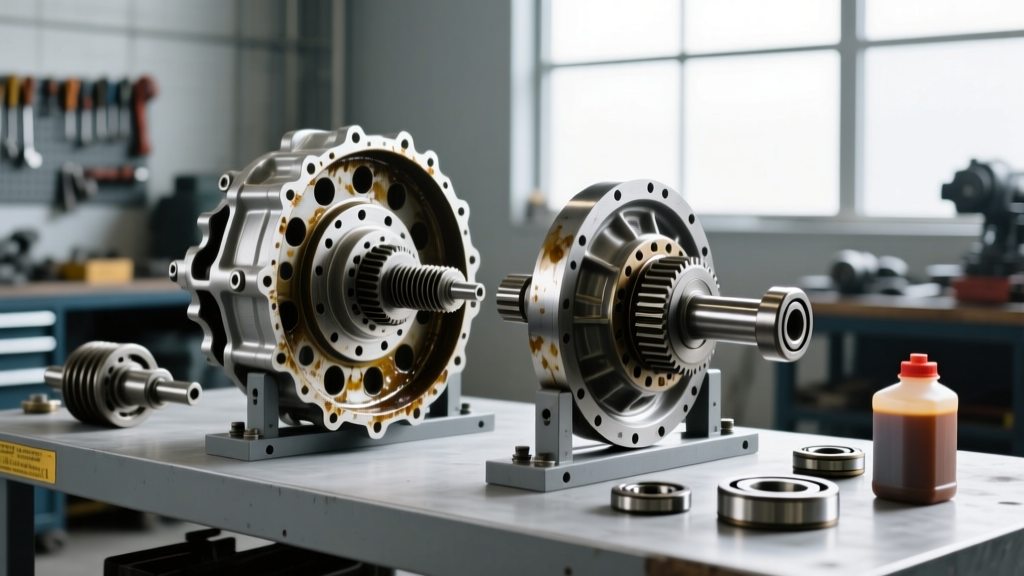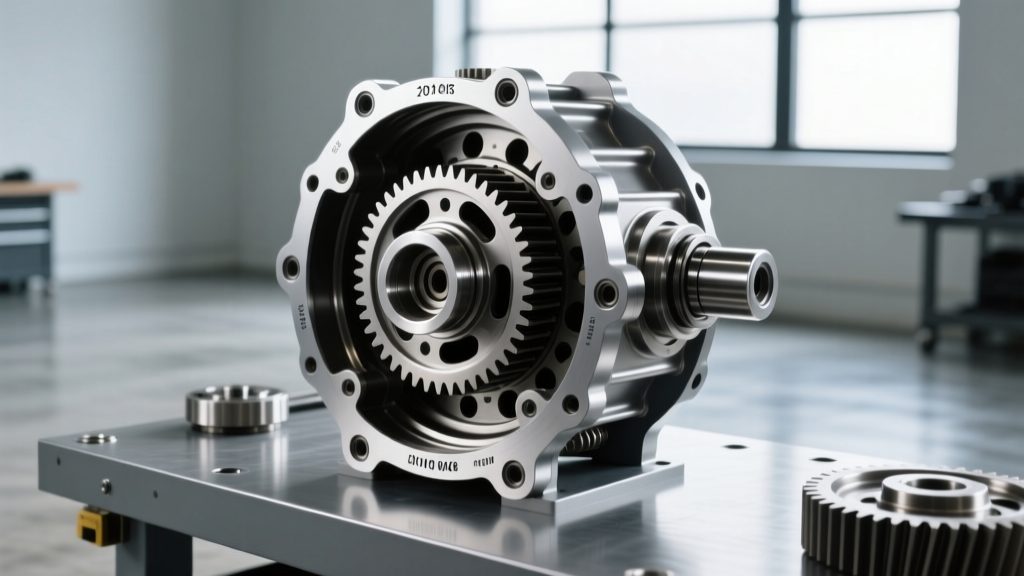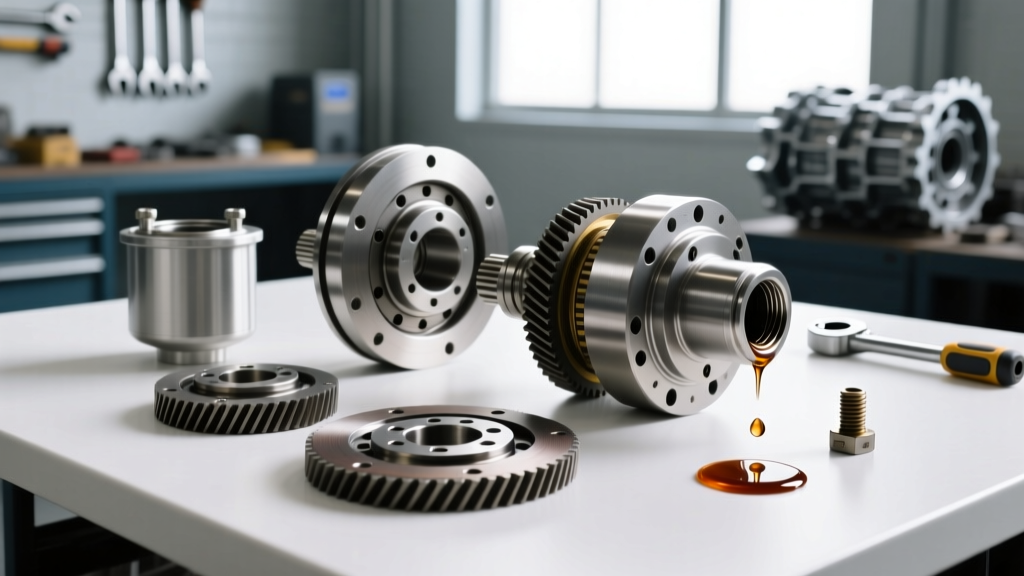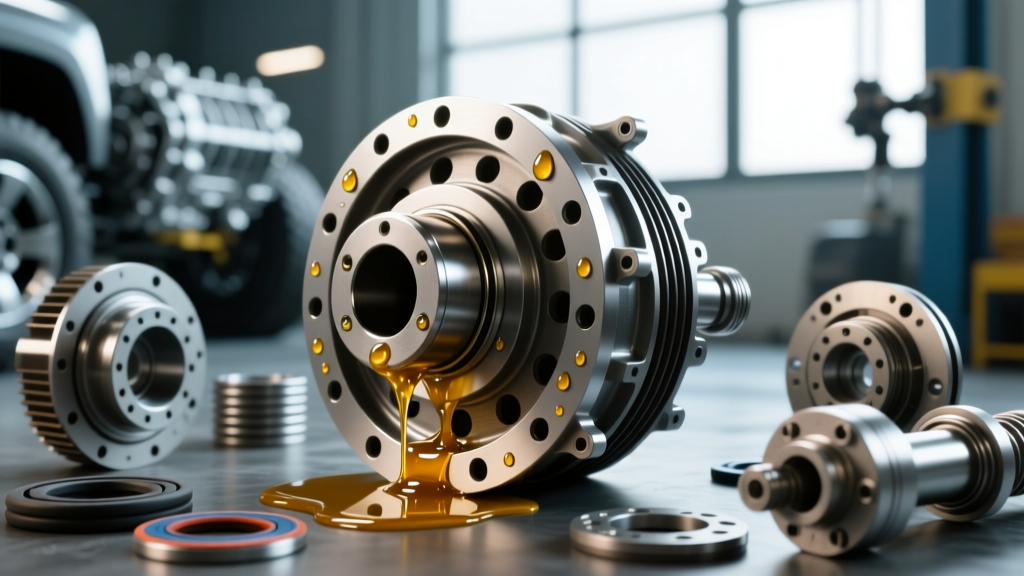
The True Cost of a Rear Differential Leaking Under Load
When you are towing a 10,000-pound trailer or crawling through technical off-road terrain, the last thing you want to see on the driveway is a puddle of 80W-90 gear oil. A rear differential leaking fluid is not merely a cosmetic nuisance; it is a critical warning sign of impending mechanical failure. For modern trucks and SUVs equipped with high-torque powertrains, running a differential low on fluid leads to rapid thermal breakdown, ring and pinion galling, and catastrophic bearing seizure.
However, simply swapping a worn seal with an OEM replacement is a missed opportunity. In this performance and upgrade guide, we will explore how to diagnose the exact failure point, upgrade to heavy-duty sealing solutions, eliminate housing flex, and select advanced synthetic gear oils designed for the extreme demands of 2026 truck platforms.
Diagnosing the Breach: Pinion, Axle, or Cover?
Before ordering parts, you must identify the origin of the leak. Truck and SUV axles—such as the GM 14-bolt 10.5-inch, Ford 10.5-inch Sterling, and Dana 60—typically suffer from three primary leak points.
1. The Pinion Yoke and Seal Interface
If fluid is slinging off the driveshaft and coating the undercarriage, your pinion seal has failed. But why did it fail? In 80% of high-mileage trucks, the rubber lip of the seal hasn't just worn out; the mating surface of the pinion yoke has developed a deep wear groove. Installing a new seal over a grooved yoke guarantees a repeat leak within 5,000 miles. The Upgrade: Use an SKF Speedi-Sleeve (e.g., SKF 99181 for many Dana 60 applications) to provide a pristine, hardened stainless-steel sealing surface without replacing the entire yoke.
2. Axle Shaft Seals and Bearing Wear
Fluid weeping past the brake backing plate and onto the inside of your rear tires indicates a failed axle shaft seal. On semi-floating axles, a leaking axle seal is often a secondary symptom of a worn wheel bearing. When the bearing develops axial play, the axle shaft wobbles, tearing the inner lip of the rubber seal. Always inspect the bearing race and rollers when replacing axle seals on high-load SUVs.
3. Differential Cover Gasket and Housing Flex
Many enthusiast trucks suffer from differential cover leaks not because of bad gaskets, but due to housing flex. When towing heavy loads or articulating off-road, the stamped-steel OEM differential cover can twist slightly, breaking the RTV or cork seal. Upgrading to a cast-aluminum performance cover with integrated load bolts (from brands like AFE Power or BDS Suspension) braces the bearing caps, eliminates flex, and stops the leak permanently.
The Performance Upgrade Path: Seals and Spacers
When addressing a rear differential leaking issue, performance builders abandon OEM crush sleeves and cheap cork gaskets in favor of precision components.
Expert Upgrade Tip: Ditch the Crush Sleeve
OEM differentials use a crush sleeve to set pinion bearing preload. Under heavy shock loads (like off-road rock crawling or aggressive drag launches), crush sleeves can collapse further, altering pinion depth, destroying the pinion seal, and annihilating the ring and pinion gears. Upgrade to a solid pinion spacer kit (such as Ratech Manufacturing kits) paired with precision shims. This provides infinite preload adjustability and maintains absolute pinion stability under extreme torque.
For gaskets, abandon liquid RTV sealants which can cure into hard beads that break off and clog oil pickup tubes. Instead, utilize reusable elastomer gaskets like the LubeLocker series. These feature a steel core with a molded nitrile rubber O-ring that seals perfectly even if the mating surfaces have minor pitting.
Heavy-Duty Fluid Matrix: 75W-90 vs. 75W-140
Once the leaks are sealed, the housing must be filled with a fluid capable of handling modern towing standards. According to technical data from Spicer/Dana technical resources, higher viscosity fluids provide a thicker hydrodynamic film under extreme pressure, but they also increase parasitic drag and operating temperatures in lighter-duty applications.
| Application Profile | Recommended Viscosity | Top Performance Pick | Capacity (Typical 10.5" Axle) |
|---|---|---|---|
| Daily Driving / Light Towing (< 5,000 lbs) | 75W-90 Synthetic | Amsoil Severe Gear 75W-90 (SVG) | 3.5 - 4.0 Pints |
| Heavy Towing / Commercial Hauling | 75W-140 Synthetic | Royal Purple Max Gear 75W-140 | 3.5 - 4.0 Pints |
| Extreme Off-Road / Shock Loading | 75W-140 (Shock Treated) | Red Line 75W140 ShockProof Gear Oil | 3.5 - 4.0 Pints |
Note: If your truck is equipped with an OEM clutch-type Limited Slip Differential (LSD), ensure your chosen fluid contains the necessary friction modifiers, or add a dedicated LSD additive (e.g., GM Part # 88900330) to prevent chatter and clutch pack degradation. For more on LSD fluid dynamics, consult the Yukon Gear technical library.
Step-by-Step Torque and Reassembly Specs
Proper torque is the difference between a sealed differential and a destroyed axle. Below are the baseline specifications for popular heavy-duty truck axles (always verify with your specific factory service manual).
- Pinion Nut (Crush Sleeve Equipped): Typically 250–300 lb-ft. You do not torque to a specific number; you torque until the rotational preload reaches 15–25 inch-pounds (measured with an inch-pound dial torque wrench). Never reuse a crush sleeve.
- Pinion Nut (Solid Spacer Equipped): Torque to 175–200 lb-ft, checking rotational preload frequently until 15–25 inch-pounds is achieved.
- Axle Shaft Retainer Plate Bolts: 45–60 lb-ft. Apply a medium-strength threadlocker (blue Loctite) to prevent backing out under vibration.
- Differential Cover Bolts: 25–35 lb-ft. Overtightening these bolts will warp the stamped steel or cast aluminum cover, instantly causing a new leak.
- Drain/Fill Plug Torque: 25 lb-ft. Use a new crush washer on the fill plug if equipped.
Sourcing and Cost Breakdown
Upgrading your axle sealing and fluid system is an investment in drivetrain longevity. Here is a realistic cost breakdown for a complete heavy-duty seal and fluid upgrade on a standard GM 14-bolt or Ford Sterling axle:
- Premium Pinion & Axle Seals (Timken/National): $35 – $60
- SKF Speedi-Sleeve (Yoke Repair): $25 – $40
- LubeLocker Reusable Differential Gasket: $45 – $65
- Ratech Solid Pinion Spacer Kit: $50 – $80
- Heavy-Duty Synthetic Gear Oil (3 Quarts): $60 – $110 (depending on brand and viscosity)
- Total DIY Upgrade Cost: $215 – $355
Compared to the $2,500+ cost of a complete ring and pinion replacement or axle rebuild, addressing a rear differential leaking issue with premium upgraded components is one of the highest-ROI maintenance procedures you can perform on your truck or SUV. By combining precision sealing surfaces, solid bearing spacers, and advanced synthetic lubricants, you ensure your drivetrain remains sealed, cool, and ready for the most extreme loads the road or trail can offer.