The Intersection of Maintenance and Triage
When drivetrain vibrations, axle whines, or low-speed chattering appear, vehicle owners and technicians alike face a critical decision point: is this a simple maintenance deficiency, or the early death rattle of a failing gearset? Accurately diagnosing rear differential issues requires a systematic approach that bridges the gap between routine fluid service and invasive mechanical teardowns. Because hypoid gearsets operate under extreme sliding friction and immense shear loads, the condition of the gear oil and the specific auditory signatures of the axle can reveal exactly where the failure lies.
In this guide, we will explore how to use fluid forensics, auditory triage, and targeted maintenance procedures to isolate rear differential issues. By understanding the chemistry of API GL-5 lubricants and the mechanical tolerances of popular axle housings, you can determine whether a drain-and-fill will cure the symptom or if a complete ring-and-pinion overhaul is inevitable.
Auditory Triage: Decoding Differential Noises
Sound is the most immediate and honest indicator of internal differential health. Because the ring and pinion gears, side bearings, and pinion bearings all generate distinct acoustic frequencies under varying load states, a careful road test is your primary diagnostic tool. Before dropping the differential cover, you must categorize the noise based on throttle position and vehicle dynamics.
| Noise Profile | Driving Condition | Probable Failure Point | Maintenance Fix? |
|---|---|---|---|
| High-pitch whine | Acceleration (Drive load) | Pinion bearing preload loss or Ring & Pinion wear | No (Requires setup) |
| Low rumble / Howl | Coasting / Deceleration | Side bearings or Carrier wear | No (Requires press) |
| Chatter / Binding | Low-speed tight turns | LSD clutch pack friction depletion | Yes (Fluid + Modifier) |
| Clunk on engagement | Shifting Drive to Reverse | Excessive backlash / Worn cross pins | No (Requires rebuild) |
If the noise is isolated to tight, low-speed turns, you are likely dealing with a Limited-Slip Differential (LSD) that is suffering from friction modifier depletion. This is one of the few rear differential issues that can be entirely resolved through a targeted fluid service.
Fluid Forensics: Reading the Drain Plug
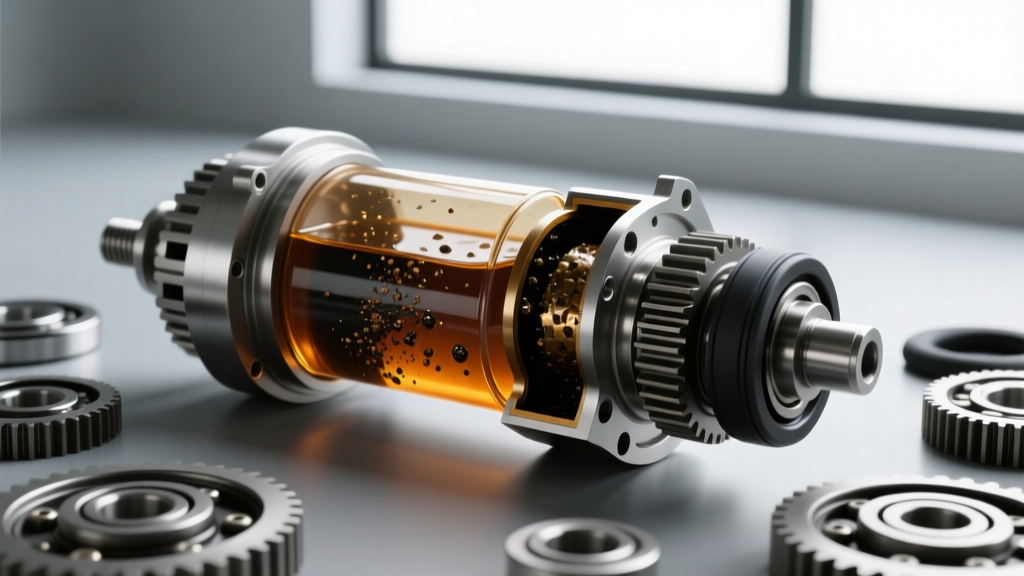
When you suspect internal wear, the old gear oil is a historical record of the axle's mechanical life. Hypoid gear oil (typically 75W-90 or 80W-90) relies on sulfur-phosphorus Extreme Pressure (EP) additives to prevent metal-to-metal contact on the sliding faces of the gear teeth. Over time, these additives deplete, and the base oil shears down, losing its viscosity.
Metallic Particulate vs. Chunking
When draining the differential, pay close attention to the magnetic drain plug or the fluid's visual characteristics:
- Fine Metallic Glitter (Paste): A small amount of fine, gray metallic paste on the magnet is normal for axles with 50,000+ miles. It indicates standard wear-in of the bearings and gear surfaces. A fluid change with a high-quality synthetic GL-5 oil is all that is required.
- Needle-like Shavings: If the magnet is covered in sharp, needle-like ferrous shards, your pinion or side bearings are actively disintegrating. No fluid service will save this axle; a bearing and seal overhaul is mandatory.
- Brass-colored Flecks: Brass or copper flakes indicate synchro wear in manual transmissions, but in a differential, this points to the destruction of the internal thrust washers (often made of bronze or copper alloys) located behind the side gears.
- Milky Emulsion: A milkshake-like consistency means water has breached the axle seals or vent tube. Water destroys the EP additive package, leading to rapid scuffing of the ring and pinion. The axle must be flushed, and the breather cap and axle seals must be replaced.
The Limited-Slip "Chatter" Phenomenon
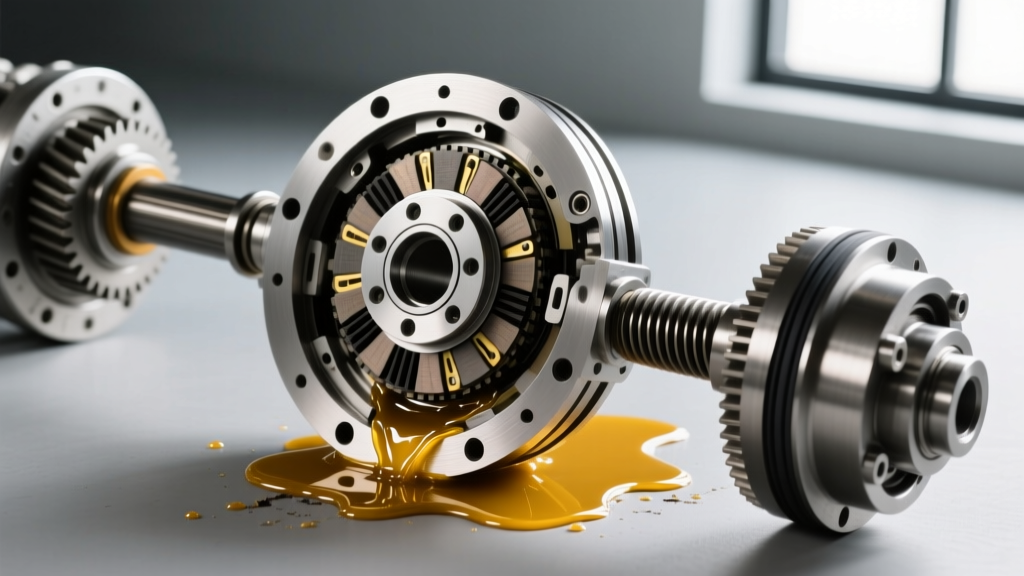
One of the most frequently misdiagnosed rear differential issues is the low-speed "chatter" or "judder" felt when turning into a driveway or parking spot. In clutch-type LSDs (like the Ford Traction-Lok or GM Eaton Positraction), the clutch packs require a specific coefficient of friction to slip smoothly during cornering, where the outside wheel must rotate faster than the inside wheel.
If the friction modifier additive depletes, the clutches grab and release violently, causing a severe chassis shudder. Many owners mistake this for a broken axle or bent shaft. The fix is a complete fluid exchange using a dedicated LSD gear oil, or the addition of an OEM friction modifier.
Expert Tip: Do not rely on generic "Limited Slip" bottled oils alone. For severe chatter, drain the axle, refill with a baseline synthetic 75W-90 GL-5 (such as Motul Gear 300 or Red Line 75W90), and add exactly one 4 oz bottle of OEM modifier (Ford XL-3 or GM 88900338). Perform three figure-eight maneuvers in an empty lot to work the modifier into the clutch pores.
Diagnostic Service Procedure & Torque Specifications
If your diagnosis points to a maintenance-solvable issue (depleted additives, water contamination, or LSD chatter), performing the service correctly is paramount to preventing new rear differential issues from arising. Improper sealing or incorrect torque on the differential cover can lead to leaks, bearing starvation, and catastrophic failure.
When removing the differential cover, always use a gasket scraper and brake cleaner to ensure the mating surface is free of old RTV silicone. If the housing uses a formed-in-place gasket, apply a 2mm bead of high-temp RTV (like Permatex Ultra Black) and allow it to skin over for 10 minutes before torquing the bolts in a crisscross pattern.
Common Axle Housing Torque Specs & Capacities
- Ford 8.8-inch (10-Bolt): Cover bolts torque to 28-38 lb-ft. Fluid capacity is approximately 2.5 to 3.0 pints. Fill to the bottom of the fill hole.
- GM 8.5-inch (10-Bolt): Cover bolts torque to 25 lb-ft. Fluid capacity is roughly 2.1 pints. Overfilling will cause fluid to blow past the pinion seal via the vent tube.
- Dana 44 (Jeep/Truck): Cover bolts torque to 30-40 lb-ft. Fluid capacity ranges from 3.5 to 4.0 pints depending on the specific housing cover (e.g., Rubicon reinforced covers hold more).
Note: Always torque the fill plug AFTER the cover is sealed and the fluid is filled. If you remove the fill plug after the cover is on, you risk introducing debris into the fresh gear oil.
2026 Cost Analysis: Service vs. Overhaul
Understanding the financial threshold between a fluid service and a mechanical rebuild helps set realistic expectations for vehicle owners. As of 2026, the cost disparity between maintenance and major drivetrain surgery is vast, emphasizing the value of early diagnosis.
- Preventative Fluid Service: $150 - $250 (Includes synthetic 75W-90, RTV/gasket, and friction modifier if equipped with LSD).
- Bearing and Seal Overhaul: $800 - $1,400 (Addresses whining caused by bearing wear, but reuses the existing ring and pinion if the gear teeth are undamaged).
- Full Ring & Pinion Setup: $1,800 - $2,800 (Required when gear teeth are pitted, chipped, or worn beyond the acceptable backlash and pattern tolerances. Includes master rebuild kit, new gears, and precision setup labor).
By utilizing fluid forensics and auditory triage, you can confidently determine whether a $200 fluid service will eliminate the symptom, or if the vehicle requires a trip to a drivetrain specialist for a full teardown.
Authoritative References
For deeper teardown specifications, bearing preload charts, and gear pattern analysis, consult Dana Spicer Support. For advanced lubrication chemistry and EP additive behavior in hypoid gearsets, review the Red Line Oil Technical FAQs. Additionally, the Ring & Pinion Tech Tips database offers invaluable visual guides for diagnosing gear wear patterns and setting proper backlash tolerances during a rebuild.