The Sonoran Desert Factor: Why Tempe Heat Destroys Differentials
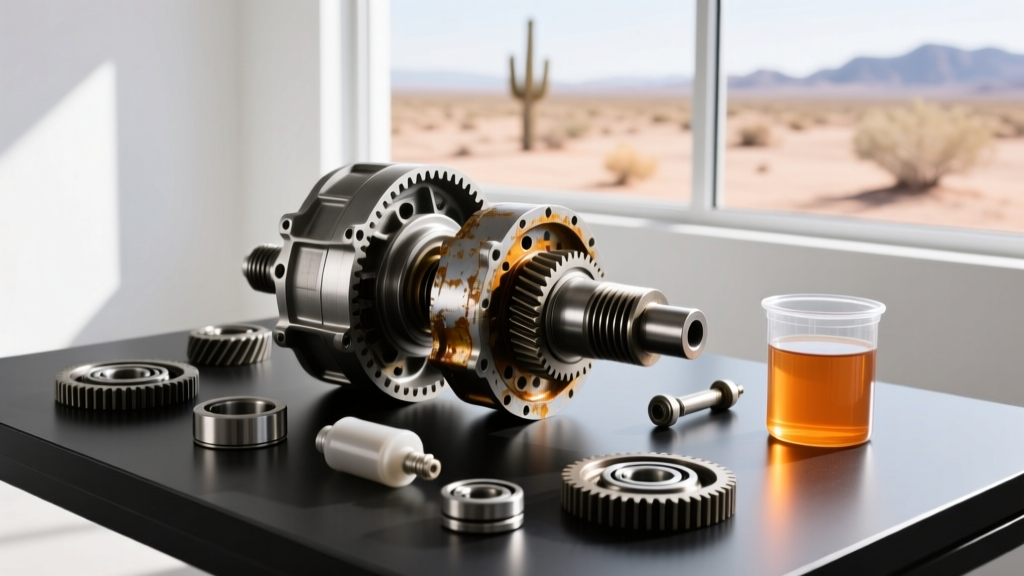
When evaluating rear differential service and maintenance, ambient and operating temperatures are the primary catalysts for gear oil degradation. In extreme climates like Tempe, Arizona, summer pavement temperatures routinely exceed 140°F (60°C). The differential housing, sitting mere inches from the asphalt, acts as a thermal sponge. By 2026, with increased towing loads on modern half-ton trucks and heavier EV/SUV platforms, the thermal stress on ring and pinion gears has never been higher.
Standard 80W-90 mineral gear oils begin to oxidize and lose their shear stability when sump temperatures cross 250°F. Once the fluid film thickness collapses, metal-on-metal contact initiates micro-pitting on the hypoid gear teeth. If you are noticing unusual drivetrain noises, understanding these thermal failure modes is critical before you search for a differential repair service. Tempe drivers must adopt severe-duty maintenance schedules to prevent catastrophic axle failure.
Auditory Diagnostics: Decoding Differential Noise
Symptom diagnosis begins with isolating the noise profile under specific load conditions. The hypoid gear set and bearing array produce distinct acoustic signatures depending on the failure point. A common misdiagnosis is confusing a failing rear wheel bearing with a differential pinion bearing. Wheel bearings typically produce a growling noise that changes pitch when the vehicle's weight is shifted side-to-side (swerving). Differential noises remain constant regardless of lateral weight transfer, changing only with drivetrain load.
1. Pinion Bearing Whine (Deceleration)
If you hear a high-pitched whine that pitches up and down with vehicle speed, specifically when you lift off the throttle and coast, the pinion bearings are likely failing. The pinion bearing preload relies on a precise crush sleeve or solid spacer. Heat-induced fluid breakdown starves the pinion bearings of lubrication, leading to brinelling (indentations on the bearing races).
2. Ring and Pinion Howl (Acceleration)
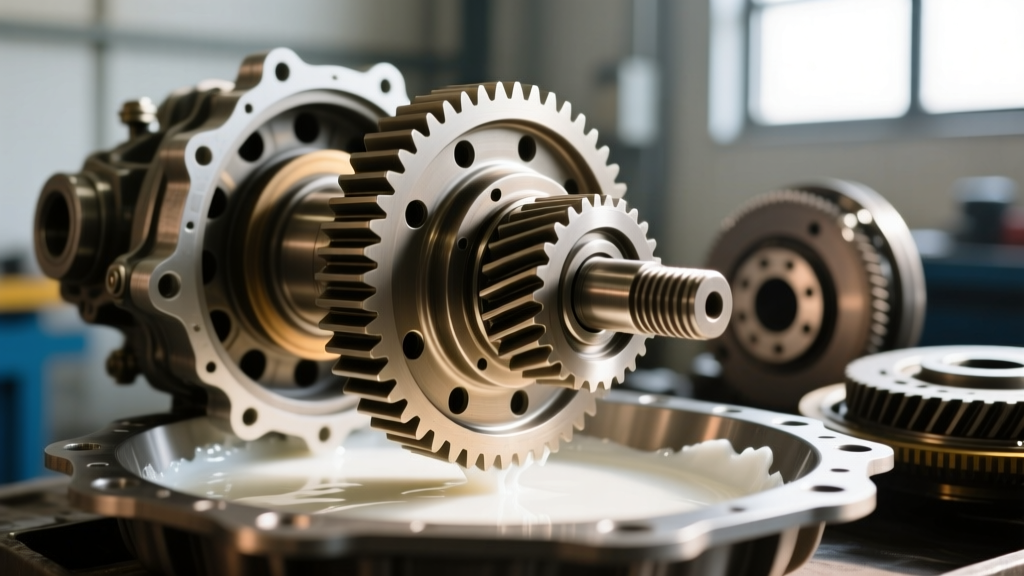
A deep, resonant howl under load (accelerating from 30 to 50 mph) indicates gear tooth wear or improper backlash. As the extreme pressure (EP) additives in the gear oil deplete, the sliding friction of the hypoid gears tears away microscopic layers of metal. This alters the gear contact pattern, shifting it toward the toe or heel of the tooth, resulting in harmonic resonance.
3. Limited-Slip Chatter (Cornering)
For vehicles equipped with a clutch-type limited-slip differential (LSD), such as the Ford 8.8 Traction-Lok or GM 10-bolt Eaton Posi, a shuddering chatter during low-speed turns is a classic symptom. The friction modifier additive (typically 4 oz of OEM-specific modifier) has either burned off due to high sump temperatures or was omitted during the last fluid change. The clutches are binding and releasing rapidly instead of slipping smoothly.
Visual and Olfactory Fluid Analysis
Before tearing down the axle, pull the fill plug or drop the differential cover to inspect the fluid. Your senses will tell the story of the internal components.
- Color & Consistency: Fresh synthetic 75W-90 is typically amber or honey-colored. If the fluid is opaque black and sludgy, it has suffered severe thermal oxidation.
- Odor: Gear oil naturally contains sulfur compounds (smelling like rotten eggs). However, if it smells sharply of burnt toast or acrid smoke, the fluid has exceeded its thermal limits and baked onto the gear teeth.
- Particulate Matter: A fine, silvery glitter suspended in the oil is normal wear-in material for a new differential. However, if you find brass-colored flakes, your pinion or side gear thrust washers are disintegrating. If you find steel chunks larger than a grain of rice, immediate professional differential repair service is required.
Thermal Breakdown: Fluid Viscosity Comparison
Choosing the correct fluid is paramount for desert driving. Below is a comparison of standard versus severe-duty synthetic gear oils and their thermal thresholds.
| Fluid Specification | Viscosity Grade | Continuous Temp Threshold | Best Application |
|---|---|---|---|
| Conventional Mineral | 80W-90 | 220°F (104°C) | Light commuter, mild climates |
| Full Synthetic | 75W-90 | 280°F (138°C) | Daily driving, moderate towing |
| Severe Duty Synthetic | 75W-140 | 320°F (160°C) | Desert towing, heavy off-road, Tempe summers |
Step-by-Step Maintenance & Torque Specifications
If your diagnostic inspection reveals only degraded fluid and no hard internal damage, a meticulous drain-and-fill service can restore quiet operation. Always use a torque wrench—overtightening drain plugs on aluminum differential covers will strip the threads, requiring a costly cover replacement.
Common Axle Torque & Capacity Specs
- Ford 8.8-Inch (Super 8.8): Capacity: 2.5 - 3.0 pints. Fill Plug Torque: 22 lb-ft. Cover Bolts (if removed): 28 lb-ft. Always add 4 oz of XL-3 Friction Modifier for Traction-Lok units.
- Dana/Spicer 44: Capacity: 3.5 pints. Cover Bolts: 35 lb-ft. Use a high-quality RTV silicone (like Permatex Black) instead of a paper gasket to prevent micro-leaks under high thermal expansion.
- GM 8.6 / 10-Bolt: Capacity: 2.5 pints. Cover Bolts: 25 lb-ft. Fill Plug Torque: 24 lb-ft.
The Refill Protocol
- Remove the fill plug before the drain plug or dropping the cover. If the fill plug is seized and you drain the fluid, you will be stranded.
- Allow the fluid to drain for at least 30 minutes while hot to ensure suspended metallic particulates are flushed out.
- Clean the magnetic drain plug. A 1/4-inch fuzz of fine metal is acceptable; hard shards indicate bearing failure.
- Refill until the fluid level is exactly flush with the bottom of the fill hole. Overfilling will cause the pinion seal to blow out due to thermal expansion and foaming.
When to Escalate to Professional Differential Repair Service
While fluid maintenance is a viable DIY task, internal gear and bearing replacement requires specialized tooling, including a hydraulic press, dial indicator for backlash measurement (typically 0.006 to 0.010 inches tolerance), and an inch-pound torque beam for pinion bearing preload.
If you have confirmed severe gear howl, pinion seal leaks (indicated by oil slung on the rear of the differential housing and brake backing plates), or rotational binding, it is time to seek specialized differential repair service. Tempe-based drivetrain shops equipped with pinion depth setting tools and gear marking compound (yellow oxide) can accurately map the contact pattern. Expect to pay between $1,200 and $2,200 for a complete ring, pinion, and bearing master overhaul kit installation, depending on whether your axle requires a standard or master-bearing setup. A master rebuild kit (Timken bearings, seals, crush sleeve, ring gear bolts) costs between $250 and $450, while labor rates for precision gear setup range from $120 to $180 per hour.