The Thermal Bottleneck in Modern Heavy-Duty Drivetrains
As we navigate the 2026 landscape of heavy-duty towing and off-road performance, modern trucks are producing more torque than ever before. Whether you are piloting a Ford F-350 with a Sterling 10.5-inch axle, a Silverado 3500HD with the GM AAM 11.5-inch 14-bolt, or a Ram 3500 equipped with a Dana 80, the rear differential is the unsung hero of the drivetrain. However, when towing 15,000-pound fifth-wheel trailers up sustained 6% grades, the ring and pinion gear mesh generates immense friction. Stock differentials rely entirely on passive splash lubrication and finned aluminum covers to shed heat. Under extreme low-speed, high-load conditions, this passive approach becomes a critical thermal bottleneck, leading to pinion bearing starvation, nitrile seal degradation, and catastrophic gear scoring.
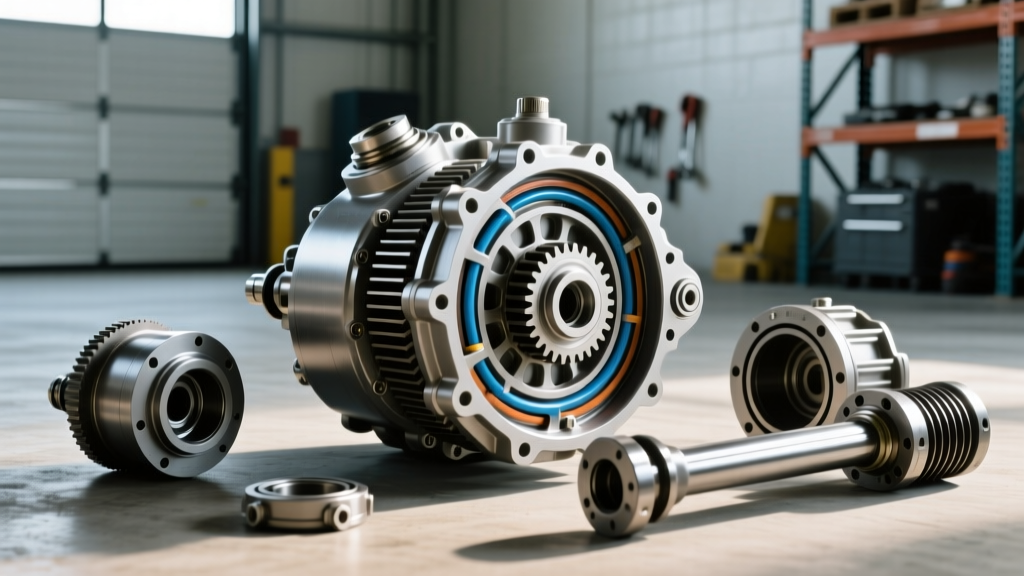
For performance enthusiasts and commercial towers, upgrading to an active rear differential fluid pump system is no longer just a niche modification—it is a mandatory reliability upgrade. By forcing high-viscosity synthetic gear oil through an external heat exchanger and directly into the pinion bearings, you fundamentally alter the thermal dynamics of the axle assembly.
Splash Lubrication vs. Forced Induction: The Engineering Reality
Stock truck differentials utilize splash lubrication. The ring gear dips into the sump and flings gear oil onto the internal components. While adequate for highway cruising, this method fails under specific towing scenarios. When climbing steep grades at speeds under 45 mph, the ring gear is not rotating fast enough to adequately splash thick 75W-140 gear oil into the upper axle tubes and the critical pinion bearings.
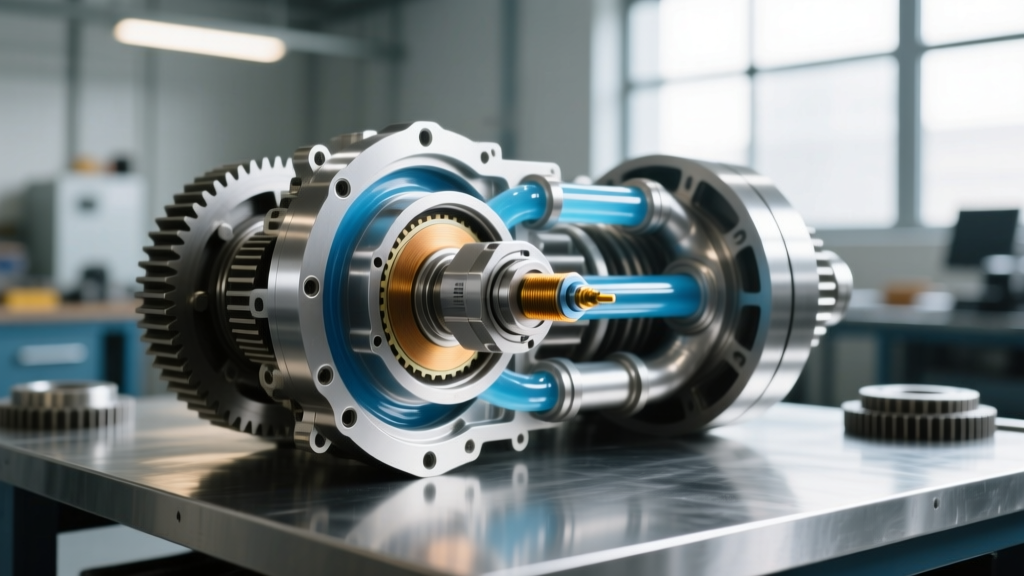
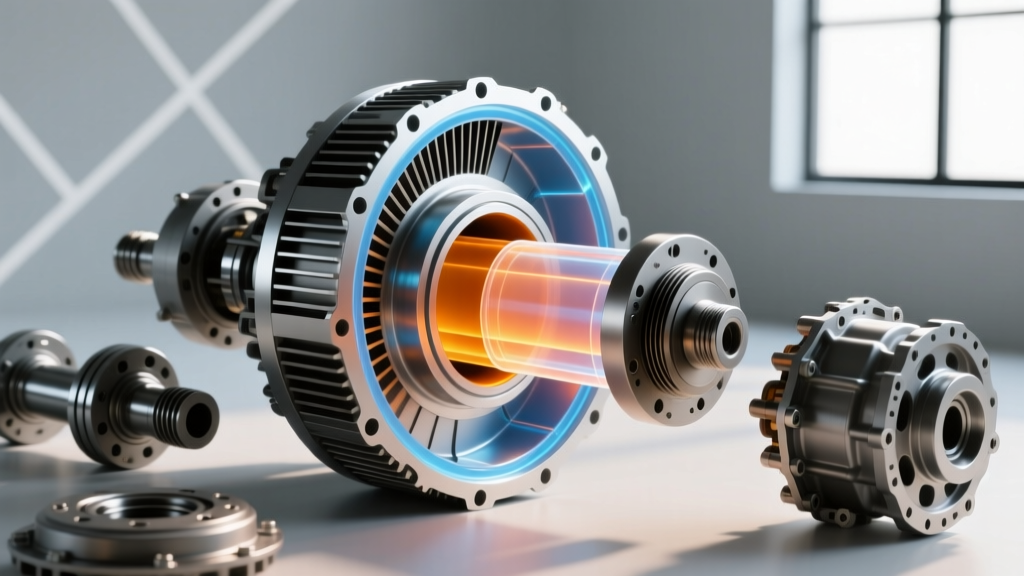
Furthermore, gear oil degrades rapidly when subjected to sustained temperatures above 250°F (121°C). While premium synthetics can survive the heat, the axle shaft seals and pinion seals (typically made of nitrile or fluoroelastomer rubber) will harden, crack, and weep fluid once they exceed 250°F for prolonged periods. An active rear differential fluid pump solves this by continuously cycling the oil out of the sump, pushing it through a finned tube or plate-style heat exchanger mounted in the vehicle's slipstream, and returning cooled oil directly to the pinion bearing cage.
Expert Insight: Parasitic churning losses from heavy 75W-140 gear oil can rob up to 3-5 horsepower at the wheels. A forced-lubrication system allows you to safely step down to a 75W-110 or high-quality 75W-90 synthetic in some applications, reducing fluid drag while maintaining absolute bearing protection through positive displacement flow.
Evaluating Active Differential Cooling Systems
When selecting a rear differential fluid pump setup, you must choose between integrated active covers and external inline pump kits. Below is a comparison of the primary cooling methodologies available for heavy-duty truck axles.
| Cooling Method | Temp Reduction (Towing) | Installation Complexity | Estimated Cost (2026) | Best Application |
|---|---|---|---|---|
| Stock Splash (OEM) | Baseline (220°F - 280°F) | N/A | $0 | Light duty / Unloaded highway |
| Passive Finned Cover (e.g., Mag-Hytec) | -20°F to -35°F | Low (Bolt-on) | $180 - $280 | Moderate towing / Daily driving |
| Active Integrated Cover Pump | -50°F to -70°F | Medium (Wiring + Plumbing) | $450 - $650 | Heavy towing / Mountain grades |
| External 12V Inline Pump + Cooler | -80°F to -110°F | High (Fabrication + Tapping) | $600 - $950 | Extreme commercial / Competition |
Why Positive Displacement Pumps are Mandatory
A common mistake in DIY differential cooling builds is attempting to use a standard 12V centrifugal water pump. Gear oil is exceptionally viscous; a 75W-140 synthetic has a kinematic viscosity of roughly 32 cSt at 100°C. Centrifugal pumps will cavitate, stall, and burn out their brushes when faced with this resistance. You must utilize a positive displacement gear pump or a specialized peristaltic pump designed for high-viscosity lubricants to ensure consistent flow rates of 1.5 to 2.5 gallons per minute (GPM).
Step-by-Step Installation: Plumbing an External 12V Pump System
For trucks like the GM AAM 11.5-inch or the Ford Sterling 10.5-inch, installing an external rear differential fluid pump requires precision machining and careful plumbing. Here is the professional workflow for a custom external cooler kit.
1. Sump Extraction and Return Line Fabrication
You must drill and tap the differential cover or the axle housing to create a suction port and a return port.
- Suction Port: Drill the lower section of an aftermarket aluminum diff cover (like those from PPE) and tap for a 1/2-inch NPT fitting. Use a -8 AN adapter to feed the pump inlet.
- Return Port: Drill the upper axle tube or the top of the diff cover. The return line must terminate directly above the pinion bearing to ensure forced lubrication of the most stressed component.
2. Selecting the Right Plumbing Materials
Do not use standard rubber fuel or oil lines. The extreme pressure (EP) sulfur-phosphorus additives in gear oil will degrade standard rubber from the inside out, leading to catastrophic hose failure and total axle seizure. You must use PTFE-lined (Teflon) stainless steel braided hoses with reusable -8 AN aluminum fittings.
3. Torque Specifications and Reassembly
When reinstalling the differential cover after tapping, surface prep is critical. Clean the mating surface with brake cleaner and apply a 1/8-inch bead of RTV silicone (specifically formulated for gear oil resistance, such as Permatex Ultra Black).
- GM AAM 11.5-inch (14-Bolt): M10x1.5 cover bolts must be torqued to exactly 25 lb-ft (34 Nm) in a crisscross pattern.
- Ford Sterling 10.5-inch: 3/8-inch cover bolts require 33 lb-ft (45 Nm).
- Dana 80: 3/8-inch cover bolts torque to 30 lb-ft (41 Nm).
4. Electrical Wiring and Thermal Switches
Wire the 12V pump to a 30-amp relay triggered by the ignition circuit, but place a thermal switch (set to close at 140°F) in the ground circuit. This ensures the rear differential fluid pump only engages when the axle actually requires active cooling, preserving the pump's lifespan and reducing parasitic electrical draw on the alternator.
Fluid Dynamics: Selecting Gear Oil for Pumped Systems
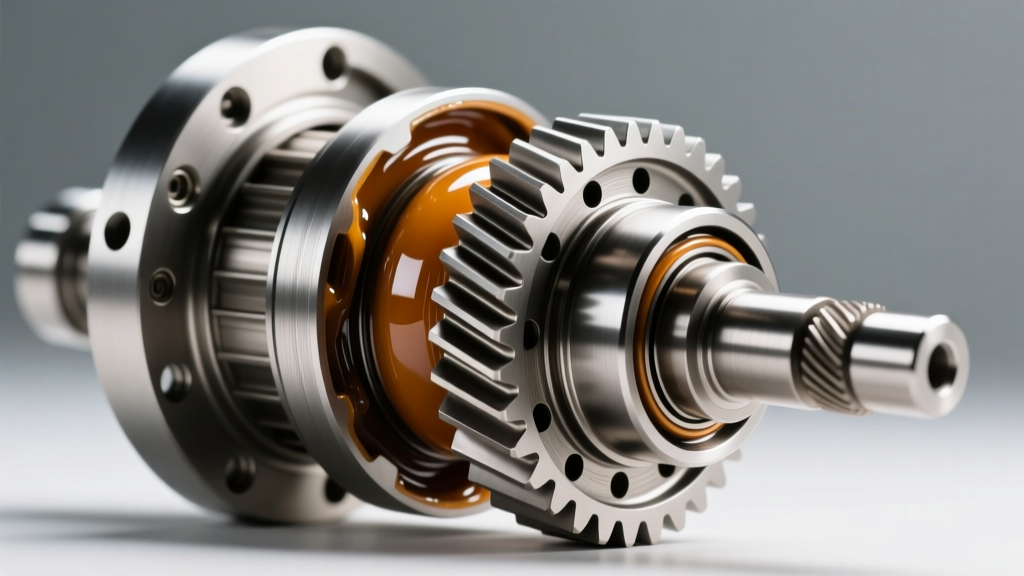
When you introduce an active rear differential fluid pump, you change the shear environment of the gear oil. The pump gears and the high-velocity return flow can cause mechanical shearing in lower-quality oils. You must select a gear oil with high shear stability and robust film strength.
For severe towing applications exceeding 10,000 lbs, a full synthetic 75W-140 remains the gold standard. Products like AMSOIL Severe Gear 75W-140 or Mobil 1 Synthetic 75W-140 contain advanced friction modifiers that protect the hypoid gear sliding action while resisting viscosity loss from the mechanical pump. If your truck is primarily a daily driver that only occasionally tows, a pumped system allows you to safely utilize a 75W-110, reducing cold-weather parasitic drag while maintaining adequate hot-film thickness thanks to the forced flow.
Maintenance Intervals and Diagnostics
An upgraded differential cooling system requires a revised maintenance schedule. The external cooler and lines increase the total fluid capacity of the axle by 1.5 to 2.5 quarts.
- Initial Break-in: After installing the pump and new gears, perform a fluid flush at 500 miles to remove metallic break-in debris that can destroy the pump gears.
- Severe Towing Interval: Change fluid every 30,000 miles. Inspect the inline magnetic filter (highly recommended) for ferrous particulates.
- Pump Diagnostics: Listen for cavitation whining from the pump. If the pump sounds like it is grinding, your suction line is likely restricted, or the oil viscosity is too high for the ambient temperature.
Investing in a high-quality rear differential fluid pump system transforms your truck's axle from a vulnerable weak point into a bulletproof, thermally stable asset capable of conquering any grade, anywhere in the world.