Mapping the Rear Differential Diagram to Fluid Diagnostics
When fleet managers and drivetrain specialists consult a rear differential diagram, they are typically tracing torque flow from the driveshaft yoke through the pinion gear, carrier, and out to the axle shafts. However, in the realm of preventive maintenance, that same schematic serves as a metallurgical map. The rear axle housing is a closed-loop ecosystem where every internal component—ring gear, pinion bearings, thrust washers, and limited-slip clutch packs—interacts under extreme shear and pressure. When these components wear, they shed microscopic and macroscopic particulates into the gear oil, altering its color, viscosity, and odor.
By cross-referencing your fluid's physical condition with a rear differential diagram, you can pinpoint exactly which internal assembly is degrading before a catastrophic failure occurs. Modern heavy-duty trucks and SUVs, such as those equipped with the GM 10.5-inch 14-bolt or the Ford 9.75-inch axles, operate under immense thermal loads. Understanding the chemical and visual shifts in 75W-90 and 75W-140 synthetic gear oils is the cornerstone of modern axle longevity.
The 2026 Fluid Color and Condition Matrix
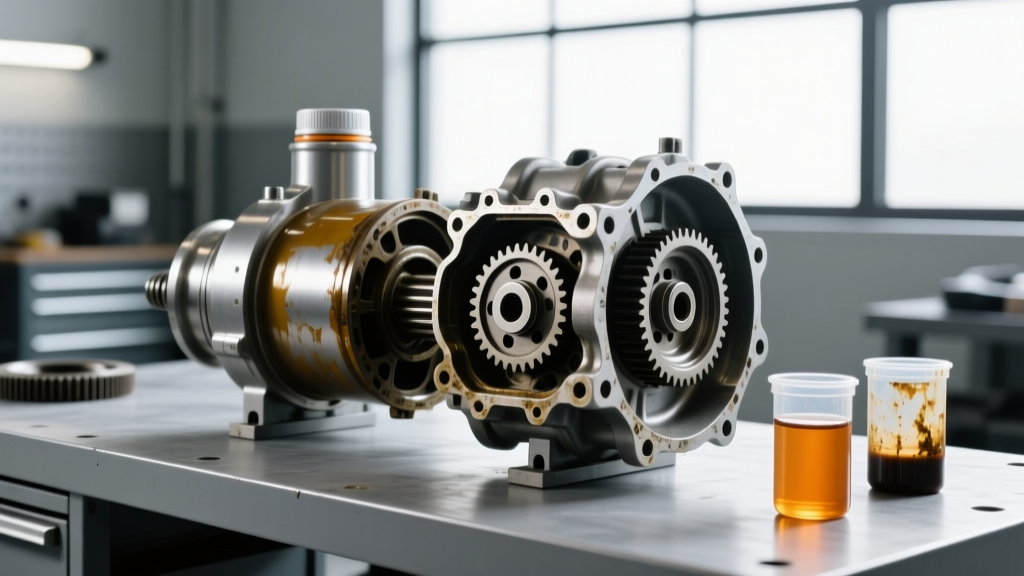
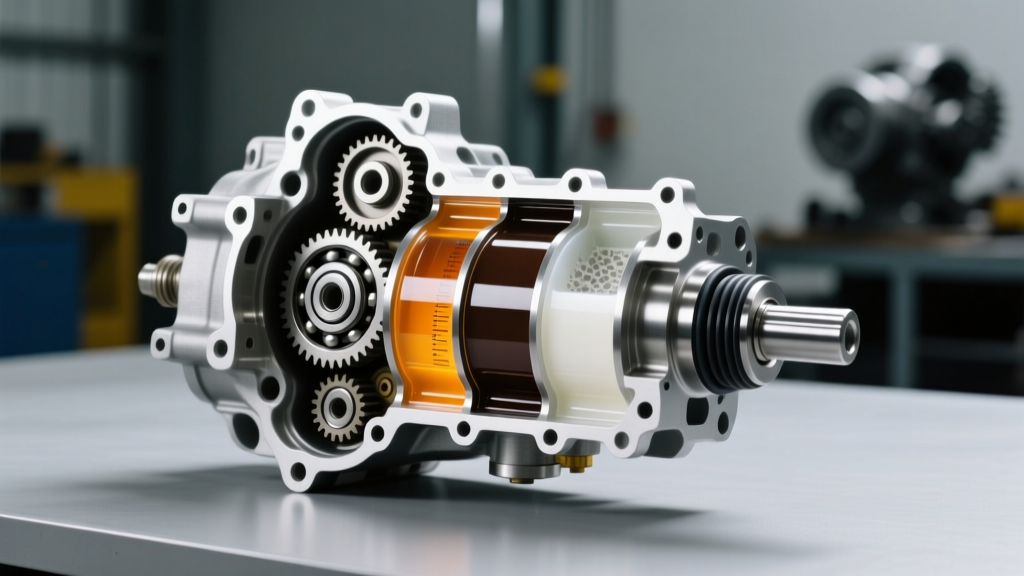
Before draining the housing or pulling the rear cover, extract a fluid sample via the fill plug using a clean syringe. Evaluate the sample against the diagnostic matrix below to determine your next service step.
| Fluid Color & Consistency | Odor Profile | Diagram Component Culprit | Preventive Action Required |
|---|---|---|---|
| Clear / Light Amber (Smooth) | Mild Sulfur | N/A (Optimal Condition) | Continue standard interval monitoring. |
| Dark Brown / Opaque (Smooth) | Acrid / Burnt | Ring & Pinion Gear Flanks (Thermal Breakdown) | Immediate fluid flush; check for towing overload or low fluid levels. |
| Chocolate Milk / Milky (Emulsified) | Damp / Musty | Axle Tube Breather Valve & Hub Seals | Replace fluid, clear clogged axle vent hose, inspect axle shaft seals. |
| Black with Magnetic Glitter (Gritty) | Sharp Metallic | Pinion & Carrier Bearings (High-Carbon Steel) | Tear-down required. Bearings are spalling; imminent gear seizure risk. |
| Dark with Golden Flakes (Non-Magnetic) | Friction Material | Carrier Thrust Washers (Bronze/Copper) | Schedule differential rebuild; carrier side gear clearance is excessive. |
| Grey / Sludgy (Thick) | Clutch Ash | LSD Clutch Friction Discs | Flush housing, replace fluid + friction modifier, test for chatter. |
Decoding Particulates: Magnetic vs. Non-Magnetic Wear
A critical step in fluid analysis is running a rare-earth neodymium magnet through the drained fluid. Referring back to your rear differential diagram, you can separate the drivetrain into ferrous and non-ferrous material groups.
- Magnetic Swarf (Steel/Iron): The ring gear, pinion gear, and bearing rollers are forged from high-carbon steel. Fine, paste-like magnetic residue on the drain plug is normal for the first 15,000 miles as the hypoid gears undergo initial lapping. However, if you find needle-like shards or chunky metallic glitter, the pinion bearing cage is likely disintegrating, or the gear tooth root is experiencing micro-pitting.
- Non-Magnetic Flakes (Bronze/Brass): Look closely at the differential diagram's carrier assembly. The side gears and pinion gears ride on bronze or copper thrust washers. If your fluid sparkles with golden, non-magnetic flakes, these washers are wearing thin. This leads to excessive side-gear clearance, resulting in a distinct 'clunk' on load reversal and eventual cross-pin shaft failure.
Limited-Slip Additive Depletion vs. Mechanical Failure
For vehicles equipped with clutch-type Limited Slip Differentials (LSD)—such as the Auburn or Eaton POSI units found in many performance and off-road applications—fluid condition is tied directly to friction modifier chemistry. Over time, the extreme pressure (EP) sulfur-phosphorus additives in GL-5 gear oil shear down, and the specialized friction modifiers (like Motorcraft XL-3 or ACDelco 10-9004) lose their molecular efficacy.
When an LSD fluid degrades, the clutch packs begin to stick and slip erratically, generating a fine, grey, ash-like sludge. This is often misdiagnosed as internal gear wear. If your fluid is grey and the vehicle exhibits low-speed cornering chatter, perform a complete fluid exchange using a high-quality synthetic 75W-90 (such as AMSOIL Severe Gear) and the exact OEM-specified dose of friction modifier. Do not use 'pre-modified' universal fluids for high-torque applications; the additive concentration is rarely sufficient for heavy-duty locking differentials.
The Water Intrusion Phenomenon: Axle Vents and Seals
The 'chocolate milk' emulsion is the most common preventive maintenance red flag. When a rear axle is submerged in water, or when the axle tube breather valve becomes clogged with mud and debris, thermal contraction sucks moisture past the axle shaft seals or the pinion yoke seal. Water destroys the hydrodynamic boundary layer of the gear oil, leading to rapid rust formation on the bearing rollers. If you spot milky fluid, consult the rear differential diagram to locate the axle vent tube (usually routed up near the frame rail on modern trucks like the Ram 2500 or Ford Super Duty). Clear the vent, replace the hub seals, and flush the housing with a cheap GL-5 mineral oil before filling with your premium synthetic.
Precision Service: Torque Specs and Extraction Protocols
Proper preventive maintenance requires adherence to exact engineering tolerances. Stripping a fill plug or warping a differential cover due to improper torque sequences will introduce leaks and contaminate your fresh fluid. Below are standard torque specifications for common heavy-duty and light-duty axles. Always verify with your specific OEM Dana Spicer or factory service manual.
Common Axle Torque Specifications
- Ford 8.8-inch & 9.75-inch (F-150 / Mustang):
- Fill Plug Torque: 15 lb-ft (20 Nm)
- Cover Bolt Torque (if applicable): 25-30 lb-ft in a star pattern
- Fluid Capacity: ~2.3 to 2.8 Liters (Requires 75W-140 for towing packages)
- GM 10.5-inch 14-Bolt (Silverado / Sierra 2500HD):
- Cover Bolt Torque: 25 lb-ft (34 Nm)
- Gasket Recommendation: Fel-Pro RDS55028 or Permatex 80050 Ultra Black RTV (allow 12-hour cure time before filling)
- Fluid Capacity: ~2.75 Liters (75W-90 Synthetic GL-5)
- Ram AAM 11.5-inch (Heavy Duty):
- Fill Plug Torque: 25 lb-ft (34 Nm)
- Fluid Capacity: ~3.5 Liters
The 'Fill-First' Rule
Never remove the rear differential cover or drain plug until you have successfully loosened and verified the fill plug. If the fill plug is seized, rounded off, or welded shut by rust, draining the housing will leave the vehicle immobilized until the fill plug can be extracted or the housing drilled and tapped. Penetrating oil and localized heat are your best allies when dealing with seized cast-iron fill plugs.
Establishing a Preventive Baseline
While many manufacturers claim differential fluid is a 'lifetime' fill, real-world telemetry and fleet data from 2026 demonstrate that severe thermal cycling degrades synthetic basestocks between 60,000 and 90,000 miles. By integrating fluid color analysis with a thorough understanding of the rear differential diagram, you transition from reactive repairs to predictive maintenance. Document your fluid's color, magnetic residue, and odor at every service interval to establish a baseline, ensuring your ring and pinion survive the harshest towing and off-road environments.