The Kinetic Loop: How Differential Failures Stress Transmissions
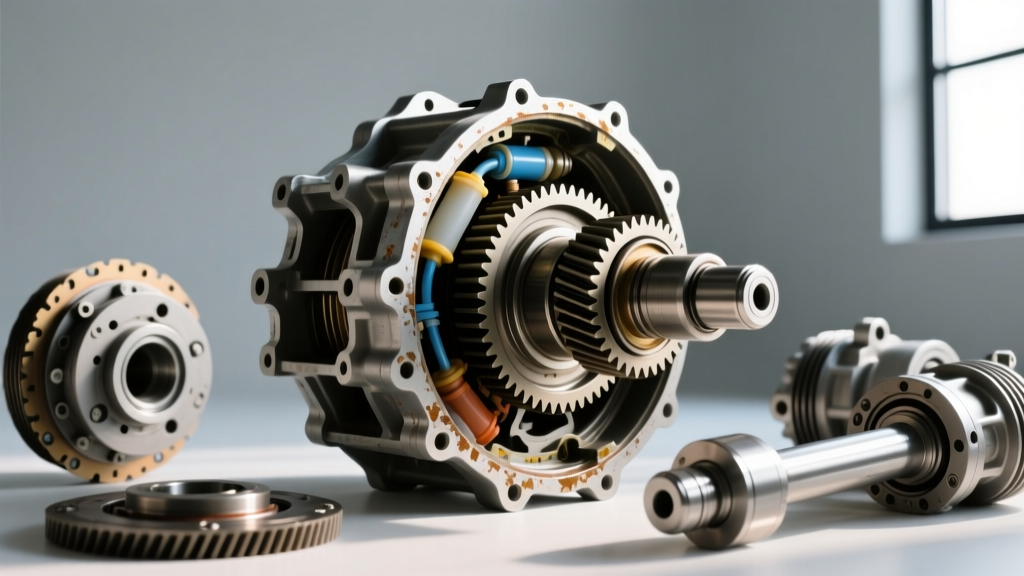
Many DIY mechanics and even some dealership technicians frequently ask: can a bad rear differential cause transmission problems? The short answer is a resounding yes. The drivetrain is a closed kinetic loop. While the transmission and the rear differential are separated by the driveshaft and U-joints, they share rotational mass, torsional load, and harmonic vibrations. When a rear differential begins to fail, it rarely does so silently or in isolation. The resulting mechanical resistance, harmonic imbalance, or sudden drivetrain lash can inflict catastrophic secondary damage on the transmission output shaft, tailshaft bushings, and even internal mechatronic units.
For example, a failing pinion bearing in the rear axle introduces severe harmonic vibration into the driveshaft. In vehicles equipped with the ubiquitous GM 4L60E or 4L80E transmissions, this vibration rapidly destroys the extension housing bushing. Once that bushing fails, the output shaft yoke begins to wobble, chewing up the rear output seal and eventually scoring the output shaft itself. Similarly, in modern vehicles with ZF 8HP or Ford 10R80 transmissions, a rear differential with excessive gear lash (clunking) sends sudden torsional shockwaves back through the driveline. This reflected inertia forces the transmission's torque converter and mechatronic valve body to constantly compensate for erratic load changes, leading to premature clutch pack wear and adaptive shift strategy corruption.
Auditory Triage: Decoding Rear Differential Noises
Before a failing differential can destroy your transmission, it will almost always warn you through acoustic feedback. Proper noise diagnosis is the first line of defense in protecting your transmission. Below is an expert diagnostic matrix to help you isolate the exact failure point based on auditory symptoms.
| Noise Type | When It Occurs | Probable Root Cause | Transmission Risk Level |
|---|---|---|---|
| Drive Whine (Howl) | Accelerating under load (30-50 mph) | Worn ring & pinion gear teeth (convex drive side) or tight pinion bearing preload. | Low (Annoying, but minimal shock load) |
| Coast Whine | Decelerating with foot off the throttle | Worn pinion bearing or damaged ring gear (concave coast side). | High (Vibration destroys trans tailshaft bushings) |
| Rumble / Growl | Constant speed above 25 mph | Worn carrier bearings or pitted differential side bearings. | Medium (Harmonic feedback affects trans mounts) |
| Heavy Clunk / Bang | Shifting from Reverse to Drive, or letting off gas | Excessive ring gear backlash, worn spider gears, or stripped axle splines. | Extreme (Torsional shock shatters trans output shafts) |
| Chatter / Shudder | Turning corners at low speeds | Limited-slip clutch pack degradation or lack of friction modifier. | Low (Mostly affects axle, but causes driveline bind) |
Coast vs. Drive Whine: The Pinion Bearing Factor
The most critical noise to identify when asking if a bad rear differential can cause transmission problems is the coast whine. When you lift your foot off the accelerator, the driveshaft is still spinning at transmission output speed, but the load has shifted to the coast side of the ring and pinion gears. If the pinion bearing is pitted or lacking proper preload, it will howl. This specific failure generates high-frequency, low-amplitude vibrations that travel directly up the driveshaft and into the transmission's output housing. Ignoring a coast whine is a guaranteed way to necessitate a transmission teardown alongside your differential rebuild.
Limited-Slip Chatter and Fluid Degradation
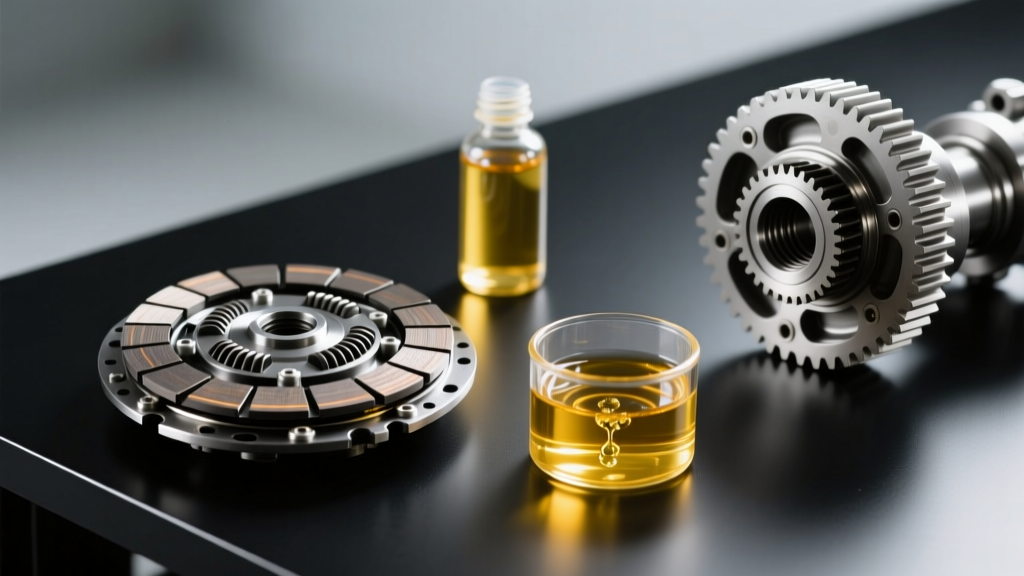
If your vehicle features a clutch-type limited-slip differential (LSD) like the Eaton Posi or Auburn Pro-Series, a turning shudder indicates that the friction modifiers in your gear oil have broken down. While this doesn't directly harm the transmission, the resulting driveline bind during low-speed cornering forces the transmission output shaft to fight against the locked axle, increasing stress on the U-joints and transmission yoke. Always use a high-quality 75W-90 GL-5 synthetic gear oil (such as Amsoil Severe Gear or Mobil 1 Synthetic Gear Lube) and add the exact OEM friction modifier—such as GM ACDelco 10-4017 or Motorcraft XL-3—during fluid service.
Expert Isolation Protocol: Separating Diff Noise from Trans Noise
Because transmission whine and differential whine can sound remarkably similar inside the cabin, you must use a systematic isolation protocol to avoid misdiagnosis. According to diagnostic guidelines from AA1Car, misdiagnosing a drivetrain noise leads to thousands of dollars in unnecessary transmission replacements.
- Step 1: The Lift & Spin Test. Safely lift all four wheels off the ground (to prevent driveline bind on AWD/4WD vehicles). Run the vehicle up to 40 mph in gear. Use a mechanic's stethoscope to listen directly to the transmission extension housing, the center support bearing (if equipped), and the differential pinion snout. A failing pinion bearing will sound like marbles grinding inside the differential housing.
- Step 2: The Coast-Down Test. Accelerate to 50 mph, shift to neutral, and kill the engine. If the whine disappears entirely, the noise is engine or transmission-related (load-dependent). If the whine persists while coasting in neutral, the noise is 100% driveline or differential-related, as the gears are still rotating via the wheels.
- Step 3: Fluid Autopsy. Drain the differential fluid into a clean, white drain pan. Inspect the magnetic drain plug. Fine, glittery metallic paste indicates normal gear wear or bearing degradation. Large, jagged metal shards or chipped teeth mean catastrophic gear failure is already sending shockwaves toward your transmission.
Precision Specifications & Rebuild Data
If your diagnosis confirms internal differential failure, a proper rebuild requires strict adherence to torque specifications and clearances. A sloppy rebuild will result in immediate gear whine and continued driveline lash. Below are the baseline specifications for one of the most common light-truck axles: the GM 8.625-inch 10-bolt / 9.5-inch semi-floating rear axle. For comprehensive OEM data, always consult resources like Spicer Parts or Ring-Pinion.com.
| Component | Specification / Torque | Expert Notes |
|---|---|---|
| Ring Gear to Case Bolts | 75 - 85 lb-ft | Must use medium-strength threadlocker (Loctite 242). Tighten in a crisscross pattern. |
| Pinion Nut (Crush Sleeve) | 200 - 250 lb-ft (approx) | Do not use an impact gun. Tighten slowly while checking rotational preload. |
| Pinion Bearing Preload (Used) | 15 - 25 in-lbs | Measured with a beam-style inch-pound torque wrench on the pinion flange. |
| Pinion Bearing Preload (New) | 25 - 35 in-lbs | Requires a new crush sleeve every time the pinion nut is removed. |
| Ring & Pinion Backlash | 0.006 - 0.010 inches | Measure at 3 equidistant points on the ring gear using a dial indicator. |
| Differential Cover Bolts | 30 - 35 lb-ft | Use RTV silicone (Permatex Ultra Black) instead of cheap cork gaskets. |
Financial Breakdown: Repair vs. Replace
Addressing differential noise early saves your transmission and your wallet. If you wait until the pinion seizes or the ring gear shatters, the cost escalates rapidly. Here is a realistic 2026 cost breakdown for rear differential service and repair:
- Routine Fluid Service: $80 - $150 (Includes 3 quarts of 75W-90 GL-5 synthetic and friction modifier).
- Master Bearing & Seal Kit: $150 - $250 (Timken or SKF bearings; does not include ring & pinion).
- Ring & Pinion Gear Set: $250 - $450 (Yukon Gear, Motive Gear, or Spicer).
- Professional Rebuild Labor: $800 - $1,400 (Requires specialized dial indicators, bearing pullers, and crush sleeve eliminators).
- Remanufactured Drop-in Axle Assembly: $1,800 - $3,200 (Best option if the differential housing is scored or warped).
- Transmission Tailshaft/Bushing Repair (Secondary Damage): $400 - $900 (Requires dropping the transmission crossmember and driveshaft).
Final Verdict
Can a bad rear differential cause transmission problems? Absolutely. The drivetrain operates as a single, interconnected ecosystem. A howling pinion bearing or clunking spider gear is not just an annoying sound; it is a mechanical warning sign that destructive harmonics and torsional shockwaves are actively battering your transmission's output components. By mastering differential noise diagnosis, adhering to strict fluid maintenance intervals, and respecting precise rebuild torque specs, you can protect your transmission and ensure your vehicle's drivetrain operates flawlessly for hundreds of thousands of miles.