The Hidden Culprit Behind Clutch Chirping and Squealing
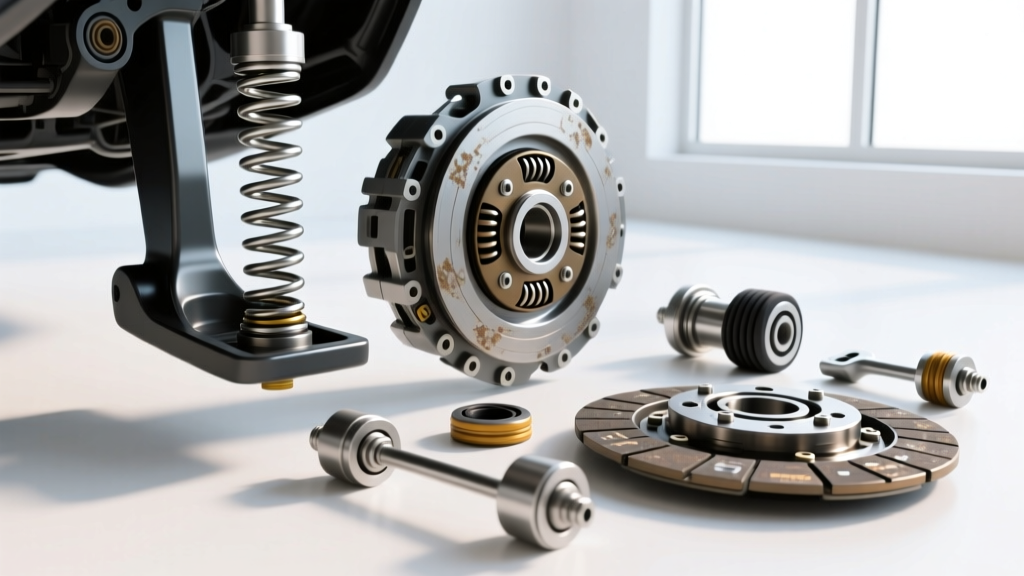
When a manual transmission vehicle develops an irritating chirp, squeal, or grind from the bellhousing, the immediate instinct for most technicians is to condemn the throw-out bearing (TOB) or the pressure plate. However, as we navigate the tighter pedal geometries and hydraulic-assist mechanisms common in 2026, the root cause of these acoustic failures frequently traces back to the firewall: a fatigued or improperly tensioned clutch pedal return spring. Ignoring this $15 component often leads to a $1,400 transmission removal and replacement (R&R) job, only for the noise to return a month later. In this expert guide, we break down the mechanical relationship between pedal return tension, clutch fork retraction, and drivetrain noise diagnosis.
Acoustic Diagnostics: Mapping Clutch Noises to Component Failure
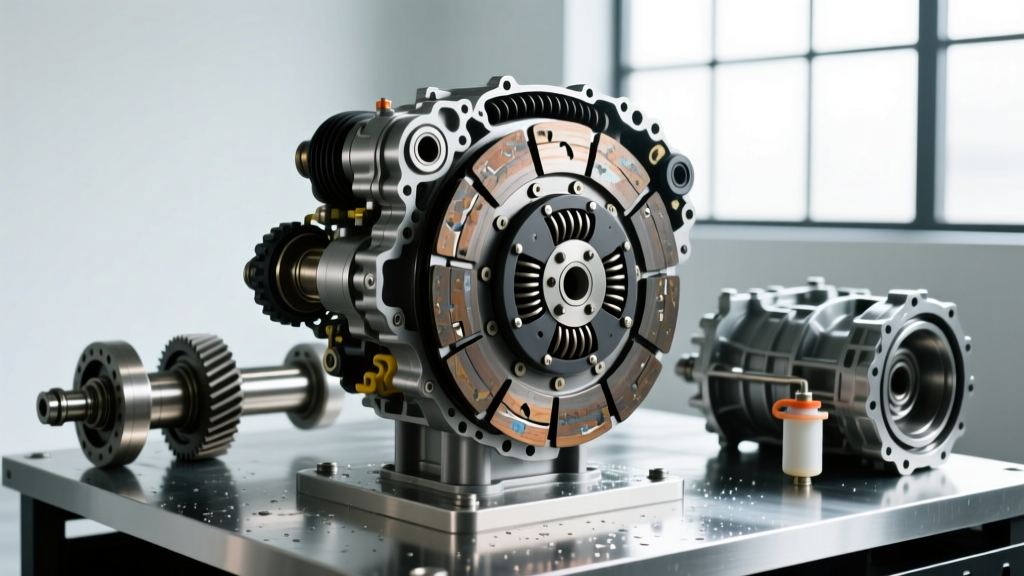
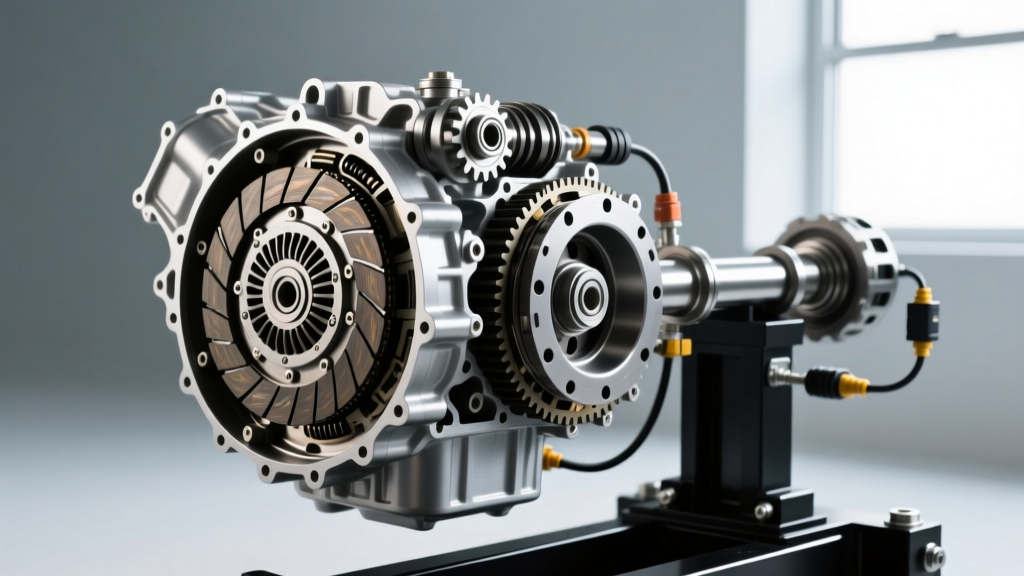
Clutch noise diagnosis requires a trained ear and an understanding of rotational dynamics. The sound emitted from the bellhousing is a direct result of the physical relationship between the stationary release bearing and the spinning diaphragm fingers of the pressure plate. Here is how to decode the acoustic signatures.
Chirping at Idle: The Light Contact Zone
A high-pitched chirping or ticking sound that occurs at idle and disappears when the clutch pedal is slightly depressed is the hallmark of light TOB contact. The throw-out bearing is designed to have an air gap—typically between 0.125 and 0.250 inches—from the pressure plate fingers when the clutch is engaged. If the clutch pedal return spring has lost its elastic limit, it fails to pull the clutch fork fully rearward. This allows the TOB to lightly 'kiss' the spinning fingers, creating a rhythmic chirp. Depressing the pedal applies firm, constant pressure to the bearing, temporarily silencing the noise.
Squealing Under Load: Friction and Heat
As the weak spring allows prolonged contact, the TOB collar and fork pivot ball experience abnormal lateral friction. A continuous squeal that worsens with engine RPM indicates that the bearing's internal lubrication is breaking down due to heat, or the clutch fork pivot ball is wearing an uneven groove into the fork's contact pad. This is highly prevalent in GM LS-swapped vehicles using Tremec T56 Magnum transmissions where aftermarket pedal assemblies lack adequate return tension.
Grinding: Catastrophic Bearing and Fork Wear
Grinding is the terminal phase. If a chirp or squeal is ignored, the TOB's internal needle bearings or carbon contact face will disintegrate. The resulting metal-on-metal grinding signifies that the bearing collar is now gouging the transmission input shaft retainer collar. At this stage, the clutch pedal return spring is no longer the primary issue; it is merely the catalyst that initiated a catastrophic mechanical failure requiring a full bellhousing teardown.
The Physics of the Clutch Pedal Return Spring
The clutch pedal return spring serves a dual purpose: it provides the tactile 'return' feel for the driver's foot, and more importantly, it supplies the mechanical force required to overcome hydraulic residual pressure and pivot friction. In modern hydraulic clutch systems, the Clutch Master Cylinder (CMC) often retains a slight internal bypass pressure to prevent air ingestion. If the return spring does not generate enough Newton-force to pull the CMC pushrod fully outward, the hydraulic system remains partially pressurized. This translates directly to forward pressure on the clutch fork, eliminating the critical TOB air gap.
| Acoustic Symptom | RPM Dependency | Pedal Pressure Test | Probable Mechanical State |
|---|---|---|---|
| Rhythmic Chirp | Idle only | Noise stops with 1 inch of pedal travel | Weak return spring; TOB lightly kissing fingers |
| Continuous Squeal | Scales with RPM | Noise changes pitch when fully depressed | Fork pivot wear; TOB collar binding on input shaft |
| Harsh Grinding | Constant, loud | Pedal feels gritty; vibration in pedal pad | Catastrophic TOB failure; input shaft retainer damage |
| Pedal Squeak (Firewall) | Independent of RPM | Noise tracks exactly with pedal movement | Dry pedal pivot bushing; broken return spring coil |
Step-by-Step Diagnostic Protocol: Isolating the Spring
Before dropping the transmission, perform this non-invasive diagnostic protocol to verify if the clutch pedal return spring is the root cause of your bellhousing noise.
- Measure Pedal Free-Play: Using a steel tape measure, check the distance the pedal travels before you feel resistance from the CMC pushrod. Specification for most OEM applications (like the Honda K-Series or Ford Mustang GT) is between 0.50 and 1.00 inches. Zero free-play guarantees TOB contact.
- The Spring Scale Test: Hook a digital luggage scale or mechanical spring scale to the center of the clutch pedal pad. Pull the pedal toward the driver's seat and measure the peak return force as it nears the firewall stop. A healthy OEM spring should yield between 20 and 35 lbs of return force. If it reads under 15 lbs, the spring has yielded and must be replaced.
- Visual Fork Retraction Check: With the engine off, have an assistant press the clutch pedal while you observe the clutch fork through the bellhousing inspection cover. Release the pedal. The fork should snap back instantly and audibly 'clink' against the rearward limit stop. A sluggish return indicates a weak spring or a binding CMC pushrod.
- Rule out Firewall Squeaks: Use a mechanic's stethoscope to isolate pedal pivot noise from bellhousing noise. A dry nylon pivot bushing or a squeaking return spring mount on the firewall can easily mimic a chirping TOB. Apply a dab of silicone-based dielectric grease to the pedal pivot; if the noise vanishes, your drivetrain is healthy.
Expert Replacement Best Practices & Torque Specs
If your diagnostics confirm a fatigued spring, replacing it is a straightforward, low-cost intervention. However, proper part selection and ancillary maintenance are critical for long-term reliability.
OEM vs. Aftermarket Part Selection
Avoid generic hardware store extension springs, as they lack the specific fatigue-rating for millions of thermal and mechanical cycles. Source exact-fit OEM or high-quality aftermarket equivalents. For example, the RockAuto catalog lists the Dorman 74019 or GM OEM 15032084 for Gen III/IV LS platforms, typically costing between $8 and $18. For Honda K20/K24 applications, the OEM Honda 46585-SDC-A01 spring is mandatory to maintain the precise hydraulic geometry of the factory CMC.
Ancillary Maintenance: The CMC Pushrod
While replacing the spring, inspect the CMC pushrod clevis pin for lateral wear. A worn clevis pin introduces slop, which alters the effective length of the hydraulic stroke and can mask the symptoms of a weak return spring. Replace the clevis pin and clip if any grooving is visible.
Bellhousing Torque Specifications (If R&R is Required)
If your diagnosis reveals that the weak spring has already caused terminal TOB damage, you will need to remove the transmission. When reassembling, adhere strictly to manufacturer torque specs to prevent bellhousing misalignment, which exacerbates fork wear:
- Tremec T56 Magnum Bellhousing to Block: 35 lb-ft (M10 bolts) / 50 lb-ft (M12 bolts). Always use an alignment dowel checker to ensure runout is under 0.005 inches.
- Clutch Fork Pivot Ball Stud: 25 lb-ft into the bellhousing. Apply high-strength threadlocker (e.g., Loctite 271) to prevent the pivot ball from backing out under heavy clutch engagement loads.
- TOB Collar Lubrication: Apply a microscopic film of high-temp synthetic grease (like Amsoil Synthetic Multi-Purpose) to the input shaft retainer collar. Over-greasing will attract clutch dust, leading to the exact binding issues that cause squealing.
Summary Checklist for Drivetrain Technicians
Mastering clutch noise diagnosis requires looking beyond the bellhousing. By understanding the vital role of the clutch pedal return spring in maintaining TOB clearance, you can save customers thousands in unnecessary transmission teardowns. Remember: a chirp at idle is rarely 'just a noisy bearing'—it is a mechanical cry for help from the firewall. Test your pedal tension, verify your free-play, and trust the physics of hydraulic retraction.
For further reading on manual drivetrain geometries and advanced clutch tuning, consult the engineering resources available at Tremec or the technical archives at Hagerty Media to stay ahead of evolving clutch system designs.