The DT Generation: AAM 9.25 vs. 11.5 Rear Axles
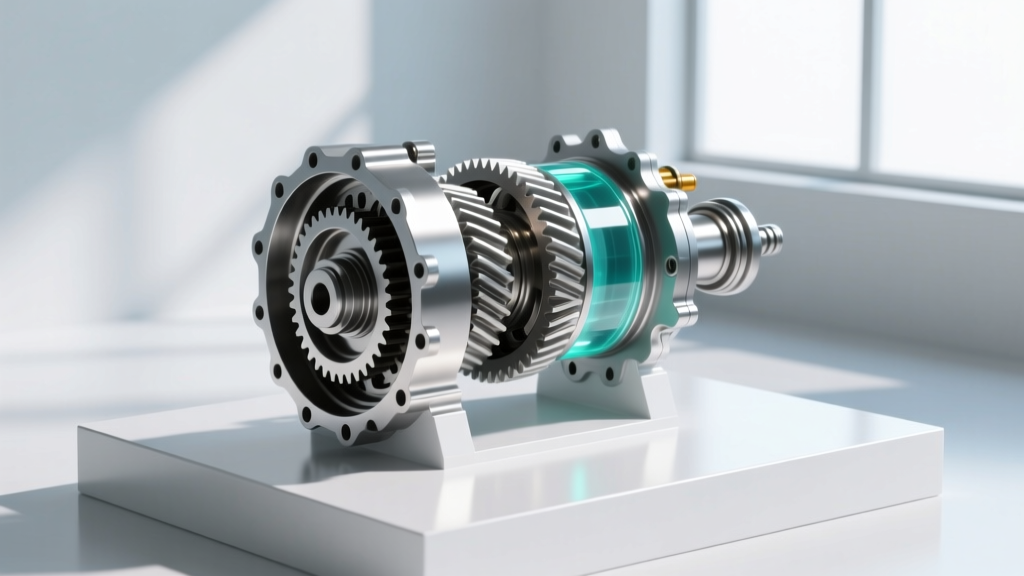
The 2019 model year marked a paradigm shift for the half-ton truck segment with the introduction of the Ram 1500 DT platform. Central to this generational leap was a complete overhaul of the drivetrain architecture, specifically the 2019 Ram 1500 rear differential. Unlike the older DS generation, the DT platform relies heavily on American Axle & Manufacturing (AAM) designs, moving away from the legacy Chrysler axles. Depending on your trim, tow package, and drivetrain configuration, your truck is equipped with either the AAM 9.25-inch or the massive AAM 11.5-inch rear axle.
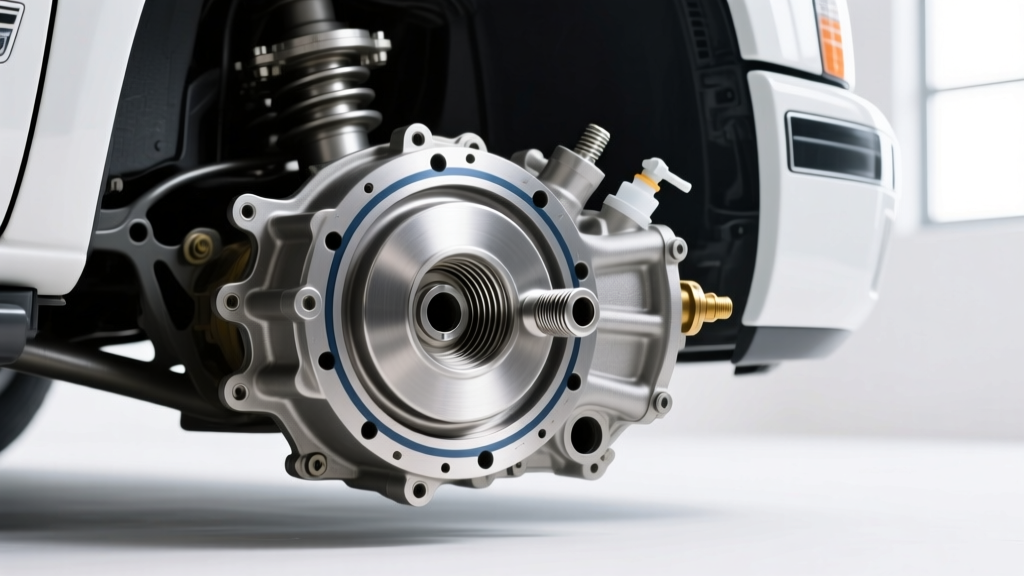
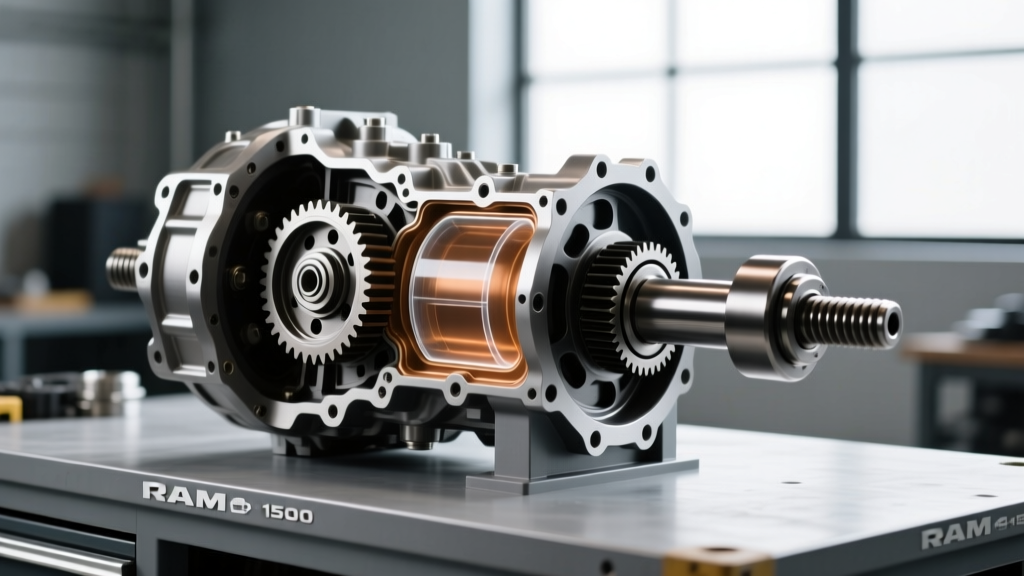
Understanding which housing sits between your rear wheels is the critical first step in any maintenance or performance upgrade protocol. The 9.25-inch axle is standard on most 4x2 models and light-duty 4x4 configurations. However, if your truck is equipped with the Max Tow package, the Off-Road Group package, or the heavy-duty payload configuration, you are running the AAM 11.5-inch ring gear. This 11.5-inch unit features a significantly larger pinion bearing, thicker ring gear webbing, and larger axle shafts, making it a cornerstone for trucks tasked with pulling heavy fifth-wheel trailers or running oversized off-road tires.
Factory Fluid Specs and 2026 Heavy-Duty Upgrade Paths
From the factory, Stellantis engineers prioritized Corporate Average Fuel Economy (CAFE) compliance, resulting in the specification of ultra-low viscosity synthetic gear oils. While excellent for commuting and light loads, these thin fluids can suffer from thermal breakdown when subjected to the extreme shear forces of modern towing. As we navigate the 2026 towing season, the consensus among drivetrain specialists is to upgrade to higher-viscosity synthetic formulations for any truck that regularly tows over 6,000 pounds or sees off-road use.
| Axle Model | Ring Gear Size | Factory Fluid (Light Duty) | Upgraded Fluid (Towing/Off-Road) | Capacity (Approx.) | Cover Bolt Torque |
|---|---|---|---|---|---|
| AAM 9.25 | 9.25" | Mopar 75W-85 (68218655AC) | 75W-90 Synthetic (Amsoil/Red Line) | 2.4 Quarts | 35 lb-ft (47 Nm) |
| AAM 11.5 | 11.5" | Mopar 75W-85 (68218655AC) | 75W-140 Synthetic (Severe Gear) | 3.4 Quarts | 35 lb-ft (47 Nm) |
For extreme applications—such as towing 10,000+ lb trailers in desert heat—stepping up to a 75W-140 full synthetic like Amsoil Severe Gear or Red Line ShockProof provides a vastly superior protective film strength. According to Mopar's official service guidelines, if you deviate from the factory 75W-85 for severe duty, you must ensure the fluid contains the appropriate friction modifiers if your axle is equipped with a limited-slip or electronic locking differential.
Precision Maintenance: Step-by-Step Service Protocol
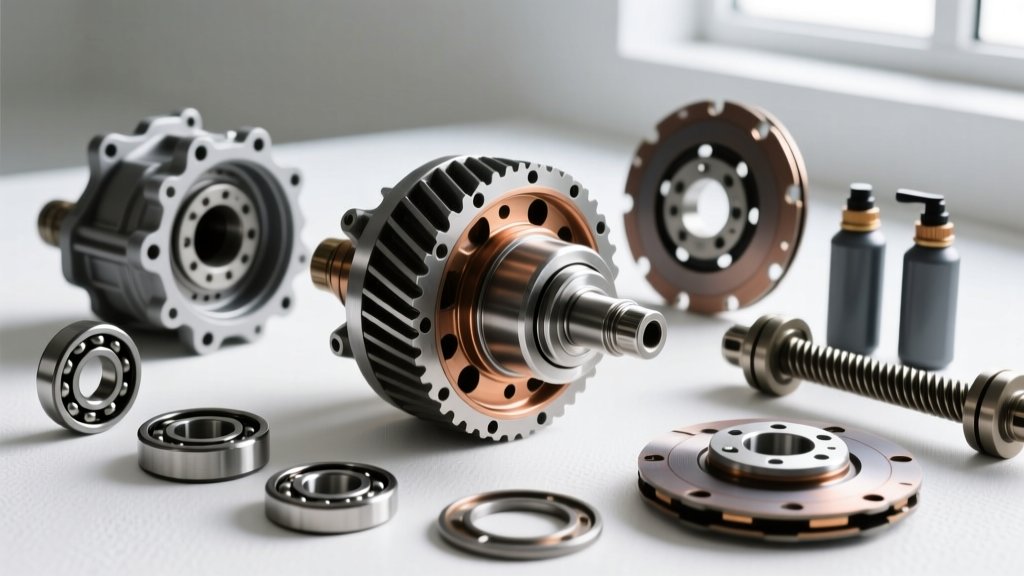
Unlike older differentials that simply featured a drain plug, the AAM 9.25-inch axle typically requires the removal of the differential cover to drain the fluid, inspect the magnets, and clean out metallic particulates. The 11.5-inch axle often includes a factory drain plug, but dropping the cover remains the gold standard for a complete service.
1. Preparation and Extraction
Drive the truck for 15-20 minutes to bring the gear oil up to operating temperature (around 120°F to 140°F). This suspends metallic particles in the fluid, allowing them to drain out rather than settling in the housing crevices. Safely support the rear axle on jack stands—never rely solely on a floor jack. Place a high-capacity drain pan beneath the differential.
2. Cover Removal and Cleaning
Using a 13mm socket, break loose the lower cover bolts first to allow the fluid to weep out in a controlled stream. Once drained, remove all perimeter bolts. AAM axles from the factory often use a proprietary reusable rubber gasket or a bead of grey RTV. If your axle uses RTV, use a plastic gasket scraper and brake cleaner to meticulously clean the mating surfaces. Any leftover RTV debris that falls into the housing will eventually clog the oil pickup or score the pinion bearings.
3. Reassembly and Torque Sequence
If replacing the RTV, apply a continuous 3mm bead of Permatex Ultra Black or The Right Stuff. Reinstall the cover and hand-thread all bolts. Using a calibrated torque wrench, tighten the bolts in a crisscross pattern to exactly 35 lb-ft (47 Nm). Over-torquing the 11.5-inch cast aluminum or stamped steel covers can warp the flange, leading to chronic seepage. Refill through the top fill plug using a fluid transfer pump until the oil reaches the bottom edge of the fill hole threads. Reinstall the fill plug and torque to 25 lb-ft (34 Nm).
Performance Upgrades: Cooling, Lockers, and Regearing
For truck owners pushing the limits of the DT platform, basic maintenance is just the baseline. The aftermarket in 2026 offers robust solutions to address the thermal and mechanical bottlenecks of the factory setup.
Deep-Sump Cooling Covers
The factory differential cover is designed for ground clearance and cost-efficiency, not thermal management. Upgrading to a finned, deep-sump aluminum cover from brands like Mag-Hytec or AFE Power increases fluid capacity by 1.5 to 2 quarts and provides massive surface area for heat dissipation. Testing shows that finned aluminum covers can drop steady-state towing temperatures by 20°F to 35°F, drastically extending the life of the ring and pinion gear set and the pinion bearings.
Regearing for Oversized Tires
If you have upgraded your Ram 1500 to 35-inch or 37-inch tires, the factory 3.21 or 3.55 gear ratios will leave the ZF 8-speed transmission hunting for gears, generating excessive exhaust gas temperatures (EGTs) and destroying fuel economy. Regearing the 2019 Ram 1500 rear differential (and the corresponding front axle) to a 3.92 or 4.10 ratio restores the factory effective gearing. A complete regear utilizing a Yukon Gear or Motive Gear master rebuild kit—including Timken bearings, crush sleeve eliminator, and ring/pinion set—typically costs between $1,500 and $2,200 per axle when performed by a certified driveline shop. Always insist on a crush sleeve eliminator kit during the rebuild; it replaces the one-time-use factory crush sleeve with a solid spacer and shims, making future backlash adjustments infinitely more reliable.
Locking Differential Enhancements
While the factory electronic locking differential (eLocker) is excellent for moderate trail use, its internal mechanism can be fragile under high-horsepower shock loads. For dedicated off-road builds or heavy rock crawling, swapping the factory carrier for a Detroit Locker (automatic) or an ARB Air Locker (selectable) provides unbreakable traction. Note that installing an aftermarket locker requires resetting the ring gear backlash to strict AAM tolerances (typically 0.006" to 0.010" of endplay).
Diagnosing Drivetrain NVH (Noise, Vibration, Harshness)
Before tearing into the differential, accurately diagnosing NVH can save you thousands in misdirected labor. Use this framework to isolate the failure point:
- Coast-Down Whine (Deceleration): Usually indicates a failing pinion bearing or insufficient pinion bearing preload. As the drivetrain unloads, the pinion gear shifts slightly, causing the gear whine.
- Acceleration Whine (Load): Points to ring gear face wear, improper backlash, or a damaged ring gear tooth. This is common in trucks that have been towed heavily on worn-out 75W-85 fluid.
- Clunk on Engagement: Often misdiagnosed as a differential issue. Before pulling the cover, check the rear driveshaft slip yoke, the transfer case output shaft bushing, and the rear upper/lower control arm bushings. If the driveline is tight, excessive ring-and-pinion backlash inside the differential is the culprit.
By adhering to strict torque specifications, utilizing high-shear synthetic fluids, and addressing thermal limitations with deep-sump covers, your Ram 1500's rear axle will reliably handle the most punishing towing and off-road environments well past the 150,000-mile mark.