The Diagnostic Dilemma: Engine Bay vs. Drivetrain
When diagnosing heavy-duty trucks like the 2007.5-2018 Ram 2500 and 3500 equipped with the 6.7L Cummins diesel and the G56 6-speed manual transmission, mechanics and DIYers frequently encounter a frustrating diagnostic overlap. The immense torque and heavy-duty components of these trucks generate significant noise and vibration. Consequently, severe bad fan clutch symptoms originating in the engine bay are routinely misdiagnosed as catastrophic transmission or clutch pedal problems.
Conversely, genuine clutch pedal issues—ranging from spongy hydraulics to violent pedal vibrations caused by a failing dual-mass flywheel (DMF)—can mimic engine harmonic failures. In this model-specific repair guide, we will dissect the clutch pedal problems inherent to the Ram G56 transmission, contrast them with engine cooling fan failures, and provide exact part numbers, torque specifications, and 2026 market repair costs to get your truck back on the road.
Identifying True Bad Fan Clutch Symptoms on the 6.7L Cummins
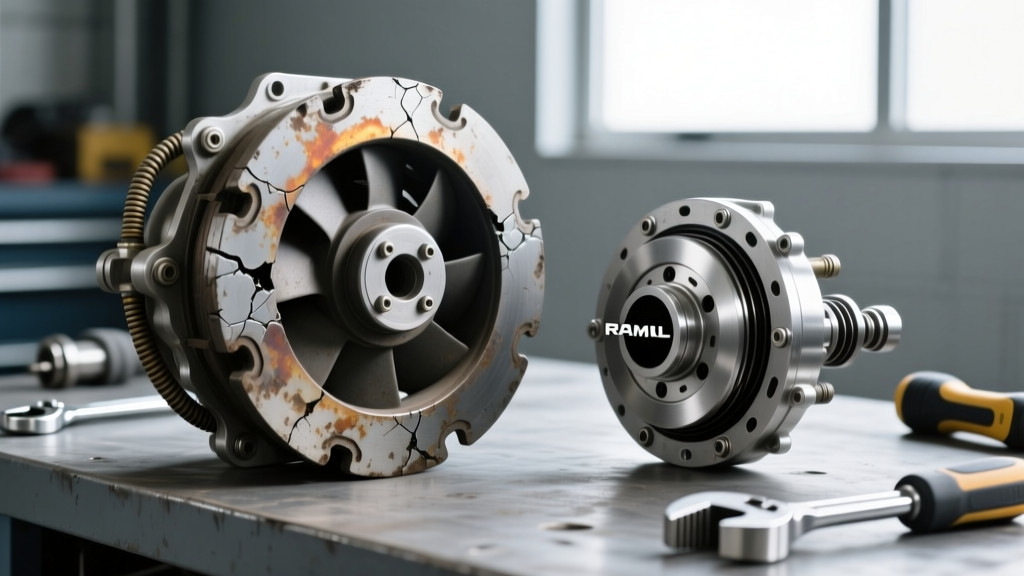
Before tearing into the G56 bellhousing, you must rule out the viscous engine fan clutch. The 6.7L Cummins utilizes a massive thermal fan clutch to pull air through the intercooler and radiator. When the internal silicone fluid degrades or the bi-metallic thermostatic spring fails, it presents symptoms that shake the entire chassis.
- The 'Freightliner' Roar: A locked-up fan clutch will sound like a jet engine at takeoff, pulling upwards of 80+ horsepower from the crank and causing severe drivetrain bogging that feels like a slipping transmission clutch.
- Chassis Vibration at Idle: A failing fan clutch bearing introduces a heavy, rhythmic wobble. Because the Cummins is hard-mounted to the frame with minimal harmonic dampening compared to gas V8s, this wobble transfers directly to the floorboards and firewall, often tricking drivers into thinking the clutch throw-out bearing or DMF is disintegrating.
- Visual Inspection: With the engine off and cold, the fan should spin freely with slight viscous resistance. If it spins like a free-wheeling bicycle wheel or refuses to budge, replacement is mandatory. Use a 36mm fan clutch wrench and a holding tool; note that many Cummins applications utilize a left-hand (reverse) thread on the water pump pulley nut.
For OEM replacements, the Mopar 53032753AC is the standard, though heavy-duty aftermarket alternatives from Hayden (Part #2735) are widely available via Mopar Online Parts and specialty diesel retailers.
G56 Manual Transmission: Clutch Pedal Problems Decoded
If the engine fan clutch checks out, the issue lies within the cab and the bellhousing. The G56 transmission, manufactured by Mercedes-Benz (ZV Gear), is incredibly robust, but its clutch actuation system and flywheel are known wear items. Here is how to diagnose specific pedal anomalies.
1. Spongy or Soft Clutch Pedal (Hydraulic Failure)
A soft pedal that sinks to the floor or fails to return to the top of its travel is almost exclusively a hydraulic issue. The Ram G56 uses an external master cylinder and an external slave cylinder actuating the clutch fork.
The Culprit: Internal seal degradation in the master cylinder (Mopar 52021435AD) allows fluid to bypass internally, resulting in a spongy feel without visible leaks. Air ingress at the quick-connect fitting on the firewall is also a chronic issue.
The Fix: Replace the master cylinder and perform a gravity bleed. Pro-Tip: Pressure bleeding the G56 system often forces air bubbles into the slave cylinder's upper crevices. Gravity bleeding with the master cylinder reservoir cap off and the line cracked at the slave cylinder yields the best pedal firmness.
2. Hard or Binding Pedal (Mechanical Interference)
If the clutch pedal feels notchy, requires excessive leg pressure, or binds near the top of its release, you are likely experiencing the infamous G56 clutch fork pivot ball wear.
The Culprit: The G56 transmission case is cast aluminum, but the clutch fork pivot ball is hardened steel. Over 100,000 miles of heavy towing, the steel ball literally eats into the aluminum case. This alters the fulcrum geometry of the clutch fork, causing the throw-out bearing to bind on the transmission input shaft sleeve.
The Fix: The transmission must be dropped. You must install a steel pivot ball repair sleeve (available from specialists like Geno's Garage) and replace the clutch fork if the contact pad is grooved.
3. Pedal Vibration (DMF vs. Engine Harmonics)
A violent vibration pulsing through the clutch pedal—especially when the pedal is fully depressed or during engine shutdown—is the hallmark of a failing Dual-Mass Flywheel (DMF).
The Culprit: The 6.7L Cummins generates massive low-frequency torsional vibrations. The DMF (LUK Part #415-014-090) uses internal arc springs to absorb this shock. When these springs fracture or the internal grease dries out, the two halves of the flywheel clash, sending shockwaves through the hydraulic slave cylinder directly into your foot.
The Fix: Replace the DMF. Many owners opt to convert to a Single-Mass Flywheel (SMF) using a heavy-duty conversion kit from South Bend Clutch (e.g., SDD3250-6) to eliminate future DMF failures, though this increases cabin gear rattle at idle.
Comparison Matrix: Fan Clutch vs. Drivetrain Faults
| Symptom Profile | Bad Fan Clutch Symptoms | G56 Clutch / DMF Failure |
|---|---|---|
| Vibration Location | Front grille, radiator support, entire chassis shake | Felt directly through the clutch pedal and firewall |
| Noise Profile | Continuous jet-engine roar or rhythmic bearing grind | Metallic clunk on engine shutdown, rattle at idle |
| Pedal Feel Impact | None (Pedal hydraulics remain firm and normal) | Spongy, pulsing, or mechanically binding/notchy |
| Worst Operating Condition | Highway speeds under heavy load (heat soak) | Lugging the engine at low RPMs in high gear |
Critical Torque Specs for G56 Clutch Repair
If your diagnosis confirms a clutch pedal problem requiring a transmission drop, adherence to factory torque specifications is non-negotiable to prevent case warping or flywheel shearing.
- G56 Transmission to Engine Block (M12 Bolts): 65 ft-lbs (Ensure dowel pins are seated; forced alignment will crack the aluminum bellhousing).
- Flywheel to Crankshaft (Grade 12.9 Bolts): 105 ft-lbs + 90-degree turn (Always use new OEM stretch bolts; never reuse them).
- Pressure Plate to Flywheel: 35 ft-lbs in a star pattern.
- Clutch Fork Pivot Ball: 25 ft-lbs (Apply high-temp anti-seize to the steel ball to prevent future aluminum galling).
2026 Market Repair Costs
Budgeting for heavy-duty manual transmission repairs requires understanding the split between parts and specialized labor. Below are the estimated 2026 market rates for independent diesel specialty shops:
- Hydraulic Master/Slave Cylinder Replacement: $450 - $650 (Parts: $200, Labor: 2-3 hours). No transmission drop required if the external slave is accessible through the inspection cover, though dropping the trans is recommended for thorough cleaning.
- Pivot Ball Repair & Fork Replacement: $1,200 - $1,600 (Requires transmission removal).
- DMF & Clutch Kit Replacement: $2,200 - $3,100 (OEM LUK DMF kits approach $1,200 for parts alone; South Bend SMF conversions are similarly priced but offer longer lifespan for tuned trucks).
- Viscous Fan Clutch Replacement: $350 - $500 (Parts: $250, Labor: 1 hour).
By systematically isolating engine harmonics from drivetrain feedback, you can avoid the costly mistake of dropping a G56 transmission only to find the culprit was a $250 fan clutch sitting right behind the radiator. Always verify your fan clutch operation before condemning the clutch pedal hydraulics or flywheel.