The Intersection of Line Pressure and TCM Logic in Ram HD Trucks
As we navigate the 2026 service landscape, the heavy-duty truck segment is heavily populated by aging workhorses, specifically the 2011–2019 Dodge Ram 2500 models equipped with the Chrysler-built 68RFE automatic transmission. While the 68RFE is renowned for its robust geartrain, its electronic control architecture—specifically the relationship between the line pressure transducer and the Transmission Control Module (TCM)—remains a primary source of diagnostic headaches. When a Ram 2500 enters limp mode with a P0700 or P0868 diagnostic trouble code (DTC), technicians must understand that the TCM is only as reliable as the hydraulic data it receives.
Understanding the exact dodge ram 2500 transmission pressure sensor location is the critical first step in differentiating between a failed sensor, a compromised wiring harness, or an internal TCM solder joint failure. In this comprehensive diagnostic guide, we will dissect the 68RFE pressure feedback loop, outline precise multimeter testing procedures, and detail the TCM replacement protocols required to restore full shifting functionality.
Pinpointing the Dodge Ram 2500 Transmission Pressure Sensor Location
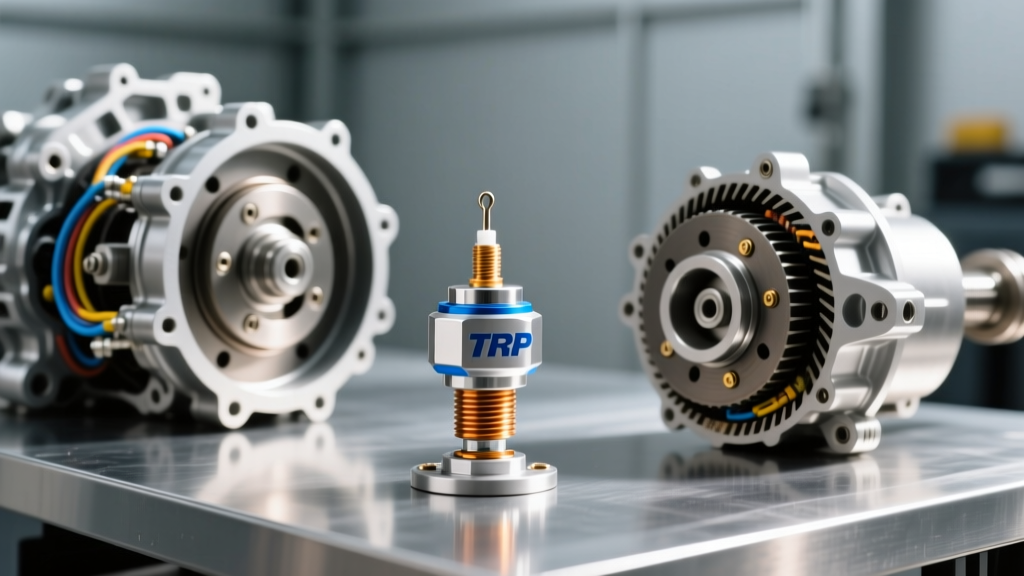
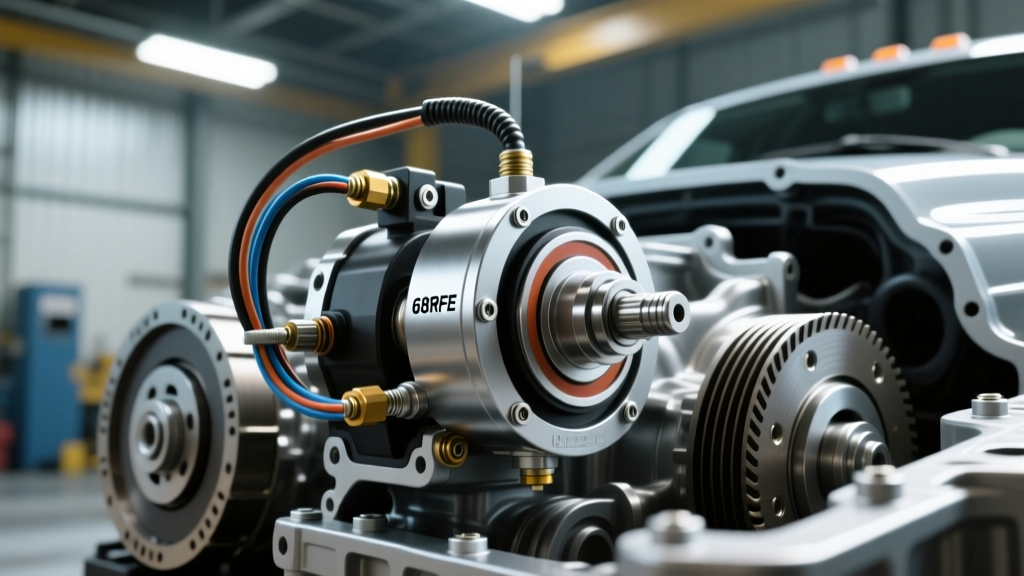
Before pulling out the scan tool, physical verification of the sensor and its environment is mandatory. On the 68RFE transmission, the Line Pressure Sensor (often referred to as a pressure transducer) is not located inside the valve body pan like the solenoid/pressure switch assembly. Instead, it is externally mounted to the transmission case.
68RFE External Sensor Placement
For the 68RFE, the line pressure sensor is located on the driver’s side rear of the transmission case, positioned just above the oil pan rail and slightly forward of the output shaft housing. It threads directly into the main case casting to read the primary hydraulic line pressure generated by the main regulator valve. This external placement was designed for serviceability, allowing technicians to replace the sensor without dropping the transmission pan or removing the valve body.
Aisin AS69RC Architecture Contrast
If your Ram 2500 is equipped with the Aisin AS69RC (typically found behind the High Output Cummins ISX or as an optional upgrade), the architecture differs drastically. The Aisin utilizes an integrated solenoid and pressure switch assembly housed inside the transmission pan. Diagnosing pressure faults on the Aisin requires pan removal, fluid evacuation, and valve body access, making accurate preliminary electrical testing at the external transmission harness connector absolutely vital to avoid unnecessary teardowns.
TCM Symptom Diagnosis: When the Brain Blames the Sensor
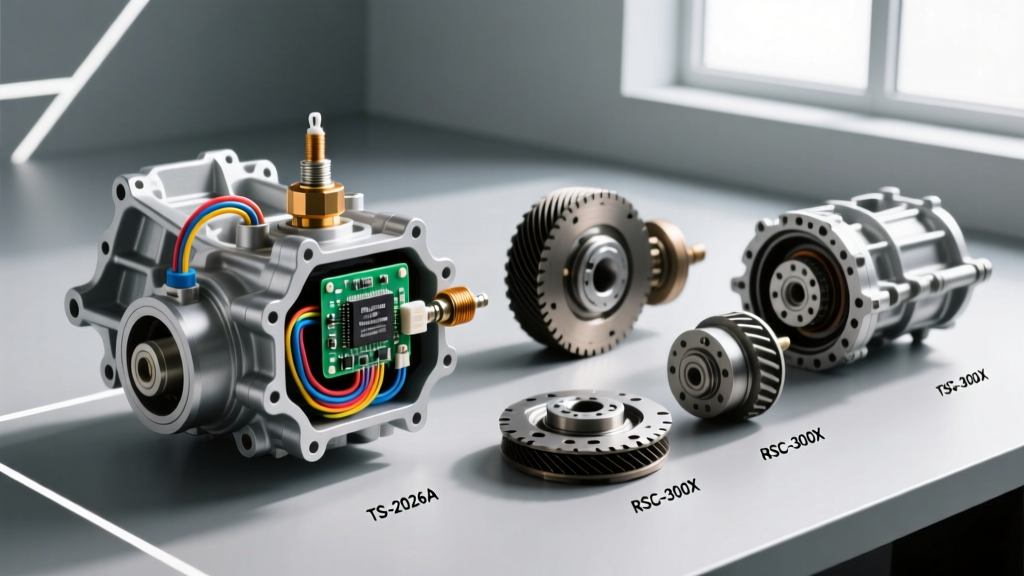
The TCM on a 68RFE-equipped Ram 2500 is typically a standalone module mounted in the engine bay (often on the passenger side firewall or cowl area, depending on the exact model year). It relies on a 5-volt reference signal sent to the pressure sensor. The sensor’s internal diaphragm deflects based on hydraulic pressure, altering the resistance and sending a return signal voltage (typically between 0.5V and 4.5V) back to the TCM.
When the TCM detects a signal voltage that falls outside the logical parameters of actual engine RPM and commanded solenoid duty cycle, it triggers a failsafe. According to data shared on the International Automotive Technicians Network (iATN), the most common failure is not a complete sensor death, but rather a degradation of the 5V reference circuit or moisture intrusion at the TCM connector causing a voltage drop.
Common Diagnostic Trouble Codes (DTCs)
| DTC | Description | TCM Failsafe Action (Limp Mode) | Primary Suspect |
|---|---|---|---|
| P0867 | Transmission Fluid Pressure Sensor/Switch 'A' Circuit High | Locks in 3rd/4th gear; Max line pressure commanded | Open signal circuit or short to 5V ref |
| P0868 | Transmission Fluid Pressure Sensor/Switch 'A' Circuit Low | Locks in 3rd/4th gear; Max line pressure commanded | Short to ground, bad sensor, or TCM fault |
| P0700 | Transmission Control System (MIL Request) | Gateway code; Check TCM for specific internal DTCs | Internal TCM logic fault or CAN-C bus error |
| P0869 | Transmission Fluid Pressure Sensor/Switch 'A' Circuit Intermittent | Harsh shifts; momentary limp mode triggers | Chafed wiring harness or loose TCM connector |
Step-by-Step Electrical Troubleshooting
Never replace the TCM or the sensor based solely on a scan tool code. The Mopar Tech Authority service manuals mandate a strict electrical verification process to isolate the fault to the component, the harness, or the module.
1. Live Data PID Analysis
Connect a WiTech 2 or high-end bi-directional scan tool. Monitor the 'Line Pressure' PID alongside the 'Line Pressure Solenoid Duty Cycle'. At idle in Park, actual line pressure should read between 45 and 65 PSI. If the scan tool reads 0 PSI or a static 255 PSI (the default error max-out value), you have an electrical circuit fault. If the pressure reads erratically while the solenoid duty cycle remains stable, the sensor diaphragm is likely failing.
2. Sensor Pigtail Testing (Back-Probing)
Access the sensor on the driver’s side of the 68RFE case. Disconnect the sensor and turn the ignition to the 'ON' position (engine off).
- Pin 3 (5V Reference): Measure between Pin 3 and chassis ground. You must see exactly 4.8V to 5.1V. If it reads 0V, the TCM has either shut down the reference circuit due to a short, or the harness is broken.
- Pin 1 (Ground): Check continuity to chassis ground. Resistance should be less than 0.5 ohms.
- Pin 2 (Signal): With the sensor disconnected, the TCM may flag a high circuit code. Reconnect the sensor and back-probe Pin 2. At idle, you should see roughly 0.8V to 1.2V. As you raise engine RPM or apply the service brakes in Drive (loading the torque converter), the voltage should climb smoothly toward 4.0V.
3. TCM Connector Drag Testing
If the sensor tests perfectly, the issue often lies at the TCM. Locate the TCM in the engine bay. Disconnect the main harness connectors. Inspect the female terminals for 'pin drag'. A common issue on 2013-2018 Ram HD trucks is terminal fretting corrosion caused by engine bay thermal cycling. Clean the terminals with electrical contact cleaner and apply a dielectric grease specifically rated for electronic connectors. If the 5V reference is missing at the sensor but present at the TCM connector, the fault is isolated to the intermediate wiring harness, which frequently chafes against the transmission bellhousing bracket.
Repair Costs, Part Numbers, and Torque Specifications
When a component is definitively condemned, using OEM Mopar parts is highly recommended for 68RFE applications, as aftermarket sensors often feature incorrect voltage curves that cause harsh 2-3 and 3-4 upshifts. For deeper diagnostic parameters regarding pressure switch logic, refer to the OBD-Codes P0868 Database.
Component Data & Pricing (2026 Estimates)
- Line Pressure Sensor (Mopar 56028187AB / 68225695AA): $45 - $85. Torque Spec: 11 Nm (97 in-lbs). Do not over-torque, as the case threads are aluminum and prone to stripping.
- TCM Assembly (Mopar RL825695AH - Remanufactured): $350 - $600. Torque Spec: 5 Nm (44 in-lbs) for mounting bracket bolts.
- Dealer WiTech Flash & PROXI Alignment: $150 - $225. Mandatory if replacing the TCM.
The CVI Reset Protocol
If you replace the TCM or the line pressure sensor, you must address the Clutch Volume Index (CVI). The CVI represents the amount of fluid (in cubic centimeters) required to pack each clutch pack. The TCM uses line pressure data to calculate CVI over time. If a faulty sensor was feeding false low-pressure data to the old TCM, the CVI values may be artificially skewed. After installing a new TCM and performing the mandatory PROXI network alignment via WiTech, clear the CVI values and perform the 'Quick Learn' procedure. This requires the transmission to be at operating temperature (above 140°F) and involves a series of automated clutch apply cycles that recalibrate the PWM solenoid duty cycles to the actual hydraulic volume of the transmission.
Final Thoughts on Ram HD Diagnostics
Troubleshooting the dodge ram 2500 transmission pressure sensor location and its associated TCM logic requires a methodical approach. The 68RFE is a highly adaptable transmission, but it relies entirely on accurate hydraulic feedback to modulate shift feel and protect the clutch packs from slip-induced thermal destruction. By verifying the 5V reference, testing the signal return under load, and inspecting the TCM harness for environmental damage, you can confidently isolate the root cause of P0868 and P0700 faults without resorting to unnecessary parts swapping. As these trucks continue to age, maintaining the integrity of the external sensor connections and the engine-bay mounted TCM will remain a cornerstone of Ram HD drivetrain service.