The Core Question: What's a Rear Differential?
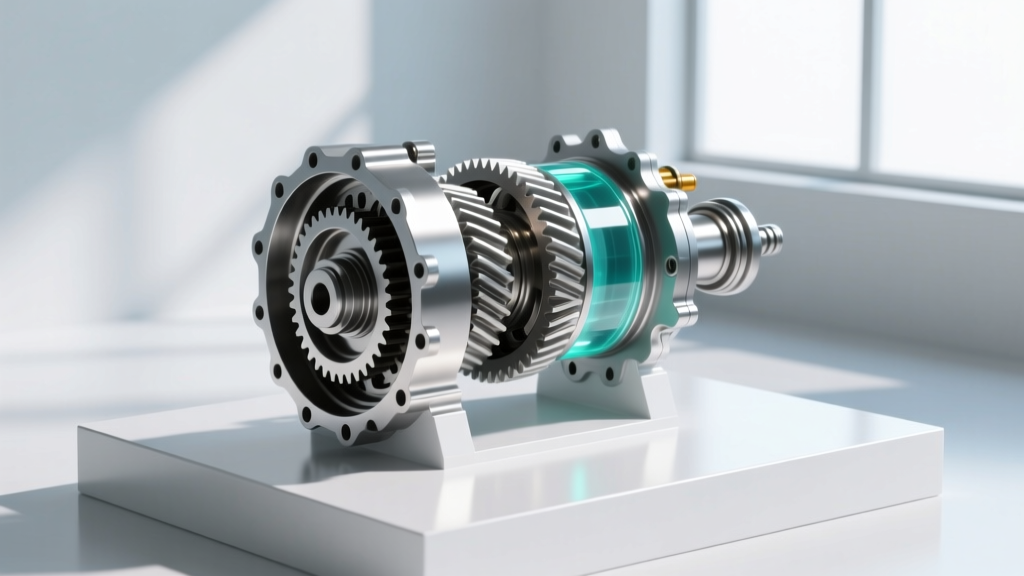
For first-time truck, SUV, and performance car owners, the underside of the vehicle can be a mystery. Many forum users and new enthusiasts ask, 'whats a rear differential?' Simply put, the rear differential is the final mechanical gateway between your drivetrain and the pavement. It takes the rotational power from the driveshaft and splits it to the left and right rear wheels. More importantly, it allows those wheels to rotate at different speeds when cornering, preventing tire scrubbing and axle binding.
However, this power transfer is not a simple gear-to-gear engagement. Most rear differentials utilize a hypoid gear set (the ring and pinion). Unlike standard spur gears that roll against one another, hypoid gears feature an offset axis that creates a massive amount of sliding friction. This extreme sliding action generates intense heat and shearing forces, which is why understanding rear differential fluid service—and the associated costs—is a critical pillar of preventive maintenance in 2026.
The Chemistry of Gear Oil: Why Motor Oil Won't Work
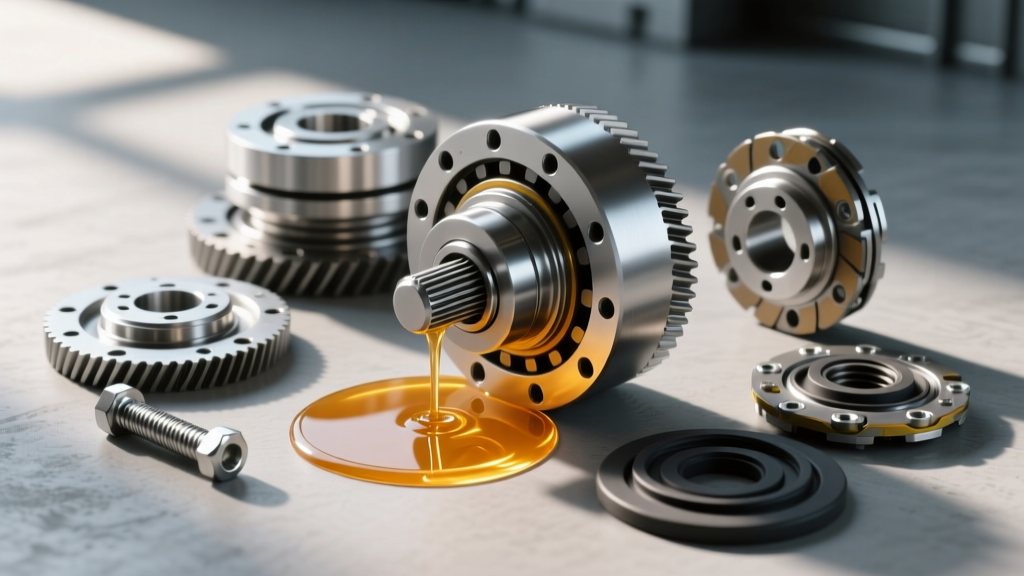
You cannot simply dump leftover 5W-30 engine oil into a differential casing. The sliding friction of the ring and pinion gears requires specialized Extreme Pressure (EP) additives, typically composed of sulfur and phosphorus compounds (like Zinc Dialkyldithiophosphate, or ZDDP). When the gear teeth mesh under heavy load, these additives react with the metal surfaces to form a sacrificial tribofilm that prevents micro-welding and gear spalling.
According to the Mobil 1 Synthetic Gear Lubricant technical data, modern synthetic 75W-90 and 75W-140 fluids maintain their shear stability far longer than conventional mineral oils, resisting the thermal breakdown that leads to that infamous 'rotten egg' sulfur smell when differential fluid goes bad.
2026 Rear Differential Service Cost Breakdown
As labor rates and chemical costs have shifted in 2026, the price of a rear differential service varies wildly depending on where you take your vehicle and the specific axle assembly you have. Below is a realistic cost matrix for a standard fluid drain, clean, and refill.
| Service Route | Estimated 2026 Cost | Time Required | Pros & Cons |
|---|---|---|---|
| DIY Drain & Fill | $45 - $95 | 1 - 1.5 Hours | Highly cost-effective; requires proper RTV sealant, torque wrench, and disposal plan. |
| Independent Shop | $180 - $280 | 1 Hour | Good balance of cost and expertise; shops often use bulk synthetic fluids. |
| Dealership Service | $275 - $450+ | 1.5 Hours | OEM-specific fluids and friction modifiers; highest labor rates ($160-$220/hr). |
| Fluid Evacuation (No Cover) | $120 - $200 | 0.5 Hours | Required for sealed diffs (e.g., BMW, ZF setups); uses a vacuum pump via fill plug. |
Hidden Cost Variables to Watch For
- Limited-Slip Additives: If your vehicle has a clutch-type Limited Slip Differential (LSD) like Ford's Trac-Lok or GM's Posi-Traction, you must add a friction modifier (approx. $12-$18 per bottle) to prevent clutch chatter. Note: Torsen (gear-type) LSDs do not require this modifier.
- Sealant vs. Gasket: Many modern axles do not use reusable cork or rubber gaskets. They require a high-temp RTV silicone like Permatex The Right Stuff (Part #81182), which adds about $25 to a DIY bill but ensures a leak-free seal.
- Heavy Duty / Towing Upgrades: If you tow a trailer, upgrading from a standard 75W-90 to a 75W-140 synthetic (like Red Line Part #57904) will cost roughly $20 more per axle but drastically reduces thermal degradation under load.
Preventive Maintenance: Step-by-Step Service Guide
Servicing a traditional solid rear axle (like the ubiquitous Ford 8.8, Dana 44, or GM 9.5-inch 14-bolt) is a straightforward preventive maintenance task. However, skipping steps can lead to catastrophic fluid leaks or bearing failure.
1. Preparation and Extraction
Jack up the rear of the vehicle and support it on jack stands. Never work under a vehicle supported only by a hydraulic jack. Place a drain pan beneath the differential. If your differential has a bottom drain plug, simply remove it using a 3/8-inch or 1/2-inch drive ratchet. If it lacks a drain plug (common on Ford and Dana axles), you must loosen the bottom half of the differential cover bolts and gently pry the cover downward with a flathead screwdriver to let the fluid drain into the pan.
2. Cleaning and Inspection
Once drained, remove the cover entirely. Use brake cleaner and lint-free shop towels to wipe down the inside of the casing, the ring gear, and the differential cover. Diagnostic Tip: A fine, glittery metallic paste on the magnet or cover is normal wear. However, if you find large metal flakes, chipped gear teeth, or brass-colored shavings (indicating spider gear thrust washer failure), a fluid change will not save you—a rebuild is imminent.
3. Sealing and Refilling
Scrape off all old RTV or gasket material from both the axle housing and the cover mating surfaces. Apply a continuous 1/4-inch bead of high-temp RTV to the cover, avoiding the bolt holes. Reinstall the cover and hand-thread the bolts. Fill the differential through the top fill plug until the fluid reaches the bottom edge of the fill hole (typically requiring 2.0 to 3.0 quarts, depending on the axle). For detailed engineering tolerances and assembly procedures, refer to the official Dana Spicer Service Manuals.
Critical Torque Specifications
Overtightening differential cover bolts is a common DIY mistake that warps the stamped steel cover, crushes the RTV bead, and guarantees a slow weeping leak. Always use a calibrated inch-pound or low-range foot-pound torque wrench. Below are the standard 2026 specifications for popular axles:
- Ford 8.8-Inch: Cover bolts to 28-38 lb-ft. Fill plug to 22-30 lb-ft.
- Dana 44 (Jeep/Truck): Cover bolts to 30-35 lb-ft. Fill plug to 25 lb-ft.
- GM 9.5-Inch (14-Bolt Semi-Float): Cover bolts to 25-35 lb-ft.
- Toyota 8-Inch (Solid Axle): Third-member nuts to 65-70 lb-ft (if removing the entire pumpkin).
Expert Insight: If you are servicing a high-performance or heavily modified off-road vehicle, consider upgrading to an aftermarket differential cover (such as those from ARB or Dana Spicer) that features integrated cooling fins and magnetic drain plugs. These covers often increase fluid capacity by 0.5 to 1.0 quarts, significantly lowering operating temperatures during sustained highway towing or rock crawling.
When Should You Change Differential Fluid?
Many modern owner's manuals list the rear differential fluid as 'lifetime' under normal driving conditions. In the automotive engineering world, 'lifetime' usually means the duration of the powertrain warranty (typically 60,000 to 100,000 miles). For true preventive maintenance and to ensure the longevity of your ring and pinion gears, follow these real-world intervals:
- Normal Commuting / Highway: Every 50,000 to 60,000 miles.
- Severe Duty (Towing, Off-Road, Track): Every 15,000 to 30,000 miles. Submerging your axle in water (mudding or river crossings) requires an immediate fluid change, as water will bypass the axle seals and emulsify the gear oil, destroying its lubricating properties within miles.
- Break-In Period: If you have recently installed a new ring and pinion gear set, the first fluid change must occur at exactly 500 miles to remove the metallic break-in debris, followed by a standard interval thereafter.
Final Thoughts on Drivetrain Longevity
Understanding the mechanics and maintenance requirements of your axle assembly saves thousands of dollars in premature rebuilds. Whether you are paying a dealership $350 for OEM-spec synthetic fluid or spending a Saturday afternoon in the driveway with a torque wrench and a bottle of AMSOIL Severe Gear 75W-90, the investment is minimal compared to the cost of replacing a shattered ring gear or seized carrier bearing. Respect the hypoid gear, use the correct EP additives, and torque your covers to spec.