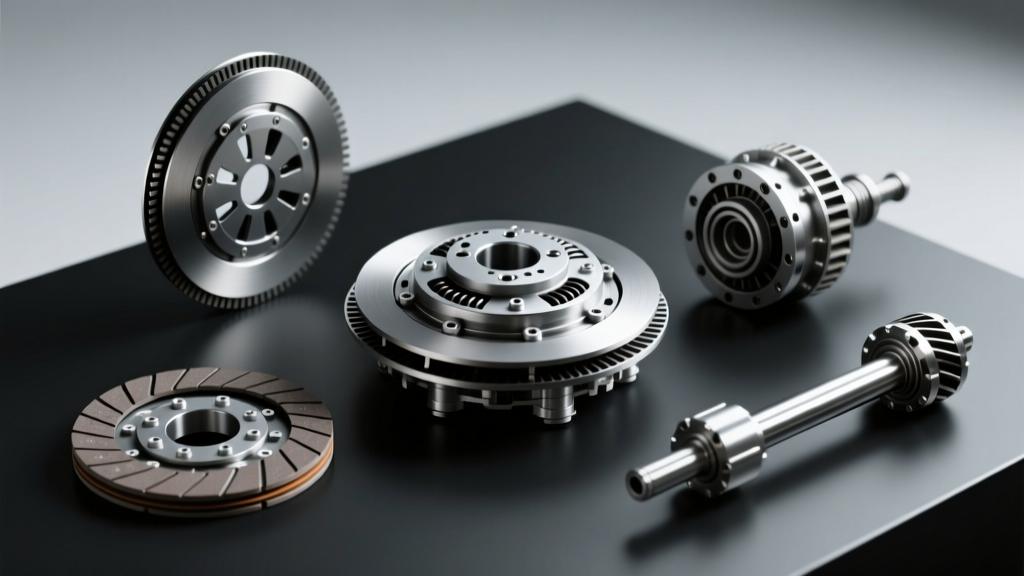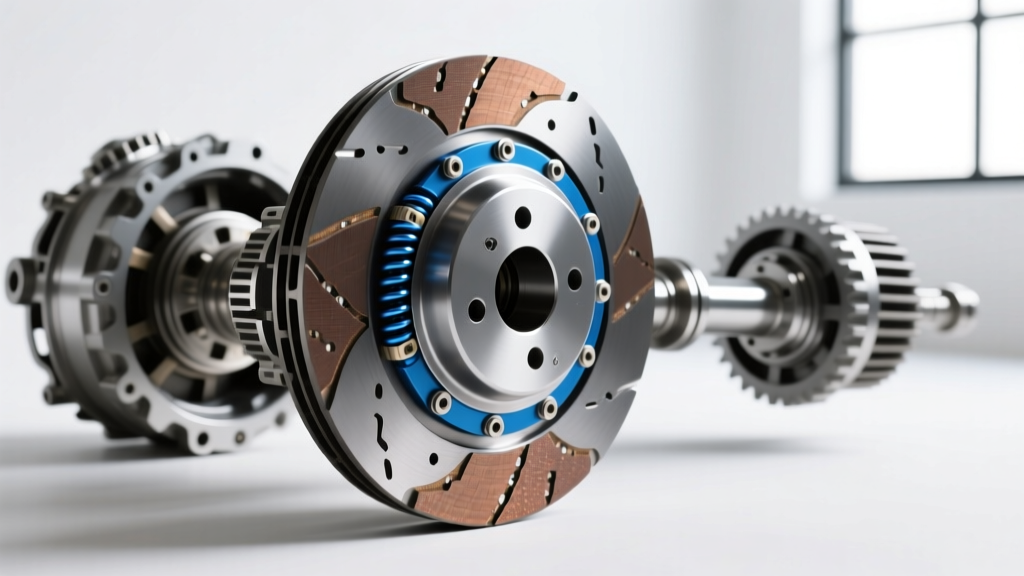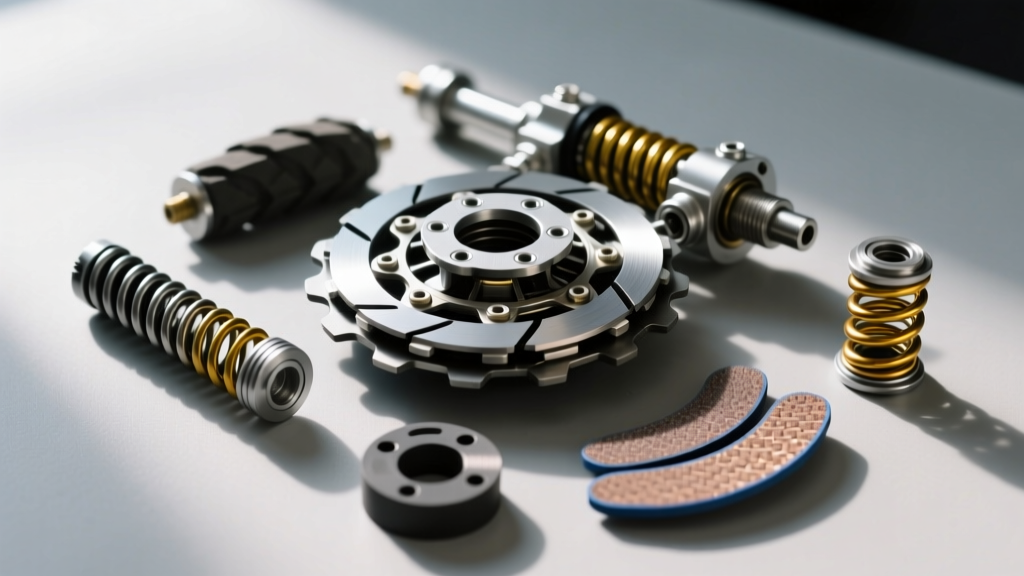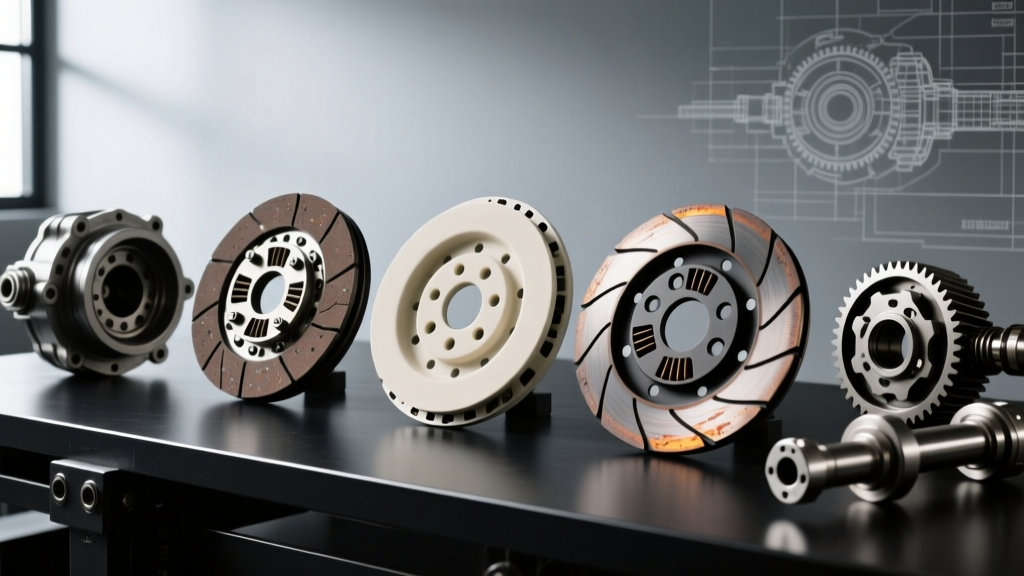
The Economics of Friction: Beyond the Sticker Price
When upgrading a high-horsepower drivetrain, selecting the right racing clutch is a complex balancing act involving friction coefficients, thermal dynamics, and budget constraints. In 2026, the aftermarket offers a dizzying array of friction materials, but the initial purchase price of the clutch kit is only a fraction of the total cost of ownership. To make an informed decision, enthusiasts and professional builders must evaluate the long-term economic impact of organic, ceramic, and sintered iron materials on the entire drivetrain ecosystem.
A cheap clutch that destroys a $1,200 chromoly flywheel or requires premature transmission removal is ultimately more expensive than a premium setup installed correctly the first time. This comprehensive cost analysis breaks down the real-world pricing, hidden machine shop fees, and torque thresholds of the three dominant friction materials used in modern performance applications, from street-driven Tremec T56 Magnums to dedicated drag-racing Liberty G-Force transmissions.
Organic and Kevlar-Blend Discs: The Street-Track Baseline
Full-face organic discs, often reinforced with Kevlar or carbon-kevlar weaves, remain the baseline for street-performance and mild track applications. These discs utilize a marcel spring (a wavy steel ring beneath the friction material) to provide a progressive, smooth engagement that mimics factory drivability while offering a 20% to 40% increase in torque capacity over OEM components.
Pricing and Torque Specifications
- Kit Price Range: $350 – $650 (Single disc with pressure plate and throwout bearing)
- Max Torque Capacity: 450 – 650 lb-ft at the crank
- Thermal Threshold: ~500°F before severe glazing occurs
From a cost perspective, organic and Kevlar-blend clutches are the most economical. They are gentle on the mating surfaces, meaning a standard nodular iron or steel flywheel can often be resurfaced on a lathe for $80 to $120, rather than replaced. However, they are highly susceptible to thermal degradation. If subjected to repeated high-RPM slip (such as aggressive drag racing launches on slicks), the organic material will glaze or burn, necessitating a complete teardown and replacement. For a daily-driven weekend warrior producing 550 wheel-horsepower, an organic/Kevlar blend from manufacturers like SPEC Clutch offers the best return on investment.
Ceramic Puck and Button Clutches: The Aggressive Middleweight
Ceramic friction materials are engineered for high-heat environments where organic compounds would instantly vaporize. Typically configured in 4-puck or 6-puck designs without marcel springs, ceramic clutches offer an aggressive, on-off engagement. The ceramic compound bites hard and fast, transferring power immediately but transmitting significant NVH (Noise, Vibration, and Harshness) into the chassis.
Pricing and Drivetrain Wear Costs
- Kit Price Range: $650 – $1,200
- Max Torque Capacity: 700 – 1,100 lb-ft
- Thermal Threshold: 800°F+
While the initial kit price is moderate, the hidden cost of ceramic lies in its abrasiveness. Ceramic pucks act like sandpaper against the flywheel and pressure plate. Over 15,000 to 20,000 miles of street and track use, ceramic material will gouge and score the flywheel face. Unlike organic discs, you cannot simply resurface a severely gouged chromoly or aluminum-stepped flywheel; it must be replaced. A new billet chromoly flywheel for an LS or Modular Ford application costs between $800 and $1,100. Therefore, the true 5-year cost of a ceramic racing clutch setup must factor in at least one flywheel replacement, pushing the realistic lifecycle cost well over $1,800.
Sintered Iron Multi-Discs: The Pro-Racing Investment
For dedicated competition vehicles, drag radials, and Pro-Mod builds exceeding 1,200 lb-ft of torque, sintered iron is the undisputed king. Sintered iron is created by fusing metallic powders under extreme heat and pressure, resulting in a porous, incredibly dense friction surface that actually thrives on high temperatures and high-RPM slip during launch. These are almost exclusively sold as 2-disc or 3-disc setups in smaller diameters (7.25-inch or 8.5-inch) to reduce rotational mass and moment of inertia.
The Premium Price Tag
- Kit Price Range: $1,800 – $3,500+ (Includes multi-disc assembly, billet pressure plate, and lightweight flywheel)
- Max Torque Capacity: 1,200 – 2,500+ lb-ft
- Thermal Threshold: 1,000°F+ (Operates optimally when hot)
Premium brands like Tilton Engineering and McLeod Racing dominate this space. The upfront cost is steep, but the lifecycle economics for a dedicated race car make sense. Sintered iron discs can be cleaned with a Scotch-Brite pad and reused if they are not cracked or severely warped. Furthermore, because multi-disc setups distribute the clamping force across multiple friction surfaces, the wear on the flywheel face is significantly reduced compared to a single-disc ceramic puck. The primary expense here is the required hydraulic release bearing setup and the precise bellhousing indexing required to make these smaller-diameter clutches function reliably.
2026 Material Cost & Performance Matrix
| Friction Material | Avg. Kit Price (2026) | Max Torque Limit | Flywheel Wear Cost | Primary Application |
|---|---|---|---|---|
| Organic / Kevlar | $350 - $650 | 650 lb-ft | Low ($80 resurface) | Street/Strip, Daily Track |
| Ceramic Puck | $650 - $1,200 | 1,100 lb-ft | High ($900+ replace) | Time Attack, Drift, Drag |
| Sintered Iron (Multi) | $1,800 - $3,500+ | 2,500+ lb-ft | Low (Clean & Reuse) | Pro Drag, Comp, Pro-Mod |
Hidden Drivetrain Costs: Machining, Hydraulics, and Hardware
Novice builders often budget strictly for the clutch kit, only to be blindsided by the ancillary costs required to complete the installation. When planning your racing clutch upgrade, you must allocate funds for the following critical items:
1. Precision Machining and Indexing
Smaller diameter racing clutches (7.25" and 8.5") require the bellhousing to be perfectly aligned with the crankshaft centerline. Misalignment of even 0.005 inches will destroy the transmission input shaft pilot bearing and cause premature spline wear. Budget $150 to $250 for a machine shop to dial-indicate the bellhousing and machine offset dowel pins if necessary.
2. High-Performance Fasteners
Never reuse factory torque-to-yield flywheel bolts. A high-horsepower setup requires ARP 2000 or ARP L19 flywheel bolts. For a standard GM LS application, a set of ARP flywheel bolts costs roughly $65, and they must be torqued to 120 lb-ft using ARP ultra-torque lubricant. Pressure plate bolts should also be upgraded to ARP units ($35) and secured with high-temperature thread locker, torqued to 25-35 lb-ft depending on the manufacturer spec.
3. Hydraulic Release Bearings and Lines
Most modern multi-disc racing clutches require a hydraulic release bearing (HRB) rather than a traditional mechanical fork. A high-quality HRB from Tilton or McLeod costs between $350 and $550. Additionally, you will need -3 AN braided stainless steel lines, a remote bleeder kit, and a master cylinder with the correct bore diameter (typically 0.750" or 7/8") to ensure adequate fluid volume for the clutch stroke. Budget an additional $400 for a complete, reliable hydraulic pedal-to-clutch system.
Expert Verdict: Aligning Budget with Horsepower
The decision between organic, ceramic, and sintered iron should never be based solely on the initial sticker price of the clutch kit. If your build produces under 600 lb-ft of torque and sees regular street duty, an organic/Kevlar blend is the most cost-effective choice, preserving your flywheel and your sanity in stop-and-go traffic. If you are building a dedicated track car producing 800 to 1,000 lb-ft and can tolerate a harsh, on-off pedal feel, ceramic pucks offer the necessary grip, provided you budget for eventual flywheel replacement.
However, once you cross the 1,200 lb-ft threshold or step into the world of dedicated drag racing with sticky tires and transbrakes, sintered iron multi-disc setups are a mandatory investment. While the entry cost approaches $4,000 when factoring in the flywheel, hydraulic bearings, and machining, the unparalleled consistency, thermal stability, and rebuildability of sintered iron make it the most economical choice for serious professional racing over a multi-season lifecycle.
Pro-Tip for 2026 Builds: Always verify the input shaft spline count and diameter of your transmission before ordering. A Tremec T56 Magnum utilizes a 1-1/8" 26-spline input, while older T5s and some Ford applications use a 1-1/16" 10-spline. Ordering the wrong hub will result in a $150 restocking fee and weeks of downtime waiting for the correct warranty exchange.