The Physics of PTO Clutch Thermal Degradation
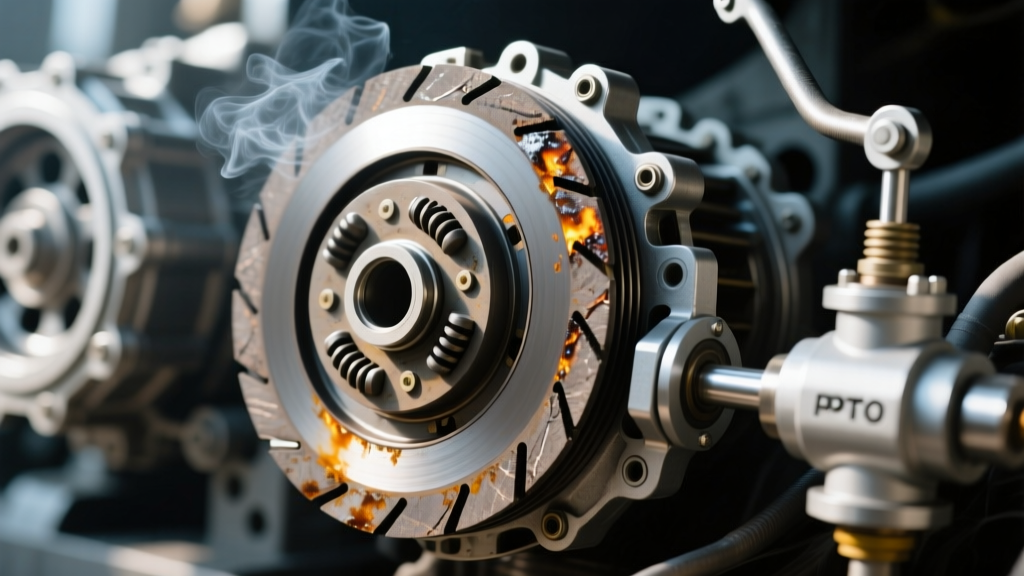
A Power Take-Off (PTO) system is the critical link between a commercial vehicle's engine or transmission and its auxiliary equipment, such as hydraulic pumps, winches, or agricultural implements. When a PTO clutch begins to emit a distinct burning smell, it is an immediate indicator of severe thermal degradation caused by kinetic friction. In both electromagnetic and hydraulic PTO clutch systems, slippage generates massive amounts of localized heat. When friction surface temperatures exceed 400°F (204°C), the resin binders in organic friction materials begin to vaporize, releasing an acrid, unmistakable odor. If left unaddressed, this thermal runaway will glaze the friction surfaces, destroy the armature or clutch pack, and ultimately lead to catastrophic PTO failure, leaving your auxiliary equipment inoperable.
Organic vs. Sintered Bronze Friction Materials
The exact profile of the burning smell depends heavily on the friction material utilized in your specific PTO clutch. Electromagnetic PTO clutches, such as those manufactured by Warner Electric, frequently utilize organic friction linings bonded to a steel armature. When these overheat, they produce a sharp, chemical-like burning scent similar to burning brake pads. Conversely, heavy-duty industrial PTOs and hydraulic clutch packs often employ sintered bronze or powdered metal friction discs. These materials can withstand much higher thermal loads (up to 600°F or 315°C), but when they do overheat due to prolonged slippage or lack of lubrication, they emit a distinct, hot metallic odor accompanied by the smell of scorched hydraulic fluid or gear oil.
Diagnostic Protocol: Isolating the Burn Source
Proper diagnosis requires a systematic approach to isolate whether the burning smell is stemming from mechanical misadjustment, electrical failure, or hydraulic pressure loss. As of 2026, advanced diagnostic tools like FLIR thermal imaging cameras are standard in heavy-duty bays, allowing technicians to pinpoint the exact origin of the heat signature before teardown.
1. Electromagnetic Air Gap Calibration
The single most common cause of a burning smell in electromagnetic PTO clutches is an out-of-specification air gap. As the friction disc wears over time, the gap between the armature and the rotor face widens. If the air gap exceeds the manufacturer's maximum threshold (typically 0.040 inches for most standard agricultural and industrial PTOs), the electromagnetic coil cannot generate sufficient magnetic force to pull the armature into full, hard contact. This results in micro-slippage under load, generating immense heat.
Diagnostic Action: Disconnect the power source and use a brass feeler gauge to measure the air gap at three equidistant points around the rotor. For most Warner Electric and Ogura PTO models, the ideal air gap is between 0.015' and 0.025'. If the gap is wider than 0.035', you must remove the armature and install precision shims to reset the gap to factory specifications. Failing to shim a worn PTO clutch guarantees continued slippage and a persistent burning smell.
2. Electrical Circuit and Coil Verification
Even with a perfect air gap, a PTO clutch will slip and burn if it is not receiving adequate voltage. A failing relay, corroded ground wire, or undersized wiring harness can cause a voltage drop at the coil.
Diagnostic Action: Set your digital multimeter to DC Volts. Back-probe the PTO clutch connector while the system is engaged and under load. You must read a minimum of 11.5V on a 12V system (or 23.0V on a 24V system). Next, test the coil resistance (Ohms). A standard 12V PTO clutch coil should read between 2.5 and 4.5 ohms. If the resistance is significantly higher, the coil is degrading internally; if it reads near zero, the coil has shorted. A weak coil will result in a 'soft' engagement, causing the clutch to slip and burn the friction material.
3. Hydraulic Clutch Pack Pressure Testing
For commercial trucks utilizing transmission-mounted PTOs (such as the Parker Chelsea or Muncie Power series mated to Allison or Eaton Fuller transmissions), the PTO clutch is often a wet, multi-disc hydraulic pack. A burning smell here usually indicates that the clutch pack is slipping due to low hydraulic engagement pressure or degraded transmission fluid.
Diagnostic Action: Install a hydraulic pressure gauge inline with the PTO engagement circuit. Command the PTO to engage via the dashboard switch or ECU. Verify that the pressure spikes immediately to the manufacturer's specification (typically 250 to 300 PSI for heavy-duty Chelsea PTOs). If pressure is low or bleeds off while engaged, the PTO control valve is failing, or the internal O-rings on the PTO piston are blown, preventing the clutch pack from fully clamping.
Troubleshooting Matrix: Odor Profiles and Failure Modes
| Odor Profile | Primary Suspect Component | Root Cause Failure Mode | Corrective Action |
|---|---|---|---|
| Sharp, acrid chemical burn | Electromagnetic Armature | Organic friction resin vaporizing due to air gap > 0.040' | Shim air gap to 0.020'; replace armature if glazed |
| Hot metallic / scorched oil | Hydraulic Wet Clutch Pack | Friction discs slipping due to low hydraulic line pressure | Test PTO solenoid valve; replace piston O-rings |
| Sweet, syrupy burn | PTO Housing / Bearings | Engine coolant leaking onto PTO housing or clutch pack | Pressure test cooling system; replace PTO shaft seal |
| Melting plastic / ozone | PTO Wiring Harness / Coil | Electrical short or voltage drop causing coil overheating | Load test circuit; replace PTO relay and coil assembly |
Real-World Repair Costs and Torque Specifications
Repairing a burnt PTO clutch requires precision reassembly. Using an impact wrench to reinstall PTO components will warp the mounting flanges, leading to misalignment, premature bearing wear, and recurring slippage. Below are standard torque specifications and estimated repair costs for common PTO systems.
- PTO to Transmission Mounting Bolts (6-Bolt Pattern): 35-45 lb-ft (Grade 8 or Metric 10.9 hardware required). Always apply a medium-strength threadlocker.
- Electromagnetic Rotor to Shaft Retaining Nut: 85-110 lb-ft (Consult specific OEM manual; often requires a specialized spline holding tool).
- Hydraulic PTO Control Valve Bolts: 15-20 lb-ft (These are typically small aluminum or cast iron housings that crack easily if over-torqued).
- Cost Estimate - Electromagnetic Armature & Coil Replacement: $250 - $600 for parts, plus 1.5 hours of labor.
- Cost Estimate - Hydraulic PTO Clutch Pack Rebuild: $800 - $1,500 for OEM friction discs, steels, and seals, plus 3-5 hours of labor depending on transmission accessibility.
Preventative Maintenance for Heavy-Duty PTOs
To prevent the recurrence of a PTO clutch burning smell, fleet managers and owner-operators must implement strict preventative maintenance intervals. For electromagnetic clutches, the air gap must be inspected and adjusted every 500 operating hours. For hydraulic wet-clutch PTOs, the transmission fluid and PTO filter must be serviced according to the OEM schedule; degraded fluid loses its friction modifiers, causing the PTO clutch pack to shudder and slip even when hydraulic pressure is nominal. Furthermore, ensure that operators are not 'riding' the PTO engagement switch or attempting to engage the PTO while the auxiliary equipment is already under heavy mechanical load, as this guarantees instantaneous friction surface glazing and thermal damage.
For more detailed installation and troubleshooting schematics, refer to the technical service bulletins provided by Muncie Power Products and your specific transmission manufacturer.